
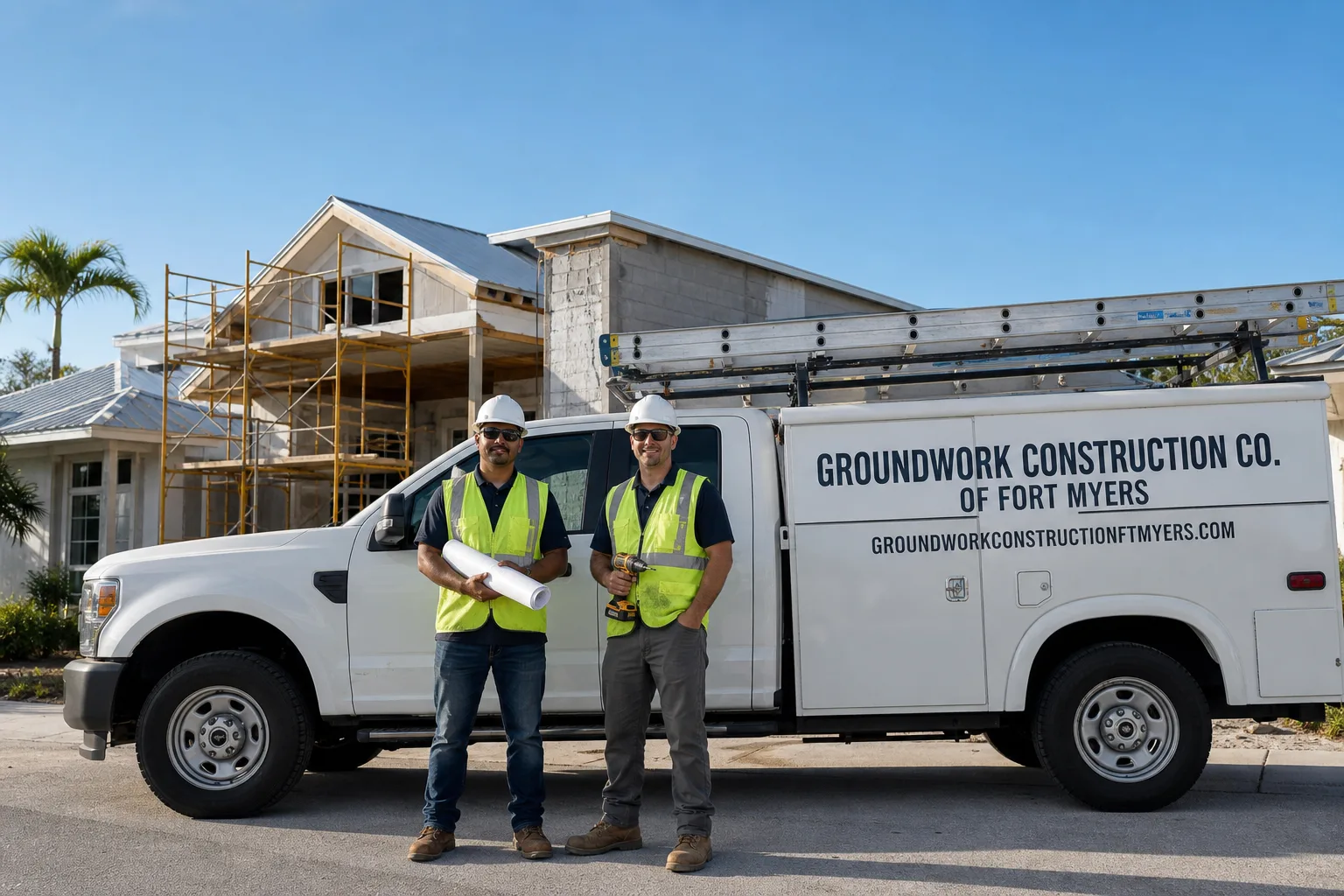
What An Iron Fence In Cape Coral Actually Costs And How Long It Takes
An iron fence in Cape Coral typically runs $3,500 to $9,000 for a standard residential project, with most installations wrapping up in 3 to 5 working days on site. That range covers excavation, concrete footers, steel post setting, panel mounting, and finish coating on an average 150- to 200-linear-foot layout. The single biggest variable is lineal footage, but access to the fence line, gate count, and whether we’re working near a canal seawall all move the number. Call (844) 638-7249 and we’ll walk your property, take measurements, and hand you a written line-item quote on the spot - no guesswork, no change orders snuck in later.
How We Handle Iron Fence Installation From Day One
Most fencing crews show up, dig holes, and hope the posts land where the property corners actually sit. We don’t. We pull the survey first - every single time. Here’s how the job actually unfolds on the ground in Cape Coral.
Stage 1: Property verification and utility locate. Before a shovel touches soil, we verify your plat survey, flag the fence line, and call in Sun-Sentinel 811 utility locates - gas, electric, water, and the city irrigation reclaim lines that crisscross a lot of Cape Coral yards. This takes 1 to 2 business days. If your property abuts a canal, we also check the current FEMA elevation certificate and Lee County seawall setback requirements right here at the start. Skip this step, and you risk building a fence that fails a post-installation inspection or, worse, violates a mandatory canal buffer.
Stage 2: Footer excavation and concrete pour. Once locates are cleared, we auger the post holes - 24 to 30 inches deep, per code, with a minimum 8-inch diameter footer. In Cape Coral’s sandy, shell-laced soil, we over-excavate slightly and use a high-strength Quikrete 5000 mix to resist the lateral saltwater saturation that routinely eats undersized footers within a decade. Concrete cure time: 48 hours minimum before we hang any panel weight on those posts. We don’t rush it.
Stage 3: Steel post setting and alignment. After the concrete has cured, we set the galvanized steel posts, check plumb on every single one with a laser level, and shim as needed. This is where fence lines either look dead straight for 20 years or they start to wave after the first wet season. Our crew strings a continuous guide line and checks post alignment at three points on every post - base, midpoint, and cap - before locking hardware down.
Stage 4: Panel mounting and gate fabrication. Panels go up in sections. We weld or mechanically fasten each panel to the posts, depending on the system specified. Gates get fabricated and hung with reinforced frames and heavy-gauge hinges - walk gates, double-drive gates, whichever your layout needs. This stage typically runs one full day for a standard residential job. The homeowner decision point here: gate hardware style and latch type, which we’ll have you choose before this day arrives.
Stage 5: Finish coating and final walkthrough. Every iron fence we install gets a corrosion-inhibiting primer followed by a factory-grade acrylic or polyester powder coat, baked on - not some rattle-can job that flakes in 18 months of Cape Coral salt air. Final touch-up at weld points, post caps, and hardware is done on site. Then we walk the whole line with you, gate operation included, and we don’t call it done until you sign off. Derek Hollenbeck’s rule on this: we leave when the fence is right, not when the clock says so.
The Options You’ll Choose Between For Your Iron Fence
You’ll make a handful of real decisions on an iron fence project, and each one changes how the fence looks, how long it lasts, and what it costs. Here are the ones that matter.
- Material grade: standard steel vs. galvanized steel. Standard steel costs less up front but starts corroding the moment Cape Coral’s canal humidity hits it. Galvanized steel - hot-dip coated before any paint goes on - adds roughly 15 to 25 percent to the material line but realistically buys you an extra 10 to 15 years of life before rust becomes a structural problem. On waterfront properties, we recommend galvanized every time.
- Finish: powder coat vs. wet paint. Powder coating is baked into the metal in a factory; it won’t chalk, peel, or fade nearly as fast as wet paint. Wet paint is cheaper on the front end and easier to touch up later. If you’re within a half-mile of salt water, the powder coat pays for itself in avoided repainting costs within five years.
- Panel style: flat-top, spear-top, or ornamental scroll. Spear-top adds height and a deterrence factor without looking institutional. Ornamental scrollwork is pure aesthetics and typically adds $8 to $15 per linear foot. Flat-top is the budget choice and keeps sightlines open, which matters if you’ve got a canal view you don’t want to block.
- Gate count and type. One walk gate is standard. Adding a double-drive gate for boat or RV access changes the post schedule, the hinge hardware rating, and the concrete footer size - usually $400 to $900 extra per gate, depending on width.
- Canal-side treatment. If your fence line runs parallel to a seawall, we often step up to heavier-gauge posts and an extra corrosion-coating cycle. This isn’t optional on a canal lot; it’s the difference between a fence that looks new at year 10 and one that’s got rust bleeding through by year 4.
What An Iron Fence Costs In Cape Coral, FL
You should expect to pay $3,500 to $9,000 for a professionally installed iron fence in Cape Coral. That’s the real spread for a typical single-family residential job with 150 to 200 linear feet, one or two gates, and standard soil conditions. Here’s what pushes a project toward the low or high end.
Lineal footage. This is the engine of the quote. Every additional 10 feet adds post holes, concrete, steel, and labor. A 100-foot fence around a small front courtyard might land at $2,800. A 300-foot perimeter wrapping a corner canal lot can push past $10,000 easily.
Gate count and size. A single 4-foot walk gate is built into most base quotes. Add a second walk gate, or spec a 12-foot double-drive gate with heavier posts, and you’re looking at $400 to $1,200 in added hardware and labor.
Soil and access. Cape Coral soil is sandy with intermittent shell and limestone pockets. If we hit a limestone lens and need a rock auger, that adds time. If the fence line is tight against a seawall or bordered by mature landscaping that can’t be disturbed, labor hours go up. We price for what we can see on the estimate walk; if we uncover something unexpected during excavation, we stop and talk to you before any change order gets written.
Material spec. Galvanized steel with a powder coat finish is the top of the range and what we spec on nearly every waterfront property. Standard steel with wet paint trims the material cost noticeably. We’ll show you both numbers side by side in the estimate so you’re deciding with real information, not a sales pitch.
Permit and inspection fees. The City of Cape Coral requires a fence permit, and the fee schedule is based on valuation. We pull the permit, schedule the inspections, and stand there for the sign-off. Our written estimate includes the permit line item broken out - no lump-sum mystery charge.
Every iron fence estimate from us is a fixed-price, line-item document. You see the excavation cost, the concrete cost, the linear steel cost, the gate hardware, the finish, the permit fee, and our labor. If a contractor won’t show you the breakdown, keep shopping. We also include exactly what’s not covered - landscaping restoration beyond the immediate trench line, for instance - so there’s zero ambiguity when the final invoice lands. Call (844) 638-7249 to schedule the free on-site estimate, and we’ll have numbers in your hand before we leave the driveway.
What Cape Coral Homes Specifically Do To An Iron Fence
Cape Coral isn’t Fort Myers. The salt air coming off 400 miles of canals doesn’t just sit in the atmosphere - it settles on metal and goes to work. We see iron fences on canal-front homes in the Yacht Club area and along the Caloosahatchee shoreline corroding at the post bases three to four times faster than the same fence installed five miles inland. The fix isn’t complicated - galvanized steel, full concrete encapsulation of every post base, and a factory-baked powder coat - but it has to be done from day one. Retrofit coatings never bond as well as the original bake.
Permitting adds another layer. The city requires a fence permit, and if your property touches a canal, the seawall setback rules from Lee County come into play. We’ve done Fence Installation in Cape Coral jobs where the fence line had to jog inward by three feet at the canal edge to satisfy the buffer requirement - something a homeowner wouldn’t know until the first inspection fails. Our crew pulls the survey and checks the setback on the front end so you don’t get a red tag later. If you’re in one of the older Unit 1-3 neighborhoods where the city is still phasing in utility lines, we also coordinate around any active water-main or force-main construction on your street; tearing up a fresh fence line because the city needs to trench through it six months later is a headache we’ve learned to avoid by checking the assessment-zone schedule before we set a single post.
The housing stock matters too. Most Cape Coral homes were built between the 1970s and 1990s in concrete block - solid construction, but many of these lots were originally fenced with corroded chain link or nothing at all. When we pull up the old stuff, we routinely find concrete remnants and abandoned post footers from previous failed fence attempts. Our excavation crew clears all of it and starts fresh with properly spaced, code-depth footers. A lot of homeowners pair an iron fence installation with hardscape work on the patio or pool deck; our Patios, Walkways & Pool Decks in Cape Coral crew can sequence both so the fence posts land exactly where the paver layout plans for them.
Derek Hollenbeck has been running jobs across Cape Coral long enough to know that every neighborhood brings its own quirks. Pelican, Sandoval, Tarpon Point - the canal proximity changes the corrosion math, the HOA architectural-review requirements tighten the style specs, and the soil composition shifts block by block. Our Fence Installation crew adjusts the footer mix and the post spec accordingly instead of running a one-size-fits-all formula. Homeowners who are also thinking about expanding their living space sometimes ask about ADU Design & Permitting in Cape Coral while we’re on site, and we can fold that into a single property-wide plan rather than treating each project like it exists in a vacuum.
Serving Cape Coral, FL - Our Local Coverage Area
We’re based in the Cape Coral area and know this community well. Use the map below to see our service coverage - if you’re nearby, we can almost certainly help.
Frequently Asked Questions About Iron Fences In Cape Coral
Yes. The City of Cape Coral requires a building permit for any new fence installation, including iron. We pull the permit as part of our scope, and the job includes both the footing inspection (before concrete is poured) and the final inspection once the fence is complete. If your property is on a canal, the Lee County seawall setback also applies and we verify it during the survey phase.
A galvanized steel iron fence with a factory powder coat installed with fully encapsulated concrete post bases will last 20 to 30 years in Cape Coral before structural corrosion becomes a concern. Standard steel with wet paint on a waterfront lot will show rust bloom at the post bases within 3 to 5 years. The material spec you choose on the front end determines whether you’re repainting at year 4 or still looking at a clean fence line at year 20.
Almost always, yes. Neighborhoods like Sandoval, Tarpon Point, and the gated sections of Pelican have specific architectural-review guidelines covering fence height, color, panel style, and finish. We request the HOA’s fence spec sheet before we quote so the estimate reflects exactly what the review board will approve - no rework, no rejected application after the fact.
It shouldn’t, and with us it won’t unless we uncover a subsurface condition that was unknowable during the estimate walk - like a buried concrete slab from a demolished pool cage that has to be saw-cut out. If that happens, we stop work, show you what we found, and give you a fixed-price change order to approve before we touch it. No surprise invoices at the end.
Once you approve the quote, we typically schedule within 2 to 3 weeks, depending on the city’s permit turnaround time and our current project queue. The on-site work itself runs 3 to 5 days for most residential iron fence jobs. Call (844) 638-7249 and we’ll give you a real start-date window based on current scheduling, not a vague “we’ll fit you in.”
Get A Fixed-Price Iron Fence Estimate In Cape Coral
If you’re looking at an iron fence in Cape Coral, the next step is a free on-site estimate where we walk the fence line with you, take exact measurements, review your HOA’s specs if applicable, check the canal setback if relevant, and hand you a written quote that breaks down every line item. No pressure, no vague ballpark number, no crew showing up later with a different price. Call (844) 638-7249 - a live person answers, day or night - and we’ll schedule a time that works for you. Derek Hollenbeck and our Fence Installation in Cape Coral crew will take it from there.
Written by Derek Hollenbeck, Owner at Groundwork Construction Co., serving Cape Coral and the surrounding Lee County communities.