
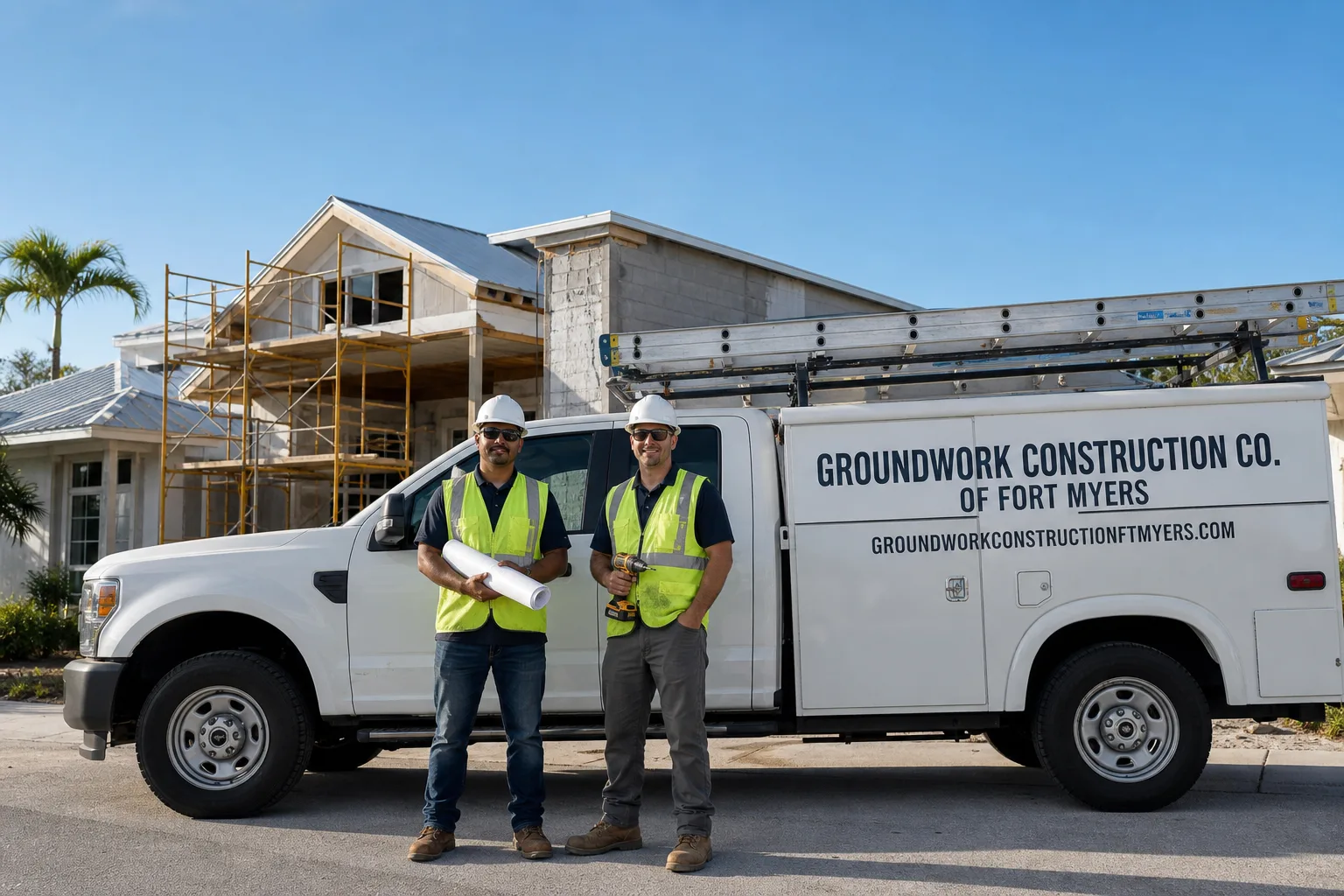
How We Build Patios, Walkways & Pool Decks That Last in Cape Coral, FL
Building a patio, walkway, or pool deck in our Cape Coral service area means choosing a surface that can handle relentless sun, salt air, and the occasional tropical downpour without cracking or shifting. For a paver patio in Cape Coral, you’re typically looking at $3,500 to $11,000, with most walkways coming in on the lower end of that range and larger pool decks running higher because of the extra prep work required. A straightforward walkway can be built in two to three days, while a full pool deck replacement often takes four to seven days once we break ground. Call (844) 638-7249 to schedule a free on-site estimate and get a firm, written number for your yard.
The Real Sequence of Building a Patio, Walkway, or Pool Deck
Every hardscape job in Cape Coral follows the same core five stages. What changes is scale, the material you choose, and whether we’re working around an existing pool shell or in a tight side yard. Here’s what actually happens from the day we show up to the day you’re grilling on your new patio.
Day 1 - Demolition, excavation, and grading. If you have an existing concrete slab or old pavers, we remove it first. Then we dig down anywhere from six to ten inches, depending on what’s going over the top and what the soil looks like underneath. Most Cape Coral lots have sandy loam that drains well, but we still grade every excavation to a minimum one-percent slope away from the house and pool coping so water never ponds against the structure. This is the stage where we also identify and mark any irrigation lines, pool plumbing, or downspouts that need to be rerouted.
Days 1-2 - Base compaction and edge restraint. Once the grade is right, we bring in crushed limestone base rock, compact it in two-inch lifts with a plate compactor, and run string lines to lock in the finished height. The edge restraint goes in next - we use rigid aluminum or composite edging staked every twelve inches, not the thin plastic strip that shifts after two rainy seasons. On pool decks, we pay extra attention to the bond beam edge and make sure the base rock doesn’t bridge against the pool shell in a way that would transfer load where it shouldn’t.
Days 2-3 - Sand setting bed and paver layout. We screed a one-inch layer of coarse concrete sand over the compacted base and begin laying the pavers in your chosen pattern. This is where you see the design come to life - herringbone, running bond, or a custom modular pattern with soldier-course borders. We keep the joints tight, typically an eighth of an inch, to minimize sand migration later. For walkways with curves or radii, every cut gets measured and marked individually so the border pieces follow the arc cleanly.
Days 3-4 - Cutting, detail work, and step construction. All the edge cuts, inset drains, and any step risers get built in this phase. If your pool deck includes a raised spa surround or a step-down seating area, we form and pour those concrete footings now and tie everything into the existing grade. On walkways that connect a front entry to a sidewalk, we match the final elevation to within a quarter inch of the city right-of-way so the transition is trip-free and meets current Cape Coral code.
Final day - Polymeric sand, compaction, and final inspection. We sweep polymeric joint sand into every gap, run the plate compactor one last time over the entire surface to lock the sand into the joints, and mist-activate it. The polymeric sand is a critical step here in Cape Coral because it hardens into a flexible, water-permeable seal that keeps ants from excavating the joints and prevents weeds from taking root. Before we leave, Derek or the crew lead walks the whole surface with you to confirm every line, every cut, and every transition meets your eye the way you expected it to.
The Options You’ll Choose Between
Most of the decisions come down to three things: paver material, paver size, and the pattern. The choices you make here change the look, the feel underfoot around the pool, and the final price. Here’s what actually matters.
- Concrete pavers vs. travertine vs. natural stone. Standard concrete pavers from brands like Tremron or Oldcastle are the most common choice in Cape Coral - they cost less, hold color well against UV, and can be replaced individually if one ever gets stained or chipped. Travertine pavers run higher on the cost scale but stay noticeably cooler under bare feet in direct Florida sun, which is why they’re popular for pool decks. Natural stone, like shellstone or flagstone, costs the most and requires more cutting labor, but it gives you a completely one-of-a-kind surface no neighbor will have.
- Paver thickness and size. Most residential patios and walkways use standard 60mm pavers, which are rated for foot traffic and light furniture. If your pool deck will hold a heavy outdoor kitchen or a spa, we step up to 80mm pavers with a thicker base section, and that moves the project price up because of the extra material and deeper excavation. The nominal size of the paver itself (6×6, 6×9, 12×12 modular sets, or large-format slabs) determines how many cuts the crew has to make and whether a pattern looks busy or clean-lined.
- Pattern and border. A simple running-bond pattern with no border is the most economical. A herringbone pattern with a double soldier-course border in a contrasting color adds labor hours and material but creates a far more finished look, especially on larger patios where the border visually contains the field. Pool decks in Cape Coral often use a lighter border color around the pool edge to reduce glare and heat buildup next to the water.
- Joint sand choice. Standard polymeric sand works for most applications. If the patio sits directly next to a canal or gets regular splash-out from saltwater pool systems, we recommend a high-performance polymeric sand rated for wet-set and submerged conditions so the joints don’t soften over time from salt exposure.
What Patios, Walkways & Pool Decks Cost in Cape Coral, FL
A paver patio in Cape Coral typically runs $3,500 to $11,000 for our Driveway & Pavers services. Most walkways fall between $3,500 and $6,500, while a full pool deck replacement that includes demolition of an old cracked slab and installation of new pavers usually lands between $7,000 and $11,000 or more depending on square footage and access. These are all-in numbers - they include the tear-out, haul-off, base material, labor, and polymeric sand. What pushes a job toward the higher end comes down to four specific variables.
First, square footage - the most straightforward driver. A 100-square-foot walkway costs less than a 400-square-foot pool deck simply because of material volume and crew days. Second, what’s underneath. If we’re removing a thick, steel-reinforced pool deck slab that was poured in the 1980s, demolition takes longer, dump fees are higher, and the base prep often requires additional fill to correct the grade left behind. Third, edge complexity. A rectangular patio with four straight sides is faster to lay and cut than a freeform pool deck with five curves and a raised spa to work around. Fourth, paver type - natural stone or travertine materials can double the per-square-foot material cost compared to standard concrete pavers.
Every estimate we write for patios, walkways, and pool decks in Cape Coral is a fixed-price, line-item document. You’ll see the cost of demolition, base rock, sand, pavers, edge restraint, polymeric sand, and labor broken out separately. There’s no allowance line for “unforeseen conditions” that turns into a change order later. If we uncover a broken irrigation line or a rotted drain pipe while we’re excavating, we’ll show you the fix on the spot with a separate price - but the hardscape number itself doesn’t move unless you change the scope.
What Cape Coral Homes Specifically Do to This Job
Specialty Roofing in Cape Coral shares similar permitting challenges, and the same geography shapes how hardscape work gets done here in a way that simply doesn’t apply inland or up the coast. The city’s 400-plus miles of canals mean a surprising number of pool decks and back patios sit within the FEMA-mapped flood zone, and any hardscape replacement that changes the finished grade or impervious-surface footprint can trigger a floodplain review and require an elevation certificate. We handle the permit submission directly with Lee County, but homeowners should expect that a patio replacement behind a canal-front home will take an extra week or two for plan review compared to a home on an interior lot.
The salt air is the silent factor that reshapes material choices over time. We regularly see concrete pavers on older Cape Coral pool decks where the surface has spalled or the color has faded unevenly because the original sealer broke down and salt-laden humidity worked into the pores. On walkways that run alongside the canal side of a property, we now almost exclusively recommend a penetrating silane-siloxane sealer applied at the end of the job - it doesn’t change the look of the paver, but it blocks salt intrusion for years longer than a film-forming acrylic sealer would.
For the older CBS homes in Units 1 through 3 and along the Cape Coral Parkway corridor - many built in the 1970s and early 1980s - there’s also the reality of ongoing utility expansion. It’s not unusual for a side-yard walkway job to back up against an area where the city has recently trenched for new water main, which means we adjust compaction and base prep on that side of the property to account for recently disturbed soil that will settle differently than the native undisturbed ground. Our Driveway & Pavers in Cape Coral crew has been working through these exact site conditions since the city’s utility-expansion assessment zones started rolling through the older neighborhoods.
Homeowners often pair a new paver patio with a larger backyard project - we’ve done patios that tie directly into a new Full Kitchen Remodeling in Cape Coral that opens onto the outdoor space, or a patio that connects to a detached ADU Site Prep & Utilities in Cape Coral unit for a guesthouse or home office. When the hardscape and the structure scope are handled by the same team, the grading, drainage, and utility rough-in all get coordinated from day one, which avoids the “I wish we’d thought of that before the pavers went in” conversation later.
Serving Cape Coral, FL - Our Local Coverage Area
We’re based in the Cape Coral area and know this community well. Use the map below to see our service coverage - if you’re nearby, we can almost certainly help.
Frequently Asked - Patios, Walkways & Pool Decks in Cape Coral
Yes, in most cases. The City of Cape Coral requires a permit for any hardscape work that changes the impervious surface area, affects drainage patterns, or sits within a FEMA flood zone. A simple walkway replacement that keeps the same footprint and doesn’t alter grade may not trigger a permit, but any new deck or expansion will. We pull all required permits through Lee County and City of Cape Coral building services as part of the scope, and the permit fees are included in your estimate.
A typical walkway in Cape Coral takes two to three working days from demo to final sand activation. A medium-sized patio runs three to five days. A full pool deck replacement, especially one where we’re cutting around an existing pool with curved edges and multiple elevation transitions, usually takes four to seven working days. Weather can push the schedule - we pause during heavy rain because compacting wet base rock creates problems later - but we build weather float into every timeline so you’re not left wondering where the crew went.
Darker concrete pavers will absorb more heat than lighter ones in direct Cape Coral sun, but the surface temperature difference between a standard concrete paver and a travertine or light-colored paver can be twenty degrees or more at midday. If the pool deck is the main barefoot zone for your family, we typically recommend a lighter color field or a travertine product that reflects more heat. A textured surface also helps because it reduces the contact area on the sole of the foot, and it provides better grip when wet.
Three things: the depth and compaction of the crushed limestone base, the rigid edge restraint that holds the perimeter, and the polymeric sand that locks the joints. In Cape Coral’s sandy soil, which drains fast, the main risk of settlement comes from poor base compaction or from organic material left under the base rock. Our prep removes all topsoil and organics down to clean sand or clay before any base rock goes in, and every lift gets compacted and checked with a level before the next lift goes on top.
A well-built paver patio or pool deck generally recovers a significant portion of its cost at resale in Cape Coral because outdoor living space is a genuine year-round selling point here, much like the value added by Cape Coral Small & Partial Kitchen Remodels. The key is that it has to look intentional and be built to last - a cracked, uneven patio with weeds in the joints hurts perception of the whole property. A properly installed paver surface with clean lines and sealed joints signals to a buyer that the outdoor space was maintained and invested in, not deferred. Call (844) 638-7249 to talk through what makes sense for your yard and budget.
Get a Fixed-Price Estimate for Your Outdoor Project in Cape Coral
The fastest way to get a real number is to have us walk the site. We’ll measure the area, talk through paver options and patterns, check the existing grade and drainage, and hand you a written, line-item estimate before we leave - no vague ranges, no pressure. Call (844) 638-7249 to set up a free on-site estimate for your patio, walkway, or pool deck in Cape Coral. A live person answers the phone every time, and we’ll schedule a time that works around your day.
Written by Derek Hollenbeck, Owner at Groundwork Construction Co., serving Cape Coral and the surrounding communities.