
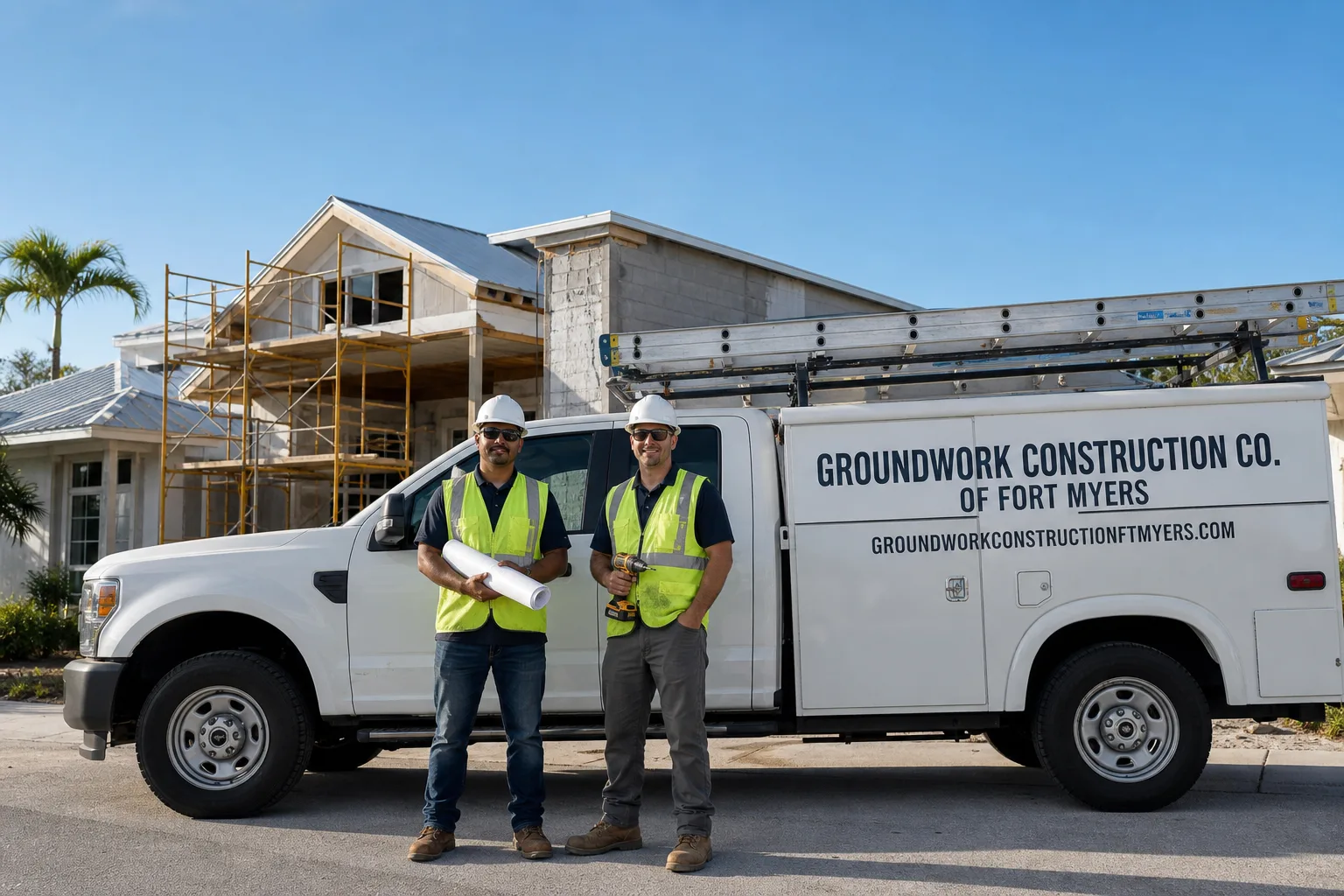
What a Junior ADU & Interior Conversion Actually Costs and Takes in Harlem Heights
A junior ADU and interior conversion in Harlem Heights typically runs between $45,000 and $130,000, takes 10 to 16 weeks from permit to final inspection, and repurposes existing square footage (an attached garage, a large basement-level room, or an oversized utility space) into a legal, self-contained dwelling with its own entrance, kitchenette, and full bath. Most projects we build here are post-Ian rebuilds or insurance-driven renovations, which means the upfront discovery work on the existing structure is heavier than it would be in a newer inland community. Call (844) 638-7249 to schedule your free estimate with Derek Hollenbeck and we’ll walk the space together before you commit to anything.
How we actually build a junior ADU in Harlem Heights, from demolition to final sign-off
Every junior ADU in Harlem Heights follows the same structural sequence, but the condition of the existing framing, slab, and tie-downs dictates how much time we spend on stages one and two. Here is what you should expect week by week:
Stage 1: Existing-condition discovery and structural remediation (days 1-5). We open the walls and ceiling of the conversion space and inspect every anchor bolt, strap, and roof-to-wall connection. Homes in Harlem Heights built before the 2002 Florida Building Code routinely have undersized hurricane clips or corroded sill-plate bolts. We photograph everything, flag what Lee County will require us to replace, and send you a written remediation addendum before we buy a single sheet of drywall. This is the stage where a $45,000 conversion can become a $70,000 conversion if the tie-downs are shot, and we’d rather you know that on day five than day forty-five.
Stage 2: Rough-in and wet-wall layout (days 5-18). The plumbing stack for the new bathroom and kitchenette gets cut into the slab or run through the nearest existing wet wall. In Harlem Heights we core through concrete-block walls rather than wood frame more often than not, which adds about two days and requires a dust-containment tent because of the silica. Your electrician pulls a dedicated subpanel for the ADU at this stage; Lee County requires AFCI breakers on all living-space circuits now, and we size the subpanel for a mini-split HVAC and induction cooktop even if you are not putting them in on day one.
Stage 3: Insulation, drywall, and window/door replacement (days 18-30). Because Harlem Heights sits in the high-humidity, salt-air corridor just inland from the Gulf, we spec closed-cell spray foam on all exterior walls and the underside of the roof deck above the conversion. It costs more than batt insulation but it air-seals the envelope and stops the moisture drive that rots drywall in un-conditioned converted garages within three summers. Any windows or exterior doors we touch get replaced with impact-rated units carrying a Miami-Dade NOA; the Lee County wind-mitigation inspector will check the product-approval sticker, and a single non-impact window in the ADU can cost you the insurance discount on the whole house.
Stage 4: Finish trades and kitchenette/bath install (days 30-50). Tile, cabinetry, countertops, plumbing trim, and electrical trim go in. The kitchenette gets a compact sink, under-counter fridge, two-burner induction cooktop, and solid-surface counters - we use brands from our curated portfolio so you are choosing between known quantities, not whatever the supply house had on the shelf that week. The bathroom gets a 36-inch shower pan or a curbless tile pan, comfort-height toilet, and a vanity with soft-close drawers. Flooring is typically luxury vinyl plank throughout because it handles the occasional slab moisture that Harlem Heights slabs still release post-Ian.
Stage 5: Final inspections, punch list, and certificate of occupancy (days 50-final). Lee County’s building department on Colonial Boulevard still runs a phased inspection backlog from the post-Ian surge, so we keep a dedicated permit-expediter relationship with the county office. A missed rough-in inspection can push your CO date back two weeks in a queue that remains unusually long for unincorporated pockets like Harlem Heights. We schedule your framing, plumbing, electrical, mechanical, and final building inspections in a single coordinated window, walk the punch list with you the same afternoon the CO is posted, and anything not right falls under our 730-Day Done Right Promise.
The choices you’ll make on a junior ADU & interior conversion
Every junior ADU we build in Harlem Heights comes down to six decisions you make before we order materials. None of them are trick questions, but each one moves the final number.
- Kitchenette configuration. A wet bar with a sink and under-counter fridge runs $4,000-$7,000. A full cooking kitchenette with a two-burner induction cooktop, vented range hood, and compact dishwasher pushes the plumbing and electrical rough-in cost up by $3,000-$5,000. The trade-off is rental flexibility: a tenant with a cooktop stays longer than one with a microwave.
- Bathroom size and shower type. A 36-inch fiberglass shower pan is the most cost-effective option and holds up fine in Florida humidity. A curbless tile shower with a linear drain costs $3,500 more but makes the unit accessible to aging family members and wheelchair users, which matters for resale in a community where multi-generational households are common.
- Flooring material. Luxury vinyl plank at $4-$7 per square foot installed handles slab moisture and cleans easily. Porcelain tile runs $8-$14 per square foot installed and never scratches, but grout lines in a high-humidity room need sealing every two years. Carpet is not something we recommend in a ground-floor Harlem Heights conversion: the slab will transmit moisture and the carpet becomes a mold liability within 18 months.
- HVAC strategy. A ductless mini-split heat pump ($3,500-$6,000 installed) gives the ADU its own thermostat and dehumidification cycle. Tapping into the main house’s existing ductwork costs less upfront but creates comfort complaints when the main system cannot balance airflow to a space it was never sized for.
- Interior door and casing package. Solid-core doors with ball-bearing hinges at $180-$300 per opening give the unit the sound isolation a tenant or in-law expects. Hollow-core doors save about $80 per opening but transmit every conversation and TV from the main house. It is a small line item with a large daily quality-of-life return.
- Lighting and electrical finish level. Code-minimum lighting gets the job done. Adding LED wafer lights in the ceiling, under-cabinet task lighting in the kitchenette, and a dedicated 20-amp circuit for a stackable washer/dryer closet turns the unit from basic to fully independent. The electrical add-on typically runs $1,800-$3,200 depending on panel capacity.
What a Junior ADU & Interior Conversion costs in Harlem Heights, FL
Plan on $45,000 to $130,000 for a permitted junior ADU and interior conversion in Harlem Heights, with most attached-garage conversions landing in the $55,000-$85,000 range. A written, line-item estimate from us includes demolition, structural remediation required by Lee County, rough plumbing and electrical, insulation and drywall, impact-rated windows and exterior doors, kitchenette cabinetry and counters, bathroom finishes, flooring, paint, and all permit fees and inspections. What it does not include, and what any honest contractor will tell you upfront, is the unknown inside the walls - the corroded lintel above the garage opening, the cast-iron waste line that crumbles when we expose it, the undersized roof truss that needs a sistered member before the ceiling goes on.
Five variables explain the $85,000 spread between the low and high end of the range:
Square footage of the conversion. A 250-square-foot attached garage finishes out at the low end. A 600-square-foot bonus room with a separate entrance and a full bathroom rough-in already stubbed through the slab lands at the high end. Every additional 100 square feet adds roughly $12,000-$18,000 in finish costs.
Existing mechanical condition. If the conversion space already has a subpanel with spare breaker slots, a plumbing stack within ten feet, and a slab in good condition, you save $5,000-$8,000 in rough-in costs. If we need to trench a new sewer lateral across the yard to tie into the main line, which is not uncommon in 1960s-era Harlem Heights homes with original cast iron, add $4,000-$7,000.
Structural remediation scope. This is the Harlem Heights-specific variable. Homes built before 1994 routinely need every sill-plate bolt replaced with epoxy-set anchors, every roof-to-wall strap upgraded, and the garage slab doweled into the existing foundation with #4 rebar at 24 inches on center to satisfy the wind-mitigation inspector. Remediation can range from $2,500 for a clean 1980s build to $15,000 for a 1950s block home with advanced spalling and tie-down failure.
Finish level. Stock cabinetry, laminate counters, and a fiberglass shower pan keep the budget tight. Custom soft-close cabinetry, quartz counters, a curbless tile shower, and Andersen impact windows push it toward the six-figure mark. We spec finishes from our curated brand portfolio so you are picking between quality tiers, not guessing what the supply house had on clearance.
Permit and impact-fee complexity. Lee County charges a mobility fee and a school-impact fee on new dwelling units, even interior conversions that create a legal second unit. Those fees typically run $1,800-$4,200 depending on the unit size and the current fee schedule. We include the exact fee amount on your estimate; it is a pass-through cost we do not mark up.
Upfront pricing, no surprises. The number you see on the estimate is the number you pay, and any change during construction goes through a written change order you approve before we pick up a tool. Call (844) 638-7249 for a free estimate with Derek Hollenbeck, and we will have a detailed number for your specific space within 48 hours of walking it.
What Harlem Heights homes specifically do to this job
Harlem Heights sits in the heart of Lee County’s Hurricane Ian ground-zero reconstruction zone, and that changes virtually every junior ADU we build here. The community’s housing stock is predominantly modest concrete-block and wood-frame homes from the 1950s through the 1980s, many of them predating the post-Andrew 1994 code revisions by decades. When we open a garage wall on a Prospect Avenue home built in 1962, we expect to find undersized tie-down hardware, single-pane jalousie windows rotted at the sill, and roof-to-wall connections that would not pass a wind-mitigation inspection today. None of it is surprising, all of it is fixable, and every bit of it must be remediated to current Lee County standards before the building department issues a certificate of occupancy or a wind-mitigation credit.
The salt air and high humidity in this corridor just inland from the Gulf accelerate corrosion on embedded steel and fasteners. We routinely replace lintels above garage openings that looked fine from the outside but had lost 40 percent of their section to rust behind the stucco. Ian’s storm surge also saturated slabs and wall cavities across Harlem Heights, and we still find elevated moisture readings in slab-on-grade floors three years later. A moisture test and a mold assessment are standard line items on our Harlem Heights estimates because framing over a wet slab guarantees callbacks. On the permitting side, Lee County’s post-Ian inspection backlog on Colonial Boulevard remains real, and a missed rough-in window can push a final by weeks. We keep a dedicated permit expediter relationship with the county for exactly that reason. If you are considering a junior ADU as part of a full Home Additions & ADU in Harlem Heights project, the sequencing of inspections across both scopes of work is something we coordinate from day one so you are not stuck waiting on two separate queues.
Serving Harlem Heights, FL - Our Local Coverage Area
We’re based in the Harlem Heights area and know this community well. Use the map below to see our service coverage - if you’re nearby, we can almost certainly help.
Frequently asked - Junior ADU & Interior Conversion in Harlem Heights
Ten to sixteen weeks from permit issuance to final inspection, with the spread driven by how much structural remediation Lee County requires after we open the walls. The actual construction - framing out the interior, running plumbing and electrical, hanging and finishing drywall, installing finishes - takes eight to ten weeks. The permitting queue on Colonial Boulevard adds two to four weeks on the front end, and the final inspection window can add another week if the county’s backlog is running deep. We give you a week-by-week schedule at contract signing and update it every Friday.
Yes, absolutely. Lee County treats any interior conversion that creates a separate dwelling unit - with its own entrance, kitchen, and bath - as a new residential unit requiring a building permit, plumbing permit, electrical permit, mechanical permit, and a zoning clearance confirming the lot is zoned for accessory dwelling. We pull every permit, schedule every inspection, and post the certificate of occupancy. An unpermitted conversion in Harlem Heights will flag during a homestead-exemption review or a wind-mitigation re-inspection, and the county can require you to decommission the unit or bring it to code retroactively at significantly higher cost.
Sometimes, and that is the ideal scenario for cost. If the conversion space already has a bathroom rough-in stubbed through the slab - common in mid-century Harlem Heights homes where a half-bath sits off the garage - and the electrical panel has spare capacity, the plumbing and structural scope shrinks dramatically. Most of the homes we work on here do not have that luxury, and we are saw-cutting the slab to tie a new wet wall into the existing sewer lateral. It adds time and cost but it is routine work for our Home Additions & ADU crew, and we tell you before we cut whether the lateral is in good enough shape to tie into or needs replacement.
Every junior ADU and interior conversion we build is covered by our 730-Day Done Right Promise. If something is not right - a plumbing leak at a fitting, a drywall crack at a seam, a cabinet door that won’t stay closed, a mini-split that is not dehumidifying to spec - we make it right at no charge for two full years from the certificate-of-occupancy date. It is one of the longest workmanship guarantees in residential construction, and we put it in writing on every contract. The material warranties from our brand partners (cabinetry, flooring, windows, appliances) run separately and typically range from ten years to lifetime depending on the product.
In this part of Lee County, a legal, permitted one-bedroom ADU with its own entrance and full kitchen typically rents for $1,200 to $1,800 a month, which puts the gross yield on a $55,000 to $85,000 conversion in the 17 to 28 percent range before expenses. The math works better here than in most inland Florida markets because Harlem Heights is ten minutes from Fort Myers Beach and fifteen from downtown Fort Myers, so the renter pool includes hospital staff, service-industry workers, and seasonal residents who want a smaller footprint than a full house. Homeowners often pair a junior ADU with a Kitchen Design & Layout in Harlem Heights update in the main house so both units feel current. We also see Small & Partial Kitchen Remodels in Harlem Heights happening alongside ADU conversions when the main kitchen is sharing a wet wall with the new unit and the homeowner figures they might as well do both at once while the plumber is on site. Talk to us about sequencing - we can bundle the permits and keep one crew moving through both scopes without doubling your downtime.
Schedule your free junior ADU estimate in Harlem Heights
If you are thinking about a junior ADU and interior conversion in Harlem Heights, we will walk the space with you, take moisture readings on the slab, open a small inspection port in the wall to check tie-downs if needed, and put a detailed, line-item estimate in your hands within 48 hours. The estimate is free and comes with no obligation and no pressure. Call (844) 638-7249 to schedule yours with Derek Hollenbeck. Live person, 24/7 - no voicemail, no waiting until Monday. From foundation to finish line, we build it to last and back it in writing.
Written by Derek Hollenbeck, Owner at Groundwork Construction Co., serving Harlem Heights with upfront pricing and the 730-Day Done Right Promise.