
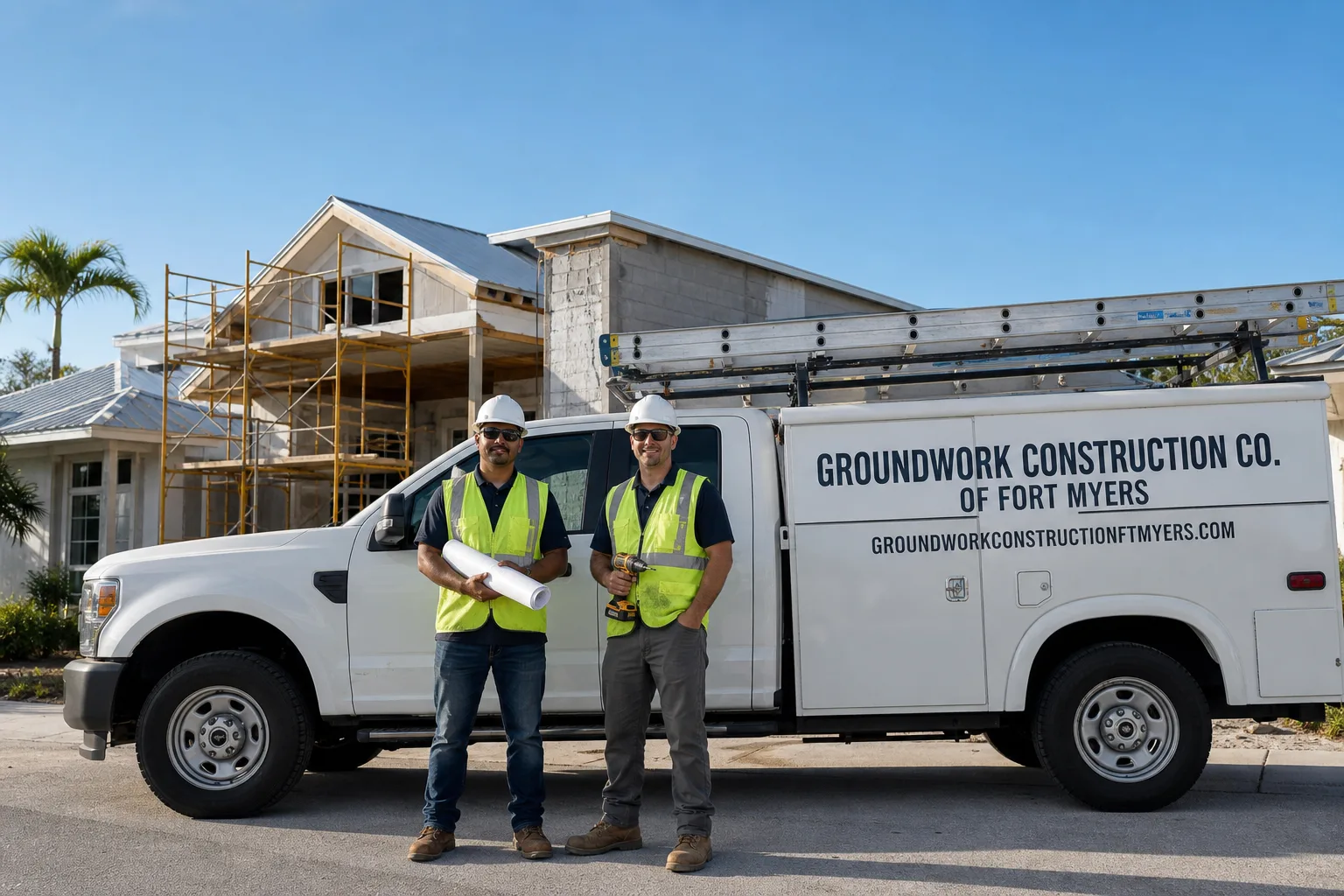
What an Iron Fence Job in Buckingham Actually Looks Like, Start to Finish
An iron fence in Buckingham runs $3,500-$9,000 for most residential lots, and a straightforward perimeter job takes our crew 3-5 working days from first post hole to final walkthrough. That timeline stretches when we’re fencing acreage, working around mature oaks, or tying into existing agricultural structures - all common here. Call (844) 638-7249 for a free on-site estimate with real numbers, not a ballpark.
How We Build an Iron Fence on Your Buckingham Property
Most iron fence projects follow the same five-stage sequence, but Buckingham’s larger lots and agricultural zoning mean the prep stage often carries more weight here than it does in a tight subdivision.
Stage 1: Site walk and measure. We’re on your property with a laser measure and a set of plans, marking where every post lands. On Buckingham’s multi-acre parcels we flag the entire run - corners, gates, transitions to existing livestock fencing, and any grade changes that affect rail height. This takes half a day on a typical one-acre lot, longer on horse properties where fence lines can stretch 400 feet or more. You decide gate placement, swing direction, and whether we’re tying into an existing structure.
Stage 2: Utility locate and permit pull. We call 811 and wait for the paint marks - 48 hours minimum in Lee County. Buckingham’s unincorporated properties sit under county jurisdiction, so permits route through Lee County’s building department. Most standard ornamental iron fences under six feet don’t trigger a full plan review, but any fence exceeding that height, or any gate system with an electric opener, will. We handle the paperwork; you just sign.
Stage 3: Post setting. We dig to 30-36 inches, set each post in concrete, and brace it true. This is the day that determines how straight your fence line looks a decade from now. On Buckingham’s sandy-loam soil - typical for inland Lee County - we go deeper than code minimums because posts settle more here than they do on Fort Myers’ compacted fill lots. We leave the concrete to cure 24 hours before hanging weight on anything.
Stage 4: Rail and picket assembly. Pre-fabricated panels go in fast on flat ground; on Buckingham’s larger rural properties, we’re more often welding sections on-site because the terrain isn’t a neat rectangle. Gate posts get extra reinforcement - a double-drive gate on a horse property takes as long to hang properly as 40 linear feet of fence line. You’ll see the full silhouette by end of day two on most jobs.
Stage 5: Touch-up, gate adjustment, final walk. We grind any rough welds, hit every scratch with matching paint, adjust gates so they swing clean without dragging, and walk the entire line with you. If something’s not square or a gate latch isn’t smooth, we fix it before we leave. Most fence installation crews wrap this stage in two hours on a standard lot; on a Buckingham horse farm with three gates and 300 linear feet, budget a full morning.
The Options You’ll Choose Between
Not all iron fence is the same product, and Buckingham properties tend to pull toward the heavier end of the spec sheet because of wind exposure and animal contact. Here’s what you’re actually deciding:
- Gauge and wall thickness. Residential-grade ornamental iron typically runs 18-gauge to 16-gauge. On Buckingham properties with livestock - horses push against fences daily - we recommend 14-gauge or thicker on the lower rail and pickets. It adds roughly 12-18% to the material cost but eliminates bowing from animal pressure.
- Pre-fabricated panels vs. custom weld-on-site. Pre-fab panels save labor on straight runs with consistent grade. Custom fabrication costs more upfront but fits Buckingham’s irregular lot lines, curved driveways, and transitions from residential yard to pasture without awkward gaps or stub sections.
- Finish: powder coat vs. paint. Powder coating is factory-applied and baked on - it resists Florida’s UV and humidity better than wet paint and typically carries a 10-15 year finish warranty. On-site paint lets us match an existing gate or railing color exactly but requires re-coating every 3-5 years in Southwest Florida’s climate. Most Buckingham homeowners choose powder coat in black or bronze.
- Gate hardware and automation. Manual latch-and-drop-rod gates work fine for pedestrian access. Double-drive gates on rural Buckingham properties often warrant an electric opener - solar-powered units are common here where running conduit across acreage costs more than the opener itself. If automated gates are in play, Lee County requires safety sensors and a separate electrical permit.
- Post caps and finials. Flat caps, ball caps, spear points - mostly aesthetic, but spear-point finials add 3-4 inches of effective height, which matters when you’re trying to keep deer out of a garden plot without exceeding Lee County’s six-foot height threshold.
A full Fence Installation in Buckingham often pairs iron with other materials - we’ve run iron along the frontage for curb appeal and switched to no-climb wire on the back pasture line, all under the same permit. That kind of mixed-material scope is routine here and we price it as one job, not two.
What Iron Fence Costs in Buckingham, FL
Most iron fence projects in Buckingham land between $3,500 and $9,000. A 150-linear-foot rectangle with one walk gate and one double-drive gate in standard 16-gauge powder-coated steel usually hits around $5,200. A 400-linear-foot perimeter with three gates on a horse property with 14-gauge custom-welded panels can push past $9,000 before gate automation.
Here’s what moves the number:
- Linear feet. The single largest variable. Every extra foot adds material and post-concrete costs, not just labor.
- Number and type of gates. A single walk gate adds $400-$700. A 12-foot double-drive gate with reinforced posts adds $1,200-$1,800, more if automated.
- Material thickness. 14-gauge runs 12-18% more than 18-gauge in material cost. For Buckingham properties with horses or wind exposure, it’s often non-negotiable.
- Terrain and access. A flat, open lot is fast and straightforward. A Buckingham acreage parcel with mature oaks, drainage swales, or existing barbed-wire removal adds labor hours. Stump grinding for old fence posts is a separate line item.
- Permit scope. Standard ornamental iron under six feet with manual gates is a straightforward Lee County permit. Add electric gate openers, exceed six feet, or build on a property with conservation easement overlays (common in eastern Buckingham), and the permit review takes longer and costs more.
Every estimate we write is a fixed-price, line-item quote - no change orders unless you change the scope. We separate material, labor, concrete, gate hardware, and permit fees so you see exactly what you’re paying for. The quote includes removal and disposal of an existing fence if there is one. It does not, by default, include stump grinding, major grade correction, or automated gate electrical unless we discuss it during the site walk.
What Buckingham Properties Specifically Do to This Job
Buckingham isn’t a typical Southwest Florida suburb, and an iron fence install here looks different than it does in Fort Myers or Lehigh Acres. Most properties we work on are unincorporated Lee County parcels - some residential, some agricultural, many a hybrid - and that changes the permitting path. Lee County’s building department handles everything, but agricultural-zoned land often triggers a zoning clearance check that standard residential lots skip. We’ve done enough jobs off Buckingham Road and Orange River Boulevard to know which permit counter to start at and which questions get asked about fence height, setback from property lines, and whether the fence serves a residential or agricultural use.
The soil matters too. Buckingham’s sandy-loam top layer drains fast but doesn’t compact the way fill dirt does in a planned subdivision. We over-dig posts deeper - 36 inches instead of 30 - and use more concrete per footing than a standard spec sheet calls for. Posts set at code minimum in this soil start leaning within three years, especially gate posts that take daily torque from a heavy double-drive gate. We learned that the hard way a decade ago and adjusted our standard. The hurricane exposure amplifies everything: Ian’s 2022 wind field tore through eastern Lee County and folded cheap ornamental iron like cardboard. A properly set 14-gauge powder-coated fence with through-bolted rails held up. That’s the standard we build to here, because Buckingham’s slightly elevated position spares it from storm surge but not from 140-mph gusts.
We also see a pattern that’s specific to this community: homeowners replacing old agricultural fencing along the frontage with ornamental iron for appearance while keeping livestock-grade wire or no-climb on the back acreage. It’s a two-material job that requires knowing where the transition points make sense. On properties with horse stalls or pole barns - and Buckingham has plenty of both - we often coordinate the fence line with an existing structure we didn’t build, which means custom field-welding sections rather than dropping in pre-fab panels. Some homeowners ask us to tie the new iron fence into a Patios, Walkways & Pool Decks in Buckingham project at the same time, especially when a pool enclosure and a perimeter fence share a property line and need to meet Lee County’s pool-barrier code together.
Serving Buckingham, FL - Our Local Coverage Area
We’re based in the Buckingham area and know this community well. Use the map below to see our service coverage - if you’re nearby, we can almost certainly help.
Frequently Asked Questions About Iron Fence in Buckingham
A standard residential lot with 150-200 linear feet and one or two gates takes our crew three to five working days, start to finish. The concrete cure day between post-setting and rail-hanging adds 24 hours. Larger Buckingham acreage properties with multiple gates, long runs, or custom-welded transitions to existing agricultural fencing can stretch to seven working days. Permit processing at Lee County is separate and typically takes five to ten business days for a standard ornamental iron fence under six feet - we submit the application at contract signing so permits are ready before our first day on-site.
Yes, Lee County requires a building permit for any fence, including ornamental iron. Fences under six feet with manual gates are usually reviewed administratively and move through the system quickly. Fences exceeding six feet, any gate with an electric opener, or fences on properties zoned agricultural with conservation easement overlays may require additional review. We pull the permit as part of our scope; you shouldn’t have to visit the county building department yourself. Call (844) 638-7249 and we’ll walk you through what applies to your specific parcel.
A properly powder-coated iron fence resists rust for 10-15 years in Southwest Florida, even with Buckingham’s humid summers and daily afternoon thunderstorms. The weak points are field welds and scratches that expose bare steel. We grind and touch up every weld with matching coating during installation, and we recommend an annual hose-down and quick inspection for any nicks from weed trimmers or landscape equipment. If a scratch goes untreated, surface rust can appear within a few months. The frames themselves - unlike hollow aluminum - are solid steel, so rust is cosmetic on a maintained fence, not structural.
Yes, we can custom-fabricate sections to match an existing iron gate, railing, or fence line. We take photos, measure picket spacing and rail dimensions, and either source a matching pre-fabricated panel or weld on-site. Color-matching is the harder part - powder coat colors vary slightly between manufacturers and batches. If an exact color match is critical, we use a wet-paint finish mixed to the existing color and applied on-site. It won’t last as long as factory powder coat, but it’ll match. We’ll give you both options and the honest trade-off before you decide.
Iron fence in Buckingham runs $3,500-$9,000 on most residential jobs; aluminum fence on the same lot typically falls in the $4,000-$10,000 range. Aluminum is lighter, won’t rust, and installs faster, but it’s more prone to denting and doesn’t carry the same structural rigidity as steel. On Buckingham properties with horses or large dogs that lean against fencing, we recommend iron for the lower rail strength. Aluminum makes more sense on purely decorative frontage where nothing pushes on it. We install both, and we’ll give you a side-by-side price on the same layout so you can choose based on your property’s actual use, not a brochure. Some Buckingham homeowners also ask about ADU Design & Permitting in Buckingham around the same time, especially when a new fence line is part of defining the ADU’s separate yard area - we can bundle the site work under one project plan.
Get a Free On-Site Estimate for Your Iron Fence in Buckingham
Every iron fence in Buckingham starts with a site walk because your property isn’t a blueprint - it’s a specific piece of ground with its own soil, grade, and existing structures. Call (844) 638-7249 and we’ll send someone who knows Lee County permitting and Buckingham’s agricultural zoning to walk the line with you, take measurements, and hand you a fixed-price written quote before we leave. No pressure, no ballparks, just the exact number. Built right, backed by our 730-Day Done Right Promise.
Written by Derek Hollenbeck, Owner at Groundwork Construction Co., serving Buckingham and Lee County since 2014.