
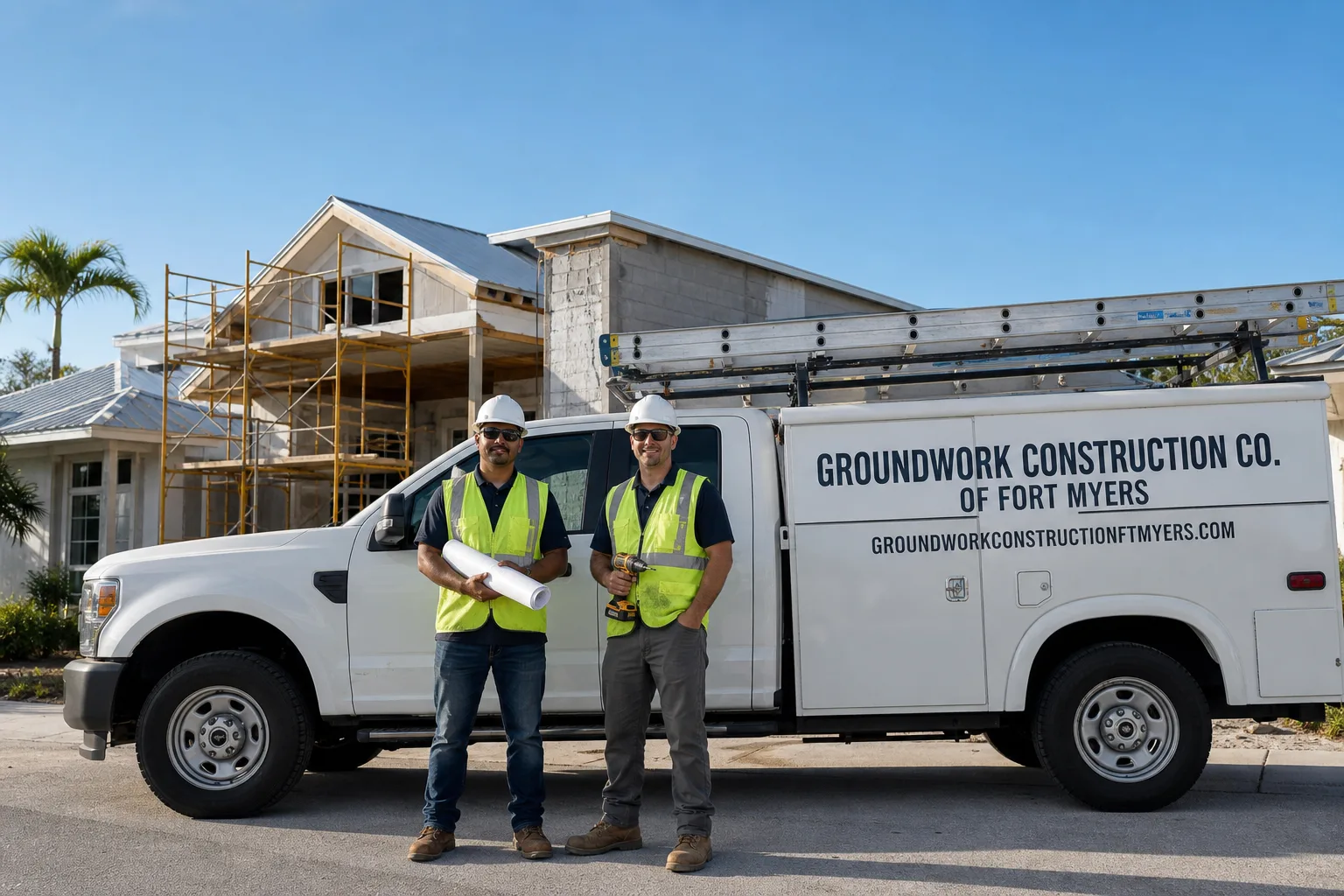
What a Paver Driveway in Sanibel Actually Costs and How Long It Takes
A paver driveway installation in our Sanibel service area typically runs between $7,000 and $18,000, with most standard two-car driveways landing in the $9,500 to $14,000 range. The job usually takes 5 to 8 working days from demolition to final sanding, though Sanibel’s unique permitting timeline adds a prep period that mainland projects don’t carry. If you’re pricing out a replacement for a storm-damaged slab or a new build on an elevated lot, call (844) 638-7249 for a free written estimate with line-item breakdowns, not a single vague number.
How We Build a Paver Driveway on Sanibel - Step by Step
Most homeowners haven’t watched a paver driveway go in before, and the sequence matters because it determines when you can park on it, when decisions need to be made, and what surprises might surface. Here’s the real order of operations we follow on our Specialty Roofing service in Sanibel jobs, with honest durations for each stage.
Day 1 - Demolition and rough grading. We remove the existing driveway surface, whether that’s a cracked post-Ian slab, an old asphalt drive, or the remnants of a gravel parking area. The heavy debris gets loaded into a dumpster that we schedule around causeway traffic patterns so we aren’t burning billable hours sitting on the Sanibel Causeway. Once the site is cleared, we rough-grade the subgrade to the correct slope for drainage, cutting down high spots and filling low ones. By the end of day one, you’ll see bare graded earth where your old driveway sat.
Days 2-3 - Base compaction and edge restraint. This is the part nobody sees after the job is done, and it’s also where cheap bids cut corners. We lay a geotextile separation fabric directly on the graded soil, then bring in 4 to 6 inches of compacted limestone base in lifts. Each lift gets compacted with a plate compactor until it reaches the density that Sanibel’s sandy, salt-saturated soils demand. We set concrete edge restraints along the perimeter so the pavers don’t migrate outward over time, a failure we’ve corrected on plenty of older Sanibel driveways where the installers skipped this step or used flimsy plastic edging that the tropical heat warped within two seasons.
Day 4 - Sand setting bed and paver placement. A one-inch layer of coarse concrete sand gets screeded smooth across the compacted base. Then the pavers go down in the pattern you chose during the estimate walkthrough, whether that’s a herringbone bond for maximum load distribution or a running bond for a cleaner sightline. We cut edge pieces on site with a wet saw to fit cleanly against the border restraints and any curves you’ve designed into the layout. This stage is where the driveway actually looks like a driveway for the first time.
Day 5 - Compaction, joint sand, and final compaction. Once every paver is set, we run the plate compactor across the entire surface to seat the pavers into the sand bed. Then we spread fine polymeric joint sand into the joints and compact again. The polymeric sand hardens when it gets its first water exposure, locking the joints against weeds, ant colonies, and the daily afternoon downpours that define southwest Florida summers. We’ll give you the watering-in instructions and the 24-hour no-traffic window before you pull your car onto it.
Permitting and inspections. This stage doesn’t fit neatly into a day count because it’s driven by Sanibel’s own building department, which maintains a separate permit queue from Lee County. For a paver driveway that exceeds a certain square footage or that changes the impervious-surface ratio on your lot, the city requires a site plan review and a final inspection. We handle the submittal, the plan review comments, and the inspection scheduling so you’re never standing at the permit counter yourself. Expect this to add 1 to 3 weeks to the front end of the project timeline, a reality every experienced Sanibel contractor builds into their schedule.
The Paver Choices You’ll Make for a Sanibel Driveway
You aren’t just picking a color. You’re choosing a material that has to hold up under hurricane-driven rain, salt spray, and the weight of full-sized pickup trucks, all while meeting the architectural standards Sanibel HOAs and the city’s design review board expect. Here are the decisions that actually matter.
- Cobble vs. plank vs. tumbled finish. Traditional cobble-style pavers from brands like Belgard and Tremron give a classic Old Florida look that fits most Sanibel ranch homes and elevated beach cottages. Plank-style pavers with longer linear dimensions read more contemporary and work well on wider driveways where you want the lines to carry the eye toward the house. Tumbled finishes with worn edges look at home against a landscape of sea grapes and cabbage palms, but they’re also the most expensive option per square foot. Expect the finish choice alone to swing the total job cost by $800 to $2,200 on a typical two-car driveway.
- Permeable vs. standard pavers. Sanibel’s post-Ian reconstruction rules have tightened stormwater management requirements, and permeable pavers that let rainwater drain through the joints and into a subsurface reservoir can help you stay under your lot’s maximum impervious-coverage limit. Belgard and Unilock both make permeable product lines rated for vehicular loads. The trade-off is real: permeable systems require a deeper stone reservoir base and more excavation, adding roughly 20 to 30 percent to the base-prep portion of the job. For a homeowner already wrestling with flood-zone elevation requirements on a rebuild, that number matters.
- Color and heat reflectivity. Dark charcoal and deep red pavers absorb and hold Gulf Coast sun, and a Sanibel driveway in August can reach a surface temperature that’s genuinely uncomfortable to walk on barefoot. Lighter sand-toned, shell-toned, and ivory pavers from Unilock’s EnduraColor line or Tremron’s coastal palette reflect more heat and blend naturally with the crushed-shell landscaping common across the island. No paver is cool under a 95-degree Florida sun, but a 15-degree surface-temperature difference is the gap between walking comfortably and hopping to the front door.
- Soldier course borders and inlays. A contrasting border in a darker paver defines the driveway edge and prevents the whole surface from reading as one big rectangle of the same material. We do single and double soldier courses, and some Sanibel homeowners add a compass rose or a small inlaid medallion at the turnaround area. These custom touches add a day of cutting labor and a hard cost of $400 to $900 depending on the complexity, but they’re the difference between a driveway that looks like a parking pad and one that looks intentional.
What a Paver Driveway Costs in Sanibel, FL
A straightforward paver driveway replacement on a standard two-car footprint in Sanibel will typically come in between $9,500 and $14,000, with the full range extending from $7,000 for a compact single-car drive to $18,000 for a wide circular drive with custom borders. Here’s what pushes the number in either direction.
Square footage is the biggest lever. Pavers are priced by the square foot, installed, so a 300-square-foot single-car driveway costs about half of what a 600-square-foot two-car driveway costs, all else held equal. If you’re adding a turnaround, a walkway connector to the front door, or a widened apron at the street, the square footage climbs fast.
Existing surface removal. If we’re pulling out a thick, reinforced concrete slab that survived Ian, the demolition labor and dumpster haul-off will add $600 to $1,200 to the job compared to starting from bare earth on a new build. Asphalt removal is cheaper but still adds a line item. A new-construction driveway on a fresh elevated lot skips this cost entirely.
Base depth and soil conditions. Sanibel’s native sandy soil drains well but needs a deeper compacted base to prevent settling once a loaded vehicle sits on it daily. We typically install 4 to 6 inches of compacted limestone base, but if the subgrade is soft or if you’re in a lower-lying area near the bay side of the island, we may need to over-excavate and bring in additional base material. That adds $1 to $3 per square foot, and we’ll tell you before we start whether your site needs it.
Paver grade and brand. Entry-level concrete pavers from Tremron’s standard line will bring the job in toward the bottom of the range. Mid-tier pavers from Belgard’s Cambridge or Unilock’s Town Hall series fall in the middle. Premium pavers with EnduraColor face mixes or permeable systems push toward the top of the range. Every estimate we write spells out the exact product SKU and cost per square foot so you’re deciding with your eyes open.
What a written estimate includes, and what it won’t. Our estimates include demolition, base material, geotextile fabric, edge restraint, the pavers themselves, joint sand, compaction, and cleanup. They also include the permit coordination and the final inspection walkthrough. They do not include landscaping restoration beyond the immediate driveway footprint, and they don’t include any electrical work for gate openers or post lighting, though we can coordinate those trades if you’re pairing the driveway work with a full Driveway & Pavers in Sanibel project across the front of the property.
How Sanibel’s Rebuilding Reality Changes a Paver Driveway Job
Building anything on Sanibel in the years since Hurricane Ian means working inside a set of conditions that no mainland contractor’s playbook covers. The island’s post-storm reconstruction has rewritten the rules for what a driveway installation looks like, and we’ve learned them by doing the work here, not by driving over the causeway and guessing.
Sanibel maintains its own municipal building department with its own permit queue and its own inspectors. A paver driveway that modifies the impervious-surface footprint on your lot needs site plan approval from the city before we can put a shovel in the ground, and the review clock runs on the city’s timeline, not ours. On lots in the VE and AE flood zones, which cover a large share of the island east of Tarpon Bay Road and much of the bay-facing shoreline, the driveway design has to account for base-flood-elevation requirements so it doesn’t redirect water toward the house or onto a neighbor’s property. We’ve worked through enough of these reviews to know what the plan examiners look for, and we submit site plans that answer their questions before they ask them.
Then there’s the causeway factor. Every load of limestone base, every pallet of Belgard or Unilock pavers, every dumpster for demolition debris enters and exits Sanibel on a single toll road that backs up during tourist season and closes to non-residents during evacuations. Our driveway & pavers crew schedules material deliveries and debris swaps for off-peak windows so your job doesn’t stall waiting on a truck that’s stuck in causeway traffic. It’s a small thing that becomes a big thing if you don’t plan for it.
The homes we work on tell the story. Most of the Sanibel properties we see are either post-Ian elevated new builds on concrete pilings, where the driveway is part of the full property reconstruction, or older slab-on-grade ranch homes from the 1960s and 70s that survived Ian and now need their cracked, heaved driveways replaced. On the elevated builds, the driveway grading has to tie in cleanly to a finished floor that’s now 10 to 14 feet in the air, which means longer runs and more material. On the older slabs, we frequently find that the original driveway had no real base underneath it, just pavers or concrete laid directly on sand, and we’re essentially building a proper driveway from scratch after we clear the old surface. Some of those homeowners are also weighing a larger property reconfiguration and decide to pair the paver driveway with a Garage Conversion ADU in Sanibel while the lot is already torn up.
Serving Sanibel, FL - Our Local Coverage Area
We’re based in the Sanibel area and know this community well, including our Tub-to-Shower Conversion service in Sanibel. Use the map below to see our service coverage - if you’re nearby, we can almost certainly help.
Frequently Asked Questions About Paver Driveways in Sanibel
Yes, in most cases. Sanibel’s building department requires a site plan review for any driveway installation that modifies the impervious-surface coverage on your lot, which a paver driveway almost always does. The review ensures the new driveway doesn’t violate the city’s stormwater management rules or flood-zone requirements. We handle the entire permitting process, from preparing the site plan to meeting the inspector on site for the final sign-off, and we build the permit fees into your estimate upfront. A paver driveway done without a permit creates a problem when you go to sell the house, so the paperwork is non-negotiable.
A properly installed paver driveway with a compacted limestone base and polymeric joint sand should last 25 to 40 years on Sanibel, with individual paver replacement as needed after about 15 to 20 years. The salt air isn’t the enemy of concrete pavers the way it is of steel, but the daily thermal expansion from Florida sun and the seasonal saturation from summer rains mean the base preparation and edge restraint system matter far more than the paver itself. We see failed paver driveways on Sanibel where the surface is fine but the edges have spread by 3 or 4 inches because the original installer used plastic edging that warped. That’s a $2,000 to $4,000 repair on a driveway that should have lasted decades.
Yes, if the original paver is still in production by the manufacturer. We can match Belgard, Unilock, Tremron, and most other major brands by product name and color code. If the paver has been discontinued, we can usually find a near match or suggest a complementary paver for the driveway that reads as intentional rather than mismatched. We’ll bring physical samples to the estimate so you can hold them up against your existing hardscape and see the comparison in Sanibel’s natural light, not under a showroom bulb.
Not unless you change the scope or we uncover a subsurface condition that nobody could have spotted during the estimate. In practice, the two things that can move the number on a Sanibel paver driveway are discovering an old buried slab or debris from a prior demolition under the topsoil, or you deciding mid-project to add square footage or a custom inlay. Both get a written change order with the updated price before we do the work. We price our jobs with fixed line items, not a vague lump sum, so you can see exactly where your money is going from day one. Call (844) 638-7249 if you want to walk through a real estimate for your specific driveway.
You can park on a new paver driveway 24 hours after the final compaction and joint-sand watering. The polymeric sand needs that day to set up, and putting vehicle weight on the pavers before the sand cures can shift the joints and create low spots. We’ll give you the exact time we finish and the exact time you’re cleared to drive on it, so there’s no guessing.
Get a Free Paver Driveway Estimate in Sanibel
Your estimate is a written, line-item price for your specific Sanibel driveway, not a phone number with a round guess. We’ll measure the site, talk through paver options from Belgard, Unilock, and Tremron, and explain what the permitting timeline looks like for your part of the island. Call (844) 638-7249 to schedule the walkthrough. Estimates are free, and you’ll have a real number in your hands by the time we leave. Some Sanibel homeowners use the driveway project as a launch point for a broader property update and ask us to quote a ADU Design & Permitting in Sanibel package at the same visit, which we’re happy to do.
Written by Derek Hollenbeck, Owner at Groundwork Construction Co., serving Sanibel and the surrounding communities.