
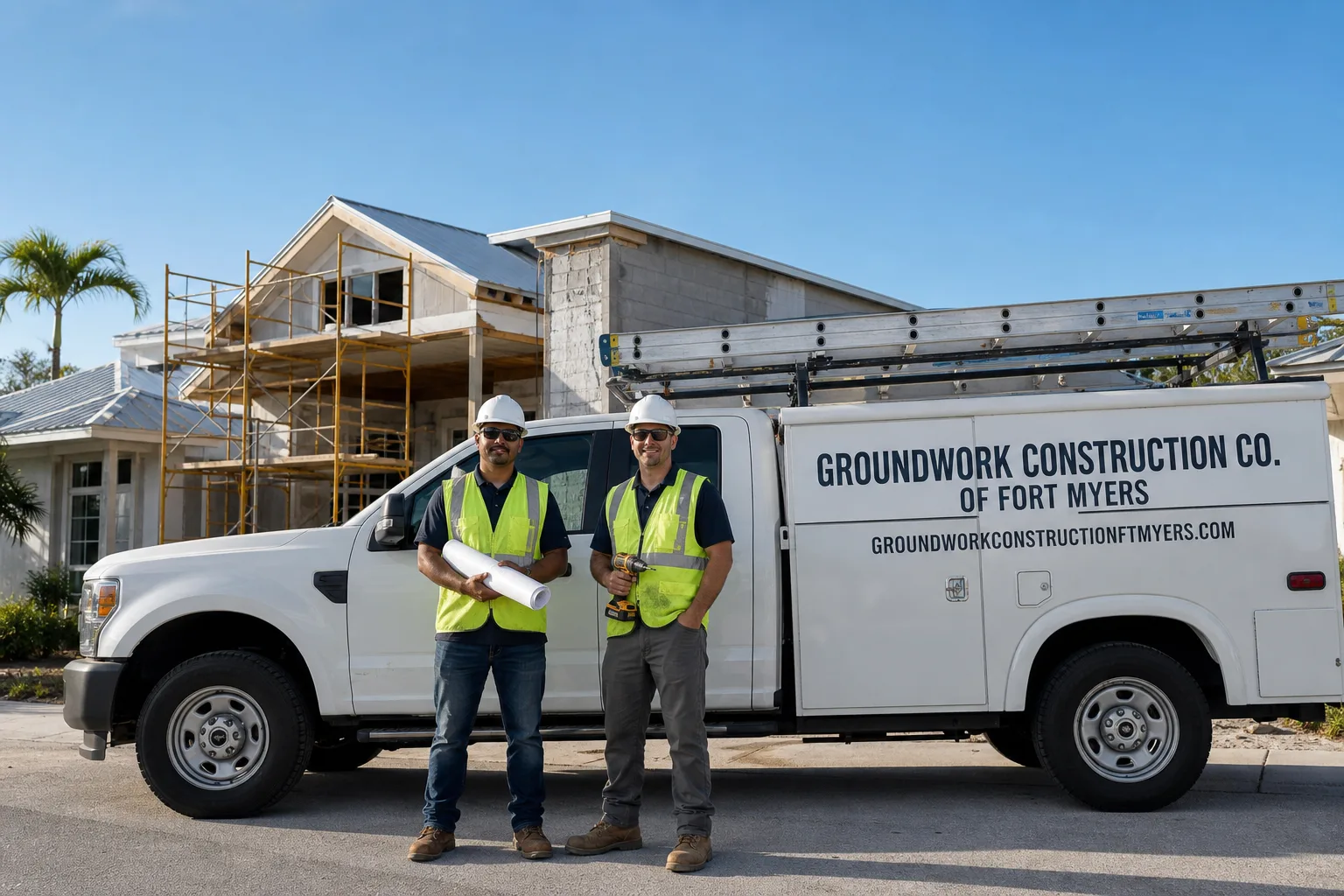
What Emergency Storm Damage Repair Actually Looks Like in Bonita Springs
Emergency storm damage repair in Bonita Springs means stabilizing your home fast, then navigating a rebuild that meets Lee County’s elevated wind and flood codes. For most homes here, especially those near the Imperial River or Estero Bay, you’re looking at $400 to $1,800 for urgent tarping, board-up, and temporary stabilization - and $8,000 to $40,000+ if the storm tore into the roof decking or compromised load-bearing walls. Call (844) 638-7249 and we’ll have a crew at your property within hours, not days, to stop the damage from compounding.
We learned the hard way during Hurricane Ian that Bonita Springs storms don’t just rip off shingles. They drive wind-driven rain sideways into soffit gaps, flood attics through compromised ridge vents, and turn patio screen enclosures into airborne missiles that puncture roof membranes. The repair sequence has to account for all of that - not just the visible hole.
How we triage and repair storm damage on a Bonita Springs home
The first 48 hours make the difference between a roof repair and a full gut-and-replace. Here’s the sequence our crews follow on every storm-damaged home in Bonita Springs.
Stage 1: Emergency stabilization (hours 0-6)
We tarp the breached areas with heavy-gauge polyethylene, secure loose flashing and fascia, and board up any broken windows or doors. This isn’t a repair - it’s triage. The goal is to stop water intrusion immediately. We also document everything with high-resolution photos for your insurance claim before we move a single shingle. A background-checked, uniformed crew arrives in a marked vehicle - you’ll know who’s on your property from the moment they pull up.
Stage 2: Damage assessment and code review (day 1-2)
This stage is uniquely critical in Bonita Springs because of Lee County’s post-Ian substantial-damage review process. We pull your property’s FEMA flood zone designation, check whether any prior renovations triggered elevation requirements, and measure the scope of damage against the 50% substantial-damage threshold. If your home is in Bonita Shores or a pre-2000 Imperial River neighborhood, we flag this immediately - a repair permit that crosses that line can legally require elevating the entire structure to current Base Flood Elevation. Nobody wants that surprise mid-project. We give you a written line-item estimate that accounts for what the code actually demands.
Stage 3: Structural and substrate repair (days 3-7)
Once the assessment is complete and we know we’re clear on the county’s substantial-damage trigger, we replace damaged sheathing, reinforce or sister compromised rafters, and install new underlayment that meets Florida Building Code wind-load requirements for our zone. If the storm exposed the deck, we’re often finding rot in older Bonita Springs homes that wasn’t visible before the shingles came off - 1970s-era plywood in neighborhoods like Bonita Springs Estates doesn’t always survive a direct hit. We address it now, not after the new roofing goes down.
Stage 4: Roofing, flashing, and weatherproofing (days 5-14, depending on scope)
This is where we install the primary roofing material - asphalt shingle, metal panel, or tile - plus all the flashing details that actually determine whether the roof survives the next storm: drip edge, valley metal, pipe boots, and ridge venting. We use GAF and CertainTeed systems backed by manufacturer warranties, installed to the high-wind nailing patterns coastal Florida requires. This is also when we replace any damaged soffit, fascia, or gutter runs that took a beating from wind-blown debris.
Stage 5: Final inspection and insurance close-out (days 14-21)
We walk the property with you, verify every penetration is sealed, and confirm the roof meets the wind-rating standard your insurance carrier needs to see. We provide the completed permit sign-off from Lee County and a full photo package you can submit to your adjuster. If your claim requires supplemental documentation - and most Ian-related claims in Bonita Springs did - we handle that paperwork. The job is only done when the county signs off and your adjuster has what they need.
The materials and choices that matter after a Bonita Springs storm
Not every roofing product makes sense in a coastal Florida storm zone. You need wind-rated materials installed the right way. Here’s what you’ll actually choose between.
- Asphalt architectural shingles with a 130-mph wind rating. This is what goes on the majority of Bonita Springs homes we repair. GAF Timberline HDZ and CertainTeed Landmark are the two lines we spec most often. They hold up well in tropical-storm-force winds when installed with six-nail patterns and full underlayment. If your home is inland of I-75 and not in a Velocity zone, this is usually the cost-effective choice.
- Standing-seam metal roofing. Higher upfront cost, but a 160-mph wind rating and interlocking panel design that sheds wind-driven rain better than shingles. We recommend this for homes in Pelican Landing, Bonita Bay, and anywhere exposed to the open fetch of Estero Bay. The panels install over solid decking with concealed fasteners - no exposed screws to back out over time.
- Tile roofing replacement (barrel or flat concrete tile). Common on Mediterranean-style homes throughout Bonita Springs. Post-storm, the challenge is matching existing tile profiles and color, and ensuring the underlayment beneath meets current code - older tile roofs in Bonita Shores sometimes had only 30-pound felt underneath, which is nowhere near sufficient now. We pull the remaining tiles, replace the underlayment with a high-temperature self-adhered membrane, and reset or replace tile as needed.
- Impact-rated ridge vents and soffit systems. A storm entry point most homeowners overlook. Wind-driven rain enters through standard ridge vents during a sustained blow. We use impact-rated vent systems that close under pressure - a minor upgrade that prevents the attic-flooding scenario we saw across dozens of Imperial River homes after Ian.
What emergency storm damage repair costs in Bonita Springs, FL
Emergency tarping and board-up in Bonita Springs runs $400 to $1,800, depending on the size of the breach and how much of the roof needs covering. A full storm-damage roof repair - replacing damaged decking, underlayment, and roofing material on a section of the roof - typically falls between $3,000 and $8,000. If the entire roof needs replacing after a storm, you’re looking at $8,000 to $20,000 for a standard asphalt shingle roof on an averaged-sized Bonita Springs home, and $15,000 to $40,000 for standing-seam metal. Those are the numbers we write on estimates every week in this market.
What pushes your job toward the high end of those ranges: the percentage of decking that needs replacement (rotten plywood on a 1970s Bonita Springs Estates home adds fast), whether truss or rafter repair is required, how many roof penetrations need re-flashing, and the roof’s pitch and accessibility. A steep second-story roof on a Bonita Bay home takes longer and costs more to work on than a low-slope ranch in Bonita Shores. What’s included in our written estimate: all materials, labor, debris removal, permit fees, and the final inspection. What’s typically not included unless specified: gutter replacement, interior drywall repair from water intrusion, and any structural framing beyond the roof assembly itself. Our pricing is upfront - the number on the estimate is the number you pay, with no change orders unless you ask us to expand the scope.
Call (844) 638-7249 for a free, on-site storm damage estimate. If the numbers above fit the project, ask about 0% financing for 18 months - it covers the repair work while you wait for your insurance settlement.
What Bonita Springs homes specifically do to storm damage work
Bonita Springs is not Naples, and it’s not Fort Myers. The dual housing stock here creates two completely different storm-damage repair scenarios, and getting them wrong costs tens of thousands. In the older concrete-block neighborhoods - Bonita Shores, Bonita Springs Estates, the streets off Terry Street and Dean Street - we’re working on homes built between 1970 and the early 1990s, before Florida’s post-2004 wind codes and the updated flood maps. These homes sit low, many in AE flood zones along the canals that feed the Imperial River. After Ian, the river overtopped its banks catastrophically, and a lot of these properties got hit with FEMA substantial-damage letters. The minute we pull a roofing permit on one of these homes, Lee County checks the cumulative renovation value against the structure’s assessed value. Cross the 50% threshold and the entire house must be elevated. We flag this before we touch the roof.
In the larger planned communities - Pelican Landing, Palmira, Bonita Bay - the homes are newer, built to stricter codes, and generally sit at higher elevations. Storm damage here tends to be wind-driven: ridge vents that failed, tiles that lifted, soffit that pulled away and let water into the attic. The repair is more straightforward, but the HOA architectural review adds time. Bonita Bay’s ARC, for example, has specific requirements for roof material color, profile, and even underlayment visibility that we navigate on every job. We’ve also seen a pattern in these communities where post-storm roof repairs prompt homeowners to roll the Roofing in Bonita Springs work into a broader exterior refresh - replacing faded fascia, upgrading gutters, or adding impact-rated soffit while we’re already mobilized. Some take the opportunity to pair it with Custom Windows & Doors in Bonita Springs, upgrading to impact-rated windows and doors in the same project cycle so the entire envelope is storm-hardened.
The soil here compounds every schedule. Bonita Springs sits on a flat coastal plain with a high water table and expansive marly soils. That’s not a roofing problem per se, but it’s why we can’t just stage materials on soft ground with a loader after a week of summer rain - and why any storm damage that compromised the foundation or grade-level framing near the slab edge requires us to pull in our Roofing crew alongside structural expertise, because water wicking up from saturated soil into stem walls is a real failure mode in this city. If a storm took out a section of fence with the roof, we’ll often handle that concurrently - our Wood Fence in Bonita Springs team can replace wind-damaged fence runs while the roofing crew is overhead, so you’re not living with a torn-up property any longer than necessary.
Serving Bonita Springs, FL - Our Local Coverage Area
We’re based in the Bonita Springs area and know this community well. Use the map below to see our service coverage - if you’re nearby, we can almost certainly help.
Frequently asked - Emergency & Storm Damage in Bonita Springs
We answer calls with a live person, 24/7, and we typically have a crew on-site within hours of your call - not days. The first priority is tarping and board-up to stop water intrusion. A full damage assessment follows within 24-48 hours. The actual repair timeline depends on scope and permitting, but we begin emergency stabilization the same day you reach us at (844) 638-7249.
Most Florida homeowners’ policies cover storm and wind damage, but post-Ian deductibles in coastal Lee County are often percentage-based (2-5% of your dwelling coverage) rather than a flat dollar amount. We provide the photo documentation and line-item estimates your adjuster needs, and we’ll work directly with your carrier to make sure nothing gets missed. Don’t wait for the adjuster to arrive before you tarp - your policy requires you to mitigate further damage immediately, and we can document the condition before we touch anything.
Yes. Emergency tarping and board-up do not require a permit, but any structural repair - decking replacement, rafter repair, full reroof - does. We pull all required permits through Lee County and handle the inspections. In Bonita Springs specifically, we also check whether your property has a pending substantial-damage determination from FEMA before we file, because a new permit can reopen that review and change the scope of what’s legally required.
If the damage is confined to a single slope, the decking is intact, and the underlayment isn’t compromised, a repair is usually sufficient ($3,000-$8,000 in Bonita Springs). If water has penetrated the attic, decking is soft or delaminated, or multiple roof planes are damaged, replacement is the right call ($8,000-$20,000+). We’ll show you photos of what we find and give you an honest recommendation - not an upsell.
If anything we repair or install fails due to our workmanship within two full years - 730 days - we come back and make it right at no cost to you. That covers our installation, not manufacturer defects (which are covered by the GAF or CertainTeed warranty). It’s one of the longest workmanship guarantees in residential construction, and we put it in writing on every storm-damage job in Bonita Springs.
Get a free storm damage estimate in Bonita Springs
Call (844) 638-7249 - you’ll reach a live person who can dispatch a crew for emergency tarping or schedule a full damage assessment at your Bonita Springs home. We’ll walk the property with you, give you a written line-item estimate, and handle the insurance documentation. Estimates are free, pricing is upfront, and every job is backed by the 730-Day Done Right Promise. From foundation to finish line, we make sure the work is built to last and backed in writing.
Written by Derek Hollenbeck, Owner at Groundwork Construction Co., bringing storm-hardened roofing expertise to Bonita Springs homeowners since 2014.