
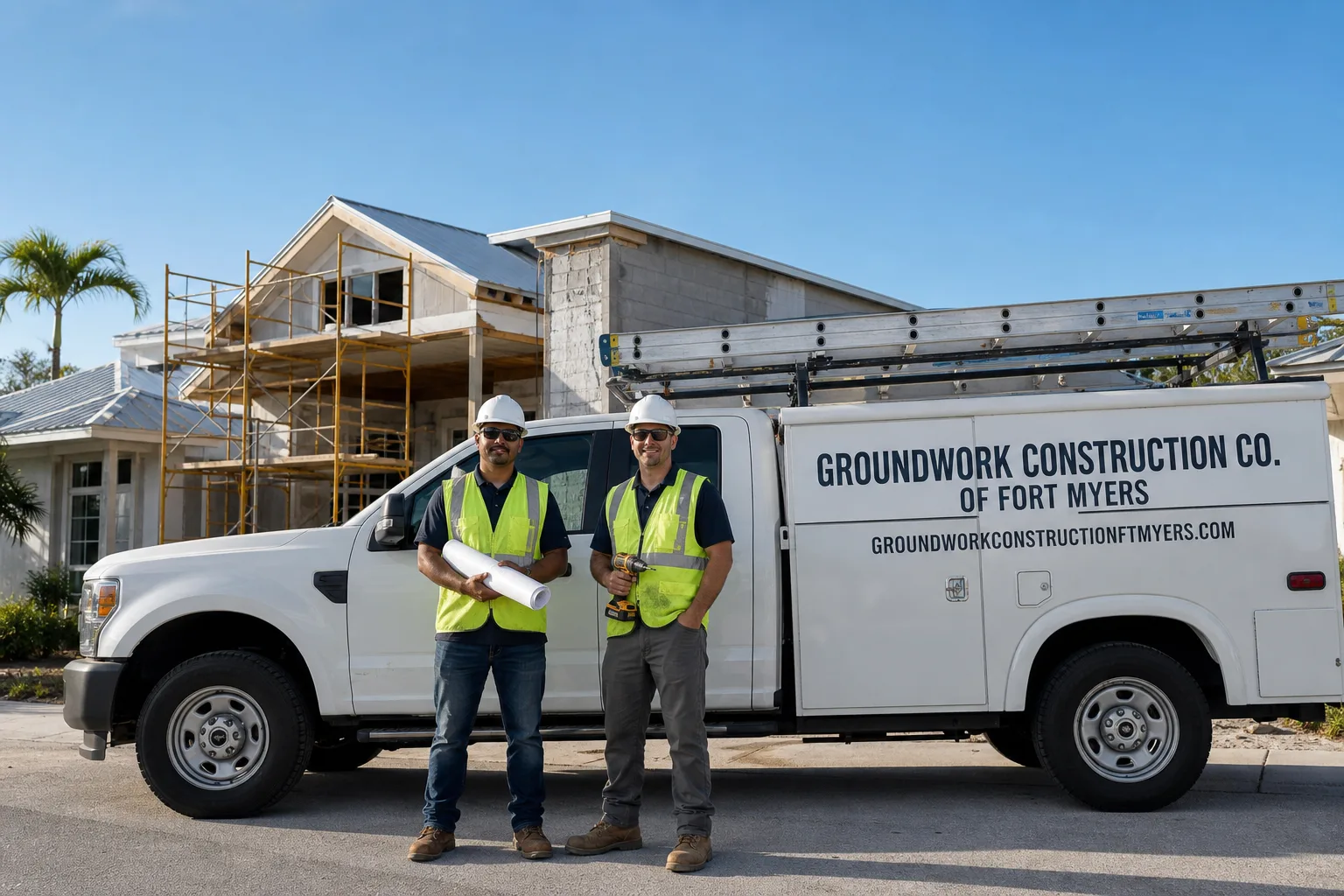
What a Metal Roof Actually Costs and Takes in Charlotte Park
Metal roofing in Charlotte Park runs $15,000 to $40,000 on a typical single-family home, and most jobs take five to seven working days from tear-off to final inspection. The wide range comes down to panel profile, existing deck condition, and whether the home still carries pre-Charley framing that needs retrofit strapping before the new roof goes on. Call (844) 638-7249 for a written line-item estimate, free and no obligation.
How We Take a Charlotte Park Home From Old Roof to New Metal
The process is methodical because metal roofing on a waterfront lot leaves no room for shortcuts. Here’s what the week looks like.
Day 1: Tear-off and Deck Inspection
We strip the existing roofing down to the sheathing and immediately inspect every square foot of the deck. In Charlotte Park, this is where the job’s real scope gets defined. Post-Charley rebuilds often have OSB sheathing that was nailed off rushed and never re-inspected. Pre-Charley homes frequently have spaced-board decking with gaps too wide for modern metal panel fastening patterns. If the deck needs partial replacement or a solid overlay, we document it with photos, update the line items on your estimate, and get your approval before a single panel goes up. This stage takes a full day on most homes, longer on steep canal-front roofs where the pitch and exposure slow the crew down.
Day 2: Underlayment, Flashing, and the Salt-Air Factor
With the deck prepped, we install a high-temperature peel-and-stick underlayment as the primary water barrier. Around every penetration (vents, stacks, skylights) we use mechanically fastened metal flashing, never relying on sealant alone. On homes directly fronting Charlotte Harbor or the canals, we upgrade to stainless-steel fasteners and heavier-gauge flashing at all eaves and gable ends. Salt spray here is relentless. Standard galvanized fasteners that hold up fine five miles inland will show rust bloom within three years on a waterfront lot. This stage runs one to two days; we don’t compress it.
Days 3-4: Panel Layout and Installation
The panels go up in sequence, starting at the eave and working upward. We snap layout lines on the underlayment so every fastener row hits a truss or rafter, not just sheathing. For standing-seam profiles, we use concealed clips that let the panels expand and contract with Florida’s 40-degree daily temperature swings. For exposed-fastener profiles, we use gasketed screws driven to the manufacturer’s torque spec (overdriven screws dimple the panel and void the warranty). Homeowners make one decision at this stage: whether to keep the original soffit ventilation or add continuous ridge venting while the ridge cap is open. We walk you through the trade-off and price difference before we cut anything.
Day 5: Trim, Ridge Cap, and Coastal Tie-Down Verification
The final metal day covers gable trim, ridge cap, hip caps, and all edge details. On any Charlotte Park home permitted after Hurricane Charley, the building inspector will check that the roof-to-wall connections meet the current Florida Building Code uplift requirements. If your home was built before 2004 and never retrofit, we flag whether the existing hurricane straps are adequate or need supplemental ties before the inspector arrives. That conversation happens early in the job, not after the panels are on.
Days 6-7: Final Inspection and Close-Out
The Charlotte County building inspector walks the roof, checks the fastener pattern and flashing details, and signs off. We then do a full property sweep with a magnetic roller to catch any stray fasteners or metal shards. You get a close-out packet with the panel manufacturer’s warranty registration, the underlayment product sheet, and our 730-Day Done Right Promise in writing: if it’s not done right, we make it right.
The Options You’ll Choose Between
Metal roofing is not one product. The profile, gauge, and finish each change the look, the cost, and how the roof ages on a salt-facing lot.
- Standing seam vs. exposed fastener. Standing seam uses concealed clips and no exposed screw heads. It’s the premium choice: cleaner lines, zero fastener maintenance for decades, and the expansion-contraction movement happens silently on the clips. Exposed-fastener panels cost less upfront but the gasketed screws eventually need retorquing or replacement, especially in Charlotte Park’s salt air. On canal-front homes, we recommend standing seam at the bare minimum for the roof faces that catch direct harbor wind.
- 24-gauge vs. 26-gauge steel. Twenty-four-gauge is thicker, stiffer, and better at resisting oil-canning (the wavy distortion visible in certain light). Twenty-six-gauge is lighter and less expensive. For a Charlotte Park roof with a steep pitch and high wind exposure, 24-gauge is worth the upgrade. On a low-slope porch roof or a carport, 26-gauge does the job.
- Kynar 500 vs. SMP paint finish. Kynar 500 (PVDF) is the top-tier finish: it holds color and gloss for decades, resists chalking from UV exposure, and stands up to salt spray without fading to chalky white. SMP (silicone-modified polyester) is a mid-grade finish that costs less but will show its age sooner on a waterfront home. If you’re planning to stay in the house ten-plus years, the Kynar premium pays for itself in appearance and resale.
- Panel profile and rib pattern. You can choose a clean flat-pan standing-seam, a beaded or striated face for subtle texture, or a more pronounced trapezoidal rib. This is an aesthetic decision, but it affects walkability for future maintenance and how the roof sheds debris from Charlotte Park’s overhanging oaks and pines. A wider flat pan catches less leaf litter than a tight-ribbed profile.
What Metal Roofing Costs in Charlotte Park, FL
A metal roof in Charlotte Park ranges from $15,000 on a small single-story home with a simple gable roof and an exposed-fastener panel to $40,000 or more on a large canal-front home with a standing-seam profile, multiple hips and valleys, and a deck that needs substantial replacement.
Five factors push the number toward the high end:
- Roof size and complexity. A 1,400-square-foot ranch with two roof planes is the low end. A 2,800-square-foot home with dormers, hips, valleys, and a steep pitch requires more panel cuts, more trim, and more labor hours. Every valley and penetration adds flashing time.
- Deck condition. Homes built before Hurricane Charley often have 1×6 spaced board decking that requires a solid overlay before metal can go down. That adds $1,500 to $4,000 depending on square footage. Decks with water damage or termite-compromised sheathing add more.
- Panel profile, gauge, and finish. Exposed-fastener 26-gauge with an SMP finish is the budget end. Standing-seam 24-gauge with Kynar 500 is the high end. The difference on an average Charlotte Park home can be $8,000 to $15,000.
- Fastener and flashing upgrades for salt exposure. On waterfront lots, we use stainless-steel fasteners and heavier-gauge flashing at all eaves and penetrations. This adds $1,200 to $3,000 depending on roof perimeter length but it’s the single best investment in roof longevity here.
- Code-compliance retrofit scope. If the home’s existing roof-to-wall connections don’t meet current Florida Building Code uplift standards, adding supplemental hurricane ties or strapping before the roof goes on can add $2,000 to $5,000. We only know this after the tear-off, and we show you photos and a line item before we proceed.
Every estimate we write is a fixed-price, line-item document. What’s included: tear-off and disposal of the old roof, deck prep and any overlay, underlayment, all flashing, the panels and trim, fasteners, permit fees, and the final inspection. What’s not included unless we discuss it upfront: soffit or fascia replacement, gutter work, or skylight replacement. If we find deck damage after tear-off, you get a change-order line item with photos and pricing before we spend a dollar of your money. No surprises.
What Charlotte Park Homes Specifically Do to This Job
Charlotte Park’s housing stock was built mostly between the 1960s and the early 1980s, then absorbed a direct hit from Hurricane Charley in 2004. The result is a neighborhood where no two roofs tell the same story. Some homes were rebuilt completely under the post-2004 Florida Building Code with proper hurricane straps and solid sheathing. Others had insurance-funded roof-overs done fast and cheap: shingles nailed over damaged decking, straps installed backward, fastener patterns that never met the wind-uplift tables. We open a roof on Appleton Boulevard or any of the canal-front streets and we do not know what we’ll find until the old layers are off.
That code-compliance audit is not optional. Charlotte County inspectors check roof-to-wall connections on every re-roof permit in a high-wind zone, and Charlotte Park’s location on the open water of Charlotte Harbor puts it squarely in that zone. If we find the existing strapping is undersized or missing, we stop, document it, and price the correction. This is not a scope-creep tactic, it is the reality of working in a neighborhood where post-storm repairs were often rushed and under-permitted. A metal roof’s 40-to-50-year lifespan only holds if the structure underneath it can handle a Category 3 wind load. In Charlotte Park, that question gets answered honestly before the panels go on.
The salt-air factor is equally real. Homes on the harbor side of the neighborhood eat through standard fasteners and thin-gauge flashing faster than anywhere else we work in Charlotte County. We spec stainless-steel fasteners and Kynar-finished panels as the baseline here, not the upgrade. It costs more on day one and costs far less over the life of the roof. Homeowners who plan to sell within five years sometimes choose the budget finish, and we’ll install it correctly either way. But for anyone staying long-term on a waterfront lot, the math favors the premium spec.
This is also a neighborhood where a metal roof often pairs with other exterior upgrades. We regularly see homeowners combine a new roof with Impact Windows & Doors in Charlotte Park to bring the entire exterior envelope up to current wind-mitigation standards. On homes getting a full exterior overhaul, a metal roof is sometimes the first phase of a broader Roofing in Charlotte Park project that includes soffit, fascia, and gutter replacement. Our Roofing crew coordinates the sequencing so no trade steps on another’s work.
Serving Charlotte Park, FL - Our Local Coverage Area
We’re based in the Charlotte Park area and know this community well. Use the map below to see our service coverage - if you’re nearby, we can almost certainly help.
Frequently Asked - Metal Roofing in Charlotte Park
Five to seven working days is the standard window for a complete tear-off and metal installation on an average single-family home in Charlotte Park. Tear-off and deck inspection take one full day. Underlayment and flashing run another one to two days. Panel installation takes two days. Trim, ridge cap, and edge detailing take one day. The final day is reserved for the building inspection and site cleanup. Weather delays can stretch the schedule, and homes with extensive deck repairs or complex roof geometries add a day or two.
Yes. A re-roof permit is required by Charlotte County for any full roof replacement, including metal. The permit triggers an in-progress inspection after the underlayment is on and a final inspection once the panels, trim, and ridge cap are complete. The inspector checks fastener patterns, flashing details, and roof-to-wall connections for wind-uplift compliance. We pull the permit as part of the job and it’s included in your estimate. Budget roughly $200 to $500 for permit fees depending on the project valuation.
We do not recommend it in Charlotte Park. A roof-over hides deck damage, skips the code-compliance audit on the existing strapping, and adds dead load the original trusses were not designed to carry, particularly on pre-Charley homes that already have marginal framing. Some contractors will do it to save a day of tear-off labor, but we will not. The deck is the foundation of the roof, and on a metal system meant to last 40-plus years, we need to know what’s underneath. Tear-off also gives us the only honest opportunity to check and correct the hurricane tie-downs.
A metal roof in Charlotte Park runs $15,000 to $40,000. A comparable asphalt shingle roof on the same home typically runs $8,000 to $20,000. Metal costs roughly twice as much upfront and lasts two to three times as long, with lower maintenance and better wind resistance. On a waterfront lot where salt air cuts a shingle roof’s life to 15 years, the lifetime cost comparison tilts heavily toward metal. Call (844) 638-7249 and we’ll price both options for your specific roof so you can make the decision with real numbers.
Only if the deck inspection turns up damage or code deficiencies we could not see before tear-off, and only with your approval. Every Groundwork Construction Co. estimate is a fixed-price document. If we find rotted sheathing, undersized hurricane straps, or a deck that needs an overlay, we stop, take photos, write a specific change-order line item, and get your sign-off before proceeding. You never get a surprise bill at the end. The 730-Day Done Right Promise covers the workmanship on everything we install.
Many Charlotte Park homeowners combine a metal roof with Window Replacement in Charlotte Park when they’re upgrading the exterior, and our team sequences both jobs so the roof and window flashing tie together correctly.
Get a Fixed-Price Estimate for Metal Roofing in Charlotte Park
If you’re weighing a metal roof on your Charlotte Park home, start with real numbers. Call (844) 638-7249 to schedule a free on-site estimate. We’ll walk the roof, discuss panel options, check the existing strapping where accessible, and deliver a written line-item quote that spells out every dollar before you commit. A live person answers the phone, day or night, and the estimate costs you nothing.
Written by Derek Hollenbeck, Owner at Groundwork Construction Co., serving Charlotte Park with upfront pricing and the 730-Day Done Right Promise.