
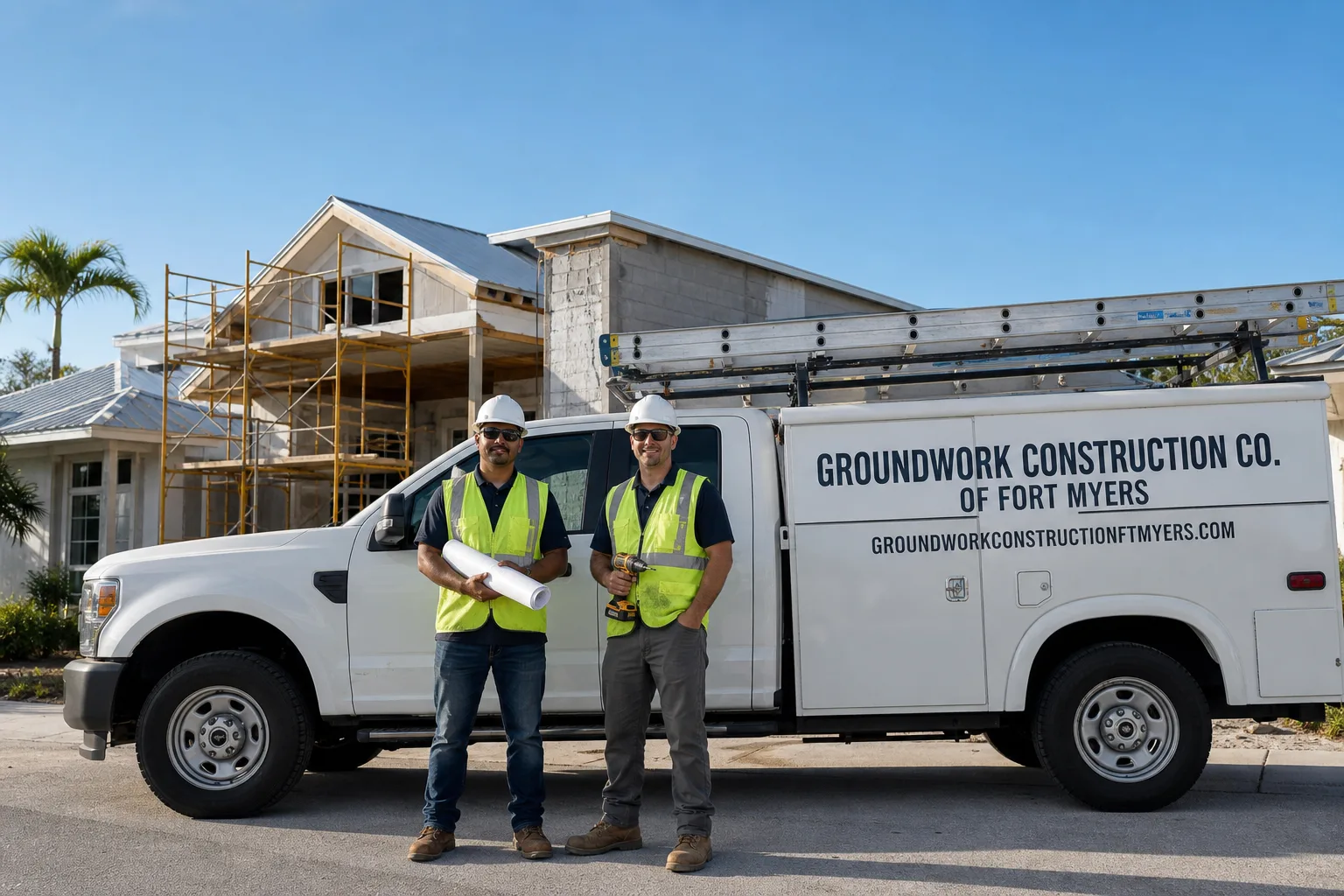
What Backsplash, Tile, and Flooring Work Runs in Punta Gorda - and How Long It Takes
Backsplash, tile, and flooring work in Punta Gorda homes typically costs between $4,500 and $18,000, depending on whether you’re tiling a single backsplash or completely reflooring a large open-concept layout, and most of these projects wrap in 3 to 5 working days. That includes demolition, surface prep, installation, grouting, and final sealing. Call (844) 638-7249 to schedule a free on-site estimate and get a fixed, line-by-line number for your specific floorplan - no surprises and no change-order games once we start.
We say this up front because the tile and flooring category creates more price-per-square-foot confusion than nearly any other remodeling line. A decorative mosaic backsplash behind a range might cost $2,200 while a full 400-square-foot porcelain-tile floor replacement through a canal-front living area in Punta Gorda Isles can land at $15,000 once you add subfloor remediation, demo, and threshold transitions. Both are tile; only one is an afternoon. We walk you through exactly where your project sits on that spectrum when we first look at the space. If the work is part of a full Kitchen Remodeling in Punta Gorda, our team can coordinate the backsplash and floor tile with countertop and cabinet install dates so you won’t lose weeks waiting between trades.
How We Handle Tile and Flooring Work - From Demo to Sealer
The sequence is straightforward, but skipping even one stage - usually the prep work - is what causes tile to crack or grout to fail in the first year. Here’s how we run every tile and flooring project in Punta Gorda:
1. On-site measure, moisture check, and material selection (1-2 hours). We measure every wall and floor plane, test the substrate with a moisture meter, and walk you through your material options right there. You’ll pick tile size, layout pattern, grout color, and trim profile during this visit. If you haven’t finalized a tile yet, we’ll leave a sample range and come back - no pressure, because we need you to live with the choice before thousands of square feet get installed. This is also when we check whether the concrete slab or subfloor needs leveling compound, crack-isolation membrane, or additional plywood underlayment, all of which we’ll build into the written estimate before we ask you to sign.
2. Surface demolition and debris removal (half-day to 1 day). We protect adjacent floors, counters, and cabinets with ram board and plastic sheeting, then remove the existing backsplash, tile floor, or sheet flooring down to the substrate. For bathrooms, we often pull baseboards and the toilet to get a clean tile edge. Homeowners working with us on a broader project often use this window to also get Vanities, Tile & Fixtures in Punta Gorda addressed - swapping a vanity or light fixture while the room is already stripped saves a second round of dust. All demo debris is hauled same-day; we don’t leave piles of broken tile in your driveway overnight.
3. Substrate prep - patch, level, seal, and membrane (1-2 days). This is the step no one should rush. For floors, we fill low spots with self-leveling compound, float any high areas, and apply a crack-isolation membrane to prevent future hairline fractures from migrating up through the tile. For backsplashes, we repair drywall cuts, square the corners, and sometimes install a waterproof backer board if the area sits behind a sink or cooktop. In Punta Gorda’s humidity, we also run a dehumidifier for 12-24 hours before laying any tile - that helps the thin-set cure slowly and bond completely, which directly reduces grout cracking years later.
4. Tile and flooring installation (1-3 days). Our crew lays out the pattern dry first so you can confirm the layout, especially around windows, islands, and sightlines from main entries. We use large-format tile mortars for planks and mosaics when the job calls for it, and every piece is back-buttered for full coverage. Floors go in with a minimum 1/8-inch expansion gap at the perimeter that gets hidden by baseboard, which matters enormous in Punta Gorda slabs that expand and contract with seasonal groundwater changes. Grouting follows 24 hours later.
5. Grout, seal, clean, and walk-through (1 day). Once grout cures, we apply a penetrating sealer to both grout joints and (for natural stone) the tile face itself. The crew does a full cleanup, reinstalls baseboards and any fixtures we removed, and then walks you through the finished space with a moisture meter and a straightedge so you can see the flatness and bond for yourself. Our 730-Day Done Right Promise covers every inch of the install: if grout cracks or a tile loosens, we come back and make it right.
The Options You’ll Choose Between - Tile, Backsplash, and Flooring Decisions
This isn’t like picking a paint color. Every tile choice has trade-offs in durability, slip-resistance, cleaning requirements, and cost. Here’s what we walk every Punta Gorda homeowner through before ordering material:
- Porcelain vs. ceramic floor tile. Porcelain is denser, less porous, and holds up better against the sand and moisture tracked in from boat docks and pool decks around Punta Gorda Isles. It costs $1-$3 more per square foot than ceramic before labor, but on a 300-square-foot floor that’s $600-$900 well spent. Ceramic is perfectly fine for backsplashes and dry areas, especially since it’s easier to cut around outlets and cornice moldings.
- Large-format tile vs. standard 12×12 or 12×24. Large-format planks (24×48 and bigger) create fewer grout lines and a more monolithic look - great for open-plan living rooms that flow into kitchens. The trade-off is that the slab has to be dead flat, meaning prep costs can run $400-$700 higher if we need to float the whole floor. Standard-format tile is more forgiving on older Punta Gorda slabs that have settled slightly over 40 or 50 years.
- Natural stone (travertine, marble, slate) vs. porcelain wood-look plank. Natural stone looks irreplaceable. It also needs annual sealing and is softer - dropped cookware can chip it. Porcelain wood-look plank gives you the visual warmth of timber without warping from Florida humidity, and it’s the most popular flooring choice we install today. Travertine is a mainstay in upgraded Punta Gorda homes with a Mediterranean or Old Florida design vocabulary, especially with a filled-and-honed finish that won’t trap sand.
- Glass and mosaic backsplash sheets. These are mounted on mesh backing and go up fast. The cost driver is the tile itself: a basic subway ceramic sheet might cost $6 per square foot for the material, while a hand-cut glass mosaic with metallic accents can run $30-$40 per square foot before you pay a single labor dollar. We help you price-compare before you fall in love with a sample.
- Grout type and color. Epoxy grout is stain-proof and never needs sealing; it’s our default for kitchen backsplashes and shower floors. Cementitious grout is less expensive and easier to work with on large floors, and we seal it twice. Grout color - matching vs. contrasting - changes the whole look as much as the tile itself does, so we always lay out sample joints in two colors.
We don’t warehouse generic tile and push what’s in stock. Our team will order from your chosen manufacturer - Daltile, Marazzi, or a special-order line - and manage the lead time so material arrives the week before your install date, not the month before it clogs your garage. For homeowners adding a Tub-to-Shower Conversion in Punta Gorda at the same time, coordinating tile orders across both spaces saves freight and keeps the project on one timeline.
What Backsplash, Tile, and Flooring Costs in Punta Gorda, FL
We quote backsplash, tile, and flooring work in Punta Gorda with a fixed-price, line-item estimate, and the range we typically see is $4,500 to $18,000. The number moves based on five factors:
Total square footage. Flooring scales almost linearly with area. A 45-square-foot backsplash is materially different from 600 square feet of continuous floor tile through a great room, kitchen, and hallway. More square feet means more material, more thin-set, and more labor days.
Substrate condition. If we pull up old sheet vinyl and find water-damaged particleboard or an uneven slab with a 3/8-inch dip across the room, our prep scope increases. That’s not a surprise we hide; our estimator shows you the meter readings and the level during the walkthrough so you see exactly why it matters.
Tile grade and availability. A standard 12×24 porcelain plank runs $3-$5 per square foot. A large-format rectified tile or a through-body porcelain rated for commercial wear sits at $7-$12. A hand-painted artisan backsplash tile can push past $40 per square foot for the material alone. The labor to install a $40 tile and a $5 tile is nearly identical; the budget difference is almost entirely in the product you choose.
Pattern complexity. Straight-lay or running-bond patterns are standard and efficient. Herringbone, Versailles, or diagonal layouts require significantly more cuts and layout time, which adds labor hours - and that’s especially true on floors with multiple doorways, closet returns, and fireplace hearths to work around.
Trim, transitions, and edges. Schluter profiles, bullnose, threshold transitions between tile and wood, and custom-cut edges around arched openings or curved walls all add time and material line items. We’ll list every transition separately in the estimate so you can decide which ones matter and which can be simplified.
What’s included in every estimate: demolition and debris haul-away, substrate prep and leveling, all setting materials (thin-set, grout, sealer, crack-isolation membrane where specified), tile installation labor, and our 730-Day Done Right Promise. What’s typically priced separately: the tile material itself (since it varies so widely), custom accent-work or inlays, and plumbing-fixture reset if we removed a toilet or pedestal sink for floor tile. Every dollar lands on paper before we start. No one from our crew will walk up mid-job and tell you the slab “needed more work than we thought.”
What Punta Gorda Homes Specifically Do to This Job
The single most important fact about tiling in Punta Gorda is that most of the city’s housing stock was rebuilt en masse after Hurricane Charley’s direct Category 4 landfall in August 2004, meaning thousands of homes sit on post-2004 slabs that are now 18 to 20 years old. Those slabs were poured to the then-current Florida Building Code, but two decades of seasonal groundwater shifts, occasional storm-surge saturation, and the natural settling of coastal fill mean we routinely open a floor in Punta Gorda Isles or Deep Creek and find micro-fracturing that would telegraph straight through new tile if we skipped the crack-isolation membrane. We don’t skip it - it’s standard in our prep protocol for every concrete-slab floor we tile in this city.
Permits are the other Punta Gorda variable. Flooring replacement alone does not trigger a building permit in Charlotte County, but if your tile work extends into a wet area - a tub surround, a shower floor, a bathroom that’s part of a larger renovation - the waterproofing and plumbing-stub requirements pull the project into permit territory. Our team pulls those permits as the contractor of record, schedules the inspection, and stands there with the inspector until the job passes. For Punta Gorda’s waterfront neighborhoods, certain HOAs (particularly in the historic district and parts of Punta Gorda Isles) also have architectural-review requirements for exterior-visible elements, though interior tile and flooring is rarely restricted. We’ve worked with enough local associations to know which ones need a heads-up and which don’t.
The Peace River and Charlotte Harbor proximity means ambient humidity is a permanent fact of life, and that directly affects cure times. We run dehumidification equipment during thin-set curing on every floor installation between May and October, when the dew point hovers above 70 degrees for weeks straight. Rushing grout in that environment leaves it chalky and weak - a failure we see on homes that were tiled quickly by out-of-market crews that didn’t account for Southwest Florida’s moisture load. If you’re pairing flooring with bath tile or a shower replacement, our kitchen remodeling experience also means we understand how tile interfaces with cabinets, appliance openings, and island overhangs - those transitions are where you either see craftsmanship or you don’t.
Serving Punta Gorda, FL - Our Local Coverage Area
We’re based in the Punta Gorda area and know this community well. Use the map below to see our service coverage - if you’re nearby, we can almost certainly help.
Frequently Asked - Backsplash, Tile, and Flooring in Punta Gorda
A standard kitchen backsplash is typically a one-day install once surface prep is done. A full floor-tile project across 300-500 square feet with demo and substrate work runs 3 to 5 working days from start through final seal. Larger jobs, multiple rooms, or patterns like herringbone add a day or two. We’ll give you a day-by-day schedule written into your estimate so you know exactly when the crew arrives, when you can walk on the floor, and when furniture goes back. For an exact timeline on your specific footprint, call (844) 638-7249.
For dry-area flooring replacement and backsplashes, no. If the tile work is in a shower, tub surround, or any wet area that involves waterproofing or plumbing-fixture reset, a permit is typically required in Charlotte County. We pull every required permit as part of our scope, and the cost is included in the line-item estimate. You won’t deal with the building department directly unless you want to.
For backsplash installation, yes - we tile right up to the underside of the upper cabinets and down to the countertop deck, cutting clean lines around outlets and window casings along the way. For floor tile in a kitchen, the standard approach is to install tile under the appliance bays (range, dishwasher, refrigerator) and butt it to the cabinet toe-kicks, though in a full Kitchen Remodeling in Punta Gorda we’d typically remove and reset base cabinets to tile the entire footprint wall-to-wall. We’ll review both options at the estimate so you understand the finished look of each.
Tile flooring installation in Punta Gorda, including thin-set, grout, sealer, and crack-isolation membrane, typically runs $8-$15 per square foot installed, plus the tile material. Luxury vinyl plank with a quality underlayment typically lands at $5-$9 per square foot installed. Tile lasts 30-50 years with proper care and adds more resale value in Florida markets where buyers expect it; vinyl plank is quieter underfoot and faster to install but has a 15-20 year service life before it shows wear at seams. We install both and can show you side-by-side samples with real installed pricing at the estimate.
Every tile and flooring installation we do is backed by our 730-Day Done Right Promise. If grout fails, a tile cracks, or lippage develops beyond industry standard within two years, we correct it. Tile manufacturers carry their own separate warranties on material defects, and we’ll register those for you at completion. No fine print, no subcontractor runaround - if it isn’t right, we make it right. Call (844) 638-7249 to schedule an estimate and see the warranty language in writing.
Get a Fixed-Price Estimate for Backsplash, Tile, and Flooring in Punta Gorda
Your next step is a free, no-pressure estimate at your home in Punta Gorda. We’ll measure every surface, check the substrate with a moisture meter and a level, walk you through tile options with real sample boards, and hand you a written, line-by-line price before we leave. Calls are answered by a live person 24/7 - no voicemail, no waiting until Monday morning. Call Derek Hollenbeck and the team at (844) 638-7249 or stop by our Fort Myers office to start your estimate. Upfront pricing, no surprises, and a 730-Day Done Right Promise on every square foot we install.
Written by Derek Hollenbeck, Owner at Groundwork Construction Co., bringing honest, fixed-price tile and flooring work to Punta Gorda homeowners since 2014.