
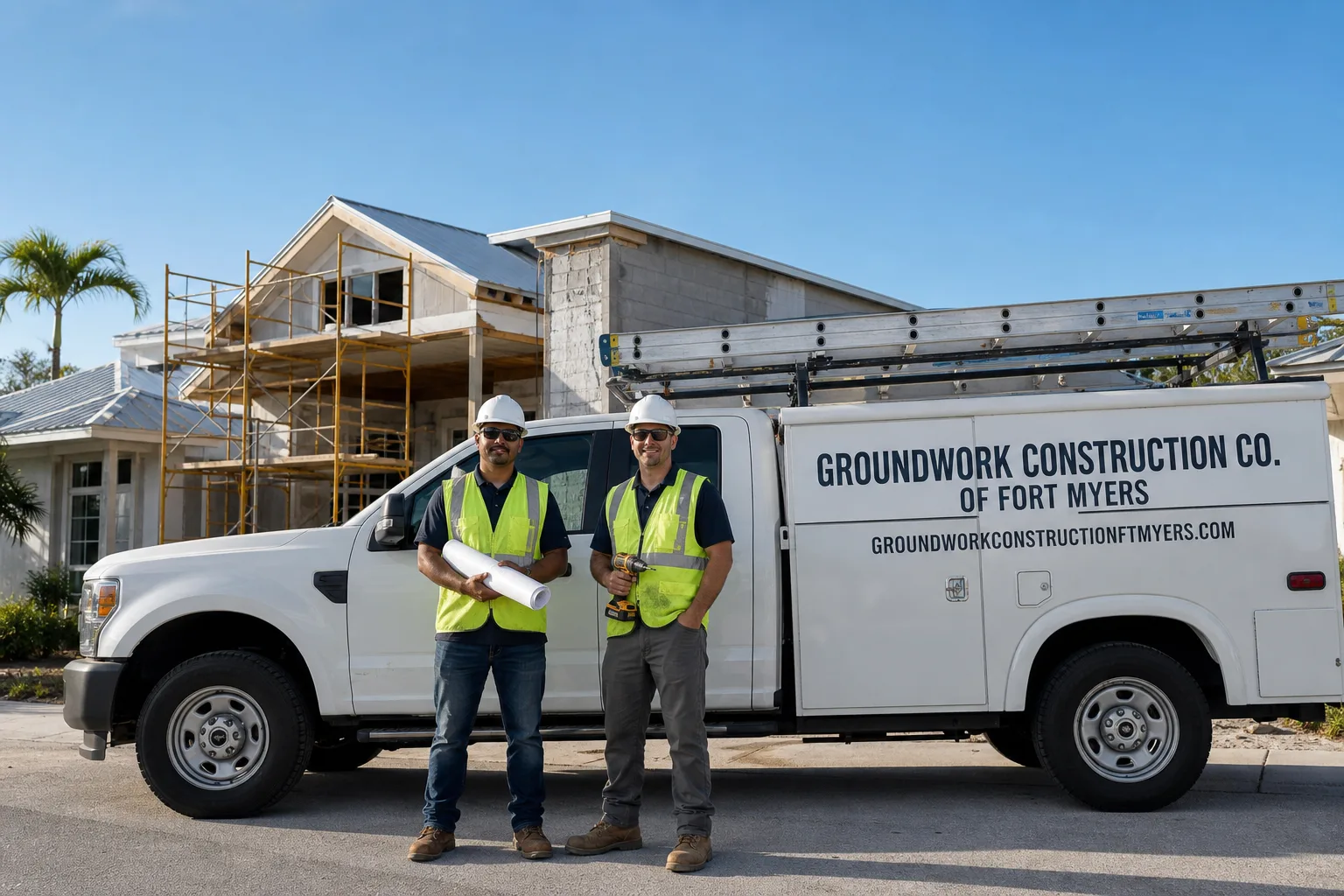
Tile roofing in Punta Gorda usually costs $8,000 to $45,000 and takes one to three weeks - but the number moves a lot depending on whether you’re reroofing over original 2004-era tile or doing a full tear-off on a Punta Gorda Isles waterfront home with extra underlayment and flashing requirements
Tile roofing in Punta Gorda isn’t a one-size job. You might need a handful of cracked barrel tiles replaced after a summer squall, or you might be facing a full underlayment failure on a 20-year-old roof where the tile field looks fine but the waterproofing beneath it is shot. The range is real: a small repair runs $600 to $2,500, while a complete tile roof replacement on a 2,200-square-foot canal-front home with high-wind fastening and secondary water barrier runs $30,000 to $45,000. The tile itself can last 50 years or more - it’s what’s underneath that Punta Gorda homeowners actually wrestle with. Call us at (844) 638-7249 and we’ll walk your roof with you, no guesswork.
We write this as the crew that’s been on more Punta Gorda tile roofs than we can count. Derek Hollenbeck runs our roofing division, and the standard he set is simple: if the underlayment isn’t right, the tile doesn’t go down. Period. That one rule avoids more callbacks than any warranty ever could.
How we handle a tile roofing job in Punta Gorda - from first call to final inspection
Tile roofing follows a sequence that surprises homeowners who’ve only done asphalt. The tile is the armor, not the waterproofing. The real work - the part that keeps your ceiling dry - is the underlayment system, and in Punta Gorda’s wind-driven rain climate, that system has to be bulletproof. Here’s how we stage it.
1. On-site inspection and core decisions (Day 1, 60-90 minutes). We’re on the roof, not looking at satellite photos. We check tile condition, underlayment adhesion, flashing integrity at chimneys and parapet walls, and fastener corrosion - a common problem on post-Charley builds where original galvanized nails are now rusting from salt air. We take moisture readings in the attic. By the time we step off the ladder, you’ll know whether this is a repair and re-bed job or a full replacement, and you’ll have a written price. No “we’ll send something over next week.” Derek’s rule is the estimate gets handed to you before the truck leaves.
2. Material selection and permit submission (Days 2-5). If we’re replacing, you choose your tile profile - flat, low-barrel, or high-barrel - and the underlayment grade. Punta Gorda’s code requires a secondary water barrier, so we spec either a peel-and-stick high-temp underlayment or a multi-ply modified bitumen system, depending on your roof’s slope and exposure. We pull the permit through Charlotte County Building Construction Services, and we don’t start until it’s posted. HOAs - especially in Punta Gorda Isles and Burnt Store Isles - often have architectural review committees that require tile samples and color approvals. We handle that submittal for you.
3. Tear-off and deck prep (Days 6-8, bigger jobs can run longer). Existing tile comes off first, sorted for salvage if it’s a partial repair. The old underlayment gets stripped to bare deck. This is the stage where we find what Punta Gorda’s humidity has been doing - rotted plywood at eaves, delaminated OSB around old satellite dish penetrations, termite damage along fascia boards. Any bad decking gets cut out and replaced with CDX plywood to meet Florida Building Code nail patterns. We install drip edge at all eaves and rakes, then the secondary water barrier goes down, lapped shingle-style so water never hits a seam going the wrong way.
4. Tile installation and fastening (Days 9-14). Tile goes on in courses from eave to ridge. In Punta Gorda’s wind zone - most of the city is in the 150-160 mph Exposure C or D range - every tile gets mechanically fastened, not just every third or fourth. We use stainless steel screws and ring-shank fasteners near the coast because standard electroplated fasteners corrode in under a decade out here. Ridge and hip tiles get set in a flexible adhesive mortar with mechanical ties. Valley metal, wall flashing, and pipe boots all get installed with the tile, not as afterthoughts.
5. Final walk and closeout (Day 15 or 16). We walk the roof with a checklist: every ridge cap straight, every flashing lapped correctly, no cracked tiles from foot traffic, all debris magnet-swept from the lawn and the pool deck. We take photos of the finished roof, the underlayment laps, and the flashing details before the final tile goes down - you get those photos. The county inspector comes out, signs off, and we hand you the closeout packet: permit final, material warranties, and our 730-Day Done Right Promise in writing. If a tile cracks or a flashing leaks because of our workmanship, we fix it. No argument, no runaround.
The tile roofing options you’ll actually choose between
Tile roofing is not a commodity. The profile you pick changes the look of the house more than anything short of paint color, and the underlayment choice determines whether this roof sees 20 years or 40 before it needs attention. Here are the real decisions.
- Tile profile: flat, low-barrel, or high-barrel. Flat concrete tile gives a cleaner, Mediterranean look and costs less to produce - typically the most budget-friendly option. Low-barrel (sometimes called “Spanish S”) is what you see on most Punta Gorda Isles homes built in the 1990s and early 2000s; it’s classic Florida and middle-of-the-road on price. High-barrel tile has the most dramatic shadow lines - it costs more per square and takes more labor to install because every piece needs precise alignment. All three come in a range of colors, and we can bring sample boards to your house so you’re not guessing from a catalog photo.
- Clay versus concrete. Concrete tile dominates Punta Gorda because it’s half the cost of clay and performs identically in our climate. Clay tile - true terra cotta - is unglazed and naturally color-fast, but it’s more brittle under foot traffic and about double the material cost. We recommend it when a historic district or HOA design standard requires it, or when a homeowner wants the authentic patina that only clay develops over decades. For 95% of Punta Gorda homes, concrete tile is the right choice.
- Underlayment system: the thing that actually keeps water out. This is the single most consequential decision on a tile roof. A basic two-ply hot-mopped system meets minimum code. We spec a self-adhering high-temperature underlayment - GAF StormGuard or equivalent - as our standard because Punta Gorda’s attic temperatures cook standard asphalt underlayment over time, and a peel-and-stick membrane won’t dry out and crack the same way. On high-end waterfront homes, we often go to a full multi-ply modified bitumen system with a ventilated air space, which adds cost but extends the roof’s service life measurably.
- Fastener grade. Not glamorous, but non-negotiable near salt water. Standard electroplated nails fail. We use stainless steel wherever the home is within a mile of open water - which covers a lot of Punta Gorda. The cost difference is a few hundred dollars on a full reroof. The cost of a fastener failure is water in your attic.
What tile roofing costs in Punta Gorda, FL
A tile roof repair in Punta Gorda runs $600 to $2,500. A full tile roof replacement on a typical single-story concrete-block home runs $28,000 to $45,000, with most landing around $32,000 to $38,000 for a 2,000-square-foot roof. Partial reroofs - where we replace underlayment on one slope but salvage the existing tile - can run $12,000 to $22,000 depending on access and deck condition.
What pushes the number toward the high end? Four variables matter most. Roof complexity: a simple hip roof with no valleys is fast; a cut-up roof with dormers, crickets, and six valleys takes twice the labor. Underlayment choice: a self-adhering high-temp membrane adds $1,500 to $3,000 over basic felt on an average roof. Deck repair: if we open the roof and find widespread sheathing rot - common on older Punta Gorda Isles homes where original 1960s plywood saw decades of humidity - that’s additional material and labor, usually $1,500 to $4,000. Tile profile: high-barrel tile can add $3 to $5 per square foot installed over flat tile, which on a 2,000-square-foot roof is a real line item.
Every estimate we write is a fixed price. It includes all materials, labor, permit fees, dumpster, and final inspection coordination. The only thing that changes the number is hidden deck damage we couldn’t see until the old roofing comes off - and we photograph it, show you, and get your approval before we touch it. That’s the upfront pricing commitment Derek built this company on.
Homeowners who are already doing a full roofing in Punta Gorda project often pair tile roofing upgrades with other exterior work - we’ve had clients schedule Impact Windows & Doors in Punta Gorda at the same time so the whole exterior envelope gets done in one permit cycle, and occasionally a Sliding & Patio Doors in Punta Gorda replacement if the old sliders are leaking at the track. We coordinate the sequencing so the tile roofing crew isn’t stepping around window installers.
What Punta Gorda homes do to a tile roof that inland houses never face
Punta Gorda’s building stock lives in a salt-laced, high-humidity, hurricane-exposed environment that punishes roofing materials in ways a roof 15 miles inland never sees. We’re working on homes that were largely rebuilt after Hurricane Charley’s Category 4 landfall in August 2004. That event flattened much of the city, and what came next was a concentrated rebuild wave under the then-new Florida Building Code wind standards. Those roofs are 18 to 20 years old now - right at the point where original underlayment is failing even though the concrete tile on top looks fine. We call it the Charley-cycle replacement: homes that went up in 2005-2007 are coming due all at once, and the tile field often gets salvaged while the underlayment and flashings get completely redone.
The salt air along Charlotte Harbor accelerates fastener corrosion. We regularly pull tiles on Punta Gorda Isles homes and find the original nails have rusted to half their diameter in under two decades. In the canal-front neighborhoods - Punta Gorda Isles, Burnt Store Isles, the deeper waterfront lots along West Marion Avenue and Via Veneto - we spec stainless steel fasteners as a matter of course, because anything less is a callback waiting to happen.
Permitting runs through Charlotte County, and the inspectors here know tile roofs cold. They check underlayment laps, fastener patterns, and secondary water barrier continuity before they’ll sign a rough-in. HOA architectural review is another layer in the deed-restricted communities: Punta Gorda Isles has specific tile color palettes on file, and if your roof is visible from the golf course or a designated scenic corridor, you may have additional design-review conditions. We’ve worked through enough of these to know the process - we submit the samples, sit in the review if needed, and don’t let the paperwork slow the job.
Serving Punta Gorda, FL - Our Local Coverage Area
We’re based in the Punta Gorda area and know this community well. Use the map below to see our service coverage - if you’re nearby, we can almost certainly help.
Frequently asked - tile roofing in Punta Gorda
The concrete or clay tile itself can last 50 to 75 years - it’s the underlayment that has a 20 to 30 year service life in our climate. When your tile roof is 18 to 22 years old and you start seeing ceiling stains or granule loss in the gutters, the underlayment is usually what’s failing. We can often lift and re-bed the existing tile, replace the underlayment, and put the same tile back down, which extends the roof another two or three decades without the cost of new tile. Call (844) 638-7249 for an inspection if your roof is in that age window.
Yes. Any tile roofing work beyond a minor repair - and even some repairs depending on scope - requires a permit through Charlotte County Building Construction Services. We pull the permit as part of every job. The county inspects underlayment and fastening before tile goes on, and they do a final inspection when the roof is complete. We handle every step of that process so you’re never on the hook with an unpermitted roof.
In most cases, yes. We carefully remove and palletize the existing tile, strip and replace the underlayment, and reinstall the original tile with new fasteners. We’ll set aside any broken or spalled tiles and source matching replacements from our suppliers. The only time we recommend full tile replacement is when the tile itself is extensively cracked, the color is discontinued and matching stock is unavailable, or you want to change the profile entirely. We’ll tell you upfront which situation applies.
Every estimate includes all materials - tile, underlayment, fasteners, flashing, drip edge, mortar, and sealants - plus all labor, the dumpster and debris removal, the permit fee, and the final county inspection. It’s a fixed price, written on the spot. The only variable is unforeseen deck damage discovered after tear-off, and we get your approval before we spend a dollar on deck repair. No change orders unless you initiate them, and we put that in writing.
Insurance covers tile roof replacement when the damage is from a named storm or a covered peril like a falling tree. It does not cover age-related underlayment failure, which is considered maintenance. We’ve helped enough Punta Gorda homeowners navigate claims to know the process - we can meet with your adjuster on-site and walk them through the damage so nothing gets missed. Call (844) 638-7249 if you’re not sure whether your roof issue is a claim or an out-of-pocket job.
Get a fixed-price tile roofing estimate in Punta Gorda
If you’re seeing cracked tiles, ceiling staining, or your roof is approaching 20 years old and you want to know where it stands, call us at (844) 638-7249. We’ll schedule a time that works, we’ll be on time, and you’ll get a real price before we leave - not a range, not a ballpark, an actual number. Our roofing crew works all over Punta Gorda, from the historic district to the canal-front homes in the Isles, and we know what these roofs need. Free on-site estimate, zero pressure, and the 730-Day Done Right Promise behind every tile we set.
Written by Derek Hollenbeck, Roofing Division Lead at Groundwork Construction Co., serving Punta Gorda homeowners with honest pricing and real accountability on every roof we touch.