
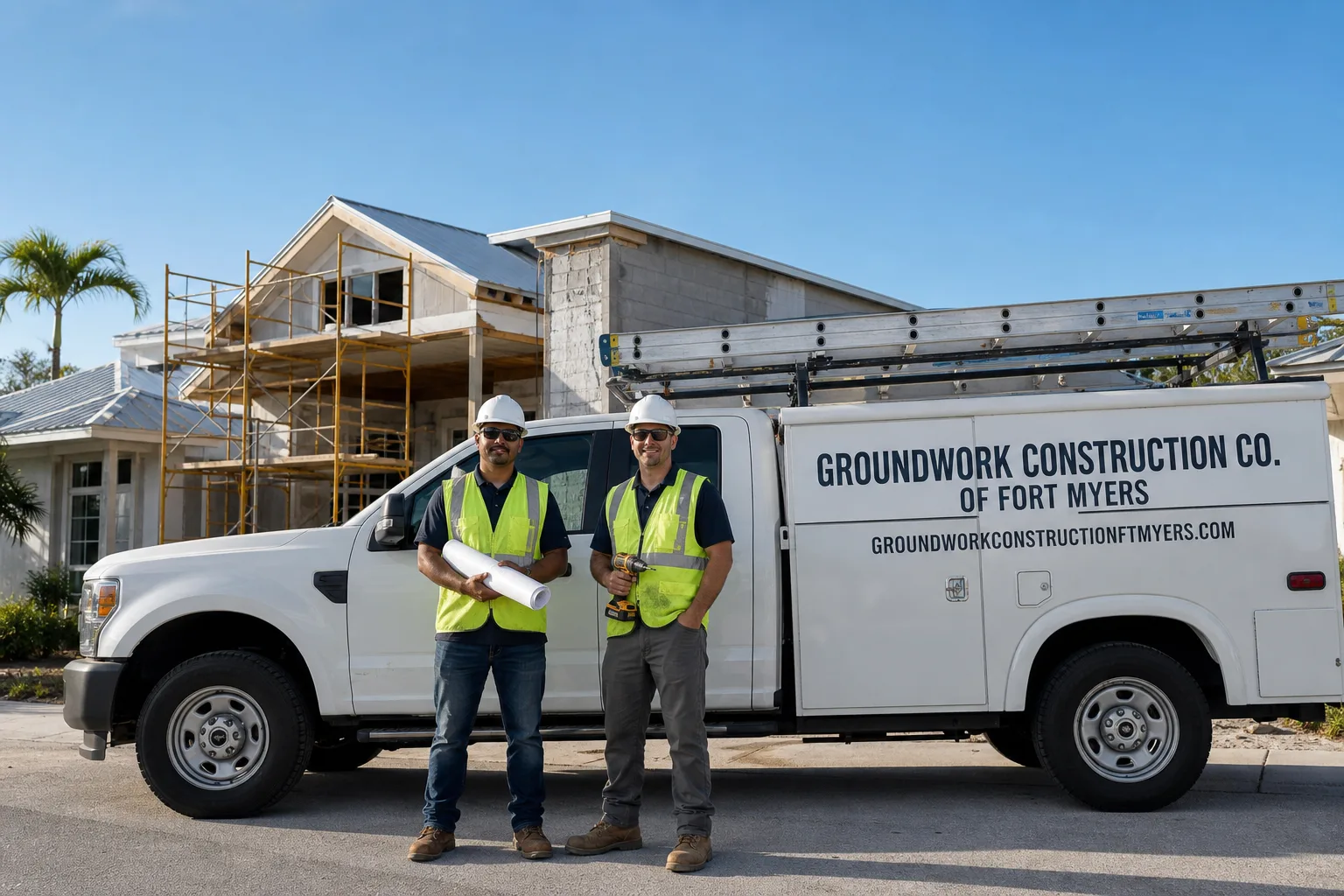
What a Paver Driveway Installation in Punta Gorda Actually Costs and How Long It Takes
A paver driveway installation in Punta Gorda typically runs between $7,000 and $18,000, with most standard two-car driveways landing in the $9,500 to $13,500 range. A full job, from tearing out the old slab to compacting the final joint sand, takes our crew five to seven working days, weather permitting. If you’re staring at a cracked, heaved concrete driveway and wondering whether pavers are the right move for your Punta Gorda home, call us at (844) 638-7249 for a free on-site estimate and a written, line-item quote you can make decisions from.
How We Build a Paver Driveway: The Five Stages
Most homeowners haven’t watched a paver driveway go in from bare dirt to finished surface. The process has more steps than people expect, and getting any one of them wrong shows up years later as a rut, a low spot, or a paver that’s shifted out of plane. Here’s how we run the job, day by day.
Stage one: demo, grading, and base. We saw-cut and remove the existing driveway surface, haul the debris, and then excavate to the depth required for the base material, typically 8 to 12 inches below finished grade in Punta Gorda’s sandy-loam soil. The subgrade gets compacted in lifts, then we bring in crushed limestone or recycled concrete aggregate, spread it in 4-inch lifts, and compact each lift with a plate compactor. This stage takes a day and a half on most jobs. The homeowner’s decision point: whether we’re matching the original driveway footprint or widening it, and whether any buried downspout drains or irrigation lines need to be relocated while the ground is open.
Stage two: edge restraint and screeding. We install aluminum or steel edge restraint along the entire perimeter and stake it every 18 inches. Then we screed a bedding layer of coarse concrete sand to a consistent 1-inch depth. This is the layer the pavers sit on, and it needs to be dead flat with a 1% to 2% slope for drainage. This is also when we set string lines to lock in the pattern alignment. Any grade correction that wasn’t caught earlier becomes obvious here, and we fix it before a single paver goes down.
Stage three: paver laying and cutting. Pavers go down in the pattern you chose at contract, starting from a fixed corner or a control line and working outward. Our crew lays them by hand, checking alignment continuously. Where pavers meet curves, edges, or the garage slab, we mark and cut them with a wet saw. This stage is two to three days for a typical Punta Gorda driveway. Your decision point: we’ll want you on site briefly when the first section is laid so you can confirm the pattern orientation and the color blend looks right in actual sunlight against your house. Small adjustments then are trivial. Changing your mind after we’ve laid half the field is not.
Stage four: compaction and joint sand. Once every paver is placed and all cuts are tight, we run the plate compactor over the entire surface, usually with a rubber mat to prevent scuffing. This sets the pavers into the bedding sand and locks them together. Then we spread fine-grained polymer joint sand, sweep it into every joint, and compact again. Polymer sand is non-negotiable in Punta Gorda: it hardens after it gets wet the first time, resists ants and washout from our afternoon thunderstorms, and keeps pavers from drifting. We’ll ask you to stay off the driveway for 48 hours after this stage while the sand cures.
Stage five: final walkthrough and cleanup. We blow off the surface, inspect every joint and edge, and walk the site with you. If anything needs a touch-up, we handle it that day. The site gets raked clean, any disturbed sod or landscaping gets put back, and you get care instructions for the first month. A key note for Punta Gorda homeowners in flood zones: we’ll confirm that the finished elevation meets your property’s FEMA minimums and that the driveway drains away from the foundation, not toward it.
The Options You’ll Choose Between
Not all paver driveways are the same product with a different color. The choices you make at contract affect how the driveway looks in ten years, how it handles Punta Gorda’s wet-season saturation, and what you’ll spend. Here are the decisions that matter.
- Paver material and brand. Concrete pavers from Belgard, Unilock, or Tremron dominate this market. Belgard’s tumbled finishes read more like natural stone, while Tremron’s smooth-finish pavers offer a cleaner, more contemporary look at a slightly lower per-square-foot cost. Unilock’s EnduraColor line uses a face-mix technology that resists fading better than standard color-through pavers - worth the premium if your driveway gets direct afternoon sun with no tree cover. Natural stone or clay brick pavers run significantly higher and require a different base spec; we stock them by special order.
- Size and pattern. The most common choice in Punta Gorda is a 6×9-inch or 6×6-inch paver in a herringbone pattern. Herringbone interlocks under vehicle load better than running bond and hides the gradual shifting that Florida’s sandy subsoils can cause over a decade of use. Larger-format pavers, like a 12×12 or a plank-style paver, give a more modern driveway but demand a flatter base with less tolerance for error, which can add a day to the base-prep stage.
- Color and finish. Lighter colors - tan, buff, shell - reflect more heat than charcoal or dark gray, which matters on bare feet in July. Tumbled or textured finishes improve slip resistance when the surface is wet but hold a little more dirt in the texture; smooth finishes are easier to keep clean but can be slick after a Punta Gorda summer downpour. We carry sample boards to your house so you can see the color against your stucco or siding in real daylight.
- Border and accent bands. A contrasting border in a darker color or a double-soldier course around the perimeter costs more per linear foot but visually frames the driveway and helps contain any edge drift over time. Accent bands that break up a large field of identical pavers add pattern interest without changing the underlying structure, and they’re a place where a small material upgrade makes a big visual difference without blowing the budget.
What a Paver Driveway Costs in Punta Gorda, FL
We gave you the range: $7,000 to $18,000. That’s not a hedge. It’s the real spread between a straightforward 400-square-foot driveway with a basic concrete paver on a flat lot, and an 800-square-foot driveway with a premium paver, a complex pattern, accent borders, and base-depth corrections on a sloped canal-front lot that needs a retaining course. Here are the variables that push a job toward the high end.
Square footage is the biggest lever. Pavers are priced per square foot installed, and a three-car driveway or a long, curved approach adds real material and labor. Existing slab condition. If the old concrete is thick, reinforced, or over-poured onto neighboring property, demolition takes longer and disposal costs more. Subgrade stability. Most Punta Gorda lots drain well, but we occasionally hit mucky or organic soil near the canal edges that requires an over-excavation and a thicker stone base - figure an extra $1.50 to $3 per square foot where that’s needed. Permit scope and flood-zone compliance. The standard fee for a residential driveway permit is modest, but if the city requires an elevation certificate or engineered drainage calculations because your lot is in a VE flood zone, that adds design time and a few hundred dollars to the permit package. Material grade. Budget pavers might run $3 to $4 per square foot for the material alone; a premium Unilock or Belgard product with a specialty finish can hit $7 or $8 per square foot before labor. The difference on a 600-square-foot driveway is real money.
Every estimate we write is a fixed-price, line-item document. It includes all demolition, base material, pavers, polymer sand, edge restraint, cleanup, and the permit fee. It does not include landscape restoration beyond the immediate work zone, and it does not include irrigation repair unless we flag that during the walkthrough and add it as a separate line. If we find something during excavation that changes the scope, we stop, show you, and give you a written change order - we don’t hand you a surprise bill at the end.
What Punta Gorda Homes Specifically Do to This Job
Punta Gorda’s building stock was largely reset after August 2004, when Hurricane Charley made a direct Category 4 landfall and leveled a significant portion of the city’s structures. The homes that were rebuilt between 2005 and 2010 were done to the then-new Florida Building Code wind standards, and those same homes are now 18 to 20 years into their lifecycle. That’s a specific, synchronized age where original concrete driveways - poured in a hurry during a construction boom - are showing their limits. We regularly see spalling, corner breaks, and settlement at the garage slab transition on post-Charley rebuilds in neighborhoods like Deep Creek and the rebuilt sections of Punta Gorda Isles. The pavers we install today sit on a compacted base that handles the sandy soil movement underneath far better than a rigid slab ever did.
The other local reality is water. Punta Gorda sits where the Peace River meets Charlotte Harbor, and a huge share of the city is in FEMA AE or VE flood zones. That means finished floor elevations and drainage patterns are tightly regulated. When we install a paver driveway on a Punta Gorda Isles canal-front property, we’re often working within a few inches of the flood elevation requirements, and the driveway slope has to pull water toward the street or toward a yard drain, never toward the house or the seawall. The city’s building department checks drainage at the inspection stage, and we don’t cut corners on it.
If your Punta Gorda home is in a deed-restricted community or an HOA, we’ll ask for the architectural review guidelines before we spec the job. Some associations restrict paver color or require a particular pattern; we submit the package on your behalf. On larger properties where a new paver driveway is part of a full exterior overhaul, many homeowners also look at adding an ADU above a detached garage. We do that work through our Garage Conversion ADU in Punta Gorda and ADU Design & Permitting in Punta Gorda services - it’s worth mentioning now because tying the driveway scope to a larger project often saves money on mobilization and base prep.
Serving Punta Gorda, FL - Our Local Coverage Area
We’re based in the Punta Gorda area and know this community well. Use the map below to see our service coverage - if you’re nearby, we can almost certainly help.
Frequently Asked Questions About Paver Driveways in Punta Gorda
Yes. The City of Punta Gorda requires a permit for any new driveway installation or replacement, including paver driveways. The permit ensures the finished elevation meets flood-zone requirements and that drainage does not direct water onto neighboring properties. We pull the permit as part of our scope, and it’s a line item on your estimate.
A properly installed paver driveway on a compacted base in Punta Gorda will last 25 to 30 years with basic maintenance. The pavers themselves won’t crack the way concrete does; what you’re watching over time is minor joint-sand erosion from our heavy rains. Re-sweeping polymer sand into the joints every three to five years is a straightforward maintenance item, and isolated pavers that settle slightly can be lifted and re-set without tearing out a section.
Not unless the scope changes. Our estimates are fixed-price and include everything we can see during the walkthrough. If we excavate and find an unexpected condition - an old buried slab, a collapsed irrigation main, soil that’s too organic to compact - we stop, show you what we found, and present a written change order with a specific dollar amount before we do an extra minute of work. You approve it or you don’t. We’re not interested in billing a surprise at the end.
You’ll need to stay off the driveway for about 48 hours after the final compaction and polymer sand application so the sand can harden properly. After that, normal passenger-vehicle use is fine. If you have a heavy RV or a boat trailer, mention it during the estimate so we can spec the base thickness accordingly.
For most Punta Gorda lots, yes. Pavers flex with the sandy soil instead of cracking when the ground shifts, and individual pavers can be replaced if one gets stained or chipped. They also drain better, which matters on lots where stormwater management is tight. Concrete has a lower upfront cost - we install that too - but over a 20-year window on Florida soil, pavers usually win on total cost of ownership. If you’re comparing the two, our Driveway & Pavers in Punta Gorda page breaks down both options in more detail.
On any job that touches the driveway, we also encourage Punta Gorda homeowners to think about how the project fits into the broader property plan. Our Driveway & Pavers crew works alongside our home addition and ADU teams regularly, and if you’re considering a garage conversion or a new detached structure in the next few years, we can phase the base prep now and save you a second mobilization later. We serve all of Punta Gorda and the surrounding communities.
Get a Written Estimate for Your Paver Driveway in Punta Gorda
You’ll get a fixed-price, line-item quote after a 45-minute site visit where we measure, check the grade, discuss paver options, and answer every question you have. No pressure, no ballpark numbers that change later. Call (844) 638-7249 to schedule your free estimate. We answer the phone - a real person, 24/7 - and we can usually have Derek or a senior estimator at your Punta Gorda home within a few days.
Written by Derek Hollenbeck, Owner at Groundwork Construction Co., serving Punta Gorda homeowners with upfront pricing and the 730-Day Done Right Promise on every paver driveway we install.