
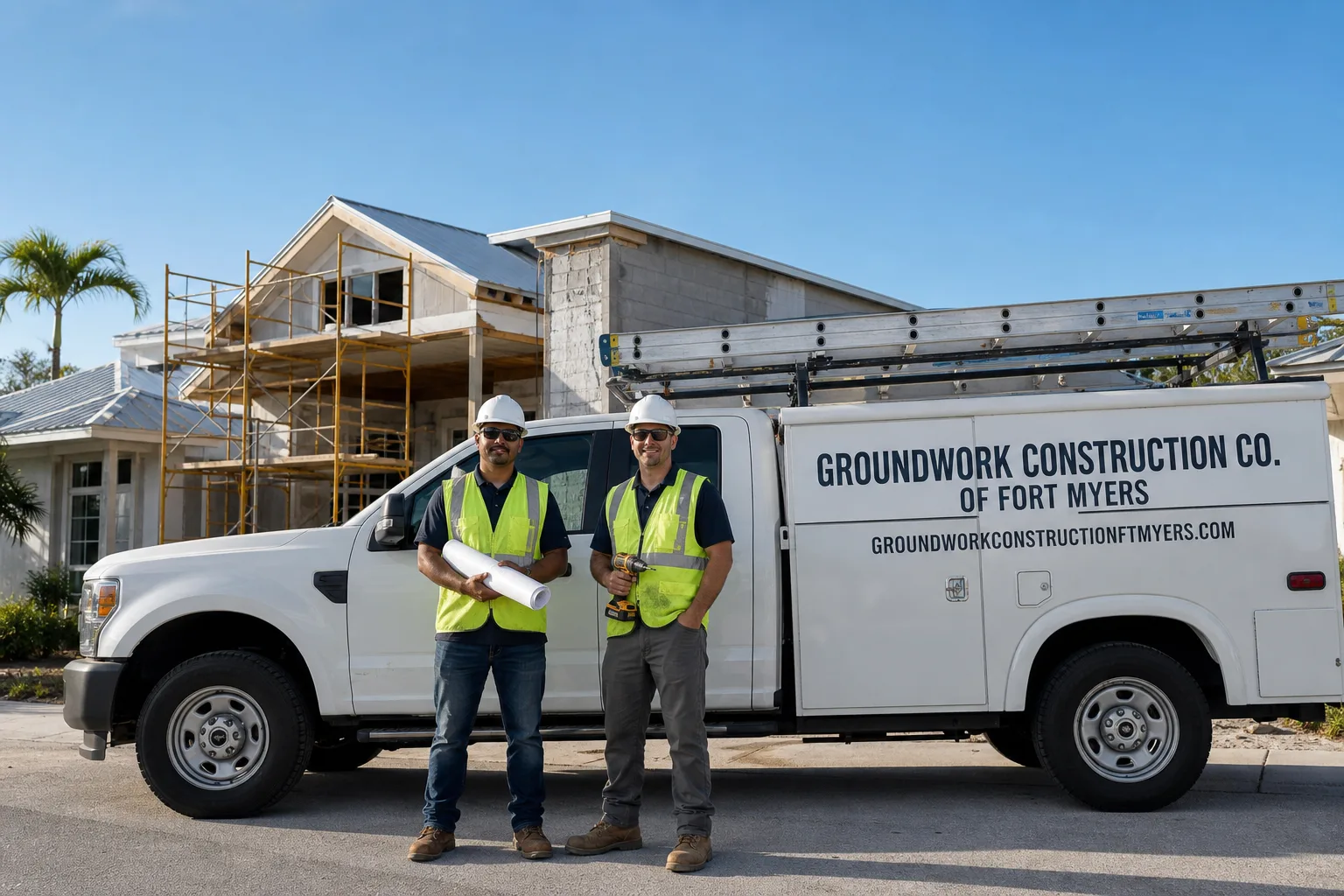
What Emergency Storm Damage Repair Actually Looks Like in Cleveland, FL
Emergency storm damage repair in Cleveland typically runs from $400 for a minor tarp-and-patch to $1,800 for a full section repair, though a complete roof replacement after a major storm falls between $8,000 and $20,000. Most jobs move from initial assessment to dried-in protection within 24 to 48 hours, with permanent repairs following once insurance adjusters and material orders line up. If water is coming in right now, call (844) 638-7249 - a live person answers 24/7, not a voicemail box.
We work on Cleveland homes that took a direct hit from the afternoon thunderstorms that roll through Pasco County from June through September, or the outer bands of a tropical system that peeled shingles and sent tree limbs through roof decking. Some calls are simple - a single leak, a few missing shingles. Others are full tarp-and-mitigate situations where half the roof is compromised and the ceiling below is sagging. The common thread is that waiting makes everything worse, and the right first steps determine whether you’re looking at a repair or a full replacement down the road.
This page is about the emergency response itself: what happens hour by hour, what decisions you’ll make, and what it costs in Cleveland specifically. If you need broader Roofing in Cleveland information, we cover that separately.
How We Handle a Storm Damage Call in Cleveland Step by Step
The sequence moves fast, but it needs to follow a specific order so your insurance claim holds up and the temporary protection actually lasts until permanent work begins. Here’s what it looks like when we respond to a Cleveland home:
1. Triage call and dispatch (within the hour)
When you call (844) 638-7249, a real person picks up. Not a service that takes a message and promises to call back Monday. We ask four things: is water actively entering the house, what part of the roof is damaged, is there visible structural sagging, and do you see exposed electrical. Those answers determine whether we send a tarp-and-secure crew immediately or whether the situation calls for a full emergency response. If the damage is severe enough that interior space is unusable, we talk through what to move and what to cover before we arrive.
2. On-site assessment and temporary protection (hours 1 through 4)
The crew arrives in uniform, background-checked. We do a walkaround first - ground-level assessment of visible damage, then ladder access to inspect the roof plane, flashing, soffits, and any penetrations. Photos are taken for your insurance file before anything gets touched. Then we tarp: heavy-duty reinforced poly fastened with furring strips directly into the roof deck, not just bricks on the corners. For wind-driven rain that got behind siding or into gable vents, we address those entry points too. The goal is to stop active water intrusion and prevent secondary damage that insurers may dispute.
3. Interior mitigation and documentation (day 1, sometimes day 2)
If water breached the ceiling or walls, we set up commercial drying equipment - air movers and dehumidifiers - and remove saturated insulation or drywall that can’t be saved. Every damaged surface gets photographed and logged with moisture readings. This documentation is what gets your claim approved without pushback. We mark the areas that need replacement and give you a clear scope so you know what’s temporary protection versus what will be permanently rebuilt. The insurance adjuster receives the same photo package you do.
4. Scope and estimate for permanent repair (days 2 through 5)
Once the house is dried in and stable, we write a line-item estimate for the permanent fix. This covers shingle type and grade, underlayment, any decking replacement, flashing, drip edge, and vent boots. If the storm exposed prior installation problems - improper nailing patterns, missing ice and water shield, unsealed penetrations - we flag those so the repair addresses root causes, not just visible storm damage. Our estimates come with upfront pricing: the number you see is the number you pay. No change orders buried in fine print. We also run the numbers on full Roofing replacement if the damage exceeds roughly 40% of the total roof area, since at that threshold a partial repair often costs more per square foot and leaves you with a mismatched roof.
5. Permanent repair and final inspection (typically 1 to 3 days on-site)
Materials ordered, permit pulled, crew scheduled. On an emergency repair, we sequence the job so your house is never exposed overnight - old damaged sections come off and new underlayment and shingles go on in the same shift. Flashing gets replaced, not re-used. Ridge vents get checked for storm damage. Final inspection is scheduled with Pasco County, and we walk the roof with you before the crew leaves so you see exactly what was done. The 730-Day Done Right Promise applies: if something isn’t right, we make it right.
The Decisions You’ll Make During a Storm Damage Repair
Even in an emergency, you have choices that affect how the roof performs for the next 15 to 30 years. We walk you through these on-site, but here’s the framework so you know what’s coming:
- Shingle grade: 3-tab vs. architectural. 3-tab shingles are the budget option and meet code, but architectural shingles cost roughly 15-25% more and hold up far better against the wind-driven rain and flying debris Cleveland sees during summer storms. Most insurance policies cover architectural grade without a fight - we check your policy language before you choose.
- Underlayment: #15 felt vs. synthetic. Synthetic underlayment is lighter, stronger, and resists tearing during installation better than traditional felt. It’s become the standard on our storm repair jobs because it buys time if a tarp fails before permanent shingles go on. The cost difference is minor on a repair section.
- Ice and water shield placement. Code requires it at eaves in most cases, but on Cleveland homes with low-slope sections or valleys that channel heavy rain, we often recommend extending it further up the roof plane. This is especially relevant on older ranch houses where the roof pitch is 4:12 or shallower.
- Matching existing vs. full reroof. If your roof was installed more than 10 years ago, matching shingles exactly is difficult - color lots change, granule blends shift. You’ll see a visible line between old and new. For some homeowners that’s fine. For others, it’s the trigger to consider a full roof replacement, especially if the undamaged portion is nearing end of life anyway.
- Ventilation and soffit repair. Storms often damage soffits and ridge vents, not just the roof plane. If your attic ventilation is already marginal - common in Cleveland’s 1970s CBS ranches with original box vents - the repair is the right moment to upgrade. Better airflow extends shingle life and drops attic temperatures measurably.
A repair or replacement also opens the conversation about other exterior upgrades. Some Cleveland homeowners pair roof work with Custom Windows & Doors in Cleveland when impact-rated openings make sense, or with a Wood Fence in Cleveland if the storm took out a fence line as well.
What Emergency Storm Damage Repair Costs in Cleveland, FL
A straightforward emergency tarp-and-patch on a small leak runs $400 to $800. A more involved repair - replacing a 10-foot by 10-foot section of shingles, underlayment, and possibly decking - lands between $800 and $1,800. If the storm damage is widespread enough to warrant a full roof replacement, Cleveland homes typically fall between $8,000 and $20,000 depending on roof size, pitch, number of planes, and shingle grade. 0% financing for 18 months is available, and projects over $10,000 qualify for $1,000 off.
What moves the number on a storm repair:
- Decking condition. If the roof deck is water-damaged or was nailed with smooth-shank fasteners that lost grip decades ago, sections need replacement before new shingles go on. Decking replacement adds material and labor costs that aren’t visible until the old shingles come off.
- Roof complexity. A simple gable roof on a Cleveland ranch repairs quickly. A roof with multiple valleys, dormers, or a steep pitch adds labor hours and safety rigging - costs that scale with the geometry, not just the square footage.
- Flashing and penetration count. Chimneys, skylights, plumbing vents, and attic fans all need flashed and sealed. More penetrations means more time and more material. On older Cleveland homes with multiple add-on vent stacks, this can add a few hundred dollars to the total.
- Shingle material grade. Three-tab asphalt is the entry price point. Architectural asphalt costs more up front but carries a longer warranty and better wind resistance. If you want a standing-seam metal panel as part of a repair, the material cost jumps significantly.
- Permit and inspection fees. Pasco County requires permits for roof work beyond basic repairs. Permit fees are a line item on every estimate and vary by job valuation. We pull all permits and schedule inspections - that’s included in the scope we quote.
Every estimate you get from us is a written, line-item breakdown. It spells out what’s included (materials, labor, permit, disposal, site protection, final cleanup) and what’s not (unforeseen decking replacement, structural repair if the storm exposed framing damage). No one can guarantee the decking is perfect until the old roof comes off, but we explain that variable honestly before you sign anything. Upfront pricing means exactly that.
What Cleveland Homes Specifically Do to This Kind of Work
Cleveland sits in Pasco County, where the karst limestone geology means the ground itself moves. We don’t think about sinkholes every day on a roofing job, but we do look for what the ground movement already did: racked door frames, hairline slab cracks, and roof truss separation that predates whatever storm just came through. When a 1970s CBS ranch shows nail pops and shingle lifting after a storm, half the time the underlying cause is decades of subtle settlement, not just wind. That matters because the repair needs to address what the storm did without ignoring what the soil started.
The housing stock in Cleveland tilts heavily toward concrete block and stucco ranch houses built between 1965 and 1985, plus a significant number of manufactured and mobile homes. On the CBS homes, we routinely see original roof decking fastened with smooth-shank nails that have backed out over 40 years of subtropical humidity cycling. When a storm hits, those loose fasteners let shingles peel in sheets. On the manufactured homes, roof-over systems with minimal pitch collect standing water and debris, so storm damage often starts as ponding that finds a seam. Neither failure mode surprises us anymore - we see them every storm season in Cleveland - and we write our repair scopes to address the underlying attachment problems, not just the cosmetic shingle loss.
Pasco County’s permitting office expects structural roof repairs to include hurricane tie-down and strap verification under the post-2001 Florida Building Code. If we open up a roof and find missing or corroded straps on an older home, the repair scope expands to bring that connection into compliance. Out-of-area contractors who don’t work in Cleveland regularly get caught by this because it’s not something their software estimate tool flags. It’s a local reality we plan for from the first walkaround.
The summer thunderstorm pattern here - intense, short-duration downpours with gust fronts that can hit 50 mph - creates a cycle we deal with every year. Water gets driven sideways into gable vents and soffit gaps that wouldn’t leak in a vertical rain. The repair often involves sealing vent edges and replacing water-damaged soffit panels, not just re-shingling the roof plane. On Cleveland homes shaded by mature live oaks, the pre-storm condition of the roof matters too: accumulated leaf litter holds moisture against shingle edges and accelerates granule loss, so the roof that fails in a storm was often already compromised at the tree line.
Serving Cleveland, FL - Our Local Coverage Area
We’re based in the Cleveland area and know this community well. Use the map below to see our service coverage - if you’re nearby, we can almost certainly help.
Frequently Asked Questions About Storm Damage Repair in Cleveland
We dispatch a crew the same day you call, and in most cases we have someone on-site within two to four hours. The first visit is about stopping the leak: heavy-duty tarping, securing loose sections, and documenting everything for your insurance claim. Permanent repair scheduling depends on adjuster timing and material availability - typically five to ten business days from the initial call. Call (844) 638-7249 and a live person answers 24/7.
Yes, if the repair involves replacing roof decking, structural members, or more than a small section of shingles, Pasco County requires a permit and a final inspection. Emergency tarping and temporary protection do not require a permit. We pull all necessary permits as part of the job and factor that into the estimate and timeline. An unpermitted permanent repair can cause problems when you sell the house or renew your insurance.
Most Florida homeowners policies cover storm damage minus your hurricane or wind deductible, which is typically a percentage of your dwelling coverage - not a flat dollar amount. We provide the photo documentation and scope write-up adjusters expect, and we’ll walk the roof with your adjuster if you want us there. The estimate we give you is what the work actually costs in Cleveland’s market, and we don’t inflate numbers just because insurance is paying.
On roofs less than five years old with a common shingle color, matching is usually straightforward. On older roofs - and most Cleveland ranches have roofs in the 10-to-20-year range - the original shingle color lot is discontinued and the existing shingles have weathered, so you’ll see a visible boundary between old and new. We’re upfront about that before any work starts. If a visible seam bothers you, we’ll price a full replacement so you can compare the cost difference honestly.
It happens regularly on Cleveland’s older homes. We find rotted decking, corroded fasteners, missing hurricane straps, or evidence of long-term water intrusion that predates the storm. When we do, we stop, take photos, and give you a clear explanation and a separate line item for the additional work before proceeding. Our upfront pricing commitment means you approve the number before we spend a dollar more. Nothing gets buried or billed after the fact. For an exact quote on your Cleveland home, call (844) 638-7249 - estimates are free and there’s no obligation.
Get a Free On-Site Estimate for Storm Damage Repair in Cleveland
If your roof took a hit from a Cleveland thunderstorm or a tropical system, the only wrong move is doing nothing. Call (844) 638-7249 and a real person answers - 24/7, no voicemail runaround. We’ll schedule a free on-site assessment, walk you through what’s damaged and what it costs to fix, and give you a written estimate with upfront pricing. From tarp to permanent repair, it’s handled by background-checked, uniformed crews backed by our 730-Day Done Right Promise. Built to last, backed in writing.
Written by Derek Hollenbeck, Owner at Groundwork Construction Co., serving Cleveland and the surrounding Pasco County communities.