
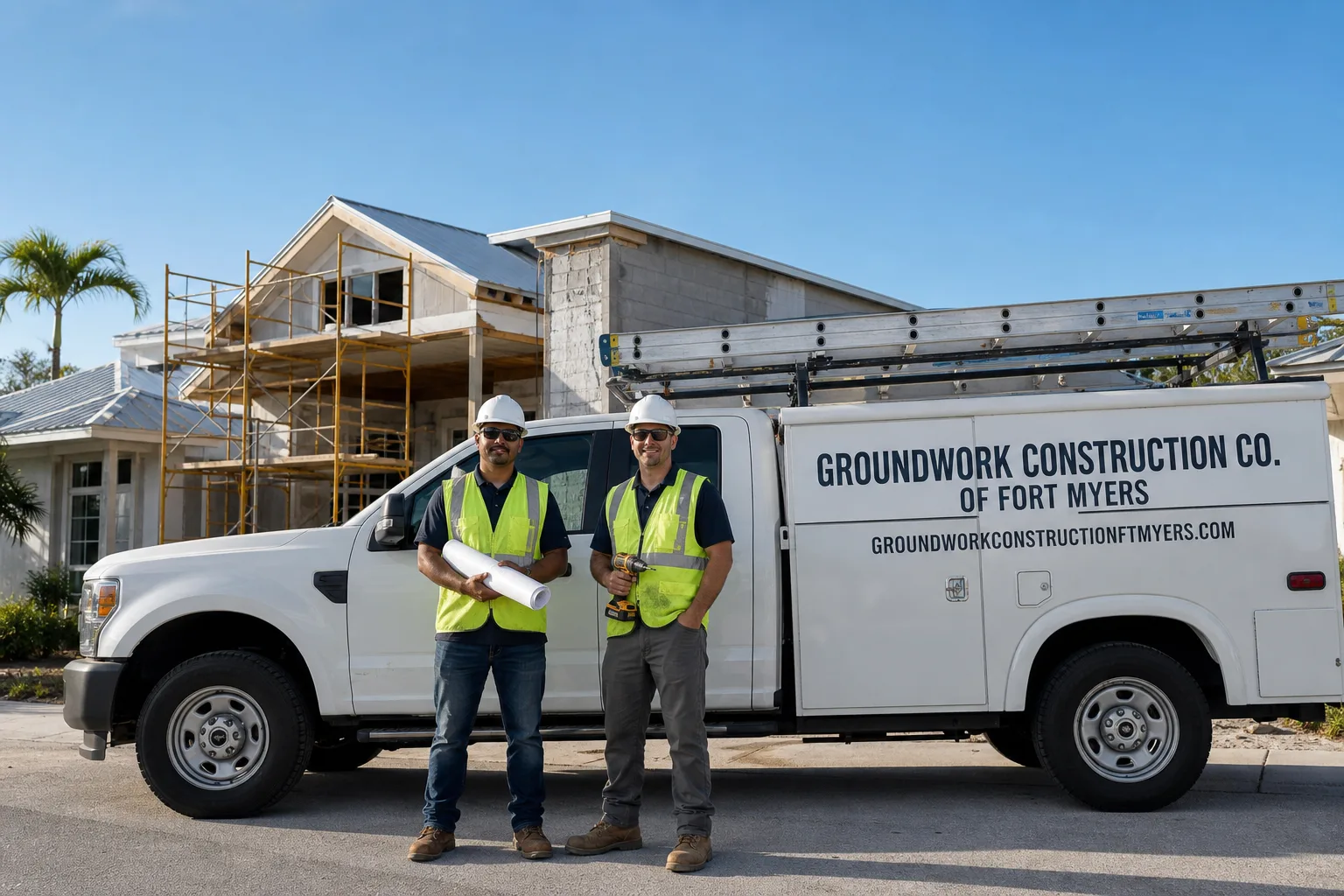
What Concrete Driveways & Concrete Work in Naples Park Actually Costs and How Long It Takes
A new concrete driveway in Naples Park, FL runs from about $4,500 for a standard single-car slab to $12,000 for a large custom pour with decorative finishes. Most jobs take 5 to 8 days from demolition to the day you can park on it, with the actual pour happening on a single morning. Call (844) 638-7249 for a written fixed price estimate on yours.
How we do the concrete pour, start to finish
Concrete work is a sequence where each step has to cure or set before the next one starts. You can’t rush it without paying for it later in cracking or spalling. Here is how a typical Naples Park driveway goes from old slab to new.
Day 1 and 2: Demolition, grade, and base prep. We saw-cut the existing concrete into manageable sections and haul it off. In Naples Park we’re usually working on a 50×100 lot, so truck access and material staging gets planned down to the foot. Once the old slab is out, we cut and compact the native soil, then lay and compact a 4- to 6-inch crushed-limestone base. This base layer matters more here than inland, because Naples Park’s high water table means any base that isn’t fully compacted will settle unevenly within two rainy seasons. You decide at this stage where the control joints go and whether we’re adding any embedded drains or trench drains at the garage lip or property line.
Day 3: Form set and reinforcement. We build the wood forms that define the driveway’s shape, thickness, and slope. On Naples Park’s tight lots with county setback rules, this is the morning we double-check the survey stakes against the permit drawings. We tie a grid of #4 rebar on 2-foot centers and set it on chairs so it sits in the middle of the slab, not at the bottom. For coastal lots closer to Vanderbilt Beach, we often upgrade to epoxy-coated rebar because salt air corrodes standard steel fast enough to spall a driveway edge in ten years.
Day 4: Pour and finish. The concrete truck arrives, usually a 4,000-psi mix with a 4-inch slump for residential driveways. We place, screed, and bull-float the slab, then wait for bleed water to evaporate before starting the final finish. If you chose a broom finish, we pull the broom across in one direction and cut the control joints while the concrete is still green. If you chose exposed aggregate or a stamped pattern, the timing on the release agent and stamping mats gets tighter. A standard two-car driveway pour is done by early afternoon.
Days 5 through 8: Cure, strip forms, and seal. Concrete doesn’t dry, it cures through a chemical reaction that needs moisture. We keep the slab damp for the first 48 to 72 hours, strip the forms around day 5 or 6, and apply a penetrating silane-siloxane sealer once the concrete reaches sufficient strength. You can walk on it after 24 hours and park a car after 7 days. The sealer is what makes the difference between a Naples Park driveway that still looks clean in five years and one that’s already pitting from salt and mildew.
The options you’ll choose between
Most of the cost and longevity decisions on a concrete driveway come down to the finish, the mix, and the edge detail. Here is what you pick and what each choice gets you.
- Broom finish. A straight drag with a stiff-bristle broom while the surface is still wet. It gives you a slip-resistant texture and is the most economical finish. Hides tire marks and minor staining better than any other option. The trade-off is it looks like a standard sidewalk, which is fine on a utility driveway but less interesting on a high-end Naples Park new build where the rest of the house is all custom trim.
- Exposed aggregate. We wash off the top paste layer after the pour to reveal the small stone underneath. It looks closer to a pebble surface and holds up extremely well against tire wear. Costs more than broom finish and can feel slightly rougher under bare feet, which matters if the driveway doubles as a play area or connects to a pool deck.
- Stamped concrete. We press a pattern into the surface and color it with integral pigment or a shake-on hardener. Ashlar slate and running-bond brick are the patterns we pour most often in Naples Park. Stamped concrete gives you the look of stone or paver for less than the real thing, but it requires resealing every two to three years in our salt-heavy air, and a poorly timed stamp job leaves visible seams.
- Integral color vs. surface color. Integral pigment is mixed through the entire batch and never flakes off; the color is permanent. Surface-applied color hardener is less expensive and can produce more vibrant tones, but it lives in the top eighth of an inch, so a gouge or heavy pressure-washing can expose the gray underneath. For Naples Park driveways that face west with full afternoon sun, we recommend integral color because UV and salt fog strip surface treatments faster here than they do a mile inland.
We also talk through edge details: a simple square edge costs nothing extra. A radius edge or a chamfered border adds forming labor but gives the slab a finished furniture look that fits the quality of the two-story custom homes going up on streets like 95th and 96th Avenue North.
We order our bagged concrete and overlay mixes from Quikrete and Sakrete because their 5000-psi repair mortars hold up to the salt exposure we see on Naples Park slabs that sit less than a mile from the Gulf. For whole-driveway pours we use a local ready-mix supplier’s 4000-psi design mix with a mid-range water reducer so the crew has enough working time in the heat without adding water on site, which weakens the finished slab.
What Concrete Driveways & Concrete Work costs in Naples Park, FL
Most concrete driveway installations in Naples Park land between $4,500 and $12,000. That range covers a single-car broom-finish slab on the low end and a large two-car stamped or exposed-aggregate driveway with integral color on the high end.
Five variables determine where your job falls inside that window. First is square footage: double the area roughly doubles the concrete, rebar, and labor. Second is the existing slab condition: a straight tear-out of an unreinforced 1960s slab goes quickly, but if the old driveway has a thickened edge, buried footers, or a section the previous owner poured over the property line, the demolition hours add cost. Third is access: a Naples Park lot with no alley and a tight side yard means the concrete pump truck or a motorized buggy needs to shuttle material, which adds half a day of equipment time. Fourth is the finish and color, as explained above. Fifth is whether the county requires an elevation certificate or stormwater calculations for your lot because it sits in a FEMA AE flood zone, which adds $400 to $800 in survey and engineering documentation before we pour.
A written Groundwork Construction Co. estimate includes the demolition, haul-off, base prep, rebar, formwork, concrete, finish, sealer, and a site cleanup. What it typically does not include is extensive landscaping restoration beyond the immediate pour zone, irrigation-line repair if the old slab had buried sprinkler lines, or resodding. We walk you through every line so you see the numbers before you sign, and we price the job once. No change orders for something we could have seen on the first walkthrough.
What Naples Park homes specifically do to this job
Naples Park is ground zero for one of Southwest Florida’s most active teardown-and-rebuild cycles: modest 1960s and 1970s concrete-block homes sitting less than a mile from Vanderbilt Beach are being razed at a rapid pace and replaced with two-story luxury spec homes. That means a concrete driveway here is rarely just a driveway. It is often part of a full Driveway & Pavers in Naples Park scope that runs from the street to a new elevated garage slab, tied into a side-yard walkway and a rear patio, all on the same pour day if we plan it right.
The site conditions on these narrow 50×100 lots make concrete work more precise than it is on a sprawling lot in a newer subdivision east of I-75. Collier County’s maximum lot-coverage rules force a tight dance between the driveway, the front setback, and any side-yard pavers. We have done pours on Naples Park driveways where the county required a variance review or a survey stakeout before we could set forms, because the new two-story house pushed right up against the impervious-surface limit. An out-of-area contractor who assumes a standard driveway apron will pass plan review often gets flagged at the permit counter. Our driveway & pavers crew has pulled enough permits in Naples Park to know which surveyor and which Collier County plan reviewer handles this overlay district, so we submit right the first time.
The salt-air environment adds a second layer of concern. We see 20-year-old Naples Park slabs with spalling along the rebar lines because the original builder used uncoated steel and poured to minimum cover depth. On a new driveway within a half-mile of the Gulf, we specify a minimum 3 inches of concrete cover over any steel and use epoxy-coated rebar where the budget allows. The silane-siloxane sealer we apply at the end of the cure locks out salt and moisture at the pore level, which standard acrylic cure-and-seal products do not do nearly as well. These are the details that separate a driveway that still looks tight in 15 years from one that starts pitting at year seven.
The teardown-rebuild trend also creates a specific sequencing problem. When a homeowner demolishes the original 1968 CBS ranch and builds a two-story home elevated 8 to 10 feet above base flood elevation, the new garage slab and driveway have to tie in at a matching grade. That often requires a retaining course or a stepped pour where the driveway transitions from the street elevation to the elevated garage floor. Some of these homeowners pair the new driveway with a Garage Conversion ADU in Naples Park or a New Detached ADU in Naples Park, which adds another slab pour and requires us to coordinate the driveway grade with the ADU’s finished floor elevation. We sequence it so the driveway pour happens after the ADU foundation is in but before final grading and landscaping close out the job.
Serving Naples Park, FL - Our Local Coverage Area
We’re based in the Naples Park area and know this community well. Use the map below to see our service coverage - if you’re nearby, we can almost certainly help.
Frequently asked: Concrete Driveways & Concrete Work in Naples Park
Yes. Collier County requires a permit for any new driveway pour or full replacement that connects to the public right-of-way. The permit triggers a site plan review, which checks lot coverage, setbacks, and in flood-zone lots, the elevation of the finished slab relative to base flood elevation. We pull the permit as part of our scope and schedule the required inspections: forms and rebar before the pour, and a final after the concrete is placed. An unpermitted driveway can stall a home sale in Naples Park, so we do not cut that corner.
Seven days for a passenger vehicle. Concrete reaches about 70% of its design strength at day seven, assuming average Florida temperatures and proper curing. We keep the slab covered and damp during the cure period to prevent the surface from drying out faster than the interior, which causes shrinkage cracking. For heavy vehicles like an RV or a loaded box truck, wait 28 days. Call (844) 638-7249 to schedule so we can lock in a pour date that fits your timeline.
Exposed aggregate with a penetrating silane-siloxane sealer. The aggregate surface is naturally slip-resistant when wet and does not show salt bloom the way a dark integral color can. The penetrating sealer blocks chlorides without forming a surface film that peels under UV. Broom finish works fine if your priority is budget; just understand it will need resealing more often and will show mildew staining faster than aggregate in Naples Park’s humid, salty air.
Three causes dominate what we see: inadequate base compaction over our high-water-table soil, lack of or poorly placed control joints, and adding water to the mix on site to make it easier to place. A properly compacted limestone base, rebar on chairs at the correct depth, and control joints cut to at least one-quarter the slab thickness within 24 hours of the pour prevent nearly all early cracking. The shortcuts are not a Naples Park problem specifically, but the high water table here punishes poor base prep harder than a well-drained inland site would.
Every concrete driveway we pour in Naples Park is covered by our 730-Day Done Right Promise. If something is not done right, we make it right. That covers cracking that exceeds industry-standard tolerances, spalling, and settlement, provided the driveway is used normally. Structural failures that show up two years out almost always trace back to base prep or mix design, and we stand behind both. Call (844) 638-7249 for a free on-site estimate and a walkthrough of what your specific driveway needs.
Get a fixed-price estimate for your concrete driveway in Naples Park
If you are planning a new concrete driveway, a teardown-and-rebuild, or a driveway replacement on your Naples Park property, we will come out, measure, talk through the finish and grade options, and hand you a written line-item estimate. No sales pitch, no number that changes after the first day of work. Our Driveway & Pavers in Naples Park team answers the phone live when you call (844) 638-7249, and we can usually have someone on your lot within a few days to start the estimate.
Written by Derek Hollenbeck, Owner at Groundwork Construction Co., a full-scope home construction partner serving Naples Park and the surrounding Southwest Florida communities.