
How Much Does Backsplash, Tile & Flooring Cost in Charlotte Harbor, FL - and How Long Does It Really Take?
Backsplash, tile, and flooring work in Charlotte Harbor typically runs between $800 for a simple backsplash installation and $45,000 for whole-home tile and flooring replacement across a larger waterfront property. For most kitchens and living areas we see around here, homeowners invest between $3,500 and $12,000 for a complete floor-to-backsplash tile package. Timeline depends heavily on demolition conditions in Charlotte Harbor’s older concrete-block homes, but most standalone tile and backsplash jobs finish in three to seven working days. Call (844) 638-7249 when you’re ready to talk through your project, and we’ll give you a written, line-item estimate at no charge.
The Moment You Know the Old Tile Has to Go
It starts the same way in a lot of Charlotte Harbor homes built before Hurricane Charley. A single diagonal crack runs from under the breakfast bar all the way to the sliding door. Then another appears perpendicular to it, right where the floor dips three-eighths of an inch. That’s not just a cosmetic tile crack. It’s the concrete slab underneath telling you it settled decades ago, and the original thin-set stopped bridging the gap years back.
In post-2004 rebuilds, the failure looks different. Builders in the rush after Charley sometimes laid tile over green concrete that hadn’t fully cured. What homeowners see now, twenty years later, is widespread debonding: tiles that sound hollow when you tap them, grout that turns to powder no matter how many times you seal it. Both scenarios lead to the same living-room conversation: do we patch this again, or do we pull it all and do it right one time.
Our tile crews have been in enough Charlotte Harbor homes to know the answer almost immediately. If the substrate is shot, patching buys you a year, maybe two. A full re-tile with proper uncoupling membrane and polymer-modified thin-set approved for Florida’s humidity and slab movement solves it for decades. This is the kind of call we make with the homeowner standing right there, tapping the floor with us.
How We Handle Backsplash, Tile & Flooring - Start to Finish
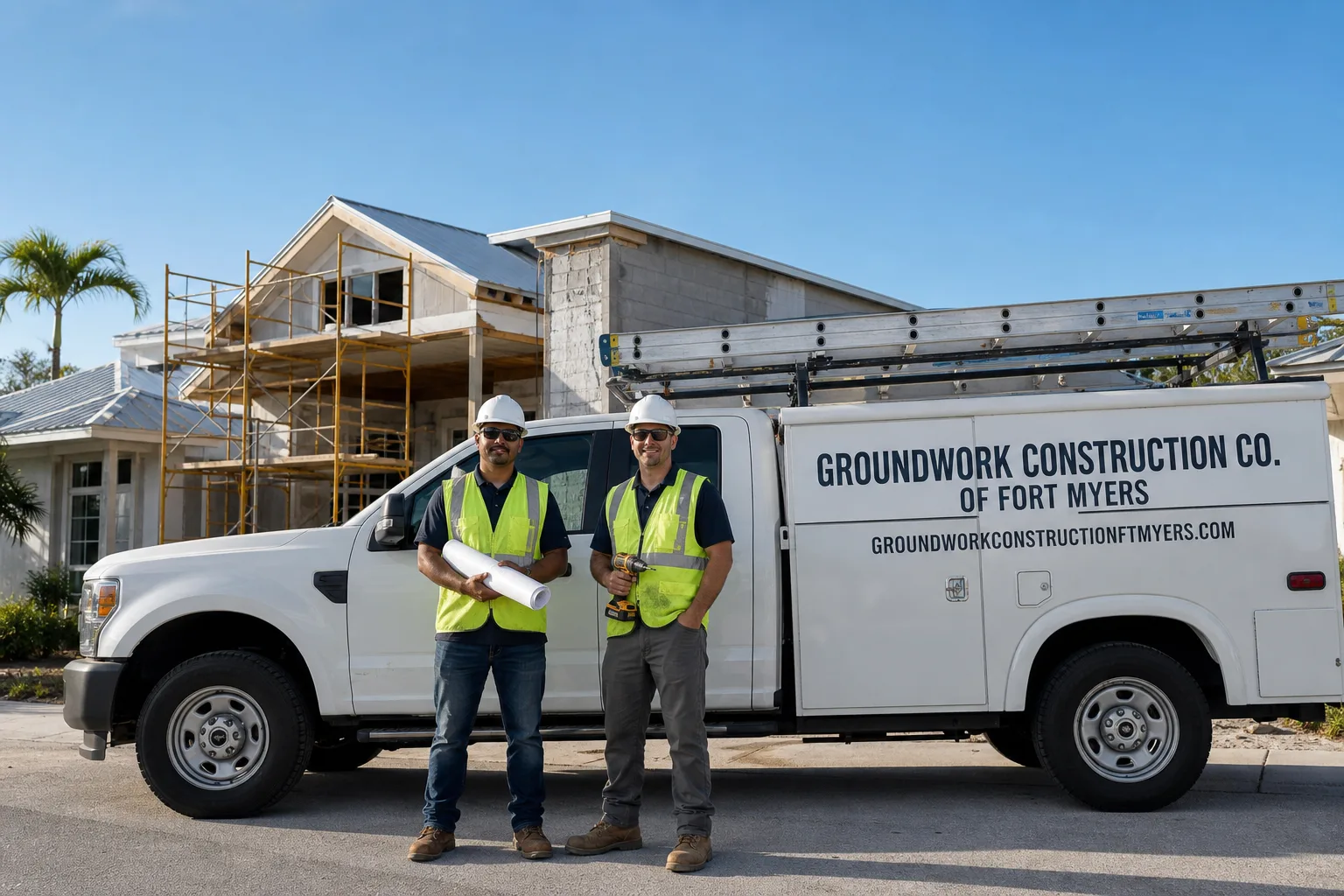
Every backsplash, tile, and flooring job in Charlotte Harbor follows the same disciplined sequence. No shortcuts, no rushed cure times, and no mysteries about what happens next. Here’s how a typical kitchen floor and backsplash plays out from the day we pull up in the truck.
Day 1: Gut check and floor prep. We remove the existing flooring down to the slab or subfloor. In Charlotte Harbor’s older CBS-block homes, that often means chipping up tile that was set directly on concrete in the 1970s, using a demo hammer with a wide blade to avoid fracturing the slab underneath. If we find cracks, spalling, or moisture - and in this estuary climate we usually find at least one - we stop and walk you through what’s needed before any new material goes down.
Day 2: Substrate correction. This is where a Charlotte Harbor tile job succeeds or fails. We apply crack-isolation membrane (Ditra or similar) over the entire slab, a step that local building inspectors specifically look for given the area’s expansive soils near the Peace River basin. For second-story bathrooms and laundry rooms in wood-framed rebuilds, we replace any water-damaged subfloor with exterior-grade plywood, then install cement board with the required alkaline-resistant mesh tape. The homeowner doesn’t see much on day two. What’s happening underneath determines whether the floor stays flat for twenty years.
Day 3: Layout and first cuts. We snap reference lines from the longest, straightest wall and dry-lay enough tile for you to approve the pattern before a single piece is set. For backsplash, we discuss outlet placement, under-cabinet lighting reveal, and whether you want the tile to terminate at the cabinet bottom or run up to the ceiling behind a range hood. Choices you make on day three ripple through everything else, so we stay on-site until every question is answered.
Days 4-5: Setting and curing. Tile goes down with polymer-modified thin-set mixed to the manufacturer’s specs for Florida’s humidity - never soupy, never dry. We use a suction cup and rubber mallet to bed large-format tiles fully, eliminating the hollow spots that give Charlotte Harbor homeowners the same debonding headaches their original builders left them. Grout follows after the thin-set reaches full cure, typically 24 hours later. We enforce that cure window, period.
Days 6-7: Sealing and final walk. Grout gets sealed with a penetrating sealer rated for wet-area use, even on dry floors - this is Charlotte Harbor, where humidity alone can darken unsealed grout within a season. Baseboards go back on, transition strips get set between tile and adjacent flooring, and we walk the entire floor together. If you can feel a lip, we fix it. The job isn’t done until you’d put a bare foot on it without flinching.
Part of a larger project? Our Kitchen Remodeling in Charlotte Harbor team coordinates tile, cabinets, and counters as a single schedule so nobody’s waiting on the wrong trade.
The Options You’ll Choose Between Before the First Tile Gets Set
Tile isn’t one decision. It’s a stack of them, and each one moves the price and the final feel of the room. Here’s what we talk through at the estimate.
- Porcelain vs. ceramic for floors. Porcelain costs more per square foot but stands up to Charlotte Harbor’s sandy foot traffic and won’t absorb moisture like ceramic can. If the room connects directly to a pool deck or lanai, porcelain is the only tile we recommend. Ceramic works fine for a guest bath upstairs where foot traffic and moisture are minimal; you’ll save about 30% on material.
- Large-format vs. standard tile. A 24×48 tile floor feels seamless and modern, but it demands a perfectly flat substrate - any deviation over 1/8 inch in ten feet telegraphs right through. Standard 12×24 tiles are more forgiving on older Charlotte Harbor slabs that haven’t been self-leveled. Large-format costs more in both material and prep labor; the aesthetic is worth it if the floor allows.
- Glass, subway, or slab backsplash. Glass tile backsplashes reflect light beautifully in Charlotte Harbor kitchens that get strong morning sun off the water, but they’re fussy to cut and the material runs higher than ceramic subway. Classic 3×6 ceramic subway tile in a running-bond pattern stays around $5-$8 per square foot installed and won’t date itself. Full-slab backsplashes in quartz or granite eliminate grout lines entirely; they push the budget but pay off in a zero-maintenance wall behind the cooktop.
- Grout type and color. Epoxy grout costs roughly double what cementitious grout does, but it will not stain, will not support mold, and will not need resealing - a legitimate advantage in a coastal kitchen or bath. We default to epoxy for shower floors and backsplashes behind ranges. For dry-area floors, a quality cement grout with a penetrating sealer does the job.
- Trim and edging profiles. Schluter metal edges, bullnose tile, or stone pencil trim - these are small line items that make a large difference in how the tile terminates at doorways, countertops, and drywall returns. We bring samples to the estimate so you can hold them against your cabinet color.
Homeowners pairing this with a bathroom upgrade often ask about Tub-to-Shower Conversion in Charlotte Harbor. When the wall tile continues from the shower into the vanity area, the whole room reads as one clean plane.
What Backsplash, Tile & Flooring Costs in Charlotte Harbor, FL
A standard kitchen backsplash in Charlotte Harbor runs $800-$2,500 installed. A kitchen floor plus backsplash in porcelain with a deco insert lands between $2,800 and $6,500. Whole-home tile flooring across a 2,000-square-foot Charlotte Harbor property pushes the total to $12,000-$45,000 depending on material grade and substrate condition. These are the actual ranges our estimates have fallen into for homes from Edgewater Drive to the Harbor Heights corridor.
What moves the number:
- Slab condition. If the original tile delaminated across 40% of the floor and the concrete underneath is riddled with hairline cracks, self-leveling compound and full membrane isolation add $2-$4 per square foot in prep alone.
- Tile selection. Entry-level porcelain starts around $3/sq ft; large-format Italian porcelain or wood-look plank tile runs $7-$14/sq ft before labor.
- Demo difficulty. Tile set in the 1970s with solvent-based adhesive over concrete requires more aggressive demo and dust abatement. Post-2004 homes with tile over cement board come out faster and cleaner.
- Pattern complexity. A running-bond subway layout is fast. Herringbone, Versailles, or a mosaic medallion triple the install labor and generate more waste cuts.
- Permit scope. Flooring alone rarely triggers a permit in Charlotte County. The moment we touch a shower pan, a waterproofing membrane behind a tub surround, or relocate drain lines, we pull the permit and schedule the inspection. That adds roughly $200-$600 depending on scope.
Every estimate we write is line-item, not a lump sum. You’ll see the material cost, the prep labor, the install labor, the trim work, and any permit fees broken out separately. What you won’t see is a change-order surprise halfway through. If we uncover substrate damage we couldn’t have predicted, we photograph it, explain it, and give you a fixed price to fix it before we proceed. Our Kitchen Remodeling division operates the same way: upfront pricing, no hidden conditions.
What Charlotte Harbor Homes Specifically Do to a Tile Job
Tile work in Charlotte Harbor is shaped by one fact more than any other: the building stock is split right down the middle. Roughly half the homes we work in are original CBS-block construction from the 1960s through early 1980s, many of which took a beating during Hurricane Charley and still carry the settlement and moisture issues that come with sixty-year-old Florida slabs. The other half are post-2004 rebuilds, framed to current code but often finished on accelerated construction timelines, with tile work that looked fine during the walkthrough and started failing inside of a decade.
In the older homes along streets like Melbourne Street and Harborview Road, we routinely find floor slabs that have shifted enough to crack tile in long, straight lines - sometimes across three rooms. Charlotte County’s expansive soils, combined with decades of wet-dry cycling from the harbor’s tidal influence, create more slab movement than you’d see five miles inland. Our substrate prep accounts for that movement from day one. We also see bathrooms where the original mastic-set wall tile is still hanging on, but the drywall behind it has wicked moisture up from a failed tub flange for who knows how long. Demo reveals what the eye can’t see.
In newer construction near the Charlotte Harbor Preserve State Park and along the waterfront rebuild corridor, the issue is often speed of original finish. Builders after Charley were under immense pressure to deliver homes. Some cut corners on thin-set coverage, leaving tiles with 40% bond instead of the required 80% or better. We know it the second we pull the first piece: it pops off clean, almost no adhesive on the back. That’s a full redo.
Permits are straightforward for non-structural tile work inside existing footprints, but if your project involves moving a drain or replacing a shower receptor, Charlotte County Building Construction Services will inspect every layer - pre-pitch, liner, flood test, and final. They want to see a 24-hour flood test with water standing above the weir. No water drop, no pass. We schedule our work around that inspection because we know the standard and we don’t gamble with it.
For homeowners updating a bathroom in stages, we often coordinate tile with Vanities, Tile & Fixtures in Charlotte Harbor so the vanity footprint and plumbing rough-ins are finalized before the tile saw fires up. Doing it out of order means cutting around a vanity that wasn’t supposed to stay.
Serving Charlotte Harbor, FL - Our Local Coverage Area
We’re based in the Charlotte Harbor area and know this community well. Use the map below to see our service coverage - if you’re nearby, we can almost certainly help.
Frequently Asked - Backsplash, Tile & Flooring in Charlotte Harbor
A standalone kitchen backsplash takes one to two days including grout and cleanup. A kitchen floor plus backsplash takes four to six working days, assuming the slab is sound and we aren’t wrestling with extensive self-leveling. Whole-home tile flooring across 1,500-2,000 square feet typically runs seven to ten working days, with furniture moved and protected in rooms we aren’t working in. Call (844) 638-7249 and describe your scope; we’ll give you a realistic calendar for your specific house.
Only if we uncover a condition we could not have seen during the estimate - rotted subfloor under a toilet flange, a slab crack hidden under floating laminate, or water damage behind a tub surround that only becomes visible during demo. When that happens, we stop work, photograph the condition, and give you a fixed price to correct it before we proceed. You approve the number; we don’t spend a dollar you haven’t authorized. Our upfront pricing commitment means every dollar on the original estimate is a dollar you agreed to.
In Charlotte Harbor we strongly advise against it. The existing tile’s bond is an unknown - if it’s already failing at the thin-set-to-slab interface, adding another layer on top just delays the inevitable. The added floor height also creates trip hazards at exterior doors and appliance cutouts. We remove the old floor down to the slab, correct any flatness issues, and set the new tile on a substrate we trust. The one exception is a floor in flawless condition where height isn’t a concern; even then, we require a mechanical bond test first.
For a floor-only or backsplash-only tile replacement where no plumbing, electrical, or structural work is involved, Charlotte County typically does not require a building permit. The moment the project includes shower waterproofing, drain relocation, or any plumbing rough-in changes, a permit is required and an inspection will follow. We pull the permit when it’s needed, and we schedule inspections as a standard part of the job, not an added headache.
Every backsplash, tile, and flooring installation we complete in Charlotte Harbor is covered by the 730-Day Done Right Promise: if it’s not done right, we make it right. That’s two full years of workmanship coverage, and it applies to grout failure, debonding, lippage, and any installation-related defect. Manufacturer warranties on the tile and setting materials are separate and typically run far longer - we walk you through what’s covered by whom before the job starts. Our guarantee is simple: you won’t be chasing us. Call (844) 638-7249 for your free estimate, and you’ll get a written proposal with the warranty terms clearly stated.
Get a Written Estimate for Your Charlotte Harbor Backsplash, Tile & Flooring Project
If you’re standing in a Charlotte Harbor kitchen with cracked tile underfoot and grout that won’t stay clean no matter what you do, let’s talk. Call (844) 638-7249 and we’ll schedule a free, no-pressure on-site estimate. One of our tile specialists will come out, measure, talk through your material options, tap the floors, and hand you a line-item price before they leave. No obligation, no deposit to get the number - just the facts on what it takes to get your floors and backsplash right, backed by a guarantee that outlasts any handshake. We answer the phone live, 24/7, right here in Southwest Florida.
Written by Derek Hollenbeck, Owner at Groundwork Construction Co., serving Charlotte Harbor with upfront pricing and tile work built to handle Florida’s slabs, humidity, and hurricanes for the long run.