
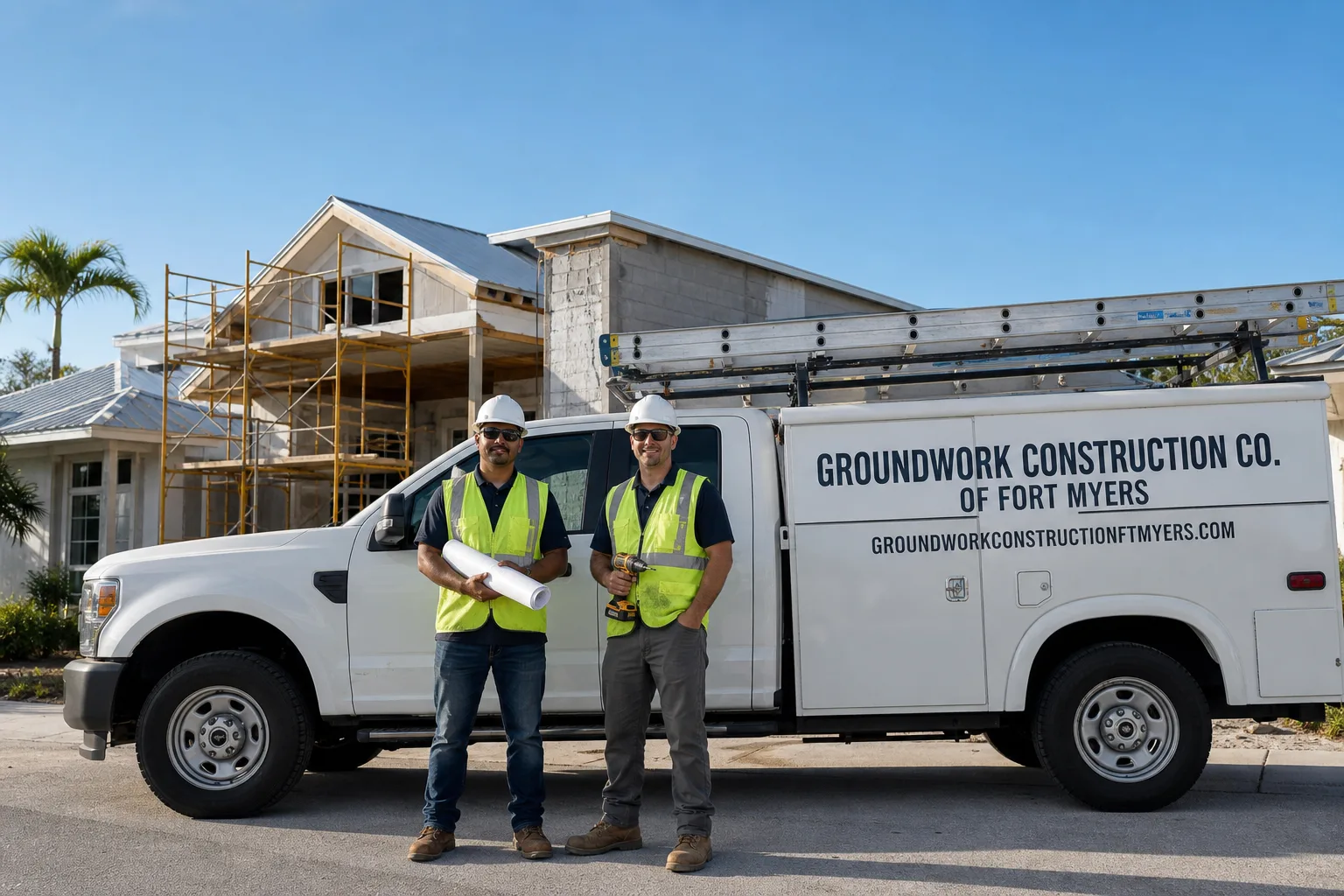
What specialty roofing actually costs and how long it takes in Harbour Heights
Specialty roofing in Harbour Heights, FL typically runs between $6,500 and $35,000 depending on the material system, roof complexity, and whether we’re dealing with legacy framing from the pre-Charley housing stock. Most jobs take seven to fourteen working days from tear-off to final inspection, though projects requiring structural remediation (common on Peace River-fronting lots with older tie-downs) can stretch that timeline by another four to six days. Call (844) 638-7249 for a free estimate that accounts for your specific roof condition, and we’ll have a real person walk you through what to expect before any commitment.
How we handle specialty roofing from start to finish
We’ve done enough roofs in this community to know that a Harbour Heights home rarely presents a textbook job. The process below is what we follow, but we adapt it around what we find once the old roof comes off.
Stage 1: The on-site assessment (same day, about 90 minutes)
We walk the roof, inspect the attic framing, and check the existing decking for storm fatigue or rot, especially on homes built before 2004 that took a direct hit from Charley. If the property sits in a FEMA Special Flood Hazard Area along the Peace River, we confirm whether a current Elevation Certificate exists, because that document dictates finished-roof-height allowances and can change the permit path. You’ll get a written, line-item price before we leave, not a callback three days later.
Stage 2: Permitting and material ordering (2-5 business days)
Charlotte County permits for roofing in Harbour Heights require wind-load calculations specific to the coastal exposure zone, and if the home is riverfront, floodplain compliance documentation gets submitted at the same time. We pull the permit, submit the product approvals for whichever specialty roofing system you selected, and place the material order. This stage is mostly invisible to the homeowner, but a slow building department or a backordered specialty tile can extend it, and we keep you updated as that moves.
Stage 3: Tear-off and deck inspection (2-3 days)
The old roofing comes off down to the deck. On the pre-Charley homes we see throughout Harbour Heights, this is often when we discover decking that passed a visual inspection but is delaminating from years of tropical moisture cycling. We’ll show you photos of anything that needs replacement before we proceed, with a per-sheet cost you already have in your estimate, so there’s no surprise change order. Replacement decking adds a day here, but skipping it guarantees the new roof won’t meet wind-code fastener requirements.
Stage 4: Underlayment, flashing, and the roofing system (4-8 days)
We install the self-adhered or mechanically fastened underlayment per the manufacturer’s high-velocity hurricane zone specs, then all new drip edge, valley metal, pipe boots, and step flashing before the visible roofing goes on. The specialty roofing material itself - whether that’s a standing-seam profile, a synthetic shake, or a custom architectural metal system - gets installed next, with every fastener pattern matched to the wind-uplift engineering for this specific exposure. This is the longest stage, and complex roof geometries on some of the larger riverfront lots can push the higher end of that window.
Stage 5: Trim-out, cleanup, and final inspection (1-2 days)
Ridge caps, venting, and any specialty trim pieces go on, the site gets magnet-swept for fasteners, and we walk the finished roof with you before the county inspector arrives. Charlotte County requires a final in-person inspection on every re-roof, and we stay on-site for that appointment so any questions get answered directly by the crew lead who did the work. Once the inspection passes, you have the full 730-Day Done Right Promise in writing.
The specialty roofing options you’ll choose between
Specialty roofing isn’t a single product. In Harbour Heights, the conversation usually starts with what the home can structurally carry, what the HOA or waterfront setback rules allow, and how long you plan to stay in the house. Here are the real choices and their honest trade-offs:
- Standing-seam metal - The top choice for Peace River-front lots where wind-driven rain and 150+ mph uplift ratings matter. Runs $18,000-$35,000 on a typical Harbour Heights ranch or two-story. Forty-plus-year lifespan, almost zero maintenance, and it meets the strictest post-Charley wind codes without supplemental tie-down retrofitting. The trade-off: it’s the highest upfront cost, and some older HOAs here still require architectural-review approval for metal profiles.
- Synthetic shake and slate composites - We use systems from manufacturers like CertainTeed and DaVinci that carry a Class 4 impact rating and a Miami-Dade NOA. These land in the $14,000-$28,000 range. They give you the look of cedar shake or natural slate without the wind-fragmentation risk real shake carries in a hurricane zone. Heavier than asphalt, so some pre-Charley truss systems need reinforcement, which adds cost.
- Architectural metal shingle systems - Stone-coated steel or stamped metal shingles that look like tile or slate but weigh roughly a third of real tile. $16,000-$30,000. Excellent for homes where barrel tile would require structural upgrades the owner wants to avoid. The finish holds up to the salt air and intense UV exposure we get along the Peace River corridor without the efflorescence or fastener corrosion we see on cheaper metal products.
- High-performance asphalt (specialty-grade, not three-tab) - For homeowners who want wind performance closer to metal at a lower price point. $8,000-$16,000 with upgraded underlayment. We spec GAF and Owens Corning lines with SBS-modified asphalt and reinforced nailing zones that meet Florida’s high-velocity hurricane zone requirements. This is the most common choice on the post-2004 rebuilds that already have code-compliant decking and just need a roof that stays on during the next storm.
Every option above gets paired with a peel-and-stick underlayment rated for the Harbour Heights wind zone. We don’t cut that corner for anyone, because the underlayment is what keeps water out of the house while the visible roofing handles the UV and impact load.
What specialty roofing costs in Harbour Heights, FL
Specialty roofing in Harbour Heights lands between $6,500 on the low end (a smaller single-story with a straightforward gable roof using high-wind asphalt) and $35,000 on the high end (a large riverfront two-story getting a standing-seam metal system with full deck replacement and structural tie-down upgrades). Most jobs we quote are in the $12,000-$22,000 range.
The variables that actually move that number:
- Deck condition. Pre-Charley homes with original plywood or plank decking often have delamination or fastener pull-through that doesn’t show until tear-off. Re-decking adds $2-$4 per square foot and can add $3,000-$7,000 to a job instantly. We include a per-sheet contingency in every estimate so you know the number before we touch the roof.
- Roof geometry and height. A simple hip roof on a single-story ranch costs less to roof than a multi-gable two-story with steep pitches and valleys that require hand-cutting metal panels or custom flashing. The Peace River-front homes in Harbour Heights often have complex rooflines and elevated finished floors, which means more staging, more safety equipment, and more labor hours per square.
- Material system. The spread from high-wind asphalt to standing-seam metal can be $10,000-$20,000 on the same house. The choice is about lifespan, maintenance tolerance, and whether you want to do this once or twice while you own the home.
- Tie-down and strapping upgrades. If the home was built before Florida’s post-Charley code rewrites and never retrofitted, we may need to bring the roof-to-wall connections up to current wind-load requirements before the new roofing goes on. That’s a structural item, not a roofing item, but it surfaces during the permit review and adds $2,000-$5,000.
- Permit and inspection fees. Charlotte County charges a roofing permit fee based on job valuation, and flood-zone parcels often require an Elevation Certificate or a V-Zone compliance letter. Those documents and the permit itself typically run $600-$1,200, and we handle all of it.
Our written estimates include all materials, labor, fasteners, underlayment, flashing, permit costs, dumpster fees, and the 730-Day Done Right Promise. What moves is what we find under the old roof, and we price that transparently, with line-item numbers and photos, before authorizing anything. No change orders that arrive as a surprise.
What Harbour Heights homes specifically do to a specialty roofing job
We work on two different houses in Harbour Heights: the one built before August 13, 2004, and the one built after. The pre-Charley stock along roads like Navigator and Peace River Drive often still carries the original roof decking and strapping from an era when Florida’s wind code was substantially lower. On those homes, specialty roofing isn’t just a material upgrade. It’s a structural conversation, because the roof-to-wall connections that were code-compliant in 1985 won’t pass a permit review today. We find corroded hurricane clips, toenailed trusses, and plywood that delaminated during the storm surge and was never replaced because the shingles hid the damage for twenty years.
The post-Charley rebuilds are different. Those homes went up under the Florida Building Code’s tightened wind-load and impact-resistance requirements, so the framing and strapping are typically in good shape. On those, the specialty roofing conversation is about upgrading from the builder-grade asphalt that many of them got during the reconstruction rush of 2005-2007. Those roofs are reaching the end of their service life now, and homeowners are choosing metal or composite systems this time around because they plan to stay.
Permitting here also means the Peace River factor. If the property falls within a FEMA Special Flood Hazard Area - and many waterfront lots in Harbour Heights do after the post-Charley flood map revisions - the building department wants a current Elevation Certificate before issuing a roofing permit, because the finished roof height can’t alter the base flood elevation compliance. We coordinate that early so it doesn’t stall the job. It’s a step out-of-area roofers skip, and it’s the kind of thing that gets a permit kicked back three weeks after you thought work was starting. Call (844) 638-7249 if you want a crew that knows which documents Charlotte County wants before we even open the permit application.
Serving Harbour Heights, FL - Our Local Coverage Area
We’re based in the Harbour Heights area and know this community well. Use the map below to see our service coverage - if you’re nearby, we can almost certainly help.
Frequently asked - Specialty Roofing in Harbour Heights
Seven to fourteen working days on most homes, from tear-off through final county inspection. Homes needing deck replacement, truss strapping upgrades, or Flood Hazard Area documentation can add four to six business days. We’ll give you a calendar schedule at the estimate, and it accounts for what we know about your specific house, not a generic timeline.
Yes. Charlotte County requires a full roofing permit with wind-load calculations for every re-roof, and waterfront parcels in Harbour Heights often trigger additional floodplain documentation. We pull the permit, submit the product approvals, and stay on-site for the final inspection. Doing a roof without a permit here puts you at risk of fines and insurance denial after the next storm. Call (844) 638-7249 and we’ll handle the paperwork from start to finish.
We don’t recommend it, and on most Harbour Heights homes it won’t pass code anyway. Florida’s high-velocity hurricane zone requirements demand specific fastener penetration into the deck, and a second layer makes it impossible to verify the deck condition or achieve the required uplift resistance. Tear-off adds cost but it’s the only way we’ll warrant the finished roof under the 730-Day Done Right Promise.
Two warranties apply. The manufacturer covers the roofing material itself - standing-seam metal systems typically carry a 30-to-50-year finish warranty and a lifetime structural warranty, while specialty asphalt runs 25 to 50 years depending on the product line. Our workmanship is covered by Groundwork Construction Co.’s 730-Day Done Right Promise: if it’s not done right, we make it right. That’s two full years, one of the longest workmanship guarantees in residential roofing.
It often does, and favorably. A standing-seam metal or synthetic shake roof with a Miami-Dade NOA and current wind-mitigation features typically qualifies for Florida’s wind-mitigation insurance credits. After we finish, we provide the wind-mitigation inspection report your insurer needs to apply those discounts. We can’t quote the exact premium change (that’s your agent’s job), but we’ve had Harbour Heights homeowners report meaningful reductions, especially on riverfront properties where wind exposure previously drove their premiums up. Call (844) 638-7249 for a free estimate and we’ll walk you through what documentation your insurer will want.
Get a free on-site estimate for specialty roofing in Harbour Heights
We’ll come out, inspect the roof and attic, and give you a written price that accounts for your home’s specific condition - deck age, framing, flood-zone requirements, and all. No range, no callback three days later, no change orders that show up after tear-off. Our crew serves the full Harbour Heights area and knows what Charlotte County wants before the permit hits the desk. If your project is part of a full Roofing in Harbour Heights scope, or you’re also considering updating Sliding & Patio Doors in Harbour Heights or adding Glass Railing Systems in Harbour Heights, we can scope the whole package in one visit. Our Roofing team is background-checked, uniformed, and backed by the 730-Day Done Right Promise. Call (844) 638-7249 to schedule yours.
Written by Derek Hollenbeck, Owner at Groundwork Construction Co., serving the Harbour Heights community across every project we take on.