
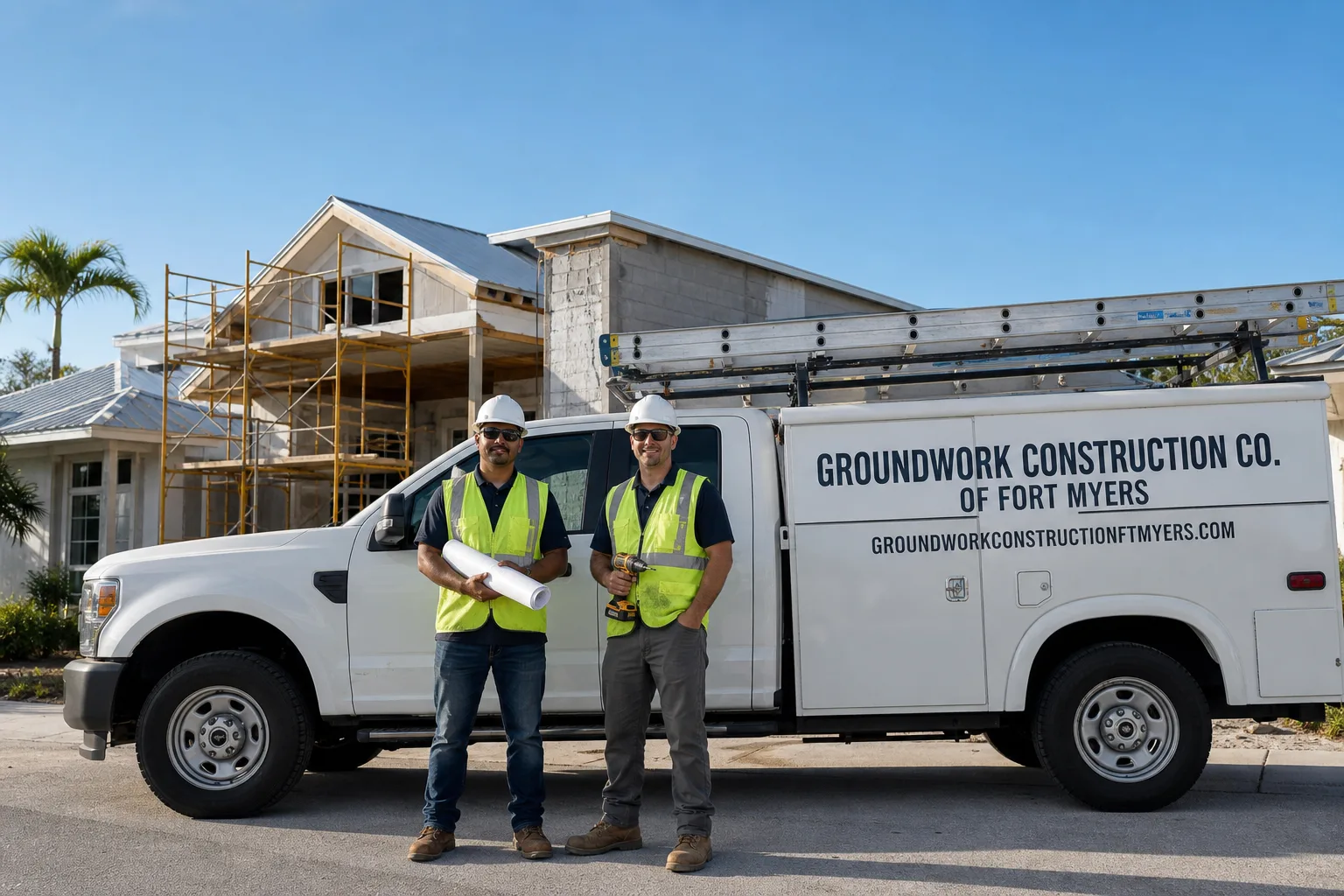
What a Vinyl Fence in Harbour Heights Entails, and What You’ll Pay
A vinyl fence in Harbour Heights typically runs $3,500 to $9,000 for a standard residential lot, with most jobs completing in three to five working days from post-hole to final walkthrough. The panels and posts arrive pre-routed and color-matched, so the work is mostly setting the structural line, digging, pouring concrete, and locking everything together. Call (844) 638-7249 for a free on-site estimate with a line-item quote: you’ll know exactly what your property needs before you commit.
How We Build a Vinyl Fence: The Day-by-Day Sequence
Vinyl fencing moves fast once the layout is confirmed, but skipping steps on the front end creates problems that are expensive to undo. Here is the actual process our crew follows on a Harbour Heights job, with real durations and the decisions you make along the way.
Day 1: Layout, Utility Locate, and Post-Set. We start by marking the fence line with paint and stakes, walking the route with you to confirm gate locations, any easement offsets, and where the line ties into existing structures. We call 811 for utility locating at least 48 hours before we put a shovel in the ground, which is non-negotiable, especially on older Peace River lots where buried septic lines and irrigation are common. Once the locate is clear, we auger post holes 26 to 30 inches deep, set the galvanized steel post inserts, and pour concrete footings. The posts get braced and checked for plumb before we leave. This is the day that determines whether the fence stays straight for twenty years or starts leaning in five.
Day 2: Concrete Cure and Panel Prep. The footings need a full day to harden before any weight goes on the posts. Our crew uses this window to stage the vinyl panels and trim, pre-cut any partial panels for shorter runs, and double-check gate hardware alignment. If you chose a decorative topper or post-cap style that requires on-site cutting, we do that now, not while panels are mid-air. This is also when we handle any slope transitions: Harbour Heights properties that drop toward the Peace River almost always need a stepped or racked fence design to follow grade without leaving gaps underneath.
Day 3: Panel Installation and Gate Hang. Panels lock into the routed post channels and get secured with stainless fasteners. We start from the corners and gate posts, working inward so any field-cut panel lands in the least visible section of the run. Gate posts get reinforced with extra concrete and steel inserts - a vinyl gate is heavier than a wood gate, and the hinge-side post takes a beating in Charlotte County winds if it isn’t overbuilt. By end of day, the fence is standing, gates swing true, and we do a first-pass cleanup of the work area.
Day 4: Trim, Caps, and Finish Work. Post caps go on, any snap-on trim channels get installed, and we do a full hardware torque check on every gate hinge, latch, and drop-rod. We run a string line along the top rail of every section to confirm there is no wave or dip, then walk the entire perimeter with you to mark any concerns. Small adjustments happen on the spot.
Day 5: Final Inspection and Site Cleanup. If the job required a permit - and most Harbour Heights waterfront projects do - the inspector typically comes on this day. We stay through the inspection to answer any questions and make corrections immediately if flagged. Once the fence passes, the crew does a final debris sweep and magnetic nail-run to catch any stray fasteners, then reviews the warranty paperwork and care notes with you. The entire yard is left graded flat around the fence line, with no concrete spoils or scrap vinyl left behind.
What You’ll Choose: Vinyl Fence Options and the Honest Trade-Offs
Vinyl looks uniform from a distance, but the spec decisions you make upfront change how the fence ages, how it handles a tropical storm, and what it costs to replace a section if a limb comes through. Here are the real choices.
- Panel grade: economy hollow-core vs. full-routed structural. Big-box hollow panels are lighter and cheaper per linear foot, but they sag faster under coastal sun and can crack at the post channels when wind loads hit. Full-routed panels with thick internal webbing cost more and install tighter across the same post span. For a Harbour Heights lot that gets afternoon storms off the Peace River, we spec the structural grade every time. The price delta on an average yard is usually $800-$1,200, and you get it back if you ever sell.
- Height: 4-foot, 5-foot, or 6-foot. Six-foot is the standard privacy height, and it is what we install on at least 80% of Harbour Heights jobs. Four-foot works for front-yard decorative runs or pool-code applications where sightlines matter. Five-foot splits the difference but limits visibility less than homeowners expect. Height moves the material cost about $3-$5 per linear foot, and taller fences require deeper post footings, so a 6-foot fence runs roughly 15-20% more total than a 4-foot fence on the same footprint.
- Color: white, tan, or clay. White is classic and reflects heat - it stays cooler to the touch in a Florida August - but shows mildew staining faster near irrigation heads and sprinkler overspray. Tan and clay hide dirt better and blend with the sandy soils common along Harbour Drive and Riverside Drive, though darker vinyl absorbs more heat and can warp slightly if panel gaps are too tight during a hot install. We use brands like ActiveYards with UV-stabilized color-through formulas, so fading is minimal across all three shades.
- Gate hardware: basic latch vs. self-closing with drop-rod. A standard gate gets a gravity latch. A pool-code gate requires a self-closing hinge and a locking latch at a specific height. If you add a double-drive gate for boat or trailer access - and plenty of Peace River-front homes need one - we recommend a steel-reinforced frame inside the vinyl gate and a cane bolt drop-rod to anchor the inactive leaf into concrete, not just dirt. Hardware upgrades add $150-$400 per gate, but they keep a heavy gate from dragging on the ground inside two seasons.
- Post spacing: standard 8-foot vs. reinforced 6-foot centers. Most vinyl panels are engineered for 8-foot post spacing, but for a fence line that faces open water or a wide canal exposure, we often pull posts in to 6-foot centers and use a thicker-gauge steel insert. The tighter spacing adds roughly 20% to post-and-concrete costs but nearly doubles the wind-load survival of the fence. After what Charley did to Harbour Heights in 2004, that math makes sense to most of our clients.
If this vinyl fence is part of a larger property project - refreshing the whole yard, reworking the driveway approach - we can coordinate it alongside Fence Installation in Harbour Heights planning and Driveway Repair & Replacement in Harbour Heights so the timeline overlaps and the site gets torn up only once.
What Vinyl Fence Costs in Harbour Heights, FL
A vinyl fence in Harbour Heights lands between $3,500 and $9,000 for a typical single-family residential job. That range covers roughly 150 to 350 linear feet of 6-foot structural-grade vinyl with one or two gates, concrete-footed posts, and standard trim. Smaller decorative runs can dip below $3,000; large waterfront lots with extensive privacy fencing, multiple gates, and difficult access can push above $9,000. When you call (844) 638-7249, we will give you a written, line-item estimate that locks in the number - no change orders because the soil was soft or the grade changed.
The variables that move your fence from the low end of that range to the high end are predictable. Linear footage is the biggest driver: every additional 50 feet adds roughly $1,200-$1,800 in material and labor. Gate count and type come next - a single walk gate is a few hundred dollars, but a reinforced double-drive gate with steel framing and a drop-rod can run $1,200-$2,000 by itself. Site access and grade matter: if the fence line runs through mature landscaping, steep slopes toward the Peace River, or spots where a mini-excavator cannot reach and posts must be hand-dug, labor hours climb. Post-hole conditions in Harbour Heights vary block by block - sandy riverbank soil digs fast, but sections with heavy clay or buried construction debris from post-Charley rebuilds need more concrete and slow the pace. Finally, panel quality and height move the material number; going from 4-foot hollow-core to 6-foot full-routed structural panels with stainless hardware adds about 30-40% to the material line.
Our written estimate includes the fence panels, posts, concrete, gates, hardware, post caps, site prep, installation labor, cleanup, and the permit package when one is required. It does not include the cost of removing an existing fence, which we quote as a separate line, or any landscape restoration beyond backfilling and rough-grading the post-hole areas. We will also flag whether your property needs an Elevation Certificate before the permit application can move - many Peace River-adjacent parcels in Harbour Heights do, and we will tell you during the estimate walk, not after you have signed.
We also offer 0% financing for 18 months and $1,000 off projects over $10,000 - so if your fence install pairs with something like Asphalt Driveways & Resurfacing in Harbour Heights, you can wrap both into one scope and hit that threshold easily.
What Harbour Heights Specifically Does to a Vinyl Fence
Harbour Heights sits right on the Peace River, and that location shapes every aspect of a vinyl fence project before the first post hole is dug. Charlotte County’s post-Charley building code imposes some of the highest wind-load requirements in the state, and a vinyl fence on an exposed waterfront lot must be engineered to stay standing in sustained tropical-storm winds - not just in calm weather. That means deeper concrete footings (30 inches or more), thicker-gauge galvanized steel post inserts, and post spacing pulled in to 6-foot centers wherever the fence line faces open water or wide canal exposure. Builders who treat Harbour Heights like an inland suburb are the reason we replace fences that are only five or six years old.
The split housing stock here adds another layer. Homes rebuilt after Hurricane Charley in 2004 were constructed to Florida Building Code standards that are fundamentally different from what was required in the 1960s through 1980s inventory. We see properties where the house itself is post-Charley and code-compliant, but the fence line crosses an older, partially repaired section of the lot with undocumented fill or buried debris. We check for that during the layout walk because it changes how the auger behaves and whether we need to over-excavate a post hole and backfill with clean stone. On lots within the FEMA Special Flood Hazard Area - which includes a significant portion of Peace River-adjacent parcels in Harbour Heights - finished-floor elevation governs what can be built where, and the fence line may need to stay below a certain height or follow specific setback rules tied to the flood zone designation. We pull the current FEMA panel and check the Elevation Certificate before filing the permit; skipping that step can get a stop-work order and a re-file fee that nobody wants to pay.
We have also learned that HOA requirements for Harbour Heights neighborhoods with community associations can override the county’s default fencing rules - some mandate a specific color (white only, for example), others restrict fence height facing the street, and a few require architectural-review approval before any visible fence work begins. We ask about HOA docs during the estimate call so we do not spec a fence that gets rejected at the board level. This is the kind of local friction that an out-of-area crew misses entirely, and it costs the homeowner time and money.
When homeowners ask about pairing this with other exterior work, we often coordinate with our Fence Installation crews across the broader Harbour Heights service area to bundle a fence, driveway, and walkway into one permit pull and one site mobilization.
Serving Harbour Heights, FL - Our Local Coverage Area
We’re based in the Harbour Heights area and know this community well. Use the map below to see our service coverage - if you’re nearby, we can almost certainly help.
Frequently Asked Questions About Vinyl Fence in Harbour Heights
Most residential vinyl fences in Harbour Heights are fully installed in three to five working days, assuming the 811 utility locate comes back on time and weather cooperates. The concrete footings need a full day to cure before panels go on, which is the one step you cannot rush. Call (844) 638-7249 to get a project-specific timeline during the free estimate.
Yes, Charlotte County requires a fence permit for most installations in Harbour Heights, and properties in FEMA Special Flood Hazard Areas along the Peace River often trigger additional elevation and setback review. We pull the permit as part of the job and handle the inspection scheduling. Do not let a contractor talk you into skipping the permit - an unpermitted fence can become a title issue when you sell.
For a 6-foot structural-grade vinyl fence with concrete-footed posts and standard hardware, expect $24 to $36 per linear foot in Harbour Heights, installed. That includes material, labor, concrete, clean-up, and the permit package. Gate add-ons, difficult access, or steep grade changes push the per-foot number toward the upper end. Call (844) 638-7249 for a line-item price on your specific fence line.
A properly engineered vinyl fence, with deeper concrete footings, galvanized steel post inserts, and 6-foot post spacing on windward exposures, has survived multiple tropical storms along the Peace River corridor. The failure points we see in Harbour Heights are shallow post holes, hollow-grade panels that shear at the routed channel, and gate posts set without steel reinforcement. We build to the post-Charley wind-load standard specifically because of where this community sits.
The vinyl material itself carries a manufacturer warranty - brands we use like ActiveYards typically cover cracking, peeling, and fading for the product’s service life. Our installation is backed by the 730-Day Done Right Promise: if something is not done right, we make it right, and that is one of the longest workmanship guarantees in residential construction. You will have both in writing before the first post goes in the ground.
Get a Free, No-Pressure Estimate for Your Vinyl Fence in Harbour Heights
If you are thinking about a vinyl fence in Harbour Heights, the smartest next step is a free on-site estimate. We walk the property, discuss layout and options, check for anything the property’s flood zone or HOA rules might require, and hand you a written quote with the exact number. No pressure, no vague ballpark, no surprises later. Call (844) 638-7249 - a live person answers, day or night - to schedule your estimate and get the project started on solid footing.
Written by Derek Hollenbeck, Owner at Groundwork Construction Co., providing full-scope home construction and fence installation to homeowners across our service area.