
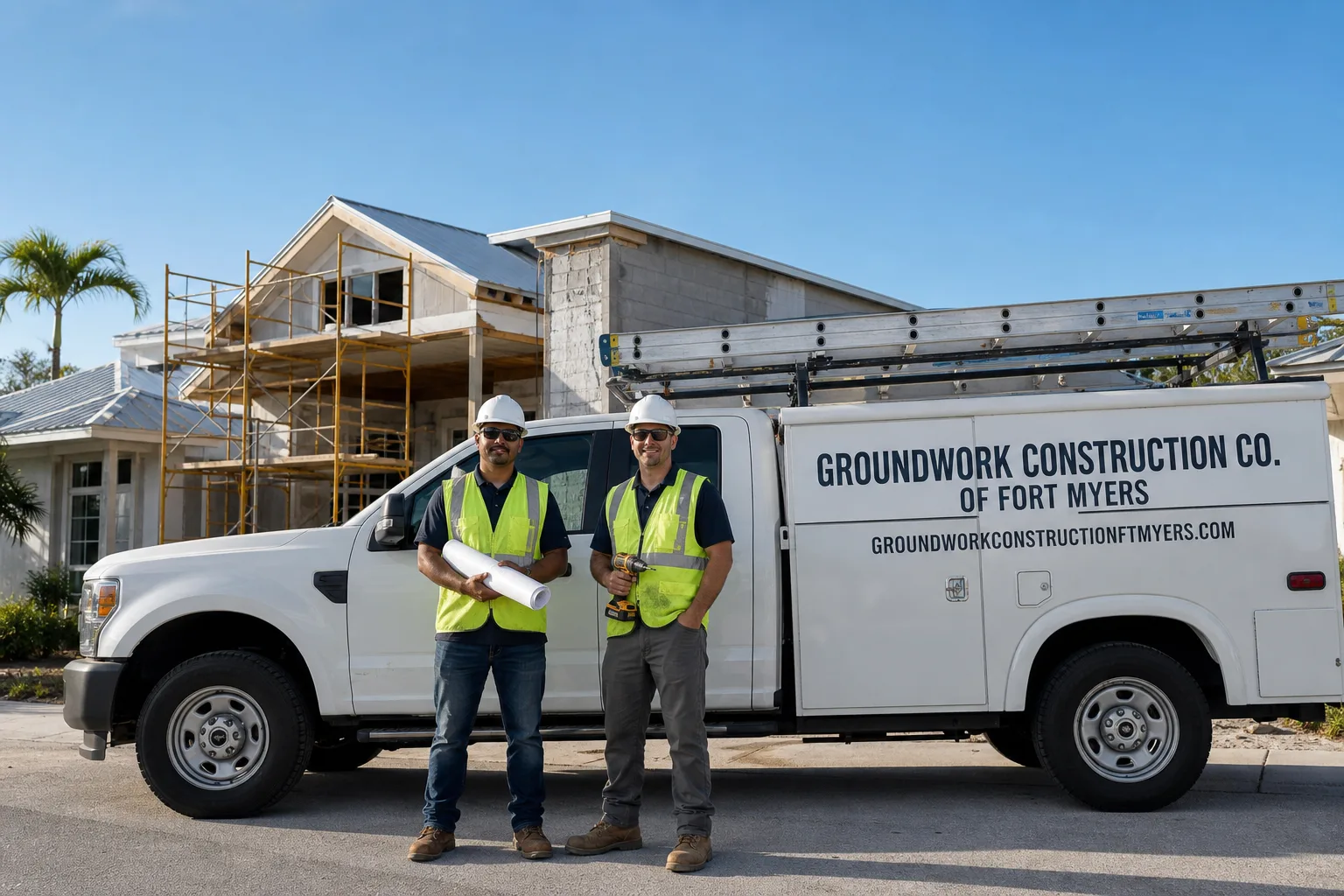
What a Wood Fence in Island Walk Actually Costs and How Long It Takes
A wood fence in Island Walk typically runs $3,500 to $9,000 for a standard residential lot, with most installations completed in three to five working days. That range covers pressure-treated pine up through premium cedar, and it assumes the DiVosta poured-concrete wall system we’re all dealing with here, which changes how every post hole gets dug. Call us at (844) 638-7249 for a written, line-item estimate specific to your property - there’s no charge for it, and the number on the quote is the number you’ll pay.
How We Build a Wood Fence in Island Walk, Start to Finish
Day Zero - The Walkthrough and Markout
This happens before any tool touches the ground. We walk the property line with you, confirm exactly where the fence runs, and mark every post location with paint on the ground. If your lot backs up to one of Island Walk’s lakes or canals, we flag the FEMA flood zone setbacks right then - some sections can’t extend past a certain line without triggering elevation requirements. You’ll make the big decisions at this stage: wood species, fence height, gate placements, and whether you want shadowbox or solid-panel privacy. We file the Dig-Safe ticket before we leave, and we’ll ask if you have a current survey - it saves time if you do, but we can work off the plat if you don’t.
Day One - Core Drilling and Post Setting
Here’s where Island Walk stops being like the rest of Collier County. Most fence crews in Florida show up with a standard auger expecting sandy soil over limestone - and that’s true for the dirt part. But DiVosta didn’t build with hollow CMU block, and when a post needs to go near the house or along a poured-concrete patio stem wall, a standard hammer drill and masonry bit won’t do it. We bring a water-fed core drill to cut clean post-base penetrations through solid concrete without cracking the surrounding slab. Every post is set in high-strength concrete, plumbed twice, and left to cure overnight before any rails or pickets are hung. This stage on a typical Island Walk lot takes one full day, sometimes a day and a half if the fence perimeter runs along a poured lanai base.
Day Two - Rails, Pickets, and Gate Framing
With the posts locked in, we frame the horizontal stringers - three rails for anything six feet or taller, which is most privacy fencing in Island Walk - and then start hanging pickets. Wood expands and contracts with humidity, and we’re in a nine-month summer here, so we gap pickets slightly tighter than standard at install to account for shrinkage during the dry winter that follows. Gate frames are built on the ground with diagonal bracing, then hung with adjustable heavy-duty strap hinges - nobody wants a sagging gate a year later. You’ll see the fence take its full shape by the end of this day.
Day Three - Stain, Seal, and Hardware
Pressure-treated pine needs to dry before staining, so if you’ve chosen PT, we’ll usually schedule the stain for a separate visit a few weeks out once the wood’s moisture content reads below a target we test on-site. Cedar can be sealed immediately if you want it - we apply a penetrating oil-based sealer that shields against UV and the constant humidity Island Walk’s lakeside microclimate throws at wood. Latches, locking hardware, and cane bolts go on, and every gate gets a tension adjustment so it swings true.
Day Four - Walkthrough and Punch List
We walk the full fence line with you. Any picket that isn’t sitting right, any gate that feels off, we fix it then. This is also when we’ll point out what to expect as the wood settles over the first six months - small gaps opening at board edges, slight color shifts - so nothing surprises you. Our 730-Day Done Right Promise covers workmanship on every wood fence we build in Island Walk, so if something moves that shouldn’t, we’re back.
The Wood Choices You’ll Actually Pick Between
- Pressure-Treated Southern Yellow Pine: The workhorse. It’s the most common wood fence material in Southwest Florida because it handles ground contact well and costs less up front. The trade-off is movement - PT pine twists and checks as it dries, especially during Island Walk’s wet-summer-to-dry-winter swings. Budget in the $3,500-$5,500 range, and plan on sealing it once it’s dry.
- Western Red Cedar: Lighter, more dimensionally stable than PT pine, and naturally rot-resistant without chemical treatment. It weathers to a silver-gray if left unsealed, which some homeowners in Island Walk lean into - it complements the Mediterranean stucco color palette DiVosta used across the community. Usually lands in the $5,500-$7,500 range depending on linear footage and gate count. Higher material cost, lower maintenance over time.
- Board-on-Board vs. Shadowbox vs. Solid Panel: Board-on-board gives full privacy with a staggered-picket design that also lets some airflow through - useful on lots where a solid 6-foot wall turns a lanai into a wind tunnel. Shadowbox is semi-private; you see through from an angle but not straight on. Solid panel is full visual block, the most popular choice along Island Walk’s back-lot lines facing neighbors. Price moves maybe $400-$800 across these styles on an average lot, mostly driven by the extra picket footage required for board-on-board.
- Metal vs. Wood Post Framing: We offer steel-reinforced post mounts for gate sections and high-load corners. A powder-coated steel post inside a wood sleeve won’t warp, and in Island Walk’s lakeside soil zones - where ground moisture stays elevated year-round - we recommend it on the gate posts at minimum. It adds roughly $150-$250 per post, and it eliminates the most common wood fence failure we see: a post that bows and pulls the gate latch out of alignment.
What a Wood Fence Costs in Island Walk, FL
A wood fence in Island Walk runs $3,500 to $9,000, with most homes landing between $5,000 and $6,800. The six variables that push a job to the low or high end are:
- Linear footage: An Island Walk lot with a standard side-and-back perimeter is one thing; corner lots or lots that wrap around a lake require more fence line, and the cost scales almost linearly with material and post count.
- Wood species: PT pine at the low end, cedar at the middle, and if you want ipe or a tropical hardwood for extreme durability - rare here but we’ve done it - the material cost jumps sharply.
- Gate count and hardware grade: One walk gate is standard. Double-drive gates for lanai or golf-cart access add real labor and hardware cost. Adjustable hinges, locking latches, and drop-rod cane bolts on a heavy gate run more than basic zinc hardware.
- Concrete penetration: If your fence line abuts the house foundation, a pool deck, or the poured-concrete patio that’s standard on DiVosta builds, every post base that meets concrete requires core drilling rather than dirt augering. That’s a slower, wetter, more specialized process, and it affects the day-one labor line item.
- Demolition and haul-away of an old fence: If there’s an existing fence to pull, that’s a separate line item on your estimate - deconstruction, post-base demolition, and debris removal usually add $400-$900 depending on the length.
- Permit type: A straight replacement often moves faster at the county level. If you’re installing a new fence where none existed, or if your lot is in a FEMA-designated flood zone, expect plan-review time and a slightly higher permit fee. We pull every permit and the line item on your quote is exactly what the county charges - no markup on permits.
Every estimate we write for an Island Walk wood fence includes a full line-item scope: post count, board footage, gate hardware specified by brand and finish, concrete for post footings, a stain-and-seal allowance or an exclusion note if you prefer to handle finishing yourself, permit fee, and debris removal. There is no change-order surprise halfway through because we already priced the DiVosta concrete work off the walkthrough. Call (844) 638-7249 for your free estimate - we’ll walk the property and give you a written number the same day.
What Island Walk Specifically Does to This Job
Island Walk wasn’t built the way most of Collier County was built, and it shows up the moment we start laying out a fence line. DiVosta Homes used solid poured concrete for the exterior walls, patios, and lanai slabs across almost every home constructed here between the mid-1990s and mid-2000s. That matters for fencing because about half the wood fences we install in Island Walk tie into or run alongside a section of poured concrete - a patio edge, a walkway, the side of the garage - and a standard fence crew that doesn’t show up with a core drill is going to waste a morning figuring out how to anchor posts through six inches of solid concrete without cracking it. We’ve been doing it long enough that it’s just part of the day-one plan. The other piece worth knowing: many Island Walk lots sit adjacent to the lakes and canals that give the community its name, and those water-adjacent sections fall under FEMA flood zone regulations that can affect post-footing depth requirements and the type of concrete mix the county wants to see. Our fence installation crew is familiar with both the DiVosta build method and Collier County’s flood-zone submittal checklist, so you’re not paying for someone else’s learning curve. If you’re pairing a fence with a wider property upgrade - a new Paver Driveways in Island Walk project, for instance - we can sequence the two so the fence goes in after the hardscape, avoiding a redo on either end.
Serving Island Walk, FL - Our Local Coverage Area
We’re based in the Island Walk area and know this community well. Use the map below to see our service coverage - if you’re nearby, we can almost certainly help.
Frequently Asked - Wood Fence in Island Walk
Yes, both. Island Walk is a deed-restricted community with an HOA that reviews and must approve fence style, height, material, and color before the county permit can be issued. We’ve worked through that ARC (Architectural Review Committee) process enough times to know what passes - cedar and PT pine in neutral stain tones are standard approvals, and 6-foot height is the typical cap - but the final sign-off is the HOA’s, not ours. On the county side, Collier County requires a fence permit for new installations and for replacements that change material or height. We pull the permit and handle the paperwork, including any flood-zone documentation if your lot is lake-adjacent. For added peace of mind, our 730-Day Done Right Promise backs every fence we build, so you’re covered long after the ARC inspection is signed off.
A well-built pressure-treated pine fence in Island Walk should give you 15 to 20 years with basic maintenance - sealing every two to three years, keeping sprinklers from soaking the bottom rails, and replacing the occasional picket that warps. Cedar can push past 25 years if it’s sealed and the posts were set correctly. The real enemy in Island Walk isn’t termites - it’s ground moisture at the post base, especially on lots that slope toward one of the community’s lakes. That’s why we set every post in concrete and, for cedar installs, use a gravel base at the bottom of the hole so water drains away from the post end grain. You can call us at (844) 638-7249 if you’re looking at an older fence and want a straight read on whether it’s worth repairing or time to replace - estimates are always free.
No. The number on your written estimate is the number you pay, unless you ask us to add scope - extra gates, a longer run, a change in wood species - after the walkthrough. From the initial site visit we already know what the DiVosta concrete will cost us in labor, we already know the lot dimensions, and we already know what the permit office requires. If a post hits unexpected underground rock or debris, we eat that time, not you. This is what upfront pricing means: the risk is ours. Ask around Island Walk and you’ll hear this is exactly what separates a Fence Installation crew that shows up ready from one that renegotiates halfway through the job.
You can, and about a third of the wood fence clients in Island Walk choose to handle finishing on their own timeline. If we’re using pressure-treated pine, we’ll install it and then recommend waiting four to six weeks - sometimes longer during the humid summer - for the wood’s moisture content to drop enough to accept stain. Cedar can be sealed immediately, so if you want us to handle it we’ll do it within days of the build. If you’re doing it yourself, we’ll give you exact product specs for what we’ve seen hold up best against the UV and moisture conditions around Island Walk’s lakeside lots. We’re also happy to include staining in the original Fence Installation in Island Walk quote so you know the all-in number up front.
Lakeside setbacks in Island Walk are governed by both the HOA community plat and Collier County flood-zone regulations. We’ll pull the FEMA panel map for your lot during the estimate, and if the fence encroaches into a designated flood zone, the permit submittal requires an elevation certificate and possibly a specific footing detail. Some lake-edge lots also have a drainage easement on the back property line that limits how close a fence structure can be to the water. We confirm all of this before we submit for the permit, so there are no stop-work surprises. If you’re also considering hardscape work near the fence line, homeowners often pair a wood fence project with a Concrete Driveways & Concrete Work in Island Walk upgrade - we can coordinate both scopes so the fence and slab edges don’t conflict.
Get a Written Estimate for Your Island Walk Wood Fence
We’ll walk your lot, account for the DiVosta concrete, check the flood-zone map, and hand you a line-by-line price for a wood fence built to handle Island Walk’s specific conditions. The estimate is free, it’s detailed enough that you’ll know exactly what every dollar covers, and you’ll get it the same day. Our fence crews are background-checked, uniformed, and backed by the 730-Day Done Right Promise - if something isn’t right, we make it right. Call (844) 638-7249 or book the walkthrough through our Island Walk service page. We answer the phone with a live person, day or night.
Written by Derek Hollenbeck, Owner at Groundwork Construction Co., serving Island Walk homeowners with upfront pricing and the 730-Day Done Right Promise.