
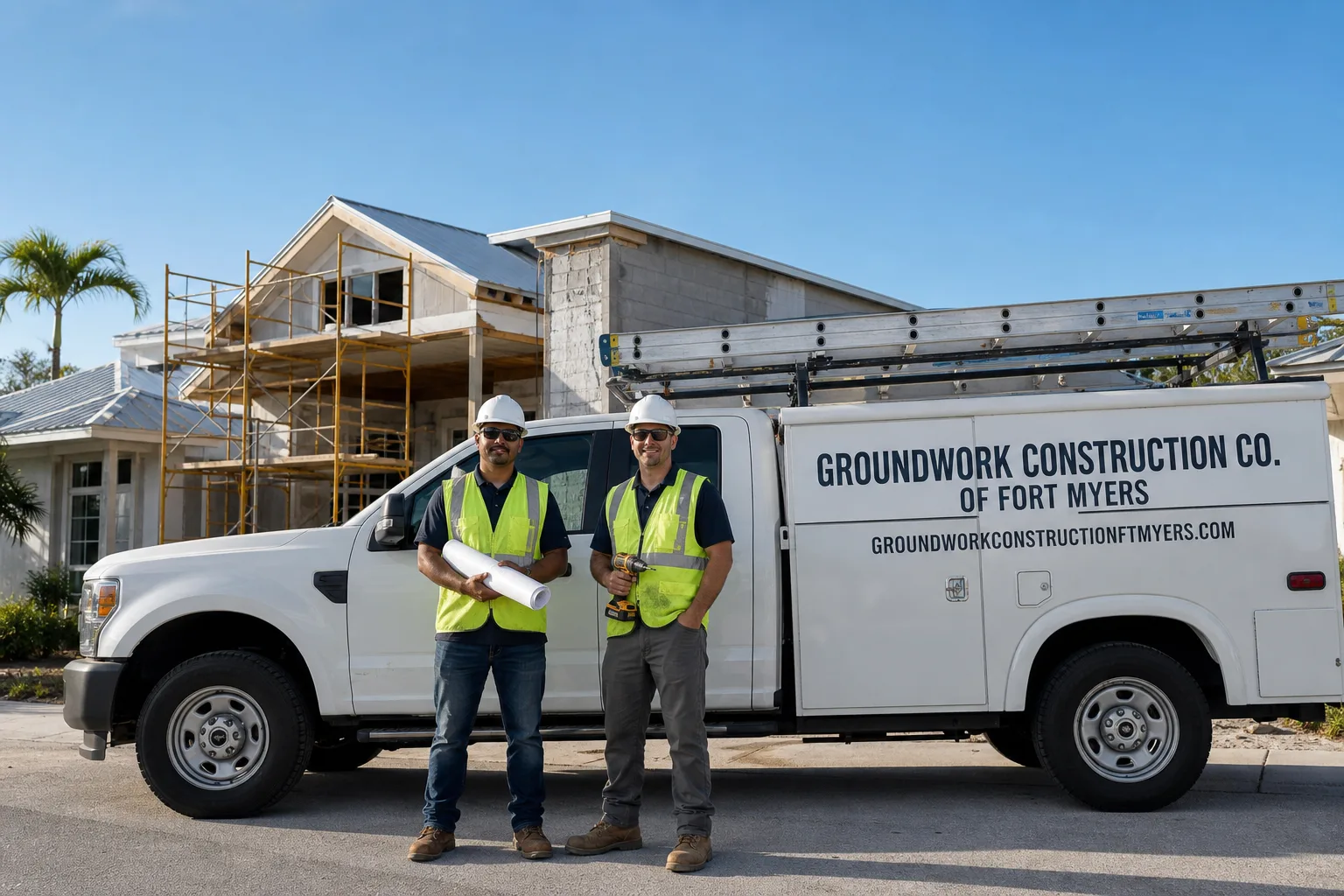
What Emergency Storm Damage Triage Actually Costs and Takes in LaBelle, FL
Emergency storm damage repair in LaBelle, FL typically runs from $1,200 to $8,500 for the immediate stabilization phase (tarping, board-up, water mitigation, structural bracing), while the full rebuild of storm-damaged sections on a home here commonly lands between $8,000 and $45,000 depending on how far the water climbed and what the FEMA substantial-improvement rule triggers. Most jobs we triage can be stabilized same-day so the property is secure and insurable while the rebuild scope gets worked out. Call (844) 638-7249 the moment you see damage, and we’ll have a live person dispatch a crew to your property in LaBelle within hours, not days.
On rural acreage lots across LaBelle, storm damage rarely stops at the house. Detached workshops, horse barns, equipment sheds, and oversized garage doors take a beating when a tropical system rolls through the Caloosahatchee Valley. Heavy-duty door systems on those outbuildings often need full spring and track replacement after wind-driven rain and debris compromise the hardware, and we carry commercial-grade springs and opener assemblies on our trucks because we know a single trip matters when you are running a farm or citrus operation. That one-trip, heavy-duty capability is the whole reason we stock the truck differently for a LaBelle call than we would for a suburban Fort Myers job.
Derek Hollenbeck has structured our emergency response around a simple principle: get the property dry, get it secure, and document everything in a written line-item estimate that holds up with your insurer and with Hendry County’s post-Ian building officials. You will not chase us for answers. You will not wait until Monday for a callback. A real person answers at (844) 638-7249, day or night, and our background-checked crew shows up in uniform, ready to work.
The Emergency Triage and Rebuild Sequence for Storm-Damaged Homes
Storm damage in LaBelle follows a different rhythm than in coastal towns. The water here comes from the river, not the Gulf, so flooding often arrives a day or two after the storm passes, when the South Florida Water Management District opens the gates at Lake Okeechobee. That means homeowners get a narrow window to act before the Caloosahatchee rises. Our process is built for that reality.
Stage 1: Immediate stabilization (hours 0-24). The first goal is stopping further damage. We tarp compromised roof sections with reinforced polyethylene secured to code, board up broken windows and doors with rated plywood, and set up commercial dehumidifiers and air movers if water has entered the envelope. On a typical LaBelle CBS home with a shingle roof, we can have the structure weathertight by end of day. For rural properties with multiple outbuildings, we triage by priority: house first, then any structure containing livestock or equipment.
Stage 2: Damage documentation and insurance scoping (days 1-3). Before we pull a single damaged board, we photograph everything. This is non-negotiable for your claim and for Hendry County’s post-disaster permitting record. We measure the water line, document the materials and condition of every affected surface, and produce a detailed scope of work with line-item pricing. If your damage appears to exceed 50% of the structure’s pre-storm value, we flag the FEMA substantial-improvement rule immediately so you know an elevation retrofit may be required before we get deep into the rebuild. We also handle this conversation with your adjuster directly; you should not be the go-between.
Stage 3: Demolition and dry-in (days 2-7, permitting-dependent). Once the scope is signed and the permit is pulled with Hendry County, we strip water-damaged drywall, insulation, flooring, and any compromised sheathing or framing. On slab-on-grade homes in LaBelle’s historic core, the muck and sandy loam soils that saturate during a river flood event mean we pay particular attention to the sill plate and bottom chord of wall framing: prolonged ground saturation here wicks moisture up into the wall cavity, and what looks dry on the surface is often rotted six inches up. We cut until we hit sound material, no shortcuts. Then we dry the cavity to a verified moisture content and install new sheathing and weather barrier so the structure is fully dried-in.
Stage 4: Structural repair and elevation compliance (days 7-21+). This is the stage that separates a LaBelle rebuild from a generic storm repair. If your parcel was rezoned from Zone X to Zone AE in the post-Ian FEMA map revision and your damage triggered the 50% rule, we are now engineering an elevated stem wall or pier-and-beam foundation to bring the finished floor to the new Base Flood Elevation. That means cutting the house loose from the slab, lifting, and building up. On agricultural outbuildings that were never permitted to modern flood code, we work with Hendry County to bring the structure into compliance without losing its functional use. This stage also includes replacing roof trusses or rafters, re-sheathing the roof deck, and installing the underlayment and finished roofing material, which we often tie into a Roofing in LaBelle scope so the entire assembly is warrantied as one system.
Stage 5: Finish work, trim, and final inspection (days 21-45+). Drywall, tape, texture, paint, flooring, baseboards, door and window casing, cabinet reinstallation if the lower boxes were pulled. We match existing finishes where possible; where the damage was extensive enough that matching is impractical, we present you with options for a full refresh of the affected rooms. Every job closes with a Hendry County final inspection and a walkthrough with Derek or your project lead. The 730-Day Done Right Promise applies to the entire rebuild, from the new stem wall to the paint on the ceiling.
Materials and Spec Choices That Hold Up to Riverine Flooding and Wind
Standard building materials fail fast in LaBelle’s specific combination of prolonged ground saturation, high humidity, and 55 inches of annual rainfall concentrated in a four-month wet season. The choices you make at the rebuild stage determine whether you are repairing the same damage again in five years or building something that outlasts the next flood event.
- Flood-resistant sheathing vs. standard OSB. Standard oriented strand board swells and delaminates after even brief water contact. We spec fiberglass-faced gypsum or closed-cell rigid foam sheathing for the bottom four feet of exterior walls on any LaBelle home in a flood-prone zone. It costs about $1.80-$2.50 more per square foot of wall area but eliminates the rot cycle that standard OSB guarantees in a repeat flood.
- Closed-cell spray foam insulation vs. fiberglass batts. In a wall cavity that may see moisture again, fiberglass batts act like a sponge and hold water against the framing for weeks. Closed-cell spray foam is hydrophobic, adds structural racking strength, and doubles as a vapor barrier. On a 1,500-square-foot exterior wall scope, the delta is roughly $2,800-$4,200, and for homes on the Caloosahatchee floodplain, it is the single best money you can spend during a rebuild.
- Impact-rated windows vs. standard tempered glass. LaBelle is inland enough that some homeowners assume they can skip impact glazing. The windborne debris maps say otherwise: Hendry County is in the windborne debris region, and any window replacement on a storm-damaged home must meet Florida Building Code impact standards. We carry Andersen and PGT impact-rated units; the cost difference between a standard insulated unit and a rated impact window is roughly 25-40%, and skipping it is not an option if you want to pass inspection. Homeowners who are already opening walls for storm repair often pair this with Custom Windows & Doors in LaBelle so the entire fenestration package is upgraded in one permit pull.
- Fiber cement siding vs. vinyl. Vinyl siding is common on LaBelle’s manufactured homes and agricultural buildings, but it blows out easily in a tropical system and does nothing to protect the sheathing from flying debris. Fiber cement (James Hardie) carries a higher wind load rating and is non-combustible. On a standard ranch home, the material cost difference is roughly $3,500-$6,000 installed, and it typically returns that in insurance premium reduction over five to seven years.
- Heavy-duty garage door systems for detached outbuildings. The oversized doors on LaBelle workshops, barns, and equipment sheds are often 10×10 or 12×12 commercial-style units with high-cycle torsion springs. After a storm, those springs are frequently overextended or snapped. We replace them with 25,000-cycle spring assemblies rated for the weight of a reinforced steel door, and we spec jackshaft openers instead of ceiling-mount trolley units so the opener is mounted to the wall, away from flood-prone floor elevation. This is the kind of heavy-duty, one-trip fix that keeps a farm running.
What Emergency Storm Damage Repair Costs in LaBelle, FL
Emergency stabilization alone (tarp, board-up, water extraction, initial drying equipment) runs $1,200 to $8,500 in LaBelle, depending on the size of the damaged area and the number of structures involved. The full rebuild of storm-damaged sections spans $8,000 to $45,000, with the wide range driven entirely by how far the water climbed and whether the FEMA 50% rule forces an elevation retrofit.
The variables that determine where your job lands:
- Water line height. Damage confined to baseboards and flooring is at the low end. Water that reached the electrical panel, HVAC air handler, or upper cabinets pushes the job into the $25,000-$45,000 range because those systems must be relocated above the Base Flood Elevation.
- Structure type. A 1990s double-wide manufactured home on a rural LaBelle lot typically costs less to strip and rebuild than a CBS home in the historic core, but the manufactured unit is far more likely to trigger the substantial-improvement rule because its pre-storm market value was lower, meaning a higher percentage of damage relative to value.
- Foundation work. If your parcel is now in Zone AE and you must elevate, the foundation scope alone adds $15,000-$35,000. This is the cost that blindsides LaBelle homeowners who have not checked the updated flood map since Ian.
- Outbuilding count. On acreage properties with detached garages, barns, and sheds, each additional structure adds its own stabilization and repair scope. We provide a single bundled estimate so you are not managing three different contractors.
- Material upgrades. Choosing flood-resistant sheathing, closed-cell insulation, impact windows, and fiber cement siding over builder-grade materials adds 20-35% to materials cost but dramatically reduces the likelihood of a repeat claim.
Every estimate we write is a fixed-price, line-item document. There are no change orders unless you change the scope. The number you see is the number you pay. We also offer 0% financing for 18 months and $1,000 off projects over $10,000, because we know a storm rebuild is never a planned expense. Call (844) 638-7249 for a free, on-site estimate that gives you real numbers, not ballparks.
How LaBelle’s Floodplain, Soils, and Housing Stock Reshape Every Storm Job
LaBelle’s position on the Caloosahatchee River creates a storm damage profile that is distinct from anything you will see in Fort Myers or Lehigh Acres. The flooding here is riverine, not coastal surge, which means it arrives late and stays long. When the SFWMD releases water from Lake Okeechobee after a major storm, the river can remain above flood stage for days or weeks. That sustained inundation, combined with the muck and sandy loam soils that dominate the Caloosahatchee floodplain, saturates foundation pads and wicks moisture into wall assemblies in ways that a quick-draining coastal lot never experiences.
The housing stock compounds the challenge. Hendry County has one of Florida’s highest concentrations of manufactured and mobile homes, and much of LaBelle’s residential inventory is older single- and double-wide units from the 1980s and 1990s on rural acreage. These homes sit low to the ground on pier foundations, with skirting that offers zero flood resistance. When the river rises, water flows underneath and into the floor cavity almost immediately. The post-Ian rebuild wave in LaBelle has been dominated by these units, and a significant portion of them crossed the 50% damage threshold, triggering the FEMA requirement to elevate the entire structure to the new Base Flood Elevation. That rule, tied to FEMA’s revised flood maps that moved many LaBelle parcels from Zone X into Zone AE, means a homeowner who thought they were getting a straightforward floor replacement is now looking at a stem wall or pier-and-beam elevation retrofit. We flag this on day one because pretending it does not exist only leads to a stop-work order from Hendry County.
In the historic core near Bridge Street and along the riverfront neighborhoods, the older CBS homes on slab have a different vulnerability: prolonged ground saturation rots the sill plate from below, and the damage is invisible until you strip the drywall. We pressure-test and probe every sill plate on a flood-damaged LaBelle slab home, and we replace any section that reads above 19% moisture content. It is tedious work, and it is non-negotiable. The same principle applies to the detached workshops, pole barns, and equipment sheds that are standard on LaBelle acreage properties: post-storm, we check every overhead door spring, every track, every opener, and we spec heavy-duty replacement components rated for the weight and cycle count that a working agricultural building demands. Most of our Roofing crew has spent enough time on LaBelle job sites to know that a barn roof repair is just as urgent as the house when your livelihood is inside it.
We also see homeowners using the storm rebuild window as an opportunity to add projects that were already on the list. A flood-damaged kitchen remodel often expands into a full Custom Windows & Doors in LaBelle upgrade because the walls are already open and the permit is active. On larger properties with perimeter fencing blown out by wind, we often bundle Wood Fence in LaBelle replacement into the rebuild scope so the entire property is restored under one contract. It is a practical way to save on mobilization and permitting costs while getting the whole homestead back to whole.
LaBelle works differently. The flood risk is riverine. The soils hold water. The housing stock skews older, lower, and more vulnerable than the county average. The permitting requirements are stricter post-Ian than most homeowners realize. Our job is to walk you through all of it with straight answers and a fixed price, and to show up with a crew that understands the difference between a LaBelle acreage property and a suburban subdivision in LaBelle. Call (844) 638-7249 and we will be on site within hours to start the triage.
Serving LaBelle, FL - Our Local Coverage Area
We’re based in the LaBelle area and know this community well. Use the map below to see our service coverage - if you’re nearby, we can almost certainly help.
Frequently Asked: Emergency Storm Damage Repair in LaBelle, FL
We dispatch a crew within hours of your call, day or night, and our trucks are stocked specifically for LaBelle’s acreage properties (heavy-duty tarps, commercial dehumidifiers, high-cycle garage door springs, and impact-rated board-up materials). A real person answers at (844) 638-7249, and we coordinate directly with your insurer so you are not stuck playing middleman at 2 a.m.
Emergency stabilization work (tarping, board-up, water extraction) does not require a permit in Hendry County. Any structural repair, roof replacement, or electrical work beyond resetting a breaker does require a permit, and post-Ian, the county is enforcing floodplain compliance strictly. If your damage crosses the 50% threshold, you will need an elevation retrofit to current Base Flood Elevation. We handle the permit pull and the FEMA compliance documentation so you are not navigating that alone.
It depends on the water line and whether the electrical panel and HVAC equipment were submerged. If floodwater reached the breakers or the air handler, the home is not habitable until those systems are replaced and inspected. For jobs where damage is confined to flooring and lower drywall with no electrical contact, you can often remain in the home with containment barriers separating the work zone. We give you a straight answer at the estimate, not a guess.
Most homeowners policies cover wind-driven rain and structural damage from fallen trees, but standard policies generally exclude riverine flood damage unless you carry a separate NFIP or private flood policy. LaBelle’s post-Ian reality is that the river flooding was the primary damage mechanism on many properties, and homeowners without flood coverage were left with out-of-pocket rebuild costs. We will work directly with your adjuster and provide the documentation they need, but we also give you a fixed-price estimate so you know exactly what your exposure is before the first check arrives.
A repair confined to flooring, drywall, and paint on a single-story home typically runs three to six weeks. A rebuild that includes foundation elevation to meet Base Flood Elevation, plus structural repair and full interior finish, generally takes eight to sixteen weeks depending on the scope of the elevation work and Hendry County inspection turnaround. We give you a written schedule at contract signing and update it weekly. Call (844) 638-7249 for a timeline specific to your property.
Start With a Free, On-Site Estimate for Storm Damage Repair in LaBelle
You need a crew that can triage the damage today and a contractor who will write a fixed price you can take to your insurer without wondering what got left out. Call (844) 638-7249 now to schedule a free on-site assessment of your storm damage in LaBelle. We will have a background-checked, uniformed crew at your property within hours, a written line-item estimate in your hand, and a rebuild plan that accounts for Hendry County’s post-Ian flood compliance requirements. Upfront pricing, no surprises, and the entire job backed by our 730-Day Done Right Promise.
Written by Derek Hollenbeck, Owner at Groundwork Construction Co., providing emergency storm damage repair and rebuild services to LaBelle homeowners with straight answers, fixed pricing, and a guarantee that lasts.