
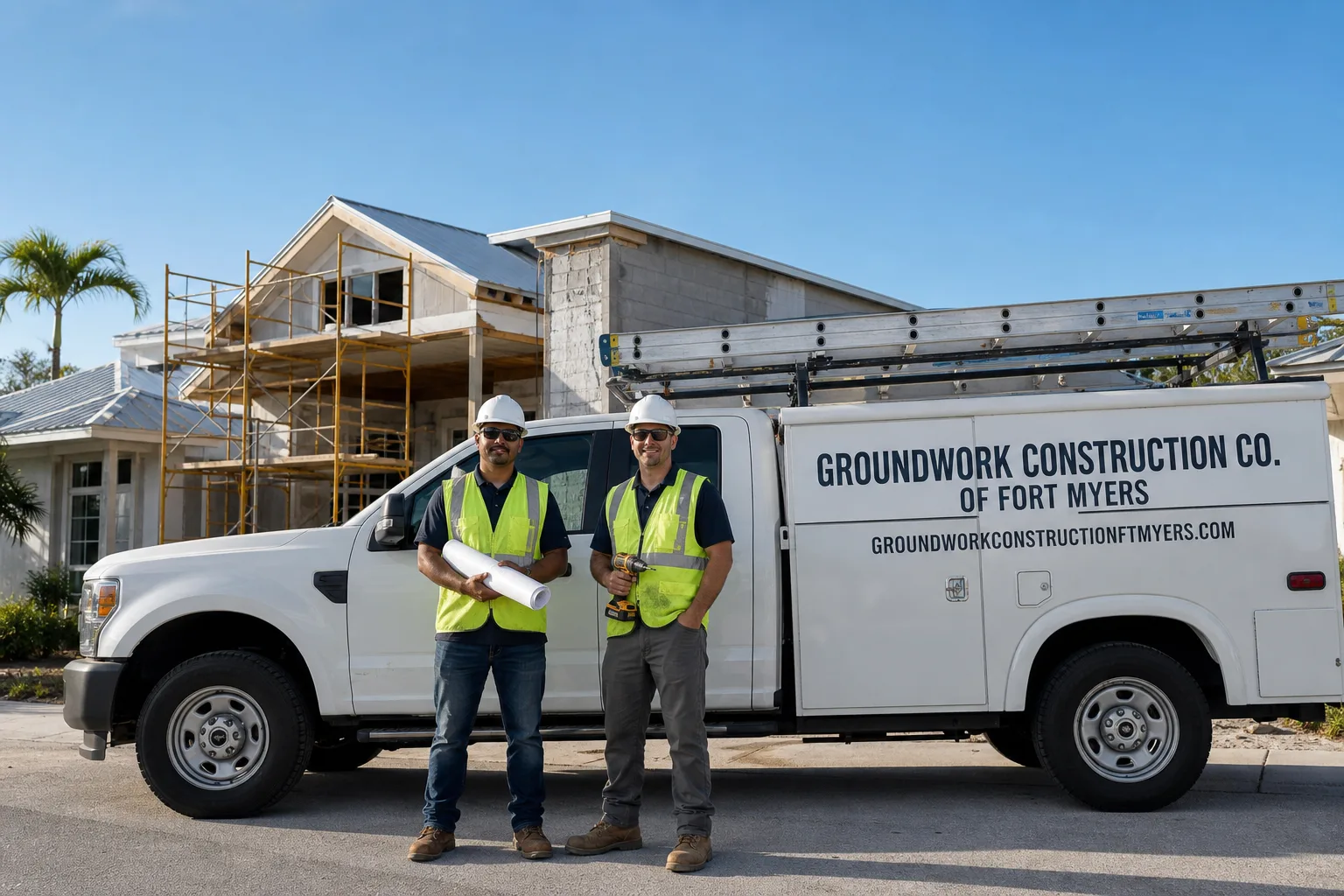
What tile roofing costs and what to expect in Port LaBelle, FL
Tile roofing in Port LaBelle runs $12,000-$38,000 for a full install on an average home, and tile roof repair specific to cracked or wind-shifted tiles lands between $600 and $2,500. The spread is real because Port LaBelle’s housing stock is wildly inconsistent: a 1980s CBS ranch on a compact lot needs less structural prep than a new build on a raw paper-platted lot where the soil has never been compacted under a finished roof load. We show up for a free on-site review, give you a written line-item price, and you reach a live person at (844) 638-7249 when you call to schedule it. No voicemail, no waiting for a callback.
How tile roofing comes together, day by day
We don’t rush a tile roof. The sequence matters, especially in Port LaBelle where wind-load calculations and pre-existing deck conditions vary so much from lot to lot. A straightforward tile roof on an existing home usually wraps in five to seven working days, but if we’re building on a lot that sat as paper plat since the ’70s, there’s more to do before the first tile goes down. Here’s how the stages actually play out.
Stage 1: On-site evaluation and wind-load calcs. Before you pick a tile profile, we look at what’s under the roof. On Port LaBelle homes from the ’80s and ’90s, we often find asphalt shingle underlayment that’s been baked for decades, or wood decking with hidden soft spots near the eaves where hurricanes pushed water sideways. We measure the roof deck deflection and check if the existing trusses can handle the added dead load of tile - concrete tile runs 600 to 1,100 pounds per square, roughly three times the weight of asphalt shingles. If the structure needs bracing, we tell you before you spend a dollar on materials. This stage takes one visit, about an hour and a half on site.
Stage 2: Permitting and any pre-construction swale work. Hendry County’s permit review for a tile roof in Port LaBelle frequently triggers a look at the drainage swale in front of the lot. If the swale is silted over or was never properly graded - common on General Development Corporation platted lots - the county wants it restored before framing or structural work proceeds. We coordinate that restoration, pull the roof permit, and file the wind-load certification. This stage runs one to three weeks, depending on how fast the county moves and whether we’re sequencing swale work alongside the roof.
Stage 3: Deck prep, underlayment, and high-heat flashing. Tile is only as waterproof as what’s underneath it. We strip old roofing, replace damaged decking, and install a high-performance synthetic underlayment with a peel-and-stick membrane at all valleys, eaves, and penetrations. In Port LaBelle, where summer heat indexes sit above 100 degrees for weeks, we use underlayments rated for high-temperature UV exposure during the construction window - because a roof sitting in direct sun for four days before tile goes on can cook a cheap underlayment. New galvanized or stainless flashing at every chimney, vent, and skylight goes in during this stage. This takes two days for most homes.
Stage 4: Tile installation and attachment method. We install tile in a staggered pattern, fastening each piece according to the wind zone requirement. Hendry County sits in a high-velocity wind zone, so mechanical fastening - screws or clips, not just gravity - is required on the perimeter and ridge, and in many cases across the entire field of the roof. We follow the manufacturer’s installation spec exactly, because that’s what the warranty and the inspector need to see. Tile layout takes two to three days on a typical Port LaBelle ranch, longer on a larger or more complex roofline.
Stage 5: Ridge cap, cleanup, and final inspection. We mortar or mechanically fasten the ridge caps, run a final alignment check, and walk the roof with two sets of eyes before calling for the county inspection. Cleanup includes a magnetic sweep of the entire perimeter - tile work generates broken pieces and nail points, and you shouldn’t find either in your yard a week later. The Hendry County inspector signs off, we hand you the paperwork, and your tile roof is live. Total timeline from permit to final walkthrough: two to five weeks, with weather as the biggest variable.
The tile and trim choices you’ll sort through
A tile roof is a 50-year product if you pick the right material for Port LaBelle’s climate and your home’s structure. These are the decisions every homeowner here makes.
- Concrete tile vs. clay tile. Concrete tile dominates Port LaBelle because it’s lighter on the wallet and handles impact well - hailstones and wind-driven debris bounce instead of cracking. Clay tile is lighter per square and holds its color longer under Florida UV, but it’s more brittle and costs 20-30% more. If you’re near the Caloosahatchee floodplain and weight is a structural concern, clay can be worth the premium because it reduces the dead load by about 200 pounds per square.
- Flat profile vs. barrel profile. Flat tile looks clean, weighs less, and sheds wind better because there’s less uplift surface. Barrel tile, or S-tile, gives you that classic Mediterranean silhouette but catches more wind and costs more per square to install due to the fiddly alignment. For homes in open lots with no windbreak - common in the unbuilt stretches of Port LaBelle - we steer people toward flat or a low-profile barrel that sits tighter to the deck.
- Color and solar reflectance. Light-colored tile drops attic temperature 20-30 degrees compared to dark tile in a Port LaBelle August. We stock colors from Eagle and Boral that meet Florida Energy Code reflectance minimums, and you’ll pick between terracotta tones, buffs, greys, and whites. The color you choose affects your cooling bill from day one, so it’s an energy decision, not just a look.
- Underlayment grade. You pick the tile, but you also get a choice on the underlayment system. A standard synthetic underlayment meets code. A double-layer self-adhered system - what we recommend here - adds about $1,200-$2,400 to a Port LaBelle roof and buys you a secondary water barrier that stays sealed around nail penetrations. In a county that catches tropical storms every few years, that second layer can be the difference between a dry attic and a ceiling stain.
- Edge and ridge finish. You’ll choose between standard rake trim, which covers the tile edges at the gable, and a raised ridge vent system that improves attic airflow. Port LaBelle humidity makes ventilation matter - a ridge vent paired with soffit intake keeps the attic dry and extends the life of the tile and the decking under it.
What tile roofing costs in Port LaBelle, FL
A full tile roof on a Port LaBelle home lands in the $12,000-$38,000 range. Repair work - swapping broken tiles after a storm, re-securing loose ridge caps, replacing a section of failed underlayment - typically runs $600-$2,500. The gap between $12,000 and $38,000 is not because we’re guessing; it’s because these variables push the number in different directions on every house.
Roof size and complexity. Square footage is the single biggest driver. A 1,600-square-foot ranch with a simple gable roof sits near the bottom of the range. A 3,200-square-foot home with hips, valleys, and multiple dormers pushes toward the top because the labor hours multiply and material waste percentage climbs on complex geometry.
Existing deck condition. If the current roof sheathing is sound, we go straight to underlayment. If we find rotted OSB or delaminated plywood - and in a Port LaBelle home that’s seen 30 years of humidity and storms, we often do - replacing decking adds $3-$7 per square foot of affected area.
Structural reinforcement. Concrete tile is heavy. Some ’80s and ’90s trusses were designed for lightweight shingle loads, not 600-plus pounds per square. If we need to sister trusses or add bracing to meet code, that adds $1,800-$5,000 depending on the span and access.
Tile grade and profile. Entry-level concrete flat tile runs about $3-$5 per square foot installed. Premium clay barrel tile, with custom trim and high-wind fasteners, can hit $9-$12 per square foot installed. You pick the material, and the price moves accordingly.
Swale and site prep. If the Hendry County permit review flags the drainage swale - and in Port LaBelle, it frequently does on old GDC lots - restoring that swale is a pre-construction cost that sits outside the roof budget but must be done to pass inspection. We tell you early if that’s coming and what it costs.
Every estimate we write is a fixed, line-item number. You see the material cost, the labor, the permit fee, and any site-work line before you sign. No change orders because we found something we should have caught in Stage 1. Call (844) 638-7249 and we’ll walk the roof with you, no charge, no pressure.
Part of a larger exterior update? Our Roofing in Port LaBelle crew handles the full scope.
What Port LaBelle homes specifically do to a tile roof
Tile roofing in Port LaBelle is shaped by three things most other Southwest Florida towns don’t deal with in the same way: the paper-platted lot legacy, the floodplain elevation requirements, and the housing stock’s age spread. We’ve worked on Port LaBelle streets where one house went up in 1985 and the next one didn’t break ground until 2022 on a lot that had been a mowed field for 47 years. That means there’s no standard starting condition for a tile roof here. A new build on raw land needs compaction reports, stem wall elevations pegged to FEMA flood maps, and trusses engineered for tile from the start. An older CBS home might need decking repair and structural bracing before it can carry the load. And on those long-dormant GDC platted lots, the county’s swale review catches people off guard - the drainage ditch that was supposed to exist on paper in 1972 is now a barely perceptible depression full of palmettos, and it has to be restored before a roof permit clears. None of this is theoretical. It’s the reality of building on land that sat waiting for five decades while the rest of Florida filled in around it. If you need a Port LaBelle roofer who knows to check the swale before they quote tile, we’re that crew.
Wind-load compliance sits at the center of every tile roof we install here. Port LaBelle’s open layout - broad, flat lots with little tree canopy to break the wind - means the uplift force on a tile roof during a tropical storm is higher than it would be in a treed Fort Myers neighborhood a few miles west. We fasten tile with mechanical methods across the entire roof field, not just the perimeter, because the code plus our own experience says gravity and a prayer aren’t enough. The county inspector will check. We want them to check. Homeowners often pair a new tile roof with Impact Windows & Doors in Port LaBelle because the same wind event that tests your roof tests every window on the house.
Tile is a long-term roof, and in Port LaBelle’s humidity, the underlayment is the part that ages fastest. We see it on re-roofs: the tile itself looks fine at 25 years, but the felt underneath is brittle, cracked, and letting moisture through at the nail lines. The right synthetic underlayment, installed with the right overlap pattern, adds a decade to the system. We spec it that way because we’re the ones backing it with a 730-Day Done Right Promise - the work is done right or we make it right, period. That promise means more when the roof has to survive Port LaBelle wind and Port LaBelle heat without soaking your insulation.
Hendry County permitting adds a layer of scrutiny that out-of-area contractors sometimes miss. The tile roof permit package requires a structural engineer’s wind-load letter, specific to the tile system you select, before the permit moves. We prepare that as a standard part of the bid because we’ve pulled enough Port LaBelle permits to know the drill. Homeowners who are also upgrading the back of the house sometimes ask about Sliding & Patio Doors in Port LaBelle at the same time, and we can sequence the door and roof work so the house stays watertight through both.
For the broader roofing conversation - replacement, repairs, and material comparisons - see what our Roofing team covers across every service.
Serving Port LaBelle, FL - Our Local Coverage Area
We’re based in the Port LaBelle area and know this community well. Use the map below to see our service coverage - if you’re nearby, we can almost certainly help.
Frequently asked - tile roofing in Port LaBelle
Concrete tile itself lasts 50 years or more if the underlayment is maintained, but Port LaBelle’s humidity and storm cycles mean the underlayment typically needs replacement at 25-30 years. Clay tile can go longer on the tile itself but is more prone to impact cracks from wind-driven debris during tropical storms. The roof system, not just the tile, is what you’re watching. We include a written workmanship warranty and a manufacturer’s material warranty on every job, so you know exactly what’s covered at year 10 and year 25. Call (844) 638-7249 if you want us to look at an aging tile roof before the next storm season - estimates are free.
Yes, every tile roof install and most repairs require a permit in Hendry County. The permit package includes a wind-load certification from a structural engineer, and the county inspector visits before the tile goes down - to check the underlayment and attachment method - and again after the job is complete. We pull the permit as part of the work, and the cost is a line item in your estimate, not a surprise fee.
Sometimes yes, sometimes no, and the only way to know is to have an engineer look at what’s in your attic. A Port LaBelle home built in the ’80s with 2×4 trusses on 24-inch centers may not be rated for the dead load of concrete tile. We’ll tell you during the on-site evaluation if reinforcement is required and what it costs, so you’re deciding with real numbers, not hoping a heavy roof works on a light frame.
Wind-shifted or cracked ridge caps and perimeter tiles are the most common failures we see after a tropical storm or hurricane passes through. The wind gets under the edge tiles, lifts them, and either breaks the bond at the ridge mortar or cracks the tile itself where fasteners held but the material couldn’t flex. A post-storm inspection lets us replace the damaged pieces and re-secure anything that loosened, typically for $600-$1,200 on a standard repair. If the storm tore underlayment, the repair scope - and price - goes up.
You get a fixed, line-item price before you sign. We don’t write change orders because we found something we should have identified in the walkthrough. If hidden deck damage or a structural issue emerges, we flag it during Stage 1 or Stage 2 and adjust the number before work proceeds, with your approval. The price you agree to is the price you pay. To schedule a free on-site estimate for tile roofing in Port LaBelle, call (844) 638-7249 - a live person answers, not a recording.
Start with a free tile roof estimate in Port LaBelle
We’ll walk your roof, talk through the material options, check the deck and trusses, and give you a written price that covers every line - tile, underlayment, permit, and any site work the county requires. The estimate is free, and scheduling it means calling (844) 638-7249 and talking to a real person. Our Roofing in Port LaBelle crew knows the permits, the swales, the wind-load rules, and the tile systems that hold up here. You’ll have a number in hand and a plan that makes sense. No pressure, no voicemail maze.
Written by Derek Hollenbeck, Owner at Groundwork Construction Co., serving Port LaBelle and Southwest Florida.