
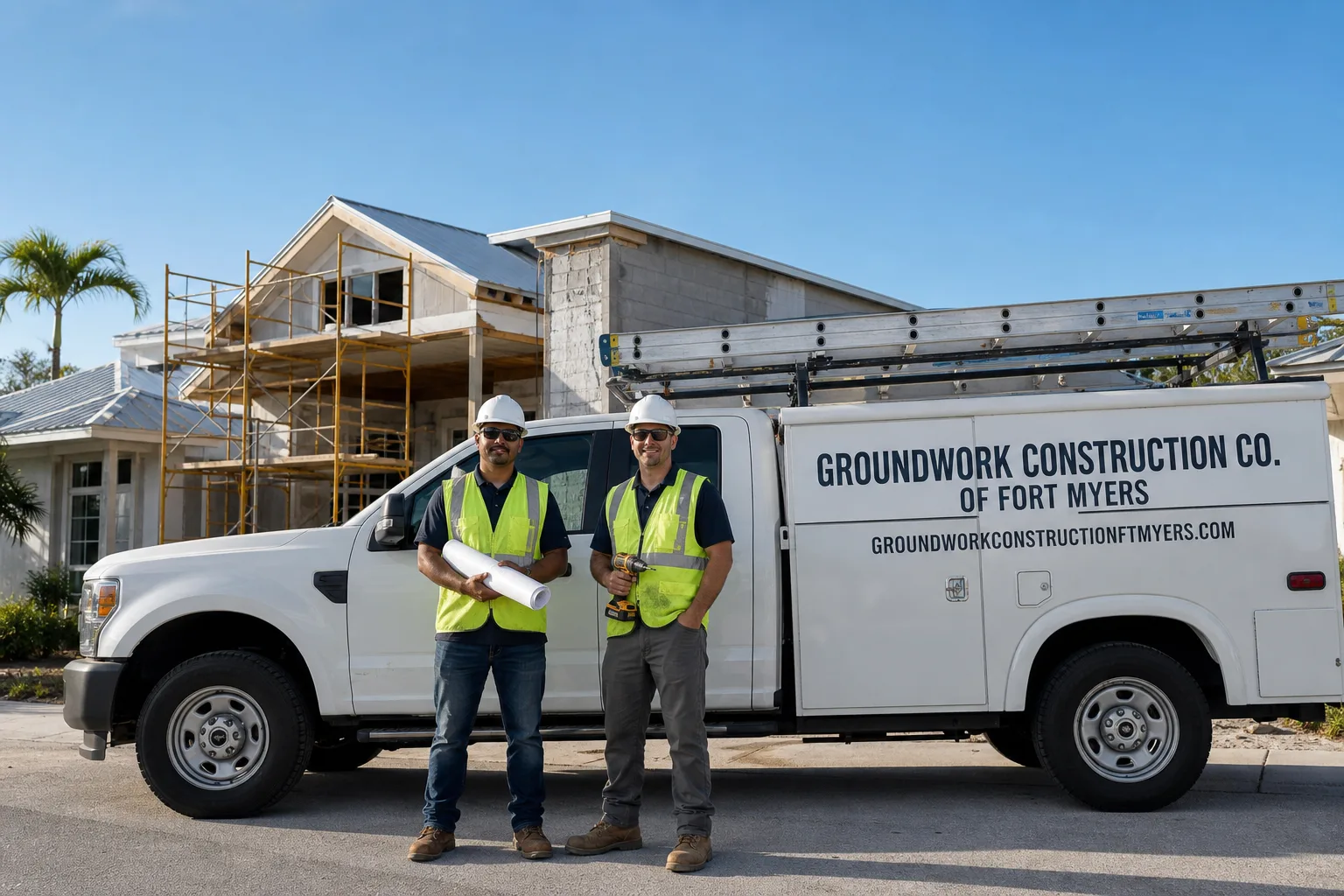
What a Chain Link Fence in Immokalee Actually Looks Like, Start to Finish
Chain link fence in Immokalee typically runs $3,500 to $9,000, and most residential jobs take our crew two to three days from post-hole digging to the final tension wire. That range covers a standard 4-foot galvanized run around a typical manufactured-home lot, up through a taller 6-foot commercial-grade enclosure with top rail and privacy slats on a larger property. If you’re pricing this out and want a real, binding number on paper, call us at (844) 638-7249 - we write fixed-line-item estimates, not ballpark guesses, and a live person answers when you call.
The majority of what we see in Immokalee isn’t a blank-slab fresh install. It is a tired, waist-high wire fence that’s been sagging on rusted posts since Irma tore through in 2017, holding a gap somebody patched with chicken wire a decade ago. A new chain link fence here solves one problem right away - security - but done wrong, it creates others: post-heave from our high water table, gate sag from sandy soil that never quite compacts, and unpermitted boundary lines that trigger a code compliance headache the moment you try to sell the property. We’re going to walk through exactly how we avoid those, what the real options and costs are, and why our warranty is one of the longest in residential construction - 730 days, in writing.
How We Handle a Chain Link Fence Job from First Call to Final Walkthrough
The sequence below is what a typical residential chain link fence install looks like with our team in Immokalee. Every stage is spelled out because we want you to know what’s happening, why, and when you’ll need to make a decision. Most jobs follow this cadence within a week.
Stage 1: Site Measure and Mark-Out (Day 1 morning)
We send a uniformed, background-checked estimator - the same person who’ll own your job file - to measure the actual fence line, confirm the lot corners against the property survey, and flag the underground utility route. In Immokalee this almost always means dealing with sandy, uncompacted soil over a high water table, so we also probe the top 30 inches for soft spots, buried concrete debris from old slabs, and any existing post remnants from a previous fence. You’ll decide the line height, gate locations, and whether you want top rail or tension wire. This visit takes about an hour and produces a written, fixed-price estimate before we leave the driveway - not a “we’ll email you later” number.
Stage 2: Permitting and Utility Clearance (Day 1 afternoon through Day 3)
Collier County requires a fence permit for any new install, and the moment you touch a post-hole digger on a pre-1994 manufactured home lot - which describes a huge share of Immokalee’s housing stock - the county’s building department may trigger a broader code compliance review under post-Andrew Florida Building Code standards. We handle the permit application, the site plan submission, and the 811 Sunshine State One-Call utility locate ticket ourselves. If the county flags an existing unpermitted addition or a missing hurricane tie-down system, we’ll flag it to you honestly, with options, before we put a shovel in the ground. This stage typically takes two business days for utility clearance to come back.
Stage 3: Demolition and Post-Setting (Day 4)
If there’s an old fence, we pull it, cut the posts flush at grade, and haul everything off the property. New posts go 24 to 30 inches deep - deeper than code minimum in our sandy soils - and every hole gets a dry concrete mix set with just enough water to hydrate, no pre-mixed slurry that washes out when the water table rises. Terminal posts (ends, corners, gate posts) get a larger diameter and a thicker wall than line posts; that’s standard for us, not an upgrade. You’ll choose galvanized or vinyl-coated finish at this point if you haven’t already. We brace and align every post before any fabric goes on.
Stage 4: Fabric, Hardware, and Gate Assembly (Day 5)
Chain link fabric gets stretched with a come-along tensioning tool along the line posts and secured with tension bands and tie wires every 18 inches. Top rail or tension wire goes on next, then the gate frames, hinges, and latch hardware. Every galvanized fitting is hot-dipped, not electroplated - that matters in Immokalee’s wet-season humidity, where cheap hardware rusts through inside three years. Privacy slats, if you want them, weave in last and add about half a day to this stage.
Stage 5: Grade, Cleanup, and Walkthrough (Day 5 afternoon)
We backfill and compact around every post base, grade the line so no gap opens under the bottom wire, test every gate for swing clearance over the sandy soil, and walk you through the finished fence. You get a checklist sign-off that ties directly to our 730-Day Done Right Promise - any post that shifts, any gate that sags, any fabric that loosens, we come back and fix it, no charge and no argument.
The Options You’ll Choose Between
A chain link fence isn’t one product, and the choices you make here determine whether the fence looks sharp and stands plumb for twenty years or starts leaning toward the neighbor’s lot by the second wet season. Here are the real trade-offs, in plain terms:
- Galvanized vs. vinyl-coated fabric: Standard galvanized (zinc-dipped, 9-gauge) is the honest workhorse - silver-gray, holds up to sun and rain, costs less. Vinyl-coated (typically black or green) adds a bonded PVC layer over galvanized wire for better corrosion resistance and a cleaner look, but it runs about 15-25% more per linear foot. In Immokalee’s relentless inland sun, vinyl coating also reduces the metal’s surface temperature enough that kids and pets can touch it without burning skin - something worth considering if the fence encloses a yard.
- Height and gauge: Residential code allows 4-foot to 6-foot heights without a variance. The thicker the wire (lower gauge number), the stiffer the fence. We default to 11-gauge fabric for 4-foot runs and 9-gauge for 6-foot - lighter than that, and the fence waves under wind load. Commercial or security applications go to 6-gauge, which adds cost but resists cutting far better.
- Top rail vs. tension wire: A top rail (horizontal pipe running the full length) stiffens the whole structure and prevents the fence from bowing between posts. Tension wire alone is cheaper but leaves the top edge flexible. If the fence line runs over 100 feet in open Immokalee wind or if a gate hangs mid-run, we strongly recommend the top rail.
- Privacy slats: Aluminum or high-density polyethylene slats weave diagonally through the chain link fabric to block sightlines. They add $6-$12 per linear foot and about half a day of labor. They also increase wind load, which means post spacing may need to tighten from 10 feet to 8 feet - a consideration on the flat, open lots common here.
- Gate hardware and automation: Standard walk gates use a gravity latch and drop rod. Drive gates - single-swing residential up to about 12 feet - can be manual or automated with a slide or swing operator. Automated gates require a dedicated electrical run and a safety sensor package, which bumps the permit scope and adds roughly $1,500-$3,000 to the project depending on gate width and operator brand.
What Chain Link Fence Costs in Immokalee, FL
Most chain link fence jobs in Immokalee land between $3,500 and $9,000. That’s an installed price - all materials, labor, concrete, hardware, gates, and permit coordination, plus cleanup and the walkthrough. The variables that push a job toward the low or high end of that range are specific and measurable, not vague.
The biggest driver is linear footage. A tight lot - say 100 linear feet around a single-wide manufactured home - comes in at the lower end. A double-lot enclosure of 250-plus feet with two drive gates and privacy slats pushes toward the upper end. Height is the second lever: 4-foot galvanized costs appreciably less than 6-foot vinyl-coated with a top rail and commercial-grade fabric. Gate count matters a lot. Every walk gate adds a terminal post, hardware, and labor; a drive gate triples that and may require a thicker post schedule.
Soil condition is the wild card specific to Immokalee. Where the water table sits within two feet of grade - common from June through October - we have to over-dig and backfill with drain rock around each post base to prevent hydraulic heave from pushing the post out of the ground. That adds material and about 15-20% more labor per post, and it is not optional if you want the fence standing straight after a heavy wet season. A written estimate from us includes every line item: post count, fabric grade, finish, gate hardware, concrete, and any soil remediation, so the number you see is the number you pay. It does not include the county permit fee itself - that goes straight to Collier County - but we handle the application. Call (844) 638-7249 and we’ll bring the tape measure and the estimate to your property, free.
What Immokalee Homes Specifically Do to This Job
Immokalee’s housing stock changes the fencing equation in ways that don’t apply 35 miles west in Naples. The dominant property type here is a pre-1994 manufactured home on a piers-and-tie-down foundation, often sitting on a lot that has seen multiple unpermitted additions over the years - a carport enclosure here, a lean-to shed there, a boundary fence that drifted six inches onto the neighbor’s parcel. When we file a fence permit with Collier County, the county’s building department reviews the entire lot against the current Florida Building Code, and if that old carport was never permitted, the fence permit can open a compliance case that the homeowner didn’t bargain for.
That does not mean you shouldn’t fence your property. It means you need a contractor who knows how to read the lot, pull the county’s permit history on the parcel before any work starts, and flag the risk early - before a code inspector shows up and red-tags something. We also deal routinely with the soil conditions on the flat, inland stretches near Lake Trafford Road and the farm roads off State Road 29: high organics, poor compaction, and a water table that rises fast in the summer wet season. Every post hole gets probed and often gets an extra gravel base to combat the hydraulic pressure that twists posts out of alignment in this soil. It’s not theoretical - we’ve corrected other contractors’ fences here that leaned ten degrees within two years because they set posts to a generic Florida standard that doesn’t hold in this ground.
For homeowners also looking at broader hardscape or land-use upgrades - a new Fence Installation in Immokalee can be scoped alongside Concrete Driveways & Concrete Work in Immokalee, and some lots benefit from Asphalt Driveways & Resurfacing in Immokalee on the approach - we coordinate the sequence so the fence doesn’t get torn out when the driveway gets poured. Our Fence Installation crew covers all of Immokalee and knows the parcel quirks here better than any contractor driving in from the coast.
Serving Immokalee, FL - Our Local Coverage Area
We’re based in the Immokalee area and know this community well. Use the map below to see our service coverage - if you’re nearby, we can almost certainly help.
Frequently Asked - Chain Link Fence in Immokalee
A standard residential chain link fence - under 200 linear feet, one or two gates - takes our crew two to three working days from post-hole digging to final cleanup, assuming the permit and utility clearance come back on schedule. The actual installation is done in about two days; the permitting and utility-locate phase adds two to three business days before we can break ground. Larger or more complex runs with privacy slats, drive gates, or soil issues can stretch to four or five working days. We’ll give you a firm timeline in the written estimate. Call (844) 638-7249 to schedule a site visit and get that in hand.
Yes. Collier County requires a building permit for any new fence installation, and a fence on a manufactured-home lot - which represents much of Immokalee’s residential property - can trigger a broader code compliance review of the existing structure if it’s pre-1994 and has unpermitted additions. We handle the permit application, the site plan, and the 811 utility coordination as part of our scope, and we’ll alert you to any compliance risk before the county inspector walks the property. No surprises.
It will if the posts aren’t set deep enough in gravel-drained holes, or if the hardware isn’t hot-dipped galvanized. Immokalee’s high water table and heavy seasonal rain create constant moisture at the post base - that’s where rust and hydraulic heave start. We go 24 to 30 inches deep, add drain rock around each post in soft soil, and use only hot-dipped galvanized fittings and fabric, which resists corrosion far longer than the electroplated hardware sold at big-box stores. The 730-Day Done Right Promise covers any post shift or hardware failure within two years.
Our written fixed-price estimate includes every line item: linear footage, fabric gauge and finish, post count and diameter, concrete, gate hardware and number of gates, top rail or tension wire, privacy slats if specified, demolition and haul-off of any old fence, soil remediation if needed, labor, cleanup, and the permit application coordination. The Collier County permit fee itself is not included - that’s paid directly to the county - but we prepare and submit the application. We do not tack on change orders after the fact unless you request a scope change mid-project. Call (844) 638-7249 for a free on-site estimate and a detailed breakdown.
You can add privacy slats to an existing chain link fence at any time - they weave in without structural changes - but raising the height or adding slats that increase wind load may require a new permit and, in some cases, a post reinforcement. If you think you might want slats, it’s cheaper and cleaner to do them at the time of the original install because we can space the posts to handle the wind load from day one. Going taller than 6 feet typically triggers a variance request with the county, which adds time and cost. We’ll walk you through the trade-off during the estimate.
Get a Fixed-Price Chain Link Fence Estimate in Immokalee
Call (844) 638-7249 and we’ll send a background-checked estimator to your property - same day or next - to measure the line, check the soil, pull the permit history, and hand you a written, binding estimate before we leave. A live person answers the phone, 24 hours a day, because we learned a long time ago that your call is the most important one we’ll get. Upfront pricing, no surprises, and a 730-Day Done Right Promise on every post we set - that’s the only way we build chain link fence in Immokalee.
Written by Derek Hollenbeck, Owner at Groundwork Construction Co., serving the Immokalee area with full-scope home construction and fence installation backed by one of the longest workmanship warranties in residential building.