
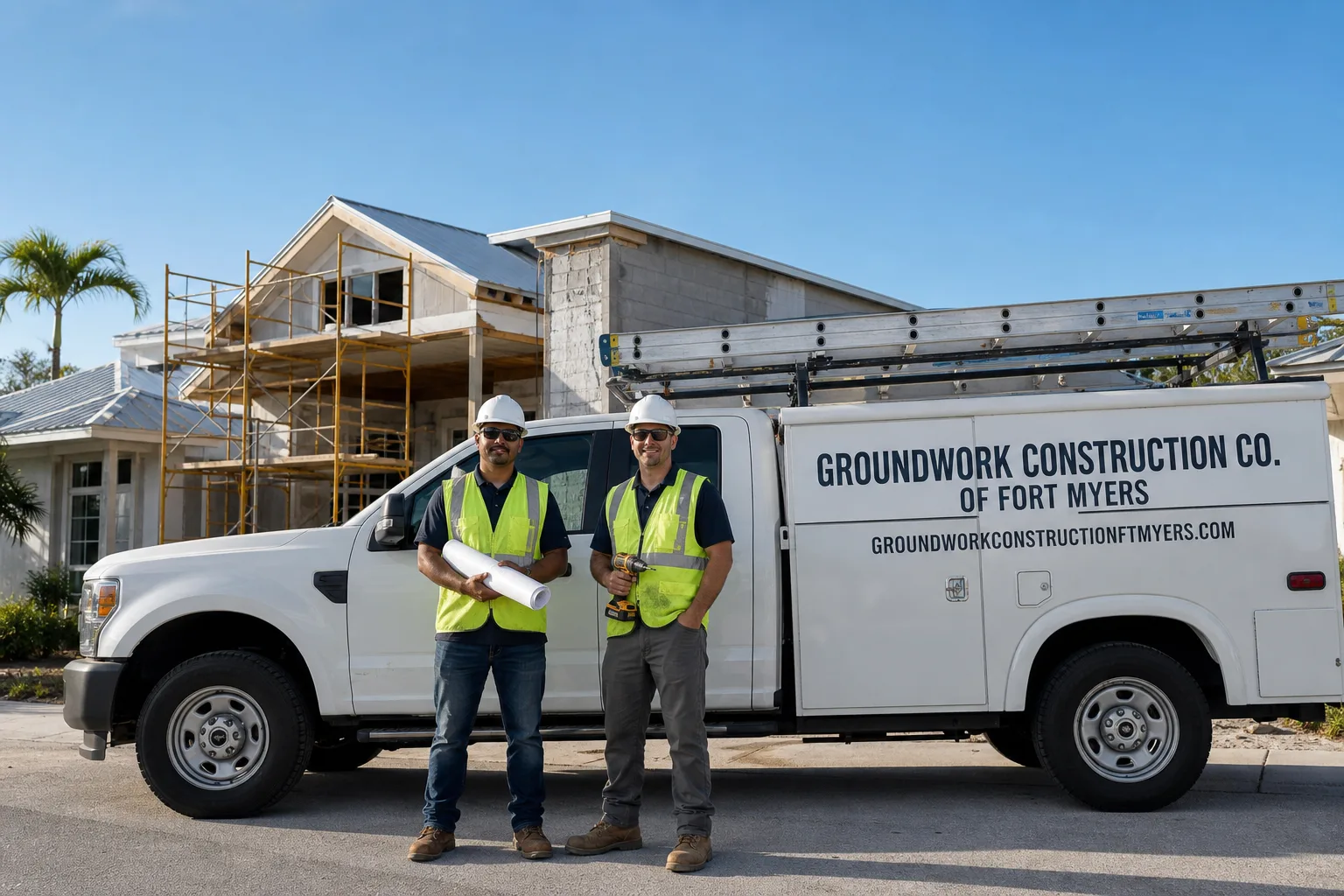
What a Tile Roofing Job in Rotonda West Means (and What It Costs)
Tile roofing work in Rotonda West typically falls into two buckets: targeted repair of cracked or storm-shifted tiles ($600-$2,500) or a full replacement on an aging CBS home where the original tile roof has reached the end of its service life. Most full replacements in this community run $15,000-$40,000, with the final number depending on tile profile, underlayment condition, and whether we discover deteriorated strapping or decking once the old material comes off. A typical job spans three to seven working days. Call us at (844) 638-7249 to schedule a free on-site estimate, and we’ll walk your roof with you and give you a written line-item quote that locks in the scope - no surprise change orders after tear-off.
How We Handle Tile Roofing in Rotonda West - Stage by Stage
The real sequence matters because tear-off on a 1970s concrete-tile roof almost always reveals something the original builder papered over. We plan each phase knowing that homes in this development share a construction era and its corresponding quirks. Here’s what to expect.
Stage 1: Site walk and structural review (Day 1, 60-90 minutes). We ground-ladder the roof, photograph every elevation, and map all cracked, spalled, or slipped tiles. We pull the permit packet same-day - Charlotte County requires a full roofing permit with wind-load calculations for any tile work exceeding a 100-square-foot repair, and on these mostly pre-Charley homes, that nearly always triggers a wind-mitigation review. You decide during this walk whether we’re repairing in kind or switching tile profile if we’re doing a full replacement.
Stage 2: Tear-off and deck inspection (Days 2-3). Existing tiles come off and get staged for reuse or disposal. On the CBS homes that dominate Rotonda West, we commonly find original 30-pound felt that has broken down into a crumbly, moisture-wicking layer - especially on canal-adjacent lots where morning humidity hangs longer. We expose the decking, inspect for dry rot around fasteners, and check truss-to-wall hurricane clips and strapping. If the strapping is undersized or corroded, Charlotte County’s post-Charley code mandates an upgrade before we can install new underlayment. You get a real-time call with photos if we find something that changes the scope.
Stage 3: Underlayment and flashings (Day 4). We install a high-temperature self-adhered or synthetic underlayment, double-layer at valleys and eaves - the underlayment choice is the single biggest performance decision on a tile roof in this climate, and we cover your options in the next section. All lead-flashed penetrations, pipe collars, and valley metal get replaced, never reused. The water table here doesn’t directly affect roofing the way it does with footer work, but stagnant air over the canals does mean valley and eave metal corrodes faster than it would five miles inland, so we inspect those joints aggressively.
Stage 5: Tile setting, fastening, and mid-roof inspection (Days 5-7). Tile is set from eave to ridge, with mechanical fasteners (screws or clips, depending on profile) on every perimeter and hip tile per current Florida Building Code wind-zone requirements. Mid-roof, the county inspector walks the job to sign off on nailing pattern and underlayment before we close the ridge. After approval, we install ridge caps, seal all hips with a flexible polymer-modified mortar, and clean every tile surface with low-pressure water. Final walk with you takes about 30 minutes - we point out every replacement we made, show you the fastener pattern, and confirm the permit is closed.
The Options You’ll Choose Between for a Tile Roof in Rotonda West
Tile roofing isn’t one product - it’s a category with real trade-offs that affect how the roof handles 150-mph wind events, how it ages under Florida sun, and what the finished look does for your home’s value. Here are the decisions that come up on nearly every job in this community.
- Concrete vs. clay tile. Most original Rotonda West homes were built with concrete barrel tile - flat or very low profile. Concrete tile (roughly $5-$8 per square foot installed) is heavier, absorbs more water over its life, and requires a stronger underlayment assembly. Clay tile ($9-$14 installed) is lighter by about 15-20%, nearly impervious to moisture, and holds its color longer. On a canal-lot home where the air is persistently damp, clay’s lower absorption can reduce long-term efflorescence and mildew staining on the north-facing elevations. But it’s a sharper up-front cost, and not every HOA’s architectural guidelines permit a material change from original spec - if you’re in the Rotonda West Association or a subdivision within it, we review that during estimating.
- Flat/low-profile vs. high-profile barrel tile. Many of these homes were built with a nearly-flat Mediterranean profile. Switching to a high-profile S-tile changes the roof’s visual weight and can affect wind uplift characteristics - a higher profile catches more wind, which means the fastener schedule gets denser. That adds roughly $1.50-$2.50 per square foot in labor and hardware. We’ll show you samples on-site so you can see the difference against your home’s elevation.
- Underlayment system: self-adhered vs. synthetic. This is the part of a tile roof you never see, and it’s where we see the most failure on homes built between 1975 and 1995. A self-adhered modified-bitumen underlayment (we often specify GAF StormGuard or equivalent) seals around fasteners and creates a waterproof layer even if wind blows a tile off. A high-grade synthetic underlayment is less expensive per square and breathes better, but it relies more heavily on the tile above it for primary water shedding. For homes west of Rotonda Boulevard - closer to the canal grid and the persistent ground-humidity layer - we strongly recommend the self-adhered route.
- Mortar and fastener upgrades. Post-Charley code in Charlotte County demands mechanically fastened hip and ridge tiles - no adhesive-only installations. We default to stainless-steel screws and polymer-modified setting mortars from brands like Quikrete and Sakrete that can handle the thermal cycling a dark tile field endures from August to January without cracking out at the bond line. If a home already shows ridge-cap mortar erosion after 30 years, we document it in the estimate photos so you know what we’re solving.
- Color and finish refiring. Some concrete tiles can be refired and recoated rather than replaced, but on 40-year-old Rotonda West roofs, the tile body itself often shows spalling - pitting and surface loss from decades of UV and salt-laden breeze off the Gulf. We’ll test a section before recommending a coating versus replacement.
What Tile Roofing Costs in Rotonda West, FL
You should expect to budget between $600 and $2,500 for a tile repair job on an existing Rotonda West roof, and $15,000-$40,000 for a full removal and replacement with new concrete or clay tile. The variables that push a project toward the low or high end are straightforward, and we put every one of them in writing before you sign anything.
Here’s what moves the number:
- Scope of repair vs. replacement. A localized valley leak where we’re replacing 40 tiles and flashing costs under $2,000. A full roof with degraded underlayment and failed strapping is a $20,000+ job. No estimator can give you a real number without a physical walk.
- Tile profile and material choice. Clay tile runs about 30-40% more than concrete on a full replacement, and high-profile S-tile adds labor and fasteners compared to the original flat-profile concrete tile most of these homes still carry.
- Underlayment condition. If tear-off reveals the original felt has failed - and on canal-adjacent Rotonda West lots, we see that on roughly two-thirds of roofs older than 25 years - we’re replacing the entire underlayment assembly, not spot-repairing. That’s a $3,500-$6,000 line item that’s invisible until the old tile comes up.
- Wind-mitigation upgrades triggered by permit review. Charlotte County’s building department reviews every roofing permit against the current wind-load map for the 150-mph zone. If the existing hurricane clips or strapping don’t meet the post-2004 standard, you’re adding structural hardware - typically $1,500-$3,000 depending on the perimeter length and truss count. This is not optional, and it’s not something we skip to lower the price.
- HOA architectural review and material matching. Some Rotonda West subdivisions require color samples, manufacturer spec sheets, and board approval before work starts. There’s no hard cost to the submittal, but the lead time can shift a schedule by 10-14 days, and if the board mandates a specific tile manufacturer, that can change the material cost by $1-$3 per square foot.
Every estimate we write includes the permit fee, the tear-off and debris-haul line, the underlayment, the tile and fasteners, the county inspection coordination, and the written workmanship warranty backed by our 730-Day Done Right Promise. What’s typically not included: replacement of rotted decking discovered during tear-off (we quote that as a unit price per sheet so you know the cost before we open the roof), and any interior drywall or paint repair from pre-existing leaks - that’s separate and we’ll flag it before we start.
What Rotonda West Homes Specifically Do to This Job
Rotonda West isn’t a typical Florida subdivision, and a tile roofing job on a canal-grid CBS home here follows a different playbook than the same work in Englewood or Port Charlotte. The community was master-planned in the early 1970s and built out overwhelmingly between 1975 and 1995, so the housing stock is unusually uniform - nearly all single-story concrete-block homes with the same generation of flat-profile concrete barrel tile. That homogeneity means we see the same failure modes repeat across homes on different streets: cracked tiles at the eave line where decades of thermal expansion have stressed the overhang, ridge-cap mortar that has debonded from the concrete substrate, and - most critically on canal-adjacent lots near Boundary Boulevard or Rotonda Circle - underlayment that has wicked moisture from persistently humid, low-moving air until it lost all waterproofing integrity.
Charlotte County’s post-Hurricane Charley building code is the other piece that changes the math here. When we pull a roofing permit on a home built before 2004, the plans examiner checks the wind-mitigation features of the existing structure - and on many of the original Rotonda West homes, the truss-to-wall hurricane clips are undersized by current standards or were never installed on the interior bearing walls. That’s not a judgment call; it’s a code-triggered upgrade that turns a straightforward tile replacement into a partial structural retrofit. It’s the right thing to do for a roof that has to hold up to a named storm, and it’s part of why our estimates include a line for “wind-mitigation hardware and fastener schedule per Charlotte County permit review” instead of treating it as an add-on surprise. Homeowners here often pair a tile roof replacement with Impact Windows & Doors in Rotonda West - the two projects share a wind-mitigation logic, and doing them together can streamline the permit and inspection process. On any tile roofing job that touches the structure, we’re working within the same Roofing in Rotonda West standards we apply to every roof we touch - the underlayment, the fasteners, the perimeter edge details are all spec’d for this specific climate and wind zone. Our team knows the Rotonda West plat well enough that we can usually tell you during the estimate which homes on your street have already been re-roofed and what tile profile they switched to - that’s useful context if you’re weighing a material change.
Canal proximity matters in ways that surprise homeowners here. The water table sits within 18-24 inches of grade across much of the development - a condition created by the uniform-depth canal excavation that defines the entire plat - and while that doesn’t directly contact roof tiles 10-14 feet off the ground, it does create a microclimate of persistently elevated humidity around the home’s envelope. We see north-facing roof planes staying damp hours after the rest of the roof has dried, which accelerates organic growth on tile surfaces and breaks down asphalt-based underlayments faster than the manufacturer’s coastal-zone warranty expects. That’s why we spec underlayment on Rotonda West canal lots the same way we’d spec it for a direct-waterfront home - self-adhered, high-temperature rated, and fully sealed at every lap. If you’re also considering door upgrades, some homeowners pair this work with Sliding & Patio Doors in Rotonda West, especially on rear elevations facing the water where salt and humidity take a toll on original aluminum frames. Regardless of scope, all of our tile work ties back into our broader Roofing standards - the same fastener schedules, the same underlayment specs, the same county-inspector relationships we bring to every roof we touch.
Serving Rotonda West, FL - Our Local Coverage Area
We’re based in the Rotonda West area and know this community well. Use the map below to see our service coverage - if you’re nearby, we can almost certainly help.
Frequently Asked Questions - Tile Roofing in Rotonda West
Most full replacements on a standard CBS rancher here take three to seven working days from tear-off to final county inspection. The biggest variable is what we find under the old tile - if the truss strapping needs upgrading per Charlotte County’s post-Charley wind-mitigation requirement, add half a day for the hardware install and the mid-job inspection step.
If the underlayment is still intact and the tile damage is localized - a limb strike, a handful of cracked tiles from foot traffic, a valley-leak repair - we can do a targeted tile repair for $600 to $2,500. The underlayment is the gatekeeper: if it’s the original felt from the 1980s and it’s begun to disintegrate, replacing only the tiles is a short-term patch that’ll leak again. We’ll show you exactly what the underlayment looks like during the estimate walk.
Yes. Charlotte County requires a roofing permit for any tile work exceeding a 100-square-foot repair, and the permit review includes a wind-load calculation for the current 150-mph zone. We pull the permit as part of every job, and the cost is included in your estimate. Permits here also trigger a mid-roof inspection before the ridge caps go on - we coordinate that, and you’ll know the inspection date before we start.
It shouldn’t, and with our upfront pricing approach it typically doesn’t. The only items that can change are things hidden until tear-off: rotted decking (we quote a per-sheet replacement cost in the estimate so you know the number), or the code-triggered wind-mitigation hardware upgrade if the existing clips aren’t visible during the initial walk. We call you with photos the moment we find something, and you approve it before we spend a dollar on it. No surprise invoices at the end.
Our workmanship is covered by the 730-Day Done Right Promise - if it’s not done right, we make it right, period. The tile manufacturer’s material warranty runs separately and typically spans 30-50 years for concrete and clay tile, but that warranty only covers the tile body itself, not the underlayment or the labor to replace a failed tile. We walk you through the warranty docs for your specific tile choice during the material-selection stage so you know exactly what’s covered and for how long.
Get a Free Tile Roofing Estimate in Rotonda West
If your roof needs a repair or you’re weighing a full replacement on one of the original 1970s-90s CBS homes that define this community, we’ll give you a real number - not a ballpark, not a range that changes after we open the roof. Call (844) 638-7249 and you’ll get a live person on the line who can schedule a free on-site estimate at a time that fits your week. We’ll walk the roof, photograph every elevation, and hand you a written line-item quote before we leave. No pressure, no voicemail black hole, just the information you need to make a decision.
Written by Derek Hollenbeck, Owner at Groundwork Construction Co., serving Charlotte County since 2014.