
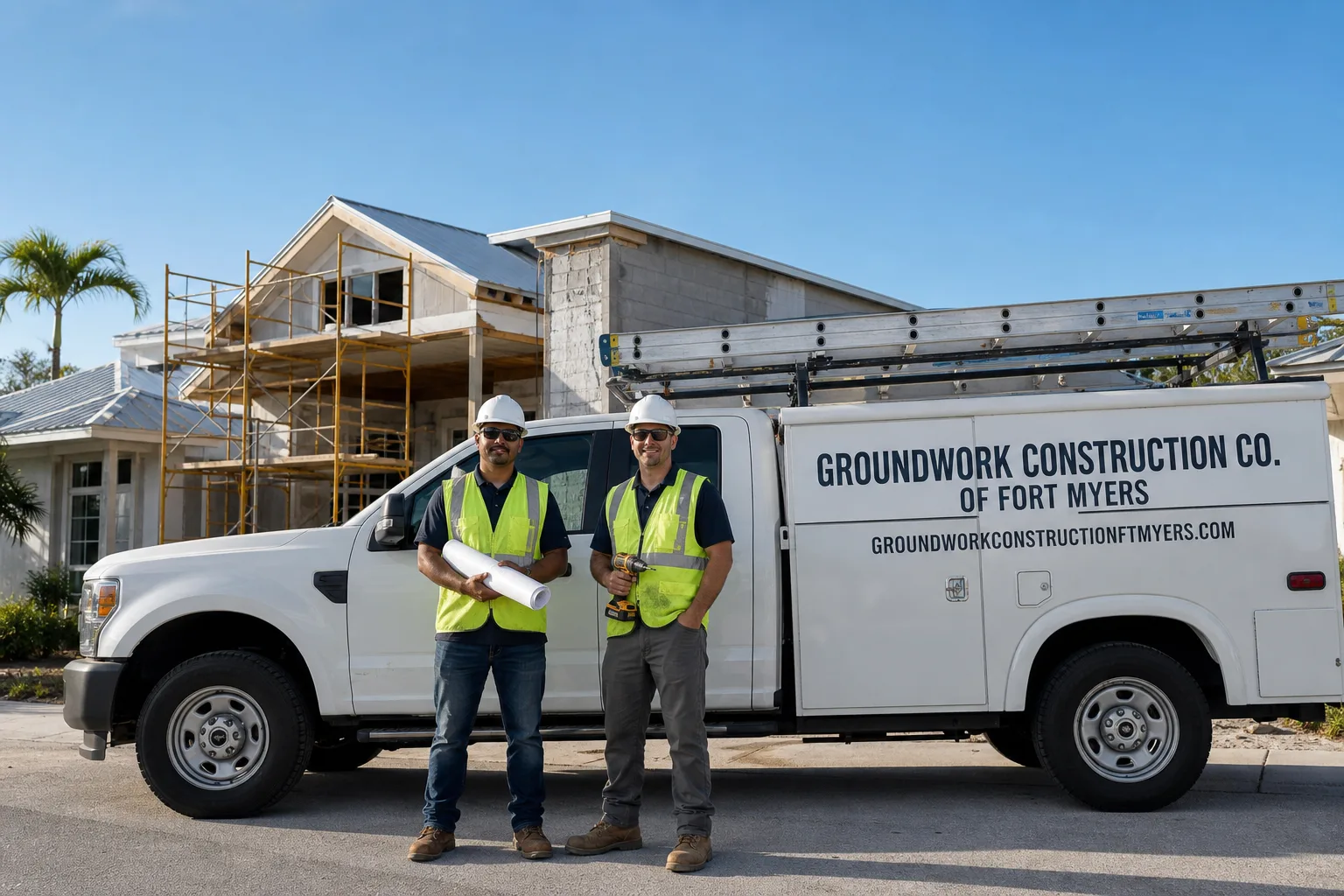
What Emergency Storm Damage Response Actually Looks Like in Rotonda West
When a storm tears through Rotonda West, the immediate need is securing the home so no more water or wind gets inside, and the realistic cost to do that right now falls between $400 and $3,500 depending on what failed. Most tarp-and-board-up calls we handle here are completed same-day, with the permanent repair following within one to three weeks once materials land and the Charlotte County permit processes. If you’re staring at a hole in your roof or a collapsed section right now, call (844) 638-7249 and a live person will get a crew dispatched while you’re still on the phone.
This isn’t general roofing work. Storm damage in a place like Rotonda West means specific failure patterns that general handyman services don’t see often enough to diagnose properly: wind-uplifted ridge caps over CBS walls, post-Charley-era tile slippage on the original 1970s flat-pour roofs, and water intrusion where the storm drove rain sideways under fascia that looked fine before the wind shifted. Derek Hollenbeck and our crews have been sorting out exactly these problems across Charlotte County’s coastal subdivisions long enough to know what’s cosmetic, what’s structural, and what the insurance adjuster needs photographed before anything gets touched.
The Actual Sequence After a Storm Hits Your Rotonda West Home
Stage 1: Emergency call and immediate triage (within hours of the storm). You call (844) 638-7249, a live person answers, and we ask three things: is water entering the living space right now, is there exposed sheathing or structural framing, and has any part of the system sagged or separated from the house. Those answers determine whether we roll a tarp crew first or a structural crew first. In Rotonda West’s canal-grid neighborhoods like Pine Valley and Long Meadow, we often find wind-driven rain has gotten under the underlayment without leaving an obvious hole from the ground, so our first look is always from on top, not from the curb.
Stage 2: Emergency stabilization (hours 2-6 on site). The crew arrives, photographs everything for your insurance file, then gets the home dried in. That means heavy-gauge polyethylene tarps mechanically fastened across the damaged section, temporary bracing on any framing that shifted, and a careful check of adjacent sections that took the same wind load but haven’t failed yet. On the flat and low-slope structures common to Rotonda West’s 1975-1995-era homes, we pay extra attention to seams and roof-to-wall junctions, because the original tar-and-gravel installs on these didn’t account for the 150+ mph uplift pressures the current Florida Building Code requires.
Stage 3: Scope of permanent repair and insurance alignment (days 1-4 after the storm). This is where homeowners make the big decisions. We write a line-item scope of work that separates storm-related damage from pre-existing conditions, because your adjuster will want that distinction clear. For homes in Rotonda West, that often means documenting that the original truss or rafter attachment only used toenails instead of the hurricane straps now required, which changes both the repair scope and what code upgrades get triggered. You decide at this stage whether you want like-for-like replacement materials or an upgrade to something impact-rated.
Stage 4: Permit submittal (days 3-7). Charlotte County’s building department requires a permit for any structural repair beyond cosmetic surface work, and because most of Rotonda West’s original CBS housing stock predates Charley-era code, that permit almost always triggers a wind-mitigation review. We handle the submittal, the plans, and the inspection scheduling. Typical turnaround in Charlotte County for storm repair permits runs 3-10 business days depending on volume after a major weather event. A homeowner’s only decision here is whether to bundle any voluntary upgrades into the permit scope while the walls are already open.
Stage 5: Permanent repair and final inspection (typically 1-3 days on site, scheduled after materials arrive). We remove damaged material, install new decking and underlayment to current code, replace or re-set the finish material, flash all penetrations, and button it up. On the aging flat and low-slope structures across the Rotonda West circular plat, we often recommend upgrading to a modified bitumen or TPO system with mechanically fastened edges during this stage, since the original built-up roof wasn’t designed for the uplift loads that Charley proved these lots can see. Final county inspection closes out the permit, and we walk you through what we found and what we did.
What You Choose Between When Storm Damage Hits a Rotonda West Home
After the emergency tarp is on, the real decisions start. Storm damage in a coastal Charlotte County community forces material choices that don’t get the same consideration on a calm-weather re-roof. Here’s what the conversation typically covers on houses here:
- Like-for-like replacement versus wind-upgraded materials. If the original system was a standard three-tab asphalt shingle, you can replace the damaged section with the same product and be code-compliant. But on the CBS homes that make up the bulk of Rotonda West, upgrading to an architectural shingle with a higher wind rating (like certain GAF or Owens Corning lines) adds roughly $1.50-$2.50 per square foot to the repair and buys you a system tested to 130+ mph. On a post-storm repair of 200-400 square feet, that’s a manageable upgrade that often lowers your wind-mitigation insurance credit going forward.
- Tile re-bed versus full replacement on broken tiles. Rotonda West has thousands of original flat-concrete and barrel-tile roofs from the Cavanagh development era. When a storm cracks or shifts tiles, the immediate question is whether the underlayment beneath them is still intact. If it is, individual tiles can be re-bedded with foam adhesive or mechanical fasteners. If the underlayment tore, we’re into a larger section replacement. The cost divide on a tile job here is roughly $600-$900 for a re-bed of a small section versus $2,200-$3,500 if we need to pull tile, replace underlayment, and reset.
- Impact-rated accessory upgrades while the crew is already on site. A storm that blew off ridge caps or damaged fascia gives you a rare cheap-access moment to upgrade vents, soffit, and edge metal to impact-resistant components. Swapping standard ridge vent to a wind-driven-rain-resistant model adds a few hundred dollars to the repair and prevents the “sideways rain under the ridge” problem we see repeatedly on Rotonda West’s low-slope homes during summer squalls.
- Permanent decking versus spot replacement. If the storm left decking exposed or waterlogged, you’re choosing between replacing only the damaged sheets (CDX or OSB to match the original) or upgrading the entire affected plane to a thicker, code-preferred deck that’s rated for the uplift pressures Charlotte County now requires on whole-roof replacements. Spot replacement keeps the job smaller; a plane-level upgrade costs more now but avoids opening the same section again if a future storm damages adjacent decking.
What Emergency Storm Damage Work Costs in Rotonda West, FL
A storm damage response call in Rotonda West runs $400-$3,500 for the emergency stabilization and repair, with the wide range driven by five variables.
The single biggest cost driver is how much of the system failed. A few missing shingles or a single shifted tile runs toward the low end. A section where the underlayment tore open or the decking got saturated pushes the number past $1,500 quickly. After Hurricane Ian and the wind events that have brushed Charlotte County in the years since, we’ve seen plenty of Rotonda West homes where a small visible loss on the outside concealed water that traveled three or four truss bays across a low-slope plane.
Access and height change the number too. A single-story ranch in the Pinehurst section is a straightforward ladder-and-walk job. The few two-story homes in the community, or a single-story with a steep cathedral section over a great room, add labor hours and safety equipment costs.
Material matching matters. If your original tile profile or shingle color is still in production, the materials cost is straightforward. If it’s been discontinued, matching it requires either sourcing reclaimed material or, more commonly, replacing a larger contiguous section so the patch doesn’t stand out. That can double the square footage of the repair.
What code upgrades get triggered is the variable that surprises homeowners who haven’t done major work on a pre-2004 Charlotte County home before. If the repair exposes more than a certain percentage of the roof plane, the permit path can require bringing the entire plane’s attachment and underlayment up to current Florida Building Code. We flag this early, during Stage 3, so you’re making an informed decision before we file.
Every estimate we write for storm damage in Rotonda West is a line-item fixed-price scope. No change order surprises. You see the cost of materials, labor, disposal, and the permit separately. What’s typically not included in the initial emergency-response invoice is the permanent-repair portion if we’re still waiting on materials or the adjuster’s determination; that comes as a separate, equally line-itemed quote before any permanent work begins.
Insurance is the other piece of the cost puzzle, and we walk you through it plainly: your deductible applies to the storm-caused portion of the work, code-upgrade coverage may pick up the mandatory wind-mitigation items, and depreciation-recoverable amounts depend on your policy. We don’t negotiate with adjusters, but we do document thoroughly enough that they have a hard time arguing with the scope.
What Rotonda West’s Housing Stock Specifically Does to a Storm Damage Job
Rotonda West is a 1970s master-planned circular community developed by Cavanagh Communities Corporation, and the near-uniformity of its housing stock means storm damage here follows patterns we simply don’t see in Englewood or North Port. Virtually everything is a single-story CBS home built between roughly 1975 and 1995, with the original construction predating the post-Charley wind-load requirements Charlotte County adopted in 2004. That means nearly every storm repair on these homes uncovers attachment methods, toe-nailed trusses without hurricane straps, and underlayment that was adequate for 1970s code but not for the 150+ mph uplift zone the county now enforces on permitted work.
The consequence for a Rotonda West homeowner is practical: a storm repair that was quoted as a simple re-shingle can become a code-mandated wind-mitigation upgrade once the decking comes up and the inspector sees what we’re attaching to. We prepare our estimates here with that in mind, and we’ve worked enough homes in the Pine Valley, Long Meadow, and Rotonda Lakes sections to know what the original framing typically looks like before we even get on the roof.
There’s also the water-table factor that contractors relocating from inland Charlotte County get caught on. The canal grid that defines Rotonda West keeps groundwater within 18-24 inches of grade across much of the development. That doesn’t directly change emergency storm-damage work on the roof, but it changes everything about site access, ladder footing, and where we stage materials after a heavy rain. We don’t show up surprised by a saturated lawn that won’t hold a ladder; we expect it and set up accordingly.
Homeowners here often pair storm-damage repairs with other exterior hardening work while the permit is open, particularly impact-rated Custom Windows & Doors in Rotonda West since the same wind event that damaged the roof often stressed window frames and seals. If the storm also took out a section of perimeter Wood Fence in Rotonda West, that’s something our crews can address in a coordinated scope. And because storm damage here is rarely isolated to just the roof, our Roofing in Rotonda West team works alongside our Roofing division proper to make sure the entire exterior envelope is watertight and wind-ready before the next named storm spins up in the Gulf.
For anyone new to the area, Rotonda West is its own distinct market with a permitting office that understands the Cavanagh-era construction better than any jurisdiction in the county. That institutional knowledge works in your favor when we’re submitting a repair permit, because the plans examiner has seen your exact house a hundred times before.
Serving Rotonda West, FL - Our Local Coverage Area
We’re based in the Rotonda West area and know this community well. Use the map below to see our service coverage - if you’re nearby, we can almost certainly help.
Frequently Asked: Emergency Storm Damage in Rotonda West
Same-day in nearly all cases. Our crews stage in Charlotte County and can typically be on-site within 2-4 hours of your call to (844) 638-7249. The emergency stabilization itself, meaning the tarp and any temporary bracing, takes 1-3 hours depending on the size of the damaged area and accessibility. The permanent repair timeline is separate and depends on materials availability and the Charlotte County permit cycle, which runs 3-10 business days during post-storm volume.
Storm-caused damage is covered under standard homeowners policies subject to your wind/hurricane deductible. The wrinkle on Rotonda West’s original Cavanagh-era homes is code-upgrade coverage: if the repair triggers mandatory wind-mitigation improvements due to the current Florida Building Code, many policies have an ordinance-or-law provision that covers a portion of those upgrades. Ask your adjuster specifically about Law & Ordinance coverage on a dwelling built before 2004. We provide the documentation that shows exactly what was pre-existing versus storm-caused.
Emergency tarping and board-up do not require a permit. Any permanent structural repair, including replacing decking, underlayment, or finish material beyond cosmetic touch-up, requires a Charlotte County building permit. Because of Rotonda West’s pre-Charley housing stock, that permit typically involves a wind-mitigation review. We pull the permit as part of the repair scope and handle all inspections. Call (844) 638-7249 if you’re unsure whether your damage falls into the cosmetic or structural category and we’ll tell you straight.
On the low-slope and flat-roof CBS homes that dominate Rotonda West, it almost always is. Water travels laterally under underlayment, and a small visible wet spot on the ceiling often corresponds to a much larger area of saturated decking above. This is why we photograph everything from on top of the roof during Stage 2 and document the full extent of the water path. That documentation protects you with the insurance adjuster and makes sure the repair scope addresses the real problem, not just the cosmetic one.
Every permanent repair we complete in Rotonda West, whether it’s a small section replacement or a full roof-plane rebuild, is covered by our written 730-Day Done Right Promise. If the repaired section fails due to our workmanship within two years, we make it right at no additional cost. Emergency tarping is a temporary stabilization measure, not a permanent repair, so the warranty attaches to the permanent work once that’s complete.
Start With a Free On-Site Estimate for Your Rotonda West Storm Damage
If your home took a hit in the last storm or you’ve got a leak that started during the last big wind event, don’t wait for the damage to spread. Call (844) 638-7249 and a live person answers, day or night, no voicemail runaround. We’ll walk you through what to look for right now, schedule a crew to assess the damage in person, and give you a fixed-price estimate with no surprises. From emergency tarp to final county inspection, it’s upfront pricing and a 730-Day Done Right Promise in writing.
Written by Derek Hollenbeck, Owner at Groundwork Construction Co., providing storm damage response and emergency repairs across Charlotte County and Rotonda West.