
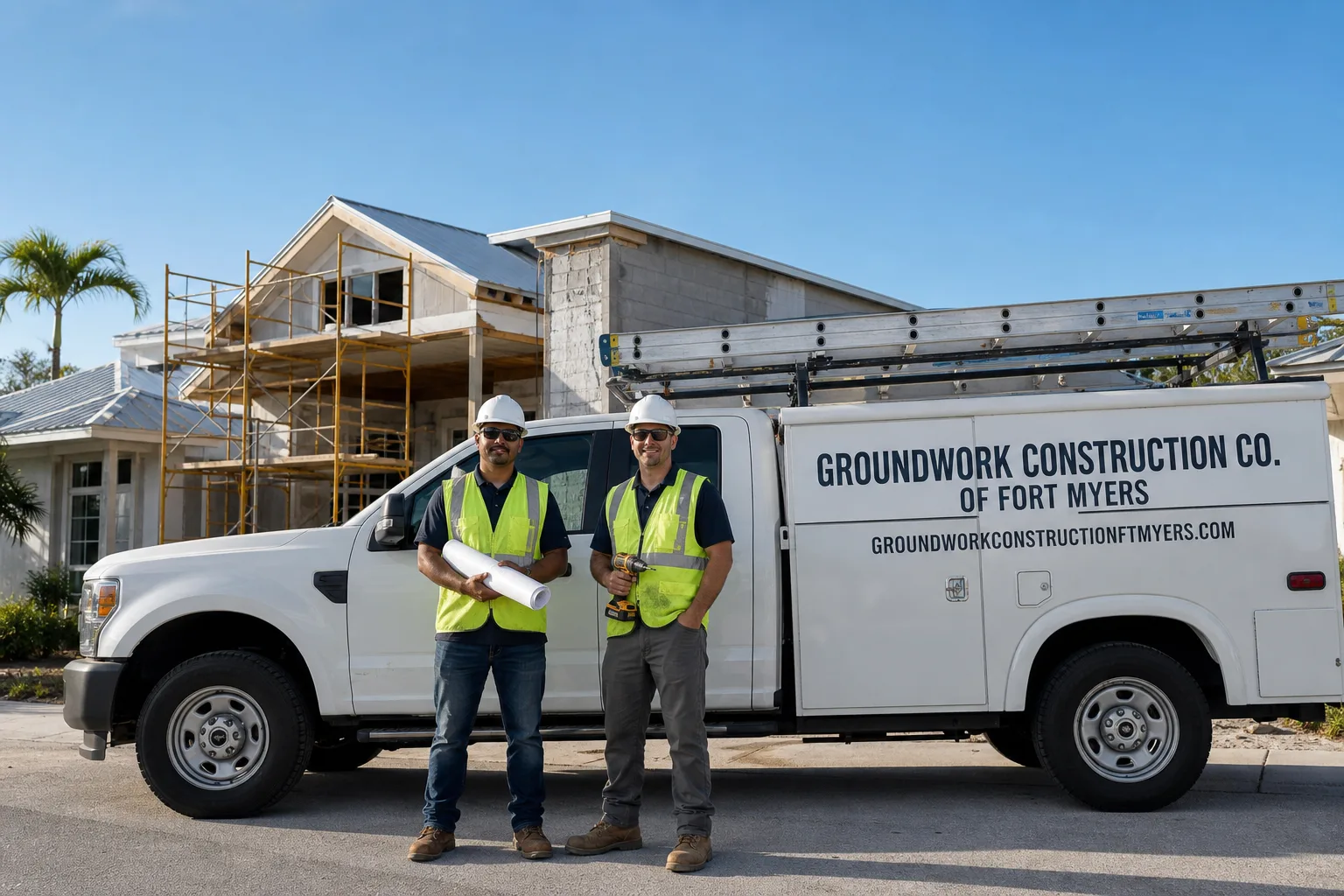
What an Iron Fence in Grove City Actually Costs and How Long It Takes
An iron fence in Grove City typically runs $3,500 to $9,000 for a standard residential lot with 150 to 200 linear feet. Most jobs are completed in two to three working days, though that timeline slides if we’re digging into the dense shell-and-limestone mix common to this part of Charlotte County, or if your property sits in a FEMA AE flood zone where post and footing depth get extra scrutiny during inspection. Call (844) 638-7249 for a free on-site estimate, and we’ll walk the lot together, measure it, and hand you a fixed price before we leave.
How We Install an Iron Fence, Step by Step
The job moves faster than most homeowners expect, but the sequence matters. Here’s what the two or three days look like when our crew arrives in Grove City.
Day One: Layout, Callout, and Digging
We start by marking the fence line with stakes and paint, walking it with you to confirm every gate location and any setbacks from the property line. Charlotte County requires a minimum 7.5-foot side-yard setback and a 25-foot front-yard setback, so we verify against your survey or order a new locate through Sunshine 811 if we need it. Then we dig the post holes: 24 to 30 inches deep, 10 to 12 inches in diameter. The soil here is sandy topsoil sitting on a mix of shell and limestone, so we run an auger where we can and switch to a rock bar and post-hole digger where the limestone ledge is shallow. Concrete goes in the same day, and posts are set and braced plumb. You decide the final gate swing direction and latch type during the walk, because that’s easier to visualize with the line staked than it is from a drawing.
Day Two: Panel Hanging and Gate Welding
Once the concrete has cured overnight, we attach the iron panels to the posts using the manufacturer’s U-bracket system or welded connectors, depending on the panel style you chose. Gate frames get welded on-site to fit the opening exactly; we don’t hang a pre-fab gate and hope it fits, because in Grove City, uneven ground and the slight settling that comes with sandy soil almost always mean a custom fit. Any field welds are ground smooth and primed the same day to keep salt air from getting a head start on the bare steel.
Day Three: Touch-Up, Final Hardware, and Walkthrough
We install the latch assembly, drop rod if the gate sits on a slope, and any self-closing hinges if the gate opens toward a pool, which Florida code requires. Rust-preventative touch-up paint goes on every weld and any spot the factory finish got scuffed during transport. We walk the entire line with you, make sure the gate swings clean and latches solid, and run through basic maintenance: rinse the panels with fresh water every couple of months during dry season, spot-paint any scratch that reveals bare metal, and keep the gate hinges lubricated with a dry silicone spray. A written workmanship warranty covers the installation, and the manufacturer’s finish warranty covers the coating.
Permitting Stage (Ongoing Throughout)
Charlotte County requires a fence permit for any new iron fence over four feet tall, and the application goes in as soon as you sign the contract. We handle the permit package: site plan, survey, product specifications, and wind-load documentation for the panel system. Permitting turnaround in unincorporated Charlotte County is running about five to seven business days for a residential fence, and we schedule installation once the permit is approved and posted. If your property is in an HOA within Grove City, we ask that you handle the architectural review submission on your end; we’ll provide the specs and cut sheets you need to submit. Fence Installation in Grove City often runs into the extra step of HOA color and height restrictions that aren’t in the county code, so we’re used to adapting specs mid-process.
The Choices That Shape Your Iron Fence
Iron fence isn’t a single product. You’re choosing between a handful of real options that determine how the fence looks, what it costs, and how it holds up against the salt air rolling off Lemon Bay. Here are the specs we walk through on every Grove City estimate:
- Pre-finished welded steel panels vs. raw steel that gets painted on site. Pre-finished panels from brands like ActiveYards ship with a baked-on polyester powder coat and carry a 15-year finish warranty, which matters when you’re 500 yards from salt water. Raw steel costs less up front but requires job-site priming and painting that adds labor days and leaves you with a finish warranty only as good as the painter’s prep work. We default to pre-finished for Grove City - the marine environment makes it the honest long-term play.
- Panel height: 4-foot, 5-foot, or 6-foot. Four feet defines a boundary without blocking sightlines and is the most common choice for front-yard fencing in Grove City neighborhoods. Five feet gives you a little more presence. Six feet adds privacy and security, but check your HOA covenants first; several of the waterfront subdivisions restrict street-facing fence height to four feet. Height is a straight cost multiplier: a six-foot iron fence runs roughly 20 to 25 percent more than a four-foot version of the same specification.
- Flat-top vs. spear-top pickets. Flat-top panels read clean and contemporary. Spear-top (sometimes called pressed-spear or fleur-de-lis) adds ornament and a few inches of visual height. Spear-top costs more per linear foot, but the difference is small enough - maybe three to five dollars per foot - that it’s almost purely an aesthetic call.
- Gate count and gate width. Every gate adds a few hundred dollars to the job: the gate itself, the welded frame, the heavy-duty post it hangs from, and the hardware. A single walk gate is standard. A double drive gate for boat or trailer access can add $800 to $1,400 depending on width. Decide early whether you ever want to pull a trailer into the backyard, because retrofitting a panel section into a gate later costs more than doing it now.
- Mounting: core-drilled into existing concrete vs. direct-set in soil. If the fence line runs across an existing patio or pool deck, we core-drill through the concrete and epoxy-anchor the posts into the slab rather than digging. Core-drilling adds labor cost per post. For soil-set posts, depth and concrete volume are driven by the wind-load requirements of the specific panel system, which the manufacturer engineers and stamps.
Our fence installation crew carries samples of the most popular panel styles and finish colors on the estimate truck, so you can hold the actual product against your house and see how it reads in natural light. Most Grove City homeowners pair their iron fence with a hardscape element on the property. Homeowners often pair this with Patios, Walkways & Pool Decks in Grove City, especially when the fence is defining a pool enclosure or framing a rear patio, where the fence posts meet the paver layout.
What Iron Fence Costs in Grove City, FL
A typical iron fence in Grove City lands between $3,500 and $9,000. That’s for a standard residential lot with 150 to 200 linear feet of four-foot or five-foot pre-finished steel panels, one walk gate, and soil-set posts. The range exists because a handful of variables push the job toward one end or the other.
The big cost drivers:
- Linear footage. Iron fence runs $22 to $35 per linear foot installed for a typical four-foot height, depending on panel style and finish grade. A small courtyard of 80 feet costs far less than wrapping a half-acre lot at 350 feet.
- Height. Every additional foot of panel height adds material weight and cost. Six-foot iron panels cost roughly 20 to 25 percent more per linear foot than four-foot.
- Gate count and type. A single walk gate adds $350 to $600. A double drive gate can add $800 to $1,400. If the gate needs a self-closing hinge and magnetic latch for pool-code compliance, expect another $150 to $300 per gate.
- Soil and access conditions. If we hit shallow limestone that requires rock-bar work rather than auger digging, post-hole labor increases. If the fence line is on a steep grade with significant terracing, post lengths and concrete volumes go up. Both are common in older Grove City lots that were never fully graded to modern pad standards.
- Concrete core-drilling. Any section that crosses an existing slab or pool deck adds $35 to $55 per post for core-drilling and epoxy anchoring.
Every estimate we hand you is a fixed, line-item price, not an allowance or a ballpark. The number on the page is the number you pay. Our pricing reflects the material, labor, permit fee, and a fully documented scope of work. The estimate includes the survey verification, the permit package, all concrete and hardware, the panels and gates, job-site touch-up, and final cleanup. It does not include HOA application fees, which you pay directly to your association, or any landscaping restoration beyond the immediate post-hole area. Our pricing is no-hassle and upfront, and we back the work with our 730-Day Done Right Promise: if it’s not done right, we make it right.
Why Grove City’s Conditions Change the Iron Fence Conversation
An iron fence in Grove City has to contend with salt air that corrodes steel faster here than it does 20 miles inland. Lemon Bay sits right there, and the prevailing breeze carries a fine salt mist across the western-facing properties. We specify hot-dipped galvanized steel posts and pre-finished, powder-coated panels as a baseline for any job within a mile of the water. Galvanized hardware is non-negotiable. Brackets, bolts, gate hinges: every piece of metal touching metal gets marine-grade spec, because we’ve pulled corroded hardware off fences that were only five years old when the original installer used standard zinc-plated fasteners to save thirty dollars on the whole job.
Grove City’s housing stock adds another layer. The mix of mid-century block homes and older fishing-camp cottages built before Charlotte County adopted the Florida Building Code means many properties still carry the original lot grading or have undocumented slab-on-grade additions. When we mark out a fence line on one of these older properties, we’re frequently working around drainage swales that were cut decades ago and never drawn on a plat. That affects post placement and sometimes forces a slight reroute of the fence line to keep the finished fence within the property boundary while staying clear of an erosion-prone slope. In the waterfront neighborhoods hit hardest by Hurricane Ian’s surge, some parcels have been re-graded as part of FEMA compliance rebuilds, and the new finished-floor elevations can change how a fence ties into the side of a raised structure. We check the elevation certificate before we dig. If you’re considering a broader property transformation alongside the fence, homeowners often pair this with ADU Design & Permitting in Grove City when the scope grows beyond a simple fence into a full lot repurposing.
The permitting side is predictable if you know the county’s quirks. Charlotte County Community Development reviews every residential fence application for setback compliance, height, and structural wind-load adequacy. The wind-load requirement means we can’t use a no-name panel system without engineering stamps; the spec sheet has to show the panel and post assembly is rated for the 150-mph Exposure C wind zone that much of coastal Grove City sits in. We use engineered systems from manufacturers like ActiveYards specifically because their Florida product approvals are already on file and don’t trigger a back-and-forth with the plan reviewer.
Serving Grove City, FL - Our Local Coverage Area
We’re based in the Grove City area and know this community well. Use the map below to see our service coverage - if you’re nearby, we can almost certainly help.
Frequently Asked Questions About Iron Fence in Grove City
Two to three working days for a standard residential job. Day one covers layout, digging, and post-setting. Day two handles panel hanging and gate fabrication. Day three is touch-up paint, hardware adjustment, and final walkthrough. If the permit review takes longer than expected or we hit a limestone shelf that slows the digging, the schedule may stretch, but the actual on-site labor days stay the same. The permit itself adds five to seven business days to the front end of the timeline. Call (844) 638-7249 and we can give you a realistic window based on your specific lot.
Yes, Charlotte County requires a fence permit for any iron fence over four feet in height. We file the permit as part of the job. The application includes a site plan showing the fence location relative to the property lines, the product specifications and wind-load documentation, and the survey. The county reviews and issues the permit before we schedule any digging, and the approved permit card must be posted on site during construction. HOAs within Grove City may require a separate architectural review, and you handle that submission directly; we supply the product cut sheets and color samples.
Iron fence in Grove City typically runs $3,500 to $9,000 for a standard lot. Aluminum fence for the same layout runs $4,000 to $10,000. Iron is heavier, requires welded gates rather than bolted connections, and needs more labor to install, but the material cost per linear foot is slightly lower than aluminum. The labor difference narrows the gap. The real deciding factor is the look: iron has a heavier, more traditional presence and historically accurate details like cast finials and pressed spears. Aluminum offers a cleaner, lighter profile and will never rust, though it can oxidize in Grove City’s salt air. Our estimates show both line items so you can make the call side by side.
Not unless the scope changes at your request. Our estimate is a fixed price that covers the work as written. If we hit limestone that requires extra labor but the linear footage stays the same, the price stays the same. If you decide mid-installation to add a second gate or extend the fence line another 30 feet, we write a change order with a firm price for the added scope, and you approve it before we do the extra work. No surprises, no “we found an issue and it’s going to cost more.” The 730-Day Done Right Promise covers the workmanship after installation.
A properly specified iron fence with hot-dipped galvanized posts and a baked-on polyester powder coat will last decades a quarter-mile from Lemon Bay. The weak points are always the field welds and the hardware. We grind and prime every weld the same day it’s made, then top-coat it to match the factory finish. All fasteners and hinges are marine-grade galvanized or stainless steel, not standard zinc-plated. You extend the life significantly by rinsing the fence with fresh water a few times a year, especially during the dry months when salt builds up without rain to wash it off. If a scratch exposes bare metal, spot-paint it within a few weeks to keep rust from starting.
Get a Fixed Price on an Iron Fence in Grove City
If you’re planning an iron fence in Grove City, the fastest way to a real number is a 30-minute walk of your property with one of our estimators. We’ll measure the fence line, talk through the panel and gate options that match your house, hand you a written, line-item price, and file the permit. Calls are answered by a live person, 24/7, at (844) 638-7249. No voicemail, no waiting until Monday. Schedule your free estimate, and we’ll be there when we say we will.
Written by Derek Hollenbeck, Owner at Groundwork Construction Co., serving Grove City and the surrounding Charlotte County communities.