
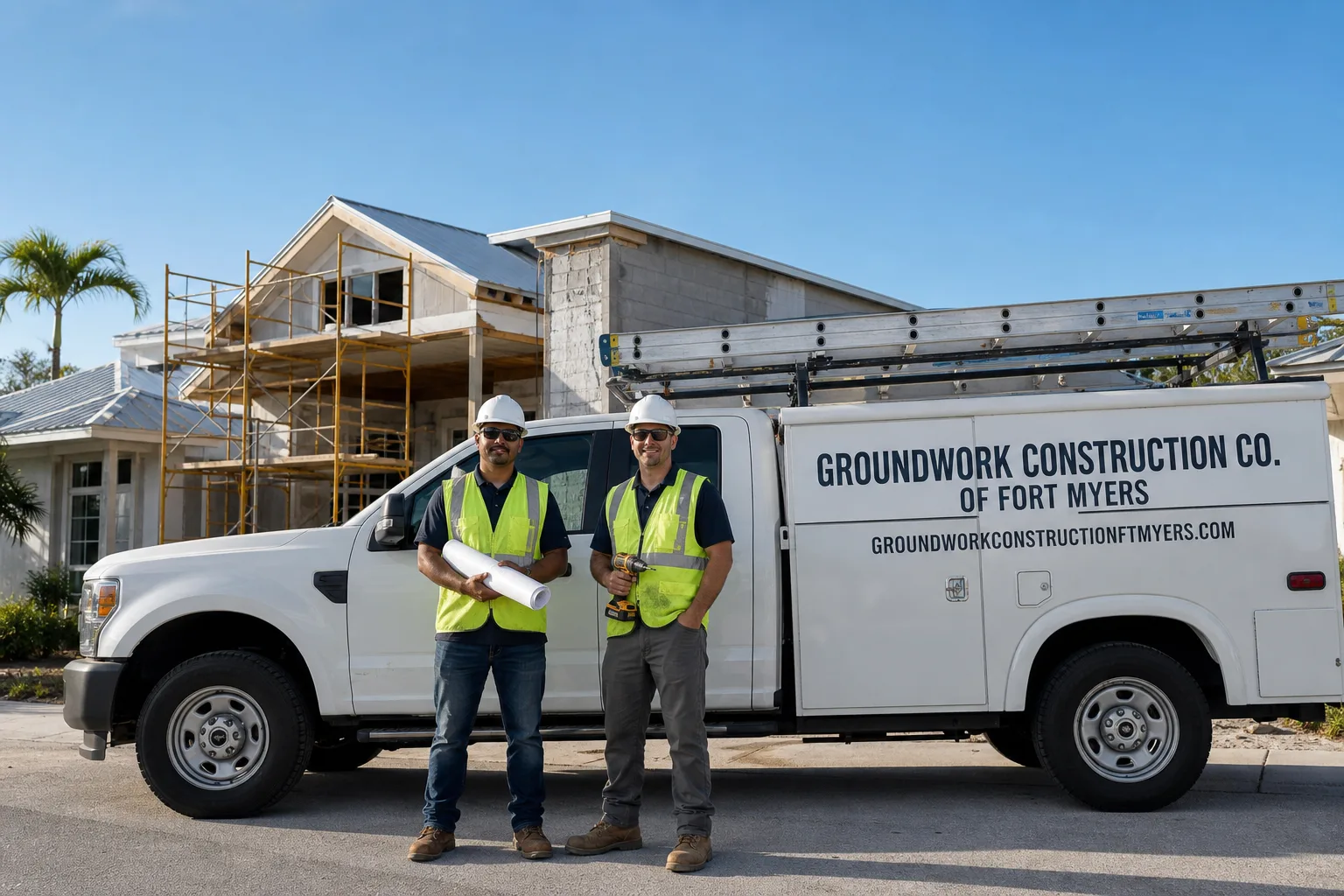
What a Patio, Walkway, or Pool Deck Project Actually Costs and Takes in Grove City
A new paver patio, a rebuilt pool deck, or a connected walkway in Grove City typically runs between $3,500 and $18,000, depending on square footage, material choice, and what we find when we dig. Most jobs take five to eight working days from demolition to final compaction, though pool decks with complicated drainage or structural repairs can push toward two weeks. You can reach us at (844) 638-7249 for a written, line-item estimate that locks in the price before anyone puts a shovel in the ground.
How the Work Gets Done on a Grove City Patio, Walkway, or Pool Deck
We’ve been building hardscapes long enough to know that skipping a single step shows up two years later as a settled corner or a crack running through a coping line. Here’s the sequence we follow, and what you’ll decide at each stage.
Day 1: Layout, mark-out, and 811 utility locate. We stake the footprint, spray-paint the outline on the ground, and call in the locate ticket. You walk the shape with our lead installer before we cut anything. In Grove City, where sandy fill and high water tables are the norm, this is also when we probe for soft spots and decide whether the existing base is salvageable or needs full removal. You’ll confirm the footprint and choose your paver color and pattern.
Days 2-3: Demo and excavation. Old concrete, cracked pavers, or a tired pool deck come out. We dig to a minimum of six inches for pedestrian areas and eight to ten inches if the patio will carry a hot tub or outdoor kitchen. This is the stage where Grove City throws curveballs: hurricane debris buried in the fill from Ian rebuilds, or previously patched concrete that hid a failing subgrade. Any discoveries here get documented and priced on a change order before we proceed, never after.
Days 3-4: Base, compaction, and slope-setting. We install and compact a crushed-limestone base in lifts, not all at once. The surface gets graded to a minimum quarter-inch-per-foot slope away from the house and away from the pool shell so rainwater sheets off instead of pooling under the deck. If the job is a pool deck, we tie the new paver line into the existing bond beam cleanly and check for any shell delamination that needs patching.
Days 5-6: Paver laying and cutting. The pavers go down on a screeded sand bed, and any edge, curve, or drain cut happens with a wet saw, not a snap cutter, so the edges are clean and the joints stay tight. This is when pattern choices actually show their character: a herringbone layout reads completely differently than a running bond, and tight radius cuts around a freeform pool take real time.
Days 7-8: Joint sand, compaction, and final walk. We sweep polymeric sand into the joints, run a plate compactor over the entire surface, and then do a final sweep and light misting to activate the sand. You walk the finished job with the crew lead, and we don’t call it done until every edge is straight and every drain works. Any job that’s part of a larger outdoor plan gets linked naturally to our Driveway & Pavers in Grove City scope so the seams between surfaces are invisible.
The Materials You’ll Actually Choose Between
Every paver walkway, patio, and pool deck starts with the same three decisions. Knowing the trade-offs upfront keeps the design consultation fast and the estimate accurate.
- Concrete pavers (Belgard, Tremron, Unilock): The workhorse option. Concrete pavers come in dozens of shapes, colors, and surface textures. Belgard’s Lafitt slab, for instance, gives a clean contemporary look with a light wire-brush finish that stays cooler under bare feet than a smooth paver. Tremron’s tumbled options read more like old Florida cottage hardscape. Expect to pay $9-$16 per square foot installed. Replacement is simple: one cracked paver pulls out and swaps in without touching the surrounding field.
- Natural stone (travertine, shellstone, bluestone): Travertine pool decks are common in higher-end Grove City waterfront homes because the stone naturally stays 20-30 degrees cooler than concrete pavers in direct July sun. The trade-off is cost: $18-$30 per square foot installed, and the stone requires periodic sealing to resist salt-air pitting. Shellstone, quarried in Florida, gives a genuinely local look but is softer and more prone to chipping around pool ladders.
- Textured concrete with a decorative border: For homeowners who like the seamless look of poured concrete but want more visual interest than a plain broom finish, a stamped or exposed-aggregate slab bordered by a single course of Unilock or Belgard pavers splits the difference. It’s cost-competitive at $11-$17 per square foot, but cracking is harder to patch invisibly than with individual pavers, and any salt-pitting repairs will read as a visible patch unless the whole slab gets an overlay down the road.
Every job uses a geotextile fabric between the subgrade and the base layer. In Grove City’s sandy, saturated soils, skipping that fabric means the stone base migrates into the sand within a few wet seasons and the surface starts to settle. Our driveway & pavers crew uses the same standard on every hardscape, whether it’s a 40-square-foot walkway or a 600-square-foot lanai extension.
What Patios, Walkways, and Pool Decks Cost in Grove City, FL
A straightforward 200-square-foot paver patio in Grove City typically lands between $3,500 and $5,500. A full pool deck replacement on a typical 15-by-30-foot Florida pool with coping work and drainage correction runs $8,000 to $15,000, and a large outdoor-living package that chains a patio, a walkway, and a fire-pit pad together can touch $18,000.
What moves the number most is subgrade condition. Grove City’s sandy soil is easy to dig, but if we discover that a previous owner poured a thin concrete slab directly on uncompacted fill without rebar, the demo and re-compaction add real labor hours. Pool decks carry an additional variable: whether the existing bond beam and skimmer collar are sound or need concrete repair before pavers go down. Material upgrades account for the rest of the spread: a Tremron tumbled paver in a standard color keeps you near the low end, while a travertine deck with bullnose coping and mitred corners pushes toward the high end.
Our written estimate includes demolition, haul-away, base material, geotextile, pavers, polymeric sand, edge restraint, compaction, and a final grade. It does not include landscaping restoration beyond the excavation footprint, and it does not include screen-cage removal or reinstallation if the pool deck runs under an existing lanai structure, though we can coordinate that with a cage contractor if needed. Homeowners sometimes pair a new pool deck with Full Kitchen Remodeling in Grove City when the outdoor kitchen sits adjacent, and we sequence the hardscape to land exactly where the kitchen base will tie in.
What Grove City’s Lots and Codes Do to a Hardscape Job
Grove City sits on the western edge of Lemon Bay, and that geography shapes nearly every patio and pool deck we build here. The water table is high: we routinely hit saturated soil less than three feet down, which means compaction has to be done in thin lifts with a plate compactor and a jumping jack on the edges, not a ride-on roller that would pump water up through the base. Salt spray is a material-specification issue, not an afterthought: every piece of steel in the job, from rebar pins to edge-restraint spikes, is hot-dipped galvanized or stainless. We learned years ago that standard zinc-coated spikes rust through in two seasons this close to the Gulf.
The housing stock tells the same story. Many of the homes we work on are original mid-century block ranches or elevated post-Ian rebuilds. The older slabs often have no control joints and no perimeter footing, just a monolithic pour that has shifted half an inch over six decades. When we tie a new paver deck to a 1950s pool shell, we expect to find spalling along the bond beam and tile line from decades of salt air and wet-dry cycling. Those repairs happen before a single paver gets laid, and we photograph and price them during excavation so there’s no surprise on the invoice.
Permitting here turns on the flood zone. Grove City parcels in AE and VE zones fall under Charlotte County’s substantial-improvement rules: if a permit valuation on a structure crosses the 50% threshold of the building’s pre-damage market value, the whole structure has to be elevated to current Base Flood Elevation. A pool deck by itself rarely triggers this, but a large patio that wraps a waterfront home and ties into a new outdoor structure can push the total project cost into territory where the building department starts asking for elevation certificates. We pull the flood zone determination before we bid, not after. Homeowners who are also planning an accessory structure sometimes ask about ADU Site Prep & Utilities in Grove City, and we coordinate the hardscape and the ADU pad as a single excavation and compaction job so the base work gets done once.
Serving Grove City, FL - Our Local Coverage Area
We’re based in the Grove City area and know this community well. Use the map below to see our service coverage - if you’re nearby, we can almost certainly help.
Frequently Asked: Patios, Walkways & Pool Decks in Grove City
Most patios and walkways are finished in five to six working days. A full pool deck replacement with coping and drainage work typically takes seven to nine working days. Weather delays are real here: afternoon thunderstorms in summer can pause excavation and base work for half a day, and we don’t lay pavers on saturated sand because it won’t compact correctly. Call (844) 638-7249 and we’ll give you a schedule commitment in writing tied to your specific job, not a generic window.
In Charlotte County, a paver patio or walkway at grade that is not attached to a structure and does not alter drainage patterns typically does not require a building permit. A pool deck replacement that ties into an existing pool shell and does not change the pool’s footprint or depth usually falls under the same exemption. However, if your property is in a FEMA flood zone and the deck is part of a larger structural project, the permit trigger changes. We check this for every job in Grove City before we quote, and the permit status is stated clearly in your estimate.
Travertine and shellstone stay the coolest underfoot, followed by light-colored concrete pavers with a tumbled or wire-brush finish. Dark-colored smooth pavers absorb the most heat and can become uncomfortable to walk on barefoot in July afternoons. If you love the look of a charcoal paver, we often recommend using it as a border or a fire-pit inlay rather than the main field surface around a pool.
It shouldn’t, unless we uncover a subsurface condition that no one could have seen before excavation: a failed pool bond beam, buried construction debris from a previous remodel, or an old septic line that was never properly abandoned. When that happens, we stop work, show you exactly what we found, and give you a written change order with a fixed price to address it. You approve it before we spend another dollar. Our upfront pricing model is built so the number on your estimate is the number you pay if the subsurface is clean.
We can get close on color and texture, but an exact match between brands is rare because each manufacturer’s color blends and surface treatments are proprietary. If the goal is a seamless look from the new pool deck to an existing walkway, the cleanest approach is to use a complementary paver in a deliberate contrast pattern rather than trying to pass two products off as identical. Our estimator will bring full-size samples to your site so you see the comparison in natural light before you decide.
Get a Written Estimate for Your Grove City Patio, Walkway, or Pool Deck
You don’t need to guess at a number or gamble on a verbal ballpark. Call us at (844) 638-7249 and we’ll schedule a free on-site walkthrough. You’ll get a line-item estimate that covers materials, base work, labor, and any permit or drainage work your property requires. The number you see is the number you pay, backed by our 730-Day Done Right Promise. No change orders unless the ground itself has a surprise waiting.
Written by Derek Hollenbeck, Owner at Groundwork Construction Co., building hardscapes across Florida’s Gulf Coast communities since 2014.