
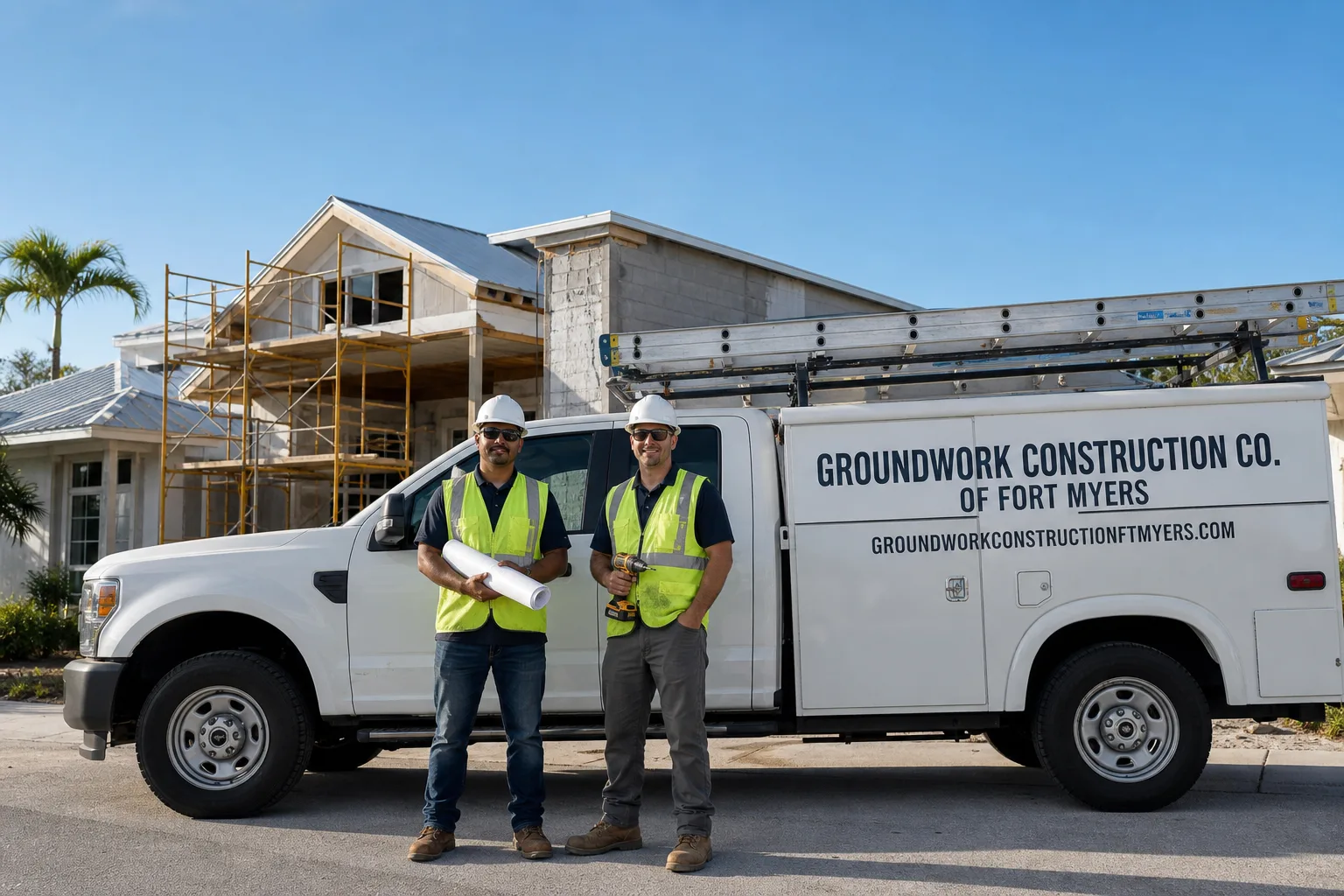
What Paver Driveways in Manasota Key Actually Cost and How Long They Take
A paver driveway in Manasota Key typically runs between $7,000 and $18,000, and most projects finish in five to seven working days. The final number depends on how much existing concrete or asphalt needs demolition, your paver choice, and whether the grade has to be reworked for proper drainage on a barrier island. Call (844) 638-7249 for a free on-site estimate with a written line-item quote, no surprises later.
We see the salt air and stormwater demands of Manasota Key shorten the life of asphalt and concrete before their time, which is why more homeowners here are switching to pavers. The material breathes, handles the shifting sandy soil better than a monolithic slab, and individual units can be replaced if a palm root or settlement pushes one out of plane. This page walks you through exactly what the job looks like from start to finish, the choices you make, and why working on a narrow barrier island changes the playbook compared to an inland driveway.
How We Build a Paver Driveway on Manasota Key, Step by Step
Every paver driveway we install follows five distinct stages. We keep you informed at each handoff so you know what the crew is doing and when you need to make a decision.
Stage 1 - Demolition and site prep (Day 1): We saw-cut and remove the existing driveway surface, whether that is aged concrete, crumbling asphalt, or an old paver bed that has heaved beyond repair. On older mid-century cottages along Gulf Boulevard or Beach Road, we often find the original slab is only two to three inches thick with no reinforcement, which comes out quickly with a skid steer. We haul all debris off the island same-day because staging space on these narrow lots is tight. This is when we expose the subgrade and check for buried surprises: abandoned sprinkler lines, old septic drain-field fingers from pre-sewer-era properties, or root intrusion from mature live oaks and sea grapes.
Stage 2 - Grading and base compaction (Day 2, sometimes bleeding into Day 3): The sandy native soil on Manasota Key drains well but compacts poorly unless it is mechanically stabilized. We excavate to a minimum of eight inches below finish grade, then bring in clean crushed limestone road base (FDOT-grade, not recycled concrete). The base goes down in lifts of three to four inches, each wetted and vibratory-compacted until we hit at least 98% proctor density. This is the part of the job that matters most on a barrier island: if the base isn’t dense, the driveway will settle unevenly after the first wet season. We set the grade with a calibrated laser so water sheets toward the street or into a shallow French drain along the property edge, never toward the house.
Stage 3 - Edge restraints and bedding sand (Day 3): Once the base is locked in, we install heavy-gauge polymer or aluminum edge restraints along the entire perimeter and spike them every twelve inches. These are what keep your pavers from drifting apart over years of vehicle turns and tropical downpours. On top of the base, we screed a uniform inch of coarse bedding sand, never masonry sand, because coarse sand drains faster and doesn’t wash out through the joints during a storm surge event. You don’t make any material decisions at this stage, but it is when we verify that the driveway pitch and the garage slab elevation will mate correctly, which is critical on the older beachfront homes where the original slab may have settled a half-inch or more over sixty years.
Stage 4 - Paver placement and cutting (Day 4 and Day 5): The pavers arrive on pallets from brands like Tremron and Techo-Bloc, which we handle with a mechanical paver cart to avoid scuffing. We lay them in your chosen pattern, starting from a straight edge at the garage and working outward so any cut units fall at the driveway edges and street apron. Every paver is seated with a plate compactor over a protective mat, then polymeric sand is swept into the joints. The sand is water-activated and cures to a firm but flexible bond that resists ants and washout. You decide the paver style and color before this stage begins; we bring samples to your home so you can see how different tones read under full Gulf sun versus the dappled shade from a cabbage palm canopy.
Stage 5 - Final compaction and seal (Day 5 or Day 6): We run the compactor once more with fresh sand to fill any remaining voids, blow off the excess, and mist-activate the joints. If you opt for a penetrating sealer, which we recommend for driveways on Manasota Key because it reduces salt and UV fade, we apply it at this stage and give it 24 hours to cure before vehicle traffic. The finished driveway is fully drivable the next day. Your only remaining decision is whether to seal, and we walk you through the trade-off between upfront cost and how the pavers will look three years from now in this coastal environment.
This is the same sequence we follow for any hardscape project that falls under our Driveway & Pavers in Manasota Key work, though the subgrade prep here gets more attention than patios or walkways because vehicles impose a much higher load.
The Options You Will Choose Between for a Paver Driveway
When you sit down for the design consult, three choices drive the final look and cost. Here is what we put in front of Manasota Key homeowners, stripped of brochure language.
- Paver material and brand. Most of our Driveway & Pavers jobs use concrete pavers from Tremron or Techo-Bloc because they hold color longer than economy alternatives and both have dedicated coastal-rated product lines with higher compressive strength. Tremron tends to run slightly less per square foot; Techo-Bloc offers more textured surface finishes that mimic natural stone. Clay brick pavers are an option but cost more and can spall in salt air over time if not sealed annually. Natural travertine or shellstone looks beautiful on Manasota Key but is porous, requires sealing every year, and pushes the price toward the high end of our range.
- Pattern and laying orientation. A standard 45-degree herringbone pattern is the strongest for vehicle traffic because it interlocks in two directions and resists creeping under braking and turning loads. A running-bond or 90-degree stack bond costs less in labor but is less stable over the long term, especially on a sandy subgrade. We also discuss banding and border accents, which use a contrasting color or a soldier-course edge to frame the driveway and tie it visually to your home’s exterior.
- Joint sand and sealer. All our driveways get polymeric sand, full stop. The choice is whether to apply a wet-look or matte penetrating sealer after cure. Sealer adds about $1.50 to $3 per square foot and buys you significantly better resistance to the salt mist that drifts off Lemon Bay and the Gulf, plus UV protection that slows color fade on the south-facing side of the driveway. We never push a sealer as mandatory but we do show you photos of sealed versus unsealed driveways at the five-year mark so you can decide with your eyes.
Homeowners sometimes pair a new driveway with a larger property update; we see Garage Conversion ADU in Manasota Key projects running concurrently when the garage slab needs replacing and the owner decides to repurpose the structure entirely.
What Paver Driveways Cost in Manasota Key, FL
As we said up top, expect $7,000 to $18,000 on Manasota Key. A standard two-car driveway in a straightforward rectangle on a level lot lands around $9,000 to $12,000. Here is what pushes the number higher or lower.
Size and shape. The square footage of pavers is the single biggest cost driver. A short single-car drive off a quiet bay-side street might be 250 square feet and stay in the low four figures. A long, flared Gulf-side drive that widens at the street apron can easily hit 800 square feet. Every additional 100 square feet adds roughly $1,200 to $2,000 depending on the paver grade.
Existing surface removal. Tearing out and hauling off four inches of wire-mesh-reinforced concrete costs more per square foot than breaking up an old asphalt drive. If the existing slab is unusually thick or contains two layers from a previous overlay, demolition time and dump fees climb. Some 1960s-era homes here have driveways with buried electrical conduit or shallow well lines running underneath, which we flag during the estimate walkthrough.
Subgrade corrections. If the native soil is too loose or we discover old fill debris buried two feet down, which is not uncommon on barrier-island lots that were built up with dredge spoil decades ago, we have to over-excavate and bring in additional base material. That adds cost but prevents the driveway from looking like a roller coaster in three years. Permitting through Sarasota County or Charlotte County may also require a site-specific compaction test, particularly within the Coastal Construction Control Line, and that engineering report is a line item on your estimate.
Paver selection. A basic Tremron tumbled paver in a common color runs around $4 to $6 per square foot for material. Techo-Bloc’s more textured profiles or a permeable paver system designed to meet stormwater code under FEMA floodplain rules can run $8 to $11 per square foot for material alone. We give you a fixed material quote with the estimate so the brand and style you choose locks the price; there is no surcharge later because a SKU changed.
We deliver a written, line-item estimate for every paver driveway in Manasota Key. What is included: all demolition, base prep, materials, edge restraints, polymeric sand, labor, cleanup, and the final walkthrough with you. What is typically separate: any required structural engineer’s compactions report for the permit package, and sealer if you choose it. We do not write change orders mid-job because we priced the driveway correctly the first time. Call (844) 638-7249 to schedule your free estimate.
What Manasota Key Homes Specifically Do to a Paver Driveway Job
Building on a narrow barrier island that sits between the Gulf of Mexico and Lemon Bay changes this job in ways a Fort Myers or North Fort Myers driveway does not face. The biggest variable, and the one that trips up out-of-area crews, is the county line. Manasota Key is split roughly in half: the northern end falls under Sarasota County jurisdiction, the southern end under Charlotte County. Two different building departments, two different permit portals, two different inspection schedules. We keep current contractor registrations in both counties because we have learned the hard way that a job on Gulf Boulevard and a job a quarter mile south on the same road can require entirely different paperwork. Pull the wrong county’s permit, and you are looking at a stop-work order and a re-file fee that delays the driveway by two weeks.
The salt air is the other constant. Fasteners, edge-restraint spikes, and rebar chairs corrode at an accelerated rate when the prevailing onshore breeze carries mist from both water bodies across the island. We use only galvanized or stainless spikes and polymer edge restraints that will not pit or rust-bleed orange streaks across the pavers two years in. On mid-century cottages along streets like Beach Road or Shore Road, we commonly find the original driveway slab contains uncoated reinforcing steel that has rust-expanded and cracked the concrete from the inside, a failure mode we see far less often even a mile inland. A properly built paver driveway sidesteps that problem entirely because it is a flexible pavement with no monolithic steel to corrode.
The housing stock itself matters. Many of the 1950s-to-1970s beach cottages have narrow side yards and limited access for a full-size skid steer. We use a compact track loader that fits through a standard gate, so we are not tearing down a fence or driving over a neighbor’s property to reach the driveway. On the newer elevated stilt homes built after Hurricane Ian, the driveway often has to tie into a raised garage slab six to eight feet above natural grade, which requires a steeper approach ramp and careful pitch work to keep water from pooling at the garage door.
Sometimes we are on the island because a homeowner is already planning a larger build; we have seen clients combine a new driveway with an ADU Design & Permitting in Manasota Key package when they are adding a guest house above a new garage and want the entire hardscape done in one pull.
Serving Manasota Key, FL - Our Local Coverage Area
We’re based in the Manasota Key area and know this community well. Use the map below to see our service coverage - if you’re nearby, we can almost certainly help.
Frequently Asked - Paver Driveways in Manasota Key
A properly installed paver driveway here lasts 25 to 30 years with basic maintenance, easily outpacing a typical concrete slab that may show spalling and cracking from salt intrusion within 15 years. The difference is that pavers move independently with the sandy soil, and a single broken or stained unit can be swapped in twenty minutes without saw-cutting or patching.
Yes, in virtually every case. Both Sarasota County and Charlotte County require a permit for driveway replacement, and if your property sits within the Coastal Construction Control Line (CCCL), the project triggers an additional FDEP review. We handle the permit pull as part of the job. The permit package typically includes a site plan showing the finished driveway footprint, the stormwater flow path, and proof that the new surface does not increase impervious area in a way that violates FEMA floodplain rules.
A paver driveway runs $7,000 to $18,000 here; stamped concrete typically lands between $5,000 and $14,000 depending on finishes and coloring. The upfront gap closes over time because pavers can be repaired unit by unit while stamped concrete that cracks or fades from salt exposure requires resurfacing or full replacement. Call (844) 638-7249 and we will give you an honest side-by-side quote for both so you can compare the numbers.
We compact the pavers and cure the polymeric sand during the final day of the job, and the driveway is ready for vehicle traffic the following morning. If you choose to seal, we ask for 24 hours of cure time after that application before you park on it. Most homeowners on Manasota Key plan to keep their car on the street or in a neighbor’s drive for one night.
Not if the base is done right. The native sand here drains well, which is an advantage, but it has almost zero structural cohesion on its own. We compact a minimum eight-inch limestone base to 98% density and lock the edges with spiked restraints. That system holds the pavers in plane even during a wet-season deluge. We stand behind every driveway with our full workmanship commitment; if something moves that should not, we fix it.
Get a Fixed-Price Estimate for Your Paver Driveway in Manasota Key
If you are ready to replace a tired driveway or build a new one that can handle the salt, sand, and storms this island dishes out, we will come to your home, measure, discuss materials, and hand you a written quote with no hidden line items. Our Driveway & Pavers crew knows both county permit offices and will make sure the paperwork lands in the right jurisdiction on day one. Call (844) 638-7249 to schedule your free on-site estimate for paver driveways in Manasota Key. A live person answers, day or night.
Written by Derek Hollenbeck, Owner at Groundwork Construction Co., serving Manasota Key with straightforward pricing and a full-scope construction team that knows this island.