
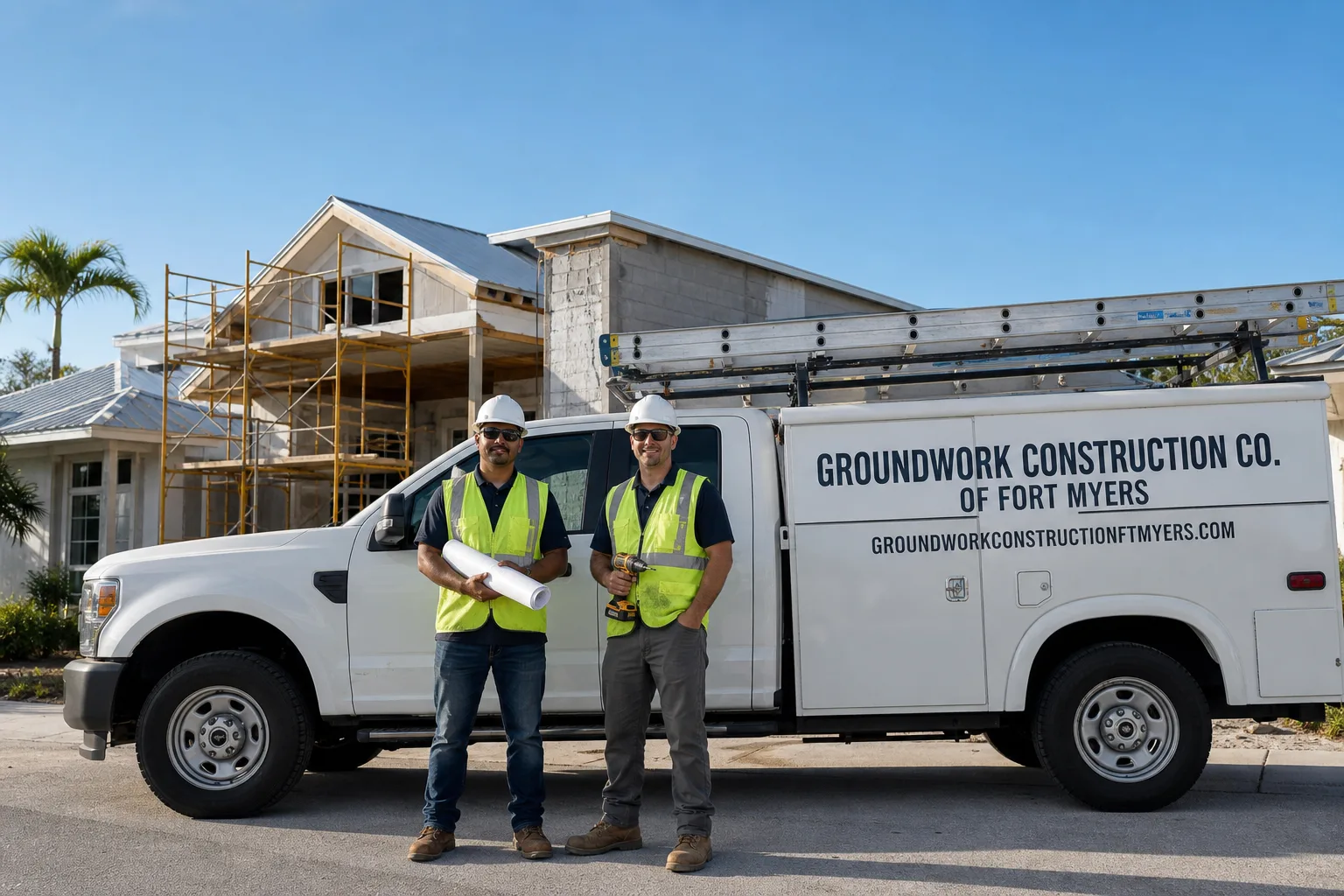
What Emergency Storm Damage Repairs Really Look Like in Englewood
Emergency storm damage repair in Englewood typically moves through three phases - tarping and stabilization within hours, a full damage assessment and insurance scope within days, and the actual rebuild starting within one to four weeks depending on permit routing and material lead times. Costs for storm-related structural repairs here run from about $1,200 for minor fascia and soffit replacement up to $40,000+ for a full roof and exterior rebuild after a hurricane hit, with most wind and water intrusion jobs landing between $4,500 and $18,000. If you’ve got water coming in or daylight showing through, call (844) 638-7249 now - we answer live and can have a crew at your property within hours for emergency tarp and board-up.
How we handle storm damage from first call to final inspection
The sequence matters, and we follow the same methodical process on every Englewood storm job because skipping steps here - with two different county building departments and state-level coastal rules in play - creates problems that compound fast. Here’s what you can expect, stage by stage.
Stage 1: Emergency response and stabilization (same day, typically within 2-4 hours). The first goal is stopping further damage. Our crew arrives with heavy-duty tarps, peel-and-stick underlayment, plywood for window and door openings, and sandbags if there’s ground-level water intrusion. We secure the envelope - roof penetrations, blown-out windows, compromised doors, damaged soffits that are letting rain into the attic - and document everything with date-stamped photos. This initial triage is what lets you sleep while the insurance adjuster gets scheduled.
Stage 2: Damage assessment and scope documentation (days 1-3). Once the property is stabilized, we do a full forensic walk-through: roof decking, underlayment condition, flashing at penetrations and valleys, window and door frame integrity, exterior wall sheathing for hidden water saturation, and any structural framing that took a wind or debris hit. We generate a line-item repair scope with photographs keyed to each finding. This scope becomes the backbone of your insurance claim - we write it in the format adjusters expect, and Derek Hollenbeck will walk it with you point by point so you understand exactly what’s damaged, what’s still sound, and what the repair path looks like.
Stage 3: Insurance scope alignment and permit routing (days 3-14, sometimes longer on barrier island properties). This is where Englewood’s split-county reality hits hardest. A storm-damaged home in the Charlotte County portion of Englewood follows one permit timeline and inspector roster, while the same damage on a house three blocks away but in Sarasota County follows a different set of officials and scheduling windows. If the property is on Manasota Key, we also trigger the Florida DEP Coastal Construction Control Line permit - a state-level review that runs parallel to the county process and can extend pre-construction by several weeks. We handle all permit applications, stay in contact with both the adjuster and the building department, and give you a construction start date once permits clear.
Stage 4: Reconstruction (varies by scope, typically 1-4 weeks of active work). We repair or replace every storm-compromised component in the correct sequence: structural framing and strapping first, then roof decking and underlayment, then exterior sheathing and moisture barrier, then windows and doors, then roofing material, then trim and exterior finishes. Englewood’s salt-air environment means every fastener and strap we install is stainless or hot-dipped galvanized - standard carbon steel corrodes in a few seasons here, especially within a mile of Lemon Bay or the Gulf. All work meets current Florida Building Code wind-load and impact standards, so your rebuilt home is stronger than the pre-storm version.
Stage 5: Final inspection and closeout. The county inspector signs off (and DEP signs off on CCCL jobs), we do our own quality walk with you, and we hand over a closeout packet with all permits, inspection sign-offs, manufacturer warranties on installed materials, and our 730-Day Done Right Promise in writing. If anything isn’t right, we make it right - that’s the warranty, no fine print.
The materials and decisions you’ll actually choose between
Storm repair isn’t a one-size-fits-all materials list. The choices you make now determine how the house holds up against the next named storm, and we’ll walk you through each one honestly.
- Underlayment: synthetic vs. peel-and-stick. Standard #30 felt does the minimum, but on Englewood homes within a mile of salt water we strongly recommend a high-grade synthetic underlayment or a full peel-and-stick membrane - the latter self-seals around fasteners and creates a waterproof barrier even if shingles blow off. Peel-and-stick adds roughly $0.40-$0.70 per square foot in material cost but dramatically reduces the odds of a repeat claim.
- Roofing material: architectural shingles vs. metal vs. tile. If you’re replacing the whole roof as part of the storm claim, you’re choosing the material. High-wind-rated architectural shingles (GAF, CertainTeed, Owens Corning) are the most common path and handle Englewood’s wind loads well when installed with the full nailing pattern. Metal - standing seam or exposed-fastener panels - offers higher wind resistance and a 50-year life but costs about twice as much upfront. Tile offers excellent longevity in the salt environment but requires a heavier roof structure and is more vulnerable to impact damage from flying debris.
- Impact-rated openings: windows, doors, and garage doors. Florida code now requires impact-rated or shutter-protected openings on new work and major repairs. Laminated impact glass and reinforced door assemblies cost more than standard units but eliminate the need for shutters and provide permanent protection. If your storm-damaged windows need replacing anyway, upgrading to impact-rated is the right call, and the insurance premium reduction often offsets the added cost over a few years.
- Exterior sheathing and moisture barrier. If water got behind the siding or stucco, the sheathing needs to come out. We use CDX plywood (not OSB, which swells irreversibly when wet) and a fully taped moisture barrier system that drains any future water intrusion downward and out rather than trapping it against the framing.
- Fasteners and connectors: stainless or hot-dipped galvanized. This isn’t optional within two miles of the water in Englewood. Every hurricane strap, anchor bolt, and exposed fastener goes in as stainless or hot-dipped galvanized. The salt spray from Lemon Bay and Gulf overwash is relentless on standard steel - we’ve pulled out anchor bolts on five-year-old additions where the heads were reduced to rust nubs.
What Emergency Storm Damage Repairs Cost in Englewood, FL
Storm damage repair pricing in Englewood ranges from about $1,200 for isolated fascia or gutter repair up to $40,000+ when a full roof, exterior sheathing, and several openings have to be rebuilt from hurricane damage. Most windstorm and water-intrusion jobs we handle fall between $4,500 and $18,000, with the insurance claim covering the bulk of the cost beyond your deductible.
Several variables move the number, and it helps to understand them before the adjuster arrives:
- Permit jurisdiction. Charlotte County and Sarasota County have different fee schedules, and Manasota Key adds a Florida DEP CCCL permit with its own costs and timeline. A repair that costs $9,500 in mainland Englewood can cost $10,500 on the Key from permitting and compliance work alone.
- Scope of water intrusion. The difference between a $3,200 job and a $16,000 job is often what got wet behind the exterior surface. If water saturated the wall cavity, sheathing, insulation, and possibly framing, you’re looking at full tear-out and rebuild rather than surface repair.
- Material upgrades for code compliance. If your home was built before the 2002 Florida Building Code, repairs that trigger a certain percentage of the roof or exterior may require bringing the entire system up to current wind-load and impact standards - new strapping, impact-rated openings, secondary water barrier. This adds cost but produces a significantly stronger home.
- Access and site conditions. Waterfront properties with tight setbacks, homes on Manasota Key requiring barge or ferry material delivery, and properties with steep or heavily landscaped lots all increase labor hours and equipment needs.
- Hidden structural damage. Wind that lifted a corner of the roof often compromised the truss-to-wall connections, and salt-sprayed framing that stayed wet for days can need selective replacement. We don’t know the full picture until the affected area is opened up, which is why our estimates include a line-item allowance for discovered conditions - no surprises, just honest expectations set upfront.
Every estimate we write is a fixed-price, line-item scope. You’ll see the cost of every material, every labor line, every permit fee, and a clearly marked allowance for potential hidden damage. If the allowance isn’t needed, you don’t pay it. Call (844) 638-7249 to schedule a free storm damage assessment and get a written estimate the same week.
What Englewood homes specifically do to storm damage work
Englewood presents a set of conditions that change how storm repairs get scoped, permitted, and built - and we’ve learned them from doing this work here. The first reality is the Charlotte-Sarasota county line that cuts through town. A storm-damaged ranch house off Placida Road follows Charlotte County permitting and inspections, while the same job on a nearly identical home a few blocks south falls under Sarasota County’s jurisdiction with different fee calculations and different inspector availability. Manasota Key adds an entirely separate state-level DEP review that gates the whole project behind a three-to-six-month permitting window that mainland contractors often fail to price in. We handle all three scenarios, and Derek stays on top of each permit routing from application to sign-off.
The housing stock itself shapes the work. Most Englewood storm repairs happen on 1950s-to-1980s concrete-block ranch homes - solid structures with original low-slope roofs, pre-2002 strapping systems, and electrical panels that frequently need upgrading once a permitted repair opens the walls. These homes are tough but were built to an older wind code, and an Ian-level storm exposes every weak point: the truss-to-wall connections, the gable-end bracing, the window and door flashing details. We’ve opened walls in Englewood after Ian and found entire cavity insulation batts turned to salt-saturated mush from a single damaged soffit panel - water traveled 20 feet horizontally before showing itself on the interior ceiling. That kind of hidden path is common in these older ranch layouts, and it’s why our damage assessment process goes well beyond what’s visible from a ladder.
The salt environment demands specific hardware choices. Homes in the Lemon Bay corridor and anything east of the Gulf beaches get pervasive salt-laden air that accelerates corrosion on every exposed metal component. When we rebuild after a storm, every strap, anchor, fastener, and flashing detail uses stainless or hot-dipped galvanized material - not as an upsell, but because we’ve pulled enough rusted-through hardware out of Englewood homes to know that standard steel is a repeat failure waiting to happen. Many of these homes also sit within FEMA flood zones, particularly the waterfront parcels and anything on Manasota Key, which can trigger elevation compliance requirements if the damage crosses the substantial improvement threshold. We’ll flag that early so there are no surprises during the permit phase.
For a full roof rebuild as part of storm recovery, homeowners often coordinate with our Roofing in Englewood crew and our broader Roofing division to keep the entire exterior scope under one team. And because storm damage to windows and doors is common, some homeowners use the repair window to upgrade to impact-rated units - our Custom Windows & Doors in Englewood team can scope that in parallel. Fencing that blew out or washed away is another common casualty, and our Wood Fence in Englewood work often runs alongside these storm rebuilds. Across all of it, we’re serving Englewood with the same team, the same warranty, and the same live-answer phone line.
Serving Englewood, FL - Our Local Coverage Area
We’re based in the Englewood area and know this community well. Use the map below to see our service coverage - if you’re nearby, we can almost certainly help.
Frequently asked - Emergency Storm Damage in Englewood
We answer the phone live at (844) 638-7249 and can typically have a crew on-site within 2 to 4 hours for emergency tarp, board-up, and stabilization. The full damage assessment and written scope follows within one to three days, depending on how many storm calls we’re managing across Englewood at that moment.
Almost always yes. Structural repairs, roof replacement, window and door replacement, and any sheathing or framing work all require a building permit from either Charlotte County or Sarasota County, depending on which side of the county line your property falls on. Manasota Key properties typically require an additional Florida DEP Coastal Construction Control Line permit. We pull all required permits on your behalf and build the timeline around each jurisdiction’s review cadence.
Most Englewood homeowner policies cover storm and wind damage beyond your named-storm or hurricane deductible, typically 2% to 5% of your dwelling coverage amount. Our damage scope is written to insurance-industry standards and we work directly with your adjuster to make sure every line item is documented and justified. The out-of-pocket portion is typically your deductible plus any upgrades you choose beyond code minimums - like upgrading to impact windows instead of replacing with standard units. Call (844) 638-7249 and we’ll help you understand the claim process before the adjuster even arrives.
Water intrusion through damaged soffits and fascia that travels horizontally through the attic or wall cavity before becoming visible on an interior ceiling or wall. We routinely find saturated insulation, compromised sheathing, and early-stage mold inside wall cavities where the exterior looked mostly intact. The 1950s-1980s ranch homes that dominate Englewood’s housing stock have open attic and soffit designs that let wind-driven rain move surprisingly far from the entry point. Our assessment opens up the affected area to verify the full extent, not just what the drywall is showing.
The active construction portion - once permits clear and materials arrive - typically runs one to four weeks for most single-family storm repairs in Englewood. The total timeline from first call to final inspection depends heavily on the permit jurisdiction: mainland Charlotte County and Sarasota County jobs usually move faster than Manasota Key work, where the state DEP Coastal Construction Control Line review can add several months to the pre-construction phase. We give you a realistic timeline once we know your exact scope and jurisdiction.
Get a free storm damage assessment in Englewood
If your Englewood home took a hit from wind, water, or flying debris, don’t wait until the damage compounds. Call (844) 638-7249 to reach a live person right now - we’ll dispatch a crew for emergency stabilization the same day and give you a written, line-item repair estimate you can hand directly to your insurance adjuster. The estimate is free, the scope is honest, and every repair is backed by our 730-Day Done Right Promise. From the first tarp to the final inspection, one team handles the whole rebuild.
Written by Derek Hollenbeck, Owner at Groundwork Construction Co., providing emergency storm damage repairs to Englewood homeowners with upfront pricing and a live-answer guarantee, 24/7.