
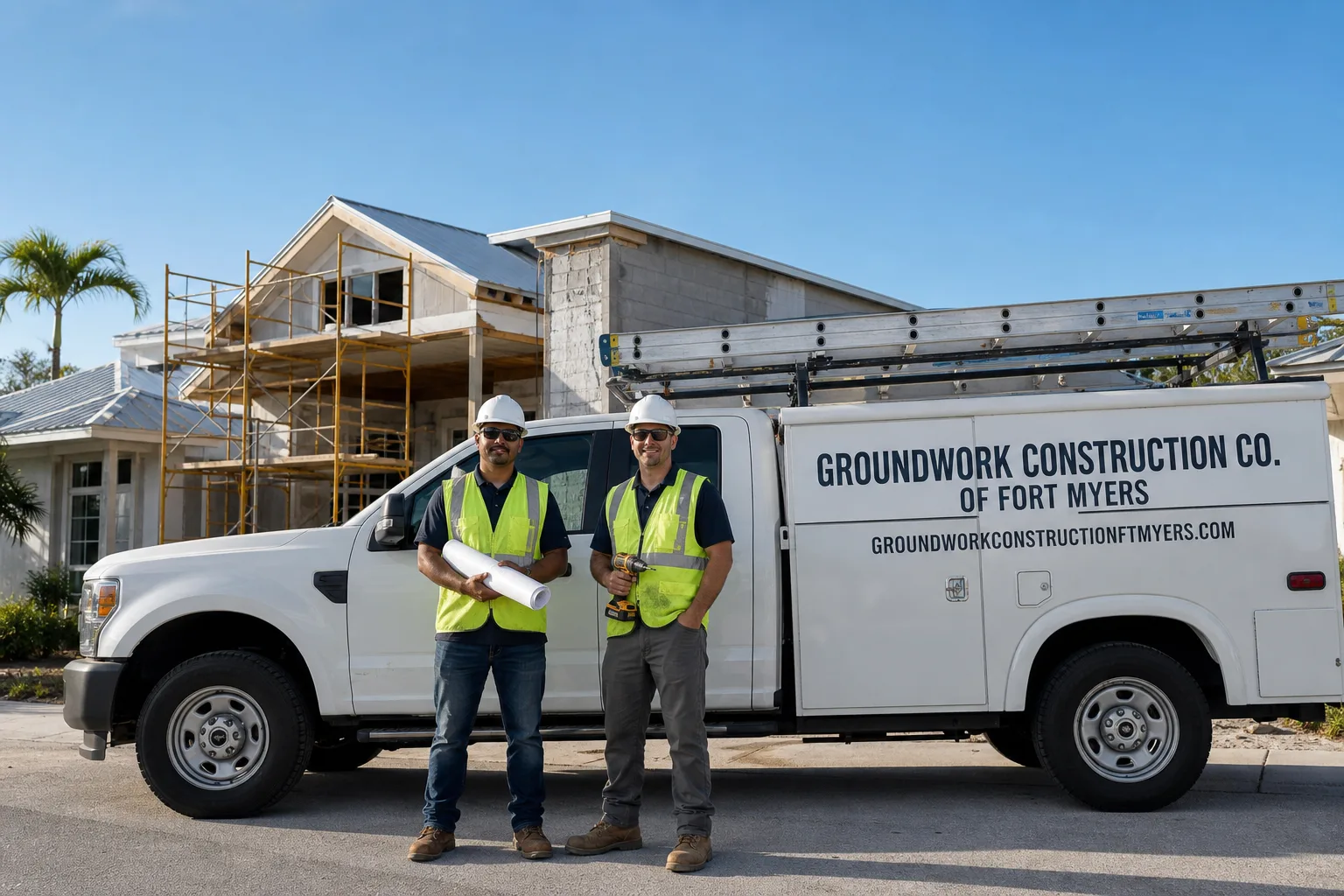
What a Paver Driveway Job in Plantation Actually Costs and Takes
A paver driveway installation in Plantation, FL typically runs between $7,000 and $18,000, with most mid-size single-family driveways landing around $9,500 to $13,000. The job usually takes 5 to 8 working days from demolition to the final compaction pass, assuming no permit delays or hidden subgrade problems. Call (844) 638-7249 for a written, line-item quote specific to your property - estimates are free and there’s no obligation.
How We Build a Paver Driveway in Plantation, Stage by Stage
Paver driveways aren’t a one-day pour-and-walk-away job, and the sequence matters a lot more than most homeowners realize before they live through one. Every project follows the same disciplined cadence because skipping steps in South Florida’s sandy, high-water-table soil shows up as settlement within the first two rainy seasons. Here’s what you’ll see from start to finish.
Day 1-2: Demolition, excavation, and base prep. The old surface comes out - usually an aging concrete slab on the 1960s-to-1980s tract homes we work on across Plantation. We excavate to a minimum of 8 inches below the finished paver grade, sometimes deeper if the subgrade is soft or we hit muck from the shallow limestone shelf. The homeowner’s one real decision at this stage: whether to widen the driveway footprint beyond the original dimensions while the ground is open, which changes the material count and the permit scope.
Day 2-3: Sub-base compaction and grading. We bring in crushed limestone aggregate - the standard base material for paver work in Broward County because it locks together under compaction better than shell or recycled concrete. Every 2-inch lift gets mechanically compacted with a plate compactor, and we laser-grade the surface to a 1% minimum slope away from the house. Plantation’s flat terrain means we sometimes have to create positive drainage with subtle crowning that the finished pavers will follow, especially on zero-lot-line properties where runoff can’t be pushed onto a neighbor’s lot.
Day 3-4: Edge restraint and bedding sand. Once the base passes compaction testing, we install aluminum or plastic edge restraint along the entire perimeter - this is what stops the outer pavers from migrating sideways over time under vehicle loads. A 1-inch screeded layer of coarse bedding sand goes on top, leveled with screed rails. This is the stage where any underground work - trenching for landscape lighting conduit or running a drain line to the street - has to be complete, because once the bedding sand is down, nothing gets dug up without starting over.
Day 4-6: Paver laying and cutting. This is the visual stage. Pavers go down in the pattern you chose - herringbone, running bond, basketweave - and the crew cuts border pieces on-site with a wet saw to fit cleanly against the garage slab, walkways, and any curved edges. If the design includes a decorative border row or an inlay, it gets laid in sequence with the field pavers. For Plantation driveways, we recommend at least a 60mm-thick paver; 80mm is standard for any property where heavier vehicles or frequent delivery-truck traffic is expected.
Day 7-8: Joint sand, compaction, and final seal. Polymeric sand sweeps into the joints, and the entire driveway gets compacted again to lock the pavers into the bedding layer. The sand is then mist-activated - we wet it just enough to trigger the polymer binder without washing it out of the joints. A final pass with the compactor, and the driveway is ready for sealant if you opted for it. Sealant isn’t mandatory, but on paver driveways in Plantation it adds a meaningful layer of stain resistance against oil drips and the tannin-heavy leaf litter from the city’s mature oak canopy. After final compaction, we walk the project with you to confirm every edge, slope, and paver is exactly right before we call the job done.
The Options You’ll Choose Between for a Paver Driveway
Most of the conversation during the estimate visit comes down to four choices that drive the final look, the long-term performance, and the price. None of them are “better” in the abstract - they’re about what fits how you use your driveway and what you want it to look like five years from now.
- Paver material: concrete vs. clay. Concrete pavers from brands like Belgard and Tremron are the most common choice in Plantation - they hold color well under South Florida UV exposure and cost less per square foot than genuine clay. Clay pavers (the thin, kiln-fired brick type) give a warmer, more traditional look that works beautifully on the older mid-century ranch homes in neighborhoods like Country Club Estates, but they’re roughly 30% to 50% more expensive and the color palette is narrower. Both handle Florida’s heat without warping, which is the real test.
- Thickness: 60mm vs. 80mm. A 60mm paver is adequate for passenger vehicles and typical driveway use. The jump to 80mm - or to an 80mm border with a 60mm field - is what we specify when the driveway will see heavier loads: large SUVs, a work truck parked nightly, or frequent deliveries. The material cost difference is about $1.50 to $2.50 per square foot, and the labor is the same. For most Plantation homes with a two-car garage and standard vehicles, 60mm is the right call.
- Pattern and laying direction. Herringbone at a 45-degree angle is the strongest pattern mechanically - the interlock resists the forward-backward shear of braking and accelerating vehicles better than any other layout. Running bond (stacked rows, like brickwork) looks cleaner and more contemporary but can shift slightly under repeated turning motions. We typically lay the pattern so the long axis runs perpendicular to the garage door; it’s a small detail that keeps the eye moving toward the house rather than toward the street.
- Border and accent banding. A single contrasting border row in a darker color - charcoal against a warm gray field, for example - frames the driveway and defines the edge visually. It adds roughly $400 to $900 to the total on a standard two-car driveway, depending on the border width and paver line. Accent banding (a row of a second color inset a few feet from the edge) is a design choice we see more often on the larger properties off Peters Road and in the Jacaranda Lakes subdivisions, where the driveway footprint is wide enough that a band doesn’t crowd the field.
What Paver Driveways Cost in Plantation, FL
For a single-family paver driveway in Plantation, expect to budget $7,000 to $18,000. The low end gets you a simple replacement of an existing single-car driveway with a standard concrete paver in a running-bond pattern, no borders, using the original footprint. The high end covers a large two- or three-car driveway with full excavation, an 80mm paver, a herringbone pattern with a contrasting border, and any subgrade corrections needed for drainage.
Five variables push the number up or down:
- Square footage. This is the biggest lever. A single-car driveway runs 300 to 450 square feet; a wide two-car with an apron and walkway connection can push past 1,000 square feet. Every additional 100 square feet typically adds $1,200 to $2,000 in materials and labor.
- Existing surface removal. Demolishing and hauling away an old concrete slab costs more than starting from bare ground. If the existing concrete is thick - common on Plantation homes where the original driveway was poured as part of the house slab - the demo takes longer and the disposal weight is higher.
- Subgrade condition. In parts of Plantation where the shallow limestone is close to the surface, we sometimes hit rock that requires a mechanical breaker to achieve proper excavation depth. That adds to the labor day count. In lower-lying areas with softer, wetter soil, we may need additional base material and possibly a geotextile fabric layer to stabilize the subgrade before the aggregate goes in.
- Paver selection. The price gap between a basic Tremron concrete paver and a premium Belgard or Unilock product with a specialty finish can be $3 to $6 per square foot just on the material. Clay pavers sit at the top of the range.
- Permit and HOA requirements. Most paver driveway replacements in Plantation require a Broward County permit, and the permit fee scales with the project valuation. If your HOA requires architectural review committee approval - and many of Plantation’s planned subdivisions do - the submittal package and the review window add time but not much direct cost. We handle the permit package as part of the job; what changes the price is whether the county requires additional site-specific drainage calculations or an engineered subgrade report.
Every written estimate we give for paver driveways in Plantation includes the full scope: demolition, excavation, base, bedding sand, pavers, edge restraint, polymeric joint sand, compaction, and cleanup. What it typically doesn’t include - and we flag this before you sign - is unforeseen subgrade correction if the excavation exposes a sinkhole, an abandoned septic tank, or utility lines that have to be relocated. Those are rare, but on a 60-year-old property with a history of additions, they’re not unheard of. Call (844) 638-7249 to schedule a free on-site estimate and we’ll walk the property with a plan and a hard number.
What Plantation Homes Specifically Do to a Paver Driveway Job
Plantation’s housing stock is uniquely homogeneous in a way that affects every paver driveway project we take on here. The vast majority of homes were built between 1958 and 1988 as part of master-planned subdivisions - think Country Club Estates, Jacaranda Lakes, and the neighborhoods branching off Broward Boulevard - and they share the same construction DNA: concrete block and stucco, slab-on-grade, and original driveways poured as monolithic extensions of the house slab. That last part matters. When your original driveway is structurally tied to the foundation, the demo has to be surgical at the garage threshold to avoid spalling or cracking the house slab itself. We see this on roughly 40% of the paver driveway projects we do in Plantation, and it’s a detail a crew unfamiliar with mid-century CBS construction will learn the hard way.
The second local factor is Broward County’s permit threshold for driveway work. Plantation falls under Broward’s building jurisdiction, not Miami-Dade’s stricter HVHZ code - but Broward still enforces Florida Building Code wind-load provisions, and a paver driveway replacement that changes the impervious surface coverage or the drainage pattern triggers a site plan review. The county’s inspectors want to see positive drainage away from the structure and no runoff directed onto adjacent properties. On the flat lots that define Plantation’s planned subdivisions, getting that 1% slope documented on the permit drawings is the thing that separates a smooth permit turnaround from a two-week back-and-forth with the plans examiner. Our team knows the Broward submittal format and the specific drainage exhibits the reviewers expect, which keeps the inspection schedule on track even during the summer months when the hurricane-season backup hits.
The mature tree canopy - live oaks, mahogany, and the occasional ficus - is the third piece. Roots from 50-year-old street trees have had decades to grow under the original driveway slab. When we excavate, we sometimes find root masses that have to be pruned back or worked around without destabilizing the tree. It’s not a dealbreaker, but it’s a discovery that can add a half-day to the base prep. In neighborhoods like the Plantation Isles area, where lot lines are tighter and trees are closer to the driveway edge, we plan for it in the initial estimate rather than treating it as a change order later.
For homeowners who are already looking at the bigger picture of a mid-century home that needs structural or layout updates, we often coordinate paver driveway work with a Garage Conversion ADU in Plantation or a ADU Design & Permitting in Plantation project - running the driveway approach and the accessory dwelling unit through the same permit cycle saves time and avoids tearing up fresh pavers later for utility trenching.
Serving Plantation, FL - Our Local Coverage Area
We’re based in the Plantation area and know this community well. Use the map below to see our service coverage - if you’re nearby, we can almost certainly help.
Frequently Asked - Paver Driveways in Plantation
Five to eight working days, start to finish. Day one and two are demolition and excavation; base prep and compaction run through day three; paver laying takes two to three days depending on the square footage and pattern complexity; and the final day is joint sand, compaction, and cleanup. Broward County inspections add a variable - the inspection window during hurricane season (June through November) can be tighter, so we schedule the permit submittal early to secure a slot.
Yes, in nearly every case. Replacing a driveway in Plantation requires a Broward County permit because the work involves ground disturbance and changes to the impervious surface coverage. We handle the full permit package - site plan, drainage calculations, and the product approval documentation for the paver system - as part of the project. HOA approval is separate and depends on your subdivision’s covenants; we can provide the submittal materials your architectural review board needs.
Technically possible but not how we do it. Laying pavers over an existing slab raises the finished grade, which often creates a trip hazard at the garage threshold and can violate the maximum height relative to the house slab that Plantation’s code enforcement checks for. Full excavation to the proper subgrade depth gives you a driveway that drains correctly, doesn’t shift, and won’t have to be redone in five years when the old concrete underneath cracks and telegraphs through the pavers.
For a standard two-car driveway in Plantation, concrete pavers typically run $7,000 to $13,000; clay brick pavers for the same footprint come in closer to $11,000 to $18,000. The gap comes down to material cost - clay pavers are more expensive per square foot - and the additional cutting labor, since clay is harder and slower to saw. Both perform well in South Florida’s climate, so the choice is mostly about the look you want against your home’s architecture.
Not if the base is done correctly. The key is excavation depth - we go to a minimum of 8 inches below the finished grade and compact the subgrade and each lift of aggregate separately. In parts of Plantation where the water table is seasonally high, we occasionally add a geotextile separator fabric between the soil and the base aggregate to prevent the sand from migrating down and the stone from punching up. A properly built paver driveway on a competent base will stay flat and interlocked for decades, and our 730-Day Done Right Promise means if anything does move, we come back and make it right. Call (844) 638-7249 for an exact quote on your property - estimates are free, and we’ll walk you through the base spec we’d use for your specific lot conditions.
Schedule a Free Estimate for Paver Driveways in Plantation
If you’re ready for a real number - not a ballpark, not a range you found online, but a written quote based on your actual driveway, your paver choices, and your property’s specific drainage and permitting requirements - call (844) 638-7249. We’ll come out to your Plantation home, take measurements, talk through the options, and hand you a line-item estimate that covers the full scope with no surprises later. A live person answers the phone, day or night, and the estimate visit is completely free.
Written by Derek Hollenbeck, Owner at Groundwork Construction Co., bringing honest pricing and a 730-Day Done Right Promise to homeowners across Plantation.