
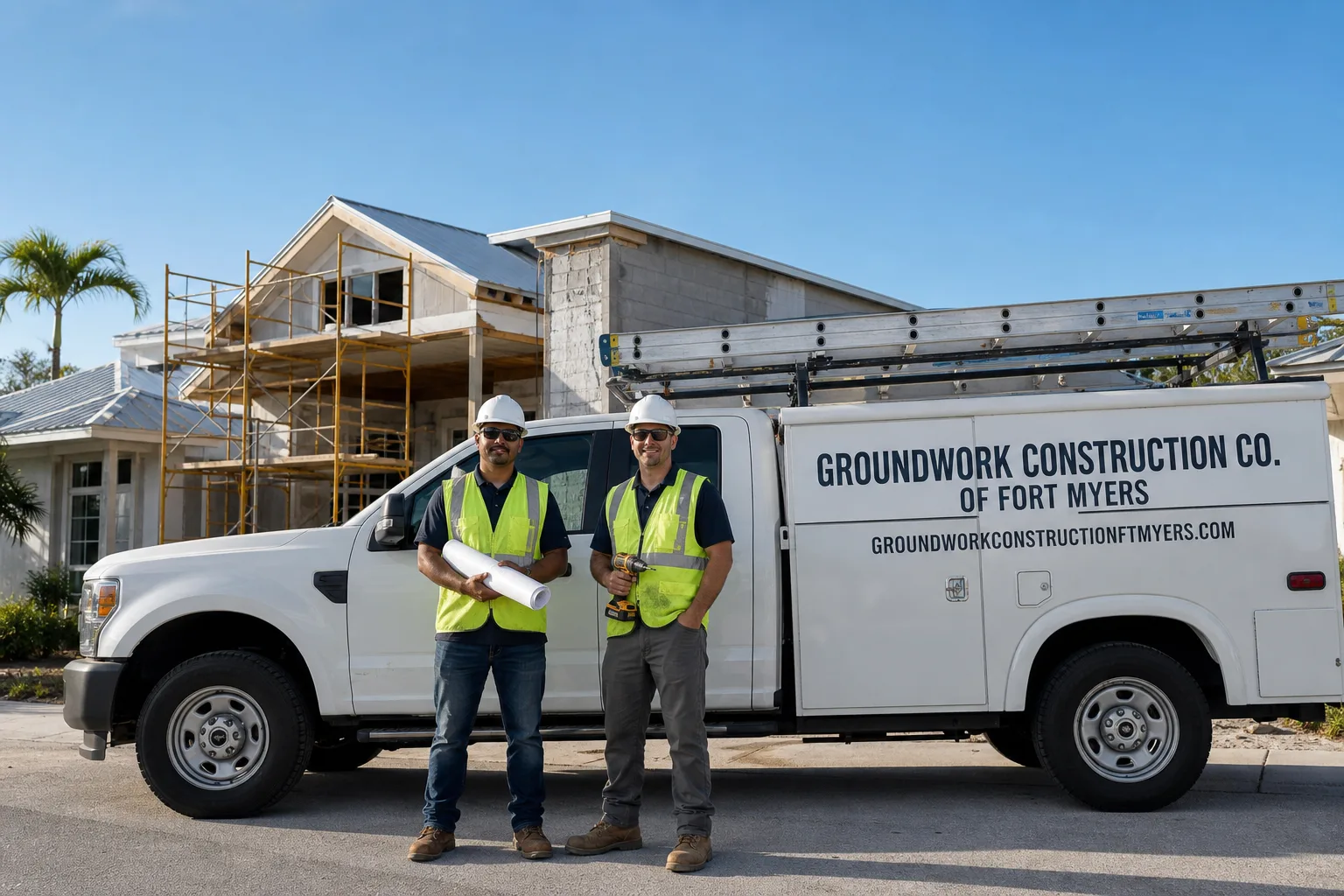
What Roof Replacement & Installation in Villas Actually Costs and How Long It Takes
Roof replacement & installation in Villas runs $8,000-$20,000 for a typical ranch home, and most jobs take 5-7 working days once materials are on-site. That range covers tear-off, sheathing repair, new underlayment, and architectural asphalt shingle installation on a 1,500-2,200-square-foot concrete block home - the size and style we see on nearly every street here. Permitting through Lee County adds a variable that catches homeowners off guard, which we’ll walk through below. Call (844) 638-7249 for a roof replacement estimate specific to your home - the estimate is free and you’ll get a written line-item quote, not a ballpark number on a napkin.
How We Replace a Roof in Villas - The Step-by-Step Process
Every roof replacement follows the same sequence, but Villas homes built before the Florida Building Code overhaul in 2002 almost always add a structural inspection step that newer subdivisions skip entirely. Here’s what to expect from the day materials arrive through final sign-off.
Stage 1: Tear-off and deck inspection (Day 1, sometimes Day 2 on larger homes). The existing shingles, underlayment, and drip edge come off down to bare plywood or tongue-and-groove decking. This is the moment of truth - on 1960s-through-1980s Villas homes, we regularly find sections of sheathing rotted from decades of high-humidity attic condensation, especially on north-facing roof planes that dry slowly. Any damaged decking gets replaced at this stage before another layer goes on. You approve sheathing replacement costs before we proceed; our crew photographs every section so you see exactly what we saw.
Stage 2: Hurricane-strap inspection and code retrofit (Day 2, Lee County-dependent). Lee County Building Department requires a strap-and-clip inspection on any pre-2002 CBS home when the roof deck is exposed. If the original builder used toenailed truss connections instead of modern galvanized steel hurricane straps - and most 1970s Villas homes did - the inspector will flag it. We install the required retrofit connectors, document it for the permit file, and move forward. This adds about a half-day and means your permit closes without the stop-work orders owners get when this step is skipped.
Stage 3: Underlayment and water barrier (Day 3). Synthetic underlayment goes down next - we use a high-temperature, high-tear-strength product rated for Florida’s UV exposure, not basic 15-pound felt. Ice-and-water shield runs along all eaves and in valleys where Villas’s summer downpours concentrate runoff. Drip edge is installed on every eave and rake edge at this stage, which prevents the wind-driven rain rot pattern we see on older homes that only had edge metal on some sides.
Stage 4: Shingle or material installation (Days 4-6). The roofing material itself goes on - architectural asphalt shingles on most jobs, though some Villas homeowners choose standing seam metal or tile (each has its own page on this site). We work one plane at a time, ridge vent goes in last, and flashing around any penetrations - plumbing vents, attic fans, the stack - is cut and sealed on install day, never retrofitted as an afterthought. Daily cleanup is part of the process; you won’t find fasteners in your driveway a month later.
Stage 5: Final walkthrough and permit closeout (Day 7). We walk the roof with you - or show you ground-level photos if you’d rather not climb a ladder - and confirm every detail matches the scope of work. The Lee County inspector performs the final, and because we’ve already handled the hurricane-strap documentation and the underlayment dry-in inspection earlier in the process, this usually goes smoothly. You get your closed permit, the manufacturer warranty registration, and our 730-Day Done Right Promise in writing before we consider the job finished.
The Roofing Material Choices You’ll Make
Most Villas roof replacements land on architectural asphalt shingles for the balance of cost, longevity, and wind rating. But you have real decisions to make beyond just “shingle color.” Here are the forks in the road and what they mean for your home.
- Architectural asphalt shingles. This is the standard on 90% of the homes we replace in Villas. A good architectural shingle - GAF Timberline HDZ or CertainTeed Landmark, for example - gets you a 130-mph wind warranty with proper installation, a Class A fire rating, and 25-30 years of useful life in Southwest Florida sun. Cost lands in the lower half of the $8,000-$20,000 range. The trade-off is weight: these are lighter than tile or metal, which matters on an older truss system that was never engineered for a heavy roof.
- Standing seam metal. Metal roofs cost more - the material price alone starts significantly higher than architectural shingle - but a standing seam panel with concealed fasteners gives you 140+ mph wind resistance, which matters in a county that just took a Category 4 landfall. Metal reflects more solar heat than dark asphalt, which can drop attic temperatures noticeably in Villas’s July and August afternoons. The consideration on a 1960s ranch is that the roof structure may need reinforcement to carry the rigid attachment points metal demands; an existing asphalt roof on 24-inch truss centers isn’t always ready for metal without some framing work first.
- Concrete or clay tile. Tile is heavy, period. Most older Villas CBS homes were not engineered for it, and adding tile means an engineer’s letter confirming the structure can carry the load, plus possible truss reinforcement. That said, tile can last 50-plus years in this climate when installed correctly, and it handles Florida sun and salt air without rust or granule loss. The cost drives toward the high end of any roof replacement in Villas once you factor in the structural work. We’re straightforward about whether your home is a good candidate, and we won’t sell you a tile roof on a structure that isn’t ready for it.
What Roof Replacement & Installation Costs in Villas, FL
You should expect to spend $8,000-$20,000 on a complete roof replacement in Villas. Where your job lands inside that range depends on a handful of specific factors, and we lay them out in writing before you sign anything. Our quotes are line-item and upfront - the number you agree to is the number you pay, backed by our 730-Day Done Right Promise.
Five variables that actually move the price:
- Roof size and complexity. A 1,400-square-foot rectangular ranch costs less than a 2,400-square-foot home with multiple valleys and dormers. Every valley adds flashing labor; every hip adds ridge cap.
- Sheathing condition once the old roof is off. If we find widespread OSB or plywood rot - and we see it most often on Villas homes where the attic ventilation was undersized from day one - replacing decking adds material and labor per sheet. We price this as a per-sheet unit cost in the estimate so if we hit zero rot, you don’t pay a dime extra.
- Hurricane-strap retrofit scope. On pre-2002 homes, the Lee County inspection almost always requires new galvanized straps and clips. If the existing truss layout makes access tight, the labor ticks up. Newer homes generally don’t face this line item.
- Material grade. Basic three-tab shingles are cheaper than architectural shingles, which are cheaper than standing seam metal or tile. We don’t install three-tab - the wind performance isn’t sufficient for what Villas sees - but the jump from architectural asphalt to a premium material is the single biggest cost lever you control.
- Permit and engineering requirements. Lee County permit fees scale with job valuation, and if your home requires an engineer’s letter for tile loading or a FEMA elevation certificate review due to flood-zone remapping, those fees become line items. We handle the paperwork; you pay the county’s fee, not our markup.
Every one of our roof replacement estimates includes tear-off and disposal, sheathing repair at a stated per-sheet rate, synthetic underlayment, ice-and-water shield in valleys and eaves, drip edge, the roofing material itself, all flashing, ridge ventilation, permit coordination, and the final inspection walkthrough. What you won’t find buried in our quote: a change-order for “unexpected” flashing - it’s either in the scope or it isn’t.
What Villas Homes Specifically Do to a Roof Replacement Job
Villas is dominated by slab-on-grade concrete block ranch homes built between roughly 1960 and 1985, and that matters more than most homeowners realize when they start pricing a new roof. These houses were framed long before Florida’s post-Hurricane Andrew high-velocity hurricane zone codes took effect, which means the original truss-to-wall connections are almost always inadequate by today’s standards. A straightforward roof replacement permit in unincorporated Lee County routinely cascades into a required hurricane-strap retrofit inspection, and if the straps aren’t there - they usually aren’t - the county won’t close the permit until we add them. We budget for this from the first estimate so you’re not blindsided. Homeowners who pair a roof replacement with upgraded impact-rated entry systems often ask about Door Installation in Villas, and some take the opportunity to Window Replacement in Villas as part of a broader hardening project.
The salt air from the Caloosahatchee River estuary works on everything. On older Villas homes we frequently find corroded rebar inside the bond beam at the top of the CBS wall - the roof anchors right into that steel, and if the rebar has been rusting for 40 years, the connection is compromised. A roofer who just nails new decking over suspect anchors is setting you up for trouble the next time a storm pushes 100-mph gusts across the river. Our crew checks the bond beam condition at every anchor point and flags it. If the underlying structural issues need attention, we coordinate that work - it’s the kind of thing a Roofing crew that only does shingles won’t catch. When the scope expands beyond just the roof into water-intrusion or structural remediation, we often bring in our broader team - this is where working with one company that also handles Roofing in Villas as a full trade makes the project run cleaner than splitting it across three separate contractors.
Flood zone remapping after Hurricane Ian’s 2022 landfall has added another layer. FEMA’s advisory base flood elevations shifted for several pockets of Villas near the Caloosahatchee drainage basin, and Lee County now sometimes requires an elevation certificate review before signing off on a permit for a roof that exceeds a certain percentage of the home’s assessed value. It’s not every home, but it’s enough of them that we check the FEMA panel for your address during the estimating process rather than discovering it mid-permit. Our team covers all of Villas and knows which neighborhoods trigger which reviews - we’ve been through this cycle enough times since the storm that the process is baked in, not something we figure out on the fly.
Serving Villas, FL - Our Local Coverage Area
We’re based in the Villas area and know this community well. Use the map below to see our service coverage - if you’re nearby, we can almost certainly help.
Frequently Asked Questions - Roof Replacement & Installation in Villas
Plan on five to seven working days from tear-off to final inspection for a typical Villas ranch home. The clock may stretch an extra day if the Lee County hurricane-strap inspection reveals framing work beyond what we anticipated, or if your material choice requires lead time from the manufacturer - standing seam metal panels are often cut to order and take a week or two to arrive before day one of the install even starts. Call (844) 638-7249 and we’ll give you a timeline tied to your specific material selection and home size.
Yes. Lee County Building Department requires a permit for any full roof replacement, and the inspector will check the nailing pattern, underlayment, drip edge, and - on pre-2002 homes - the hurricane-strap retrofit before signing off. We pull the permit as part of every job, and the cost is included in our estimate. Attempting a replacement without one risks a stop-work order and complications when you eventually sell the home.
Only if we find sheathing rot that wasn’t visible from the attic or exterior inspection. Our estimate includes a stated per-sheet replacement cost for decking, so if we pull up zero damaged sheets, you pay that line item at zero. If we find ten sheets that need replacement, you pay for ten sheets at the rate you agreed to before we started. The worst-case scenario is capped and disclosed upfront - no open-ended change orders, no “we ran into something” calls that double the price. The 730-Day Done Right Promise applies to the entire scope, not just the parts that went smoothly.
For homes closer to the Caloosahatchee River estuary, architectural asphalt shingles with a high-wind installation pattern handle the salt air and storm exposure well without the weight penalty of tile. Standing seam metal is a strong alternative if you’re willing to invest more upfront - it sheds wind-driven rain better than shingles in a coastal exposure and doesn’t rust when the panels are aluminum or coated steel. The realistic choice depends on your roof structure’s load capacity and your budget, and we’ll walk you through both options in your estimate.
Yes. The crew works from the outside, and daily noise is limited to tear-off and nailing - it’s loud during the day but the house remains fully functional. We tarp the roof at the end of every workday in case of afternoon thunderstorms, which are a daily possibility in Villas from June through September. By the end of each day, the property is cleaned, fasteners are swept with a magnetic roller, and you can park in your driveway overnight.
Get a Free Roof Replacement Estimate in Villas
If your roof needs replacing in Villas, the best next step is a written estimate that accounts for your home’s specific age, structure, and Lee County permit requirements - not a generic price per square. Call (844) 638-7249 to schedule a free on-site estimate. You’ll get a line-item quote with real numbers, a straight answer on what code upgrades your home needs, and a clear timeline. A live person answers the phone 24/7, so you won’t wait through a voicemail maze to get the process started.
Written by Derek Hollenbeck, Owner at Groundwork Construction Co., providing full-scope construction services across Southwest Florida since 2014.