
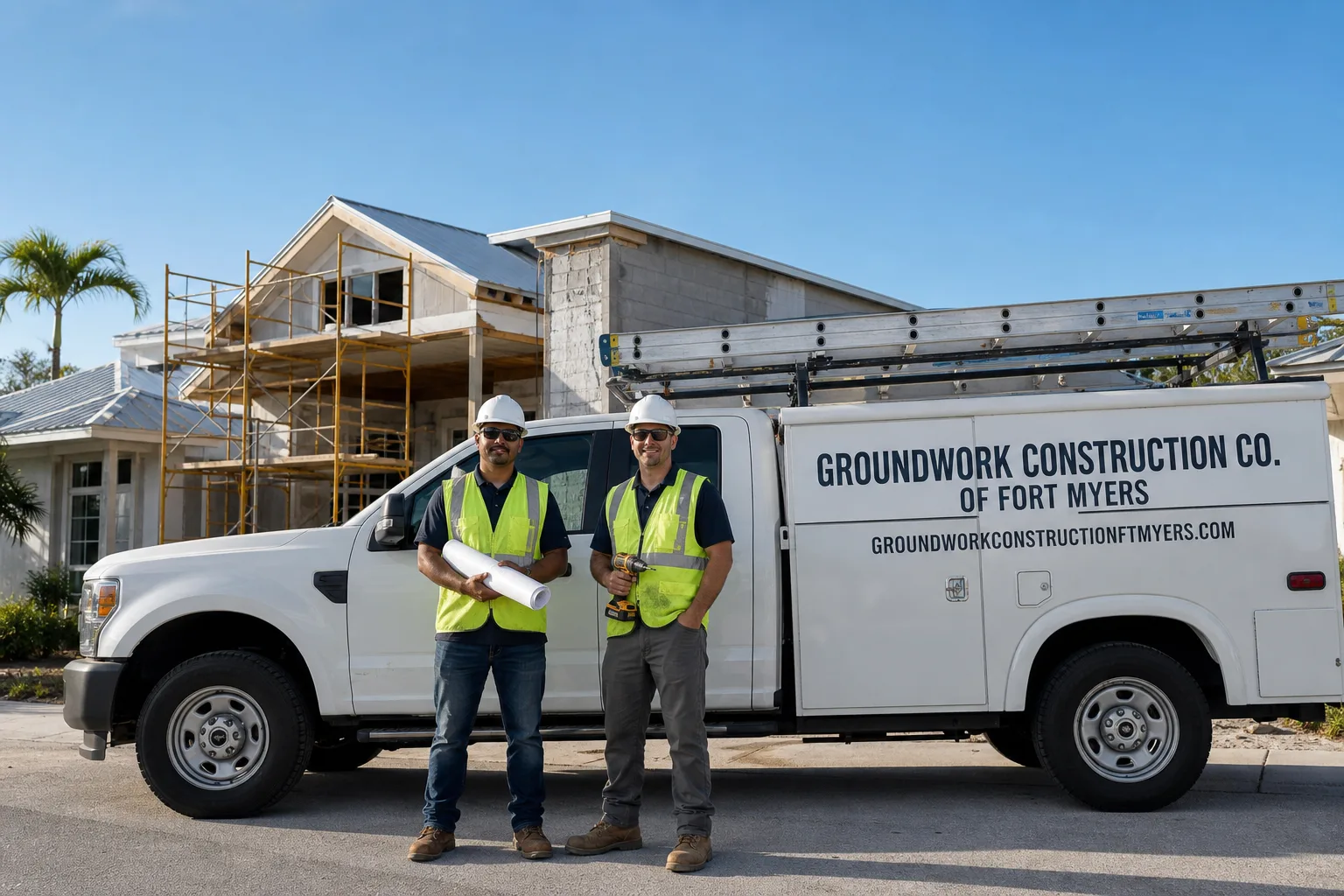
What Paver Driveways Cost and How They Come Together in Villas, FL
A paver driveway in Villas, FL typically runs from $7,000 to $18,000 on a standard residential lot, with most jobs wrapping up in four to seven working days. That spread accounts for driveway size, the paver you pick, and what we find under the old slab when we start digging. Call (844) 638-7249 for a written, no-surprise estimate on your place, and we’ll walk you through what the numbers actually mean for your specific lot.
How a Paver Driveway Gets Built, From Demolition to Final Sand
We’ve built enough paver driveways in Southwest Florida to know that the first question most folks have isn’t about brands, it’s about what the next week of their life looks like. Here’s how the sequence runs.
Day 1: Demolition and base prep
We bring the old surface out, whether that’s cracked concrete, tired asphalt, or just compacted shell and dirt. The subgrade gets cut to depth, usually seven to nine inches below finish grade for a residential driveway in Lee County. This is where we confirm what the soil is doing. In Villas, a water table that sits less than two feet down means we often need extra excavation and a thicker base rock lift to keep everything stable through wet season. The homeowner decision point here is confirming the final footprint, any flare at the street, and whether we’re widening for a third car, which changes the base rock quantity.
Day 2: Base rock and compaction
We bring in clean, crushed limestone base rock, typically 4 to 6 inches compacted in lifts. Every layer gets hit with a plate compactor until it’s dense enough to walk on without leaving a print. Proper compaction is the whole ballgame for paver driveways here: a sloppy base means pavers shift and rut within two rainy seasons. We check slope and drainage at this stage too. If we’re tying into an existing walkway or our Driveway & Pavers in Villas scope includes a patio extension, we set the elevations now so water never pools against the house.
Day 3: Edge restraint, bedding sand, and paver placement
Concrete edge restraint goes in around the full perimeter to lock the pavers in place laterally. Then a one-inch screeded bed of coarse concrete sand goes down, and the pavers start going in. This is where the pattern you chose shows up for real. Our driveway & pavers crew works section by section, keeping joints tight and consistent. A saw-cut module pattern like herringbone costs more in labor and waste than a running bond, but it also handles vehicle torque better, and we’ll be candid about which patterns hold up best for a daily-driver driveway.
Days 4-5: Cutting, borders, and compaction
All the edge and border cuts happen once the field is laid. A contrasting soldier course along both sides, often in a darker color blend, gives a clean framed look and helps the eye read the driveway as intentional rather than just a paved pad. We run the plate compactor over the whole surface, which locks the pavers into the sand bed, and then sweep polymeric sand into the joints. That sand gets misted with water and cures to a semi-rigid state that resists weeds, ants, and washout.
Day 6-7: Final sand lock, cleanup, and walkthrough
We apply a second round of polymeric sand to fill any remaining voids, do a final compaction pass, and blow the surface clean. Derek Hollenbeck walks the finished driveway with every homeowner before we call the job done, pointing out drainage, explaining how to maintain the joint sand over the years, and confirming that every inch meets the spec we agreed on. Permitting closure with Lee County, which can take a few extra days depending on inspector scheduling, follows shortly after.
The Paver Choices That Actually Matter for a Driveway
A patio paver isn’t the same animal as a driveway paver. Cars put real load on the surface, and Florida sun doesn’t forgive a thin, chalky top layer. Here are the decisions worth weighing.
- Cobble vs. slab profile. Traditional cobble-style pavers like Tremron’s Village series give a classic textured look and hide tire marks well, but the surface is slightly rougher. A larger-format slab paver, like a 12×12 or 16×16 Techo-Bloc unit, reads more contemporary and feels smoother underfoot in bare feet, though it shows surface wear more readily over decades.
- Thickness: 60mm vs. 80mm. For a residential driveway that sees SUVs and a pickup, a 60mm paver over a properly compacted base is standard and sufficient. If the driveway will carry a heavy RV, boat trailer, or frequent delivery trucks, stepping up to an 80mm paver adds cost but eliminates any risk of cracking under load. Most Villas homes with a standard two-car garage do fine with a 60mm paver on the 4- to 6-inch base rock spec we use.
- Color blend and heat. Dark charcoal and deep red pavers get hot, and in a Florida August, that’s a real thing for bare feet and pets. A lighter blend of buff, tan, and cream, like several of the Cambridge Pavers Ledgestone options, stays noticeably cooler. The trade-off is that lighter pavers show tire sheen more over time, a coat of paver sealer helps with that.
- Tumbled vs. smooth finish. A tumbled finish, where the paver faces are lightly distressed before curing, hides small chips and gives the driveway an older, settled-in look from day one. Smooth, crisp-edged pavers read newer and more formal. Both hold up equally well structurally; it’s purely an aesthetic call.
- Permeable pavers. These have wider spacer lugs to let water drain through the joints into an open-graded base below, which can help with standing water on a flat Villas lot. They’re a pricier system upfront because the base spec is different, but if your lot sits in one of the lower-lying pockets near the Caloosahatchee estuary drainage basin, they’re worth discussing.
What a Paver Driveway Costs in Villas, FL and What Moves the Price
Most paver driveways we install in Villas land between $7,000 and $18,000. The low end is a straightforward single-car driveway with a simple running-bond pattern and a standard 60mm paver. The high end is a wide, flared driveway for three vehicles with a herringbone pattern, a contrast border, and possibly an 80mm paver or permeable base system. Here’s what pushes a job one direction or the other.
- Square footage. The single biggest lever. A 400-square-foot single drive shares very little with a 900-square-foot double-wide that flares at the street. Material quantity and labor scale almost linearly with area.
- Existing surface removal. If we’re pulling out four inches of reinforced concrete that was poured in 1972, that’s real demo time and dump fees. A dirt or shell driveway comes out faster and costs less to clear.
- Subgrade surprises. In Villas we occasionally hit areas where decades of saturation have softened the native soil. That means over-excavation and additional base rock, sometimes an extra 2 to 3 inches of stone, to get back to a stable bearing surface.
- Paver selection. A standard Tremron cobble is less per square foot than a premium Techo-Bloc slab with a specialty color blend. If you land on a tumbled finish, an 80mm thickness, or a permeable system, material cost ticks up.
- Edge details and borders. A soldier-course border in a contrasting color adds material and cutting time. Curved edges or a circular turnaround feature mean more saw work than straight lines.
Every written estimate from us includes the full scope: demolition, base rock, edge restraint, pavers, polymeric sand, and final compaction, plus permit coordination with Lee County. It also states clearly what isn’t included, like landscaping restoration along the edges or relocating an irrigation line that runs under the old driveway, so there are no change-order surprises.
How Villas-Specific Conditions Shape a Paver Driveway Job
Villas sits in unincorporated Lee County on slab-on-grade ranch homes built mostly between 1960 and 1985, which means two things for a driveway project. First, the existing slabs we’re pulling out are often thinner than modern code and frequently have no wire mesh reinforcement, so they come out faster than a thicker modern pour, but the underlying soil compaction is anybody’s guess. Second, many of these homes went through some level of post-Ian reconstruction, and we’re not uncommonly the second trade on site after a roof or impact window crew. That matters because heavy material deliveries and dumpster placement from prior work can leave ruts and soft spots in the yard that affect the subgrade, and we factor that into the base prep stage.
The other Villas-specific reality is elevation and water. The local water table sits stubbornly high, and a lot of the neighborhoods just inland from the Caloosahatchee estuary drainage basin see standing water in the yard after a heavy summer storm. We design every paver driveway base with that in mind, using a free-draining crushed stone base and setting the finished grade so that water sheets toward the street or a yard drain, never toward the garage slab. If your property falls in a FEMA zone where post-Ian advisory flood elevation maps are in play, we’ll talk through whether a permeable paver system makes sense as part of the drainage puzzle. Contractors working in Villas have learned that a “simple driveway” frequently touches a permit cascade: the Lee County Building Department will want to see that the finished grade doesn’t alter site drainage to a neighbor’s property, and on a pre-2002 CBS home, the department may flag the job if there’s an open unpermitted enclosure or an electrical panel that’s still in an old flood-vulnerable location. It doesn’t derail the driveway, but it means we coordinate carefully so the permit closes cleanly.
Some homeowners use a paver driveway install as the right moment to tackle a related project. We’ve had clients pair it with a Garage Conversion ADU in Villas where the driveway already needed reworking for the new access and parking arrangement. If the project scope grows beyond the driveway itself, our ADU Design & Permitting in Villas team can step in so the whole site plan gets handled under one coordinated set of drawings and permits.
Serving Villas, FL - Our Local Coverage Area
We’re based in the Villas area and know this community well. Use the map below to see our service coverage - if you’re nearby, we can almost certainly help.
Frequently Asked: Paver Driveways in Villas
Four to seven working days on most residential driveways. The variables are square footage, the amount of old concrete to remove, and whether we run into subgrade issues that require extra base rock. Rain delays happen, and we’ll communicate those in real time; the summer afternoon thunderstorm pattern in Southwest Florida slows compaction work by a few hours at most, not days.
Yes. Any new driveway, driveway replacement, or substantial resurfacing in unincorporated Lee County requires a permit. We pull it and coordinate the inspection on your behalf as part of the job. The county will check that the finished grade doesn’t direct water onto a neighbor’s property and that the driveway apron at the street meets the right width and radius requirements. We handle every step, so you won’t be chasing paperwork.
Not if the base is built right. Pavers shift when the subgrade wasn’t properly compacted or when water erodes the base rock from underneath. We over-excavate by several inches in Villas specifically because the water table is so close to the surface, and a thicker stone base bridges any soft spots. Our 730-Day Done Right Promise covers the workmanship: if something moves that shouldn’t, we make it right.
Yes, with the right spec. A standard 60mm paver over a properly compacted 4- to 6-inch base handles daily passenger vehicles and pickups without issue. If you regularly park a heavy RV, a loaded work truck, or a boat trailer on the driveway, we recommend stepping up to an 80mm paver and possibly widening the base rock spec. It adds material cost but eliminates the load concern entirely.
Re-sanding the joints with polymeric sand every three to five years keeps weeds and ants out, and a paver sealer every two to three years helps the color hold up against Southwest Florida UV exposure. Neither is a big job, and we can point you to the right products or handle it as a maintenance visit. The driveway doesn’t require the kind of sealing and crack-filling routine that an asphalt or concrete surface does.
Get a Straight Answer on Your Villas Paver Driveway
A paver driveway is one of those jobs where seeing the site changes the numbers. Every lot in Villas has its own drainage story, its own access tight spots, and its own soil conditions. We’ll come out, walk the property with you, and put a written estimate in your hand that spells out exactly what’s included and what’s not. Call (844) 638-7249 to schedule a free on-site estimate. Live person answers, no voicemail chase, and the number you see is the number you pay.
Written by Derek Hollenbeck, Owner at Groundwork Construction Co., serving Villas and greater Lee County since 2014.