
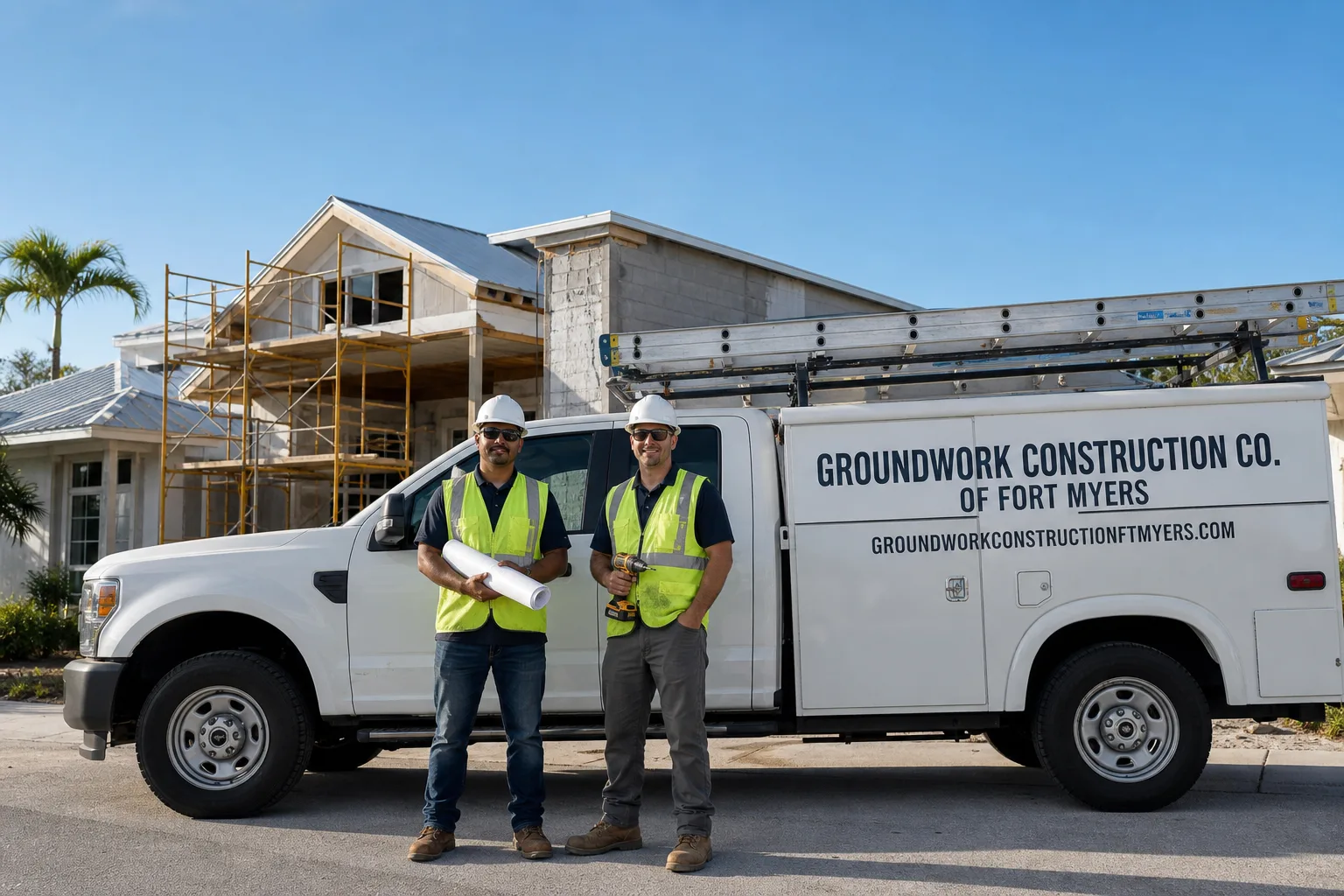
What Concrete Driveways & Concrete Work In Palmona Park, FL Actually Costs And How Long It Takes
A new concrete driveway in Palmona Park, FL typically runs $4,500 to $12,000 for a standard residential pour, with most jobs finishing in 5 to 8 working days spread across two to three weeks to allow for curing. The spread between low and high comes down to square footage, whether we’re tearing out old concrete or pouring on fresh grade, and the finish you choose. Call (844) 638-7249 to schedule a free on-site estimate and get a written quote with exact dimensions and no hidden line items.
We pour a lot of concrete on the acreage and rural-lot properties around this community, and the jobs here tend to run larger and heavier-duty than what you’d see on a tight suburban lot closer to Fort Myers. Homeowners in Palmona Park aren’t just parking two sedans. They’ve got work trucks, boat trailers, RV pads, and detached workshops with apron approaches, and the driveway has to hold up under that load for decades.
What Our Concrete Driveway Process Looks Like In Palmona Park
The job moves in five deliberate stages. Rushing any one of them shows up as cracking or settlement within the first two years, so we don’t skip steps.
Stage 1: Site walk and grade check. We come out, laser-shoot the existing grade, and check for any drainage issues that’ll cause ponding once the slab is down. On Palmona Park lots, low elevation and proximity to the Caloosahatchee drainage basin mean we’re nearly always dealing with soil that holds water. We flag whether we need additional fill, compaction, or a French drain diversion before the pour. This is the decision point where the scope either stays clean or expands to include drainage work, and we give you the number before anything starts. Plan on a one-hour walkthrough.
Stage 2: Demolition and subgrade prep. If there’s existing concrete, we saw-cut, break, and haul it. Then we excavate to the depth required for 4 inches of compacted stone base plus 4 to 6 inches of concrete, depending on what you’re parking. For an RV pad or a heavy-truck approach to a detached workshop, we go thicker. The stone base gets compacted in lifts, not dumped and raked, and we run a plate compactor until the ground stops moving. This stage takes one to two days and is the single biggest factor in whether the slab stays flat long-term.
Stage 3: Forming, reinforcement, and any embedded utilities. We set the forms to your layout dimensions, crown the center for runoff, and tie the rebar grid on chairs so it sits in the middle third of the slab, not on the bottom. If you want electrical conduit stubbed up for future gate openers or post lights, we run it now. This is also when we check that any threshold heights match existing garage slabs so you don’t end up with a lip that catches a low-clearance trailer. Lee County inspectors will want to see the formwork and reinforcement before we pour, especially if the slab ties into a structure that required a permit. One day for forming, plus an inspection window.
Stage 4: Pour and finish. Concrete arrives on-site mixed to a minimum 3,000 PSI, which is our baseline for residential driveways in this area. We step it up to 4,000 PSI or higher when the driveway doubles as a heavy-vehicle or equipment pad. The crew places, screeds, floats, and edges the slab in a continuous pour, no cold joints. If you’ve chosen a broom finish, we time the texturing for the right window after the bleed water is gone. Stamped or exposed-aggregate finishes add a second pass with pattern mats or a surface retarder wash, which extends this stage by several hours. The crew is on-site for one very long day.
Stage 5: Curing, cutting, and sealing. We saw-cut control joints within 24 hours so the slab cracks where we tell it to, not randomly. Then it’s a seven-day minimum cure before we let vehicle traffic on it, longer for heavy loads. We come back to apply a penetrating sealer once the concrete has cured fully, typically at the two-week mark. That sealer is what keeps Palmona Park’s combination of sun, humidity, and occasional stormwater saturation from spalling the surface over time.
The Options You’ll Choose Between
Every concrete driveway we pour involves a handful of decisions that change the look, the price, and how the surface holds up. Here are the ones that matter most, with the honest trade-offs:
- Finish type: Broom, stamped, or exposed aggregate. Broom finish is the most common and the most cost-effective. It’s a simple slip-resistant texture, and if it’s sealed properly it holds up fine. Stamped concrete mimics stone, brick, or tile patterns and looks sharp, but it adds cost up front and can show wear patterns over time in high-traffic pathways. Exposed aggregate reveals the stone in the mix for a pebbled, high-traction surface. We pour it with brands like Tremron and Oldcastle aggregate blends. All three options last, but stamped and exposed require more sealer maintenance years down the road.
- Concrete thickness and PSI rating. The default is 4 inches at 3,000 PSI. If you’re parking a 3/4-ton truck, a loaded cargo trailer, or an RV, we recommend stepping to 5 or 6 inches at 4,000 PSI minimum. The thicker slab costs more in material and prep, but it’s far cheaper than tearing out and repouring a cracked driveway five years from now.
- Integral color vs. surface color. Integral color mixes pigment through the entire batch, so if the surface chips the color is still there. Surface-applied color hardener is a powder troweled into the top layer. Integral holds up better long-term. Surface color gives you more intensity and is standard with stamped patterns. We’ll walk you through the sample boards so you can see how each reads under full Florida sun before you commit.
- Sealer level. A basic penetrating sealer protects against moisture intrusion and surface dusting. A high-solids acrylic sealer adds a gloss or matte sheen and extra UV protection, which matters here because Palmona Park gets relentless sun exposure with very little shade canopy on most properties. We typically recommend the high-solids option for stamped or colored concrete.
- Edge treatment and drainage. A simple eased edge is standard. A radius edge or a decorative border adds forming time and material. If your lot drains toward the house, we’ll spec a channel drain or a tapered swale as part of the pour, not as an afterthought. Solving that during Stage 1 keeps water out of the garage.
What Concrete Driveways & Concrete Work Costs In Palmona Park, FL
A standard broom-finish driveway for two cars on a flat Palmona Park lot sits in the $4,500 to $7,000 range. When you get into wider driveways, longer approaches from the road to a detached workshop, additional RV pads, or stamped finishes, the number moves into $8,000 to $12,000 territory. A few jobs run higher when there’s extensive site prep, thick pours for heavy loads, or complex drainage rework.
The variables that push the price one direction or the other:
- Square footage. Concrete is priced by the square foot, so a 40-foot approach to a shop adds real material and labor. Most Palmona Park driveways we pour are larger than the county average because lots here aren’t crammed into tight subdivisions.
- Demolition and haul-off. Tearing out an old, cracked slab and trucking the debris adds cost. If the existing driveway is badly spalled from decades of unsealed exposure, the demo just got heavier.
- Subgrade condition. Palmona Park sits at very low elevation on soil that tends to hold moisture. If we hit soft, organic material during excavation, we undercut and bring in additional stone. That’s a contingency we discuss during the initial walkthrough.
- Finish complexity. Broom finish is the base. Stamped or exposed aggregate adds $2 to $4 per square foot, sometimes more for intricate patterns or multiple colors.
- Permit and inspection scope. If your project crosses Lee County’s substantial-improvement threshold because the driveway is part of a larger rebuild, the permit requirements escalate. We handle the paperwork either way, but the fee structure changes.
Our written estimates include everything, the concrete, the base stone, the rebar, the forms, the finish, the sealer, the cut joints, the cleanup, and the permit fees. What’s typically not included are landscaping restoration beyond the immediate pour zone, custom gate fabrication, or any separate electrical work. You’ll know exactly what’s in and what’s out before you sign anything. That’s the upfront pricing we’re known for, and we don’t write change orders mid-job without your approval.
What Palmona Park Homes Specifically Do To This Job
Palmona Park presents a set of conditions we don’t see to the same degree in most other communities. First, nearly all construction permits here run through Lee County’s building department, the same office that has been managing the enormous post-Hurricane Ian rebuilding workload since late 2022. That means permit review timelines can stretch, and we build that buffer into the schedule from day one so you’re not staring at an empty formboard wondering when the inspector shows up. Second, the county’s post-Ian enforcement of the 50% substantial-improvement rule matters for homeowners whose driveway replacement is part of a larger renovation. If the total project cost triggers the threshold, the entire structure may need to be elevated to current Base Flood Elevation, which changes the driveway approach entirely. We help you navigate that line before you commit to a scope that has unintended consequences.
The housing stock here also shapes how we approach the work. Many of the homes are 1970s and 1980s concrete block structures on low slabs, and a significant number are manufactured or mobile homes on pier foundations. Neither situation is abnormal for our crews, but a driveway poured up to an older low-slab home requires careful elevation matching so you don’t end up with a step-down from the garage that pools water. On the larger acreage properties where homeowners have added detached workshops or are planning a Garage Conversion ADU in Palmona Park, we’re often pouring a longer service drive that has to carry heavier loads. The same goes for properties where a New Detached ADU in Palmona Park is in the works, and the driveway becomes a shared approach for both structures.
The soil and water reality here is straightforward. Palmona Park is low and flat, with a high seasonal water table and soil that doesn’t drain quickly. A concrete driveway poured without proper base compaction and drainage planning will heave, crack, or spall faster than one poured on well-drained upland soil. We account for that in every quote the same way our Driveway & Pavers crew does on paver jobs: over-excavating where necessary and building a base that moves water away from the slab.
Serving Palmona Park, FL - Our Local Coverage Area
We’re based in the Palmona Park area and know this community well. Use the map below to see our service coverage - if you’re nearby, we can almost certainly help.
Frequently Asked - Concrete Driveways & Concrete Work In Palmona Park
A properly poured, sealed, and maintained concrete driveway in Palmona Park should last 25 to 35 years before needing major attention. The biggest threat to longevity here is not wear and tear. It’s water intrusion. When unsealed concrete absorbs moisture and that moisture expands during the wet-dry cycles of our summer storm season, the surface spalls and the slab weakens. Regular resealing every two to three years extends the life significantly. The 730-Day Done Right Promise covers workmanship defects, and we walk every customer through a simple maintenance schedule so the driveway performs for decades, not just years.
Yes, in most cases you do. Since Palmona Park is unincorporated Lee County, there is no city building office. Everything goes through Lee County’s permitting system, and a new concrete driveway that connects to a public road or involves substantial grading typically requires a permit. We pull the permit as part of the job, schedule the inspections, and close everything out. If your driveway is part of a larger project that falls under the county’s substantial-improvement rules, the permitting path gets more involved, and we handle that coordination from the start.
Concrete is a single monolithic slab. Pavers are individual interlocking units set on a compacted sand and stone base. Concrete costs less up front, offers a continuous surface with fewer weed or ant intrusion points, and handles heavy point loads well. Pavers handle ground movement better because they flex at the joints, and a damaged paver can be swapped individually. If you’re comparing options, our full Driveway & Pavers in Palmona Park page breaks down both approaches. For homeowners with heavy trucks, boat trailers, or workshop traffic, concrete’s load distribution often makes more sense.
We pour year-round, but the summer storm window from June through October requires tighter scheduling. Fresh concrete can’t take a direct downpour during the finishing stage or the surface is ruined. We watch the radar obsessively on pour days and will reschedule if the forecast turns. The slab needs to cure without being saturated from above for at least the first several hours. It’s one of the reasons we build extra schedule margin into Palmona Park jobs during hurricane season. Call (844) 638-7249 and we’ll give you a realistic timeline based on what month you’re planning the work.
Every concrete driveway we pour is backed by our 730-Day Done Right Promise. If it’s not done right, we make it right. That covers workmanship and installation defects for two full years. The concrete material itself is manufactured to industry standards, and we only use batch plants with a consistent mix record. Beyond the warranty period, a properly sealed and maintained driveway will hold up for decades, and we document exactly what you need to do to protect the investment. Our technicians are background-checked and uniformed, and every quote is upfront pricing with no surprises, whether the job is a simple two-car pad or a full Palmona Park acreage driveway and workshop approach.
Get A Free Concrete Driveway Estimate In Palmona Park
If you’re ready to replace an old driveway or pour a new one for a home, workshop, or ADU in Palmona Park, the next step is a free on-site estimate. We’ll come out, measure, check the grade, talk through finish options, and hand you a written quote with the full scope and price before you decide anything. Call (844) 638-7249 to schedule it. You’ll get a live person on the phone, 24/7, and we’ll have someone out to walk the property at a time that works for you.
Written by Derek Hollenbeck, Owner at Groundwork Construction Co., serving Palmona Park and surrounding communities across Lee County.