
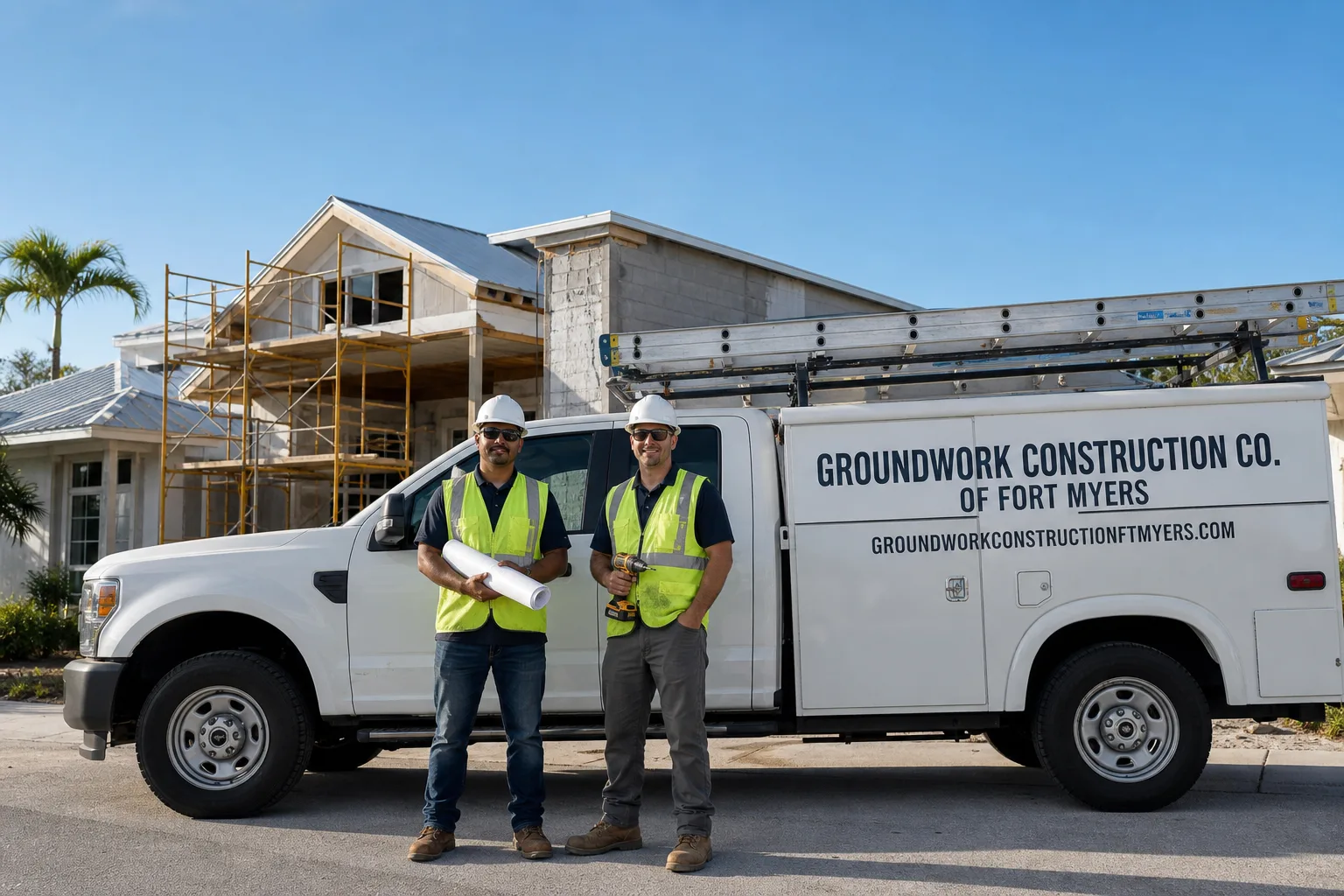
What ADU Site Prep & Utilities Actually Looks Like in Bokeelia
ADU site prep and utilities in Bokeelia runs from roughly $45,000 to $130,000 and typically takes 8 to 16 weeks from first stake to the point where a foundation is ready and permanent power, water, and sewer are live. The number moves so much because a Bokeelia lot might need six piles driven 20 feet deep or it might sit on slightly higher ground where a standard stem wall works. Either way you’re running new underground electric from the pole, trenching water and sewer lines through sandy soil, and almost certainly elevating the finished floor above Lee County’s base flood elevation. Call (844) 638-7249 to get an exact number for your property. We do free on-site estimates and the quote you get is the price you pay.
How We Take a Raw Lot to a Build-Ready ADU Pad
The first week belongs to markings, clearing, and the survey. Our crew stakes the site boundaries, flags the utility corridor, and brings in a third-party surveyor to pin the exact building footprint and setback lines. Bokeelia’s zoning on Pine Island enforces specific rear- and side-yard distances for accessory structures, and the survey is what keeps your permit application clean. While we’re clearing, you’ll decide where the new water lateral ties in and whether the sewer line connects to the existing septic system or gets its own tank. If your main house is on a pre-Ian septic that didn’t get upgraded, this is the moment to size a shared or separate system.
Weeks two and three are the structural heart of the job: foundation and elevation. For any Bokeelia property inside a FEMA AE or VE flood zone, we’re almost always installing driven piles or helical piers to lift the ADU’s finished floor above the required base flood elevation. The soil here is sandy and loose near the surface, so piles typically bottom out 18 to 25 feet down until they hit competent bearing strata. Once the pile caps are poured, we set grade beams or a reinforced stem wall. If the property is one of the rare higher-elevation lots, a conventional slab-on-grade with turned-down footers might work, but count on piles.
Weeks four through six are the underground utility rough-in, and this is where Bokeelia’s isolation gets real. Trenching for the water line, sewer lateral, and electric conduit happens in one coordinated push so we’re not opening the ground twice. New electrical service for an ADU requires a separate meter and disconnect, so we coordinate with LCEC to pull a new drop from the nearest transformer. If the transformer is at the street and your ADU is 200 feet back, cable sizing goes up and so does the line-item cost. Water lines get sleeved under any driveway crossings, and backflow prevention goes in at the meter.
Weeks six through ten are all about bringing the wet utilities to rough-in stage. Plumbers set the below-slab drainage, vents, and water supply stubs for the future kitchenette and bath. If the ADU connects to an existing septic system, Lee County DOH requires a system capacity evaluation before we can tie in. For new septic, we drill test holes to confirm the seasonal water table and size the drainfield accordingly. This stage also runs the gas line if you’re putting in a tankless water heater or a gas range, and we stub everything above the slab plane so it’s ready for the framing crew that comes next.
The final stretch, weeks ten through sixteen, wraps inspections and surface work. Lee County building inspections hit at least three checkpoints: foundation pre-pour, underground plumbing and electrical, and final rough-in signoff before framing begins. We walk every inspection with the inspector so red tags don’t stack up. Meanwhile, we backfill and grade around the pad, run the driveway spur from the main house to the new ADU, and pull any remaining low-voltage for internet and outdoor lighting. At the end, you’ve got a fully permitted pad with live power, water, sewer, and gas, ready for vertical construction.
The Spec Choices That Come Before a Single Wall Goes Up
Buyers on Pine Island usually face three real decisions during site prep, and each one changes both the upfront number and the long-term durability of the ADU. We walk you through every one on site before we quote, so nothing shows up as a surprise change order.
- Foundation type: piles vs. stem wall. Pressed concrete piles or helical piers dominate in Bokeelia because flood zone elevation is mandatory. Piles add $8,000 to $25,000 depending on depth and count, but they’re non-negotiable in AE zones. On the small percentage of lots that sit above the base flood elevation, a reinforced stem wall on a standard footing can cut foundation cost by 30 to 40 percent. We’ll pull your FEMA FIRM panel and survey data before recommending either path.
- Sewer strategy: existing septic, new septic, or grinder pump to holding tank. A new conventional septic system in Lee County currently runs $6,000 to $14,000 depending on drainfield size and soil percolation rates. Tying into an existing system costs less upfront but only works if the tank and field are sized for the additional bedroom count. For waterfront lots where drainfield separation from the water table is tight, we sometimes spec an aerobic treatment unit with a grinder pump, which adds cost but solves the setback problem.
- Electrical service size: 100-amp vs. 200-amp subpanel. A one-bedroom ADU with a mini-split, electric water heater, and standard appliances runs fine on 100 amps. Add a full electric range, EV charger, or workshop tools and you’ll want 200. The conductor size difference is significant, and if the pole transformer is undersized for the total load of both structures, LCEC may require a transformer upgrade, which adds anywhere from $1,500 to $4,000.
- Water line material: Schedule 80 PVC vs. PEX-A through conduit. Salt-laden Bokeelia soil corrodes copper quickly, so we run either heavy-wall PVC or PEX inside a protective sleeve. PEX with a conduit is slightly more upfront but easier to service later. Either one will outlast the building if installed to code depth of 12 inches minimum below grade.
What ADU Site Prep & Utilities Costs in Bokeelia, FL
Plan on $45,000 to $130,000 to take a raw piece of ground to a permitted, utility-ready ADU pad in Bokeelia. A simple, flat lot with easy utility access and conventional septic can land near the low end. A waterfront or dense-vegetation lot requiring deep piles, a mound septic system, and a long electrical run from the street will push past $100,000 without trying.
The five variables that swing the number hardest: pile count and depth, septic design (conventional vs. advanced treatment), electrical service distance and any transformer upgrades, the amount of clearing and debris removal, and whether the driveway spur requires pavers or a basic gravel compacted base. A written estimate from us breaks out each line item so you see exactly where your dollars go: excavation, concrete and steel, underground plumbing, electrical rough-in, permit fees, and the survey. It won’t include the structure itself or interior finishes. Those belong to the ADU construction phase, which starts the moment this prep phase closes out. Most Bokeelia property owners handle this as part of a full Home Additions & ADU in Bokeelia project, which keeps the engineering and permit sequencing under one roof.
What Bokeelia Homes Specifically Do to This Job
Site work on Pine Island is fundamentally different from doing it on the mainland. Getting materials here means running trucks down a single two-lane road through Matlacha, and if a load of concrete gets delayed or an inspector needs to reschedule, there is no alternative route. We schedule pile deliveries and concrete pours with a built-in weather day for precisely that reason. Lee County’s post-Ian substantial damage rule also means that many of the older 1950s and 1960s fishing cottages we work around are themselves getting torn down and rebuilt to elevated code, so a new ADU often goes in alongside a full main-house reconstruction rather than as a standalone accessory project.
The salt air is another Bokeelia detail. Every piece of embedded steel gets hot-dipped galvanized or stainless connectors. We stopped using electroplated hardware on island jobs years ago because the pitting shows up in under eighteen months. The same logic applies to the electrical panel: we spec NEMA 4X or at minimum 3R outdoor enclosures because the humidity and salt spray will otherwise corrode bus bars well before the ADU’s framing is even dried in. If your property is in one of the older platted subdivisions of Bokeelia like the Jug Creek or Bocilla areas, expect a tighter turning radius and a narrower lot corridor for equipment access. It’s exactly the kind of thing that doesn’t show up on a generic estimate but absolutely changes the daily rhythm of the job.
Serving Bokeelia, FL - Our Local Coverage Area
We’re based in the Bokeelia area and know this community well. Use the map below to see our service coverage - if you’re nearby, we can almost certainly help.
Frequently Asked Questions About ADU Site Prep & Utilities in Bokeelia
Eight to sixteen weeks, depending on the foundation type and whether a new septic system needs to be permitted and installed. The longest single variable is usually the Lee County DOH septic review, which can add three to four weeks if a new drainfield is required. Pile driving and underground utility rough-in together eat up most of the remaining time.
Yes. Lee County requires a full building permit set that includes the site plan, foundation engineering, and underground utility diagrams before we can break ground. The permit review typically takes four to six weeks. We handle the entire submittal as part of the job, so you’re not chasing paperwork.
Only if the existing system has the capacity for the added bedroom count and passes a current DOH evaluation. Many pre-Ian systems in Bokeelia were already undersized or near the end of their service life, and Lee County does not grandfather underperforming septic once a new bedroom is added to the property. We pull the system records and test before quoting so you know which scenario applies.
On a typical one-bedroom ADU in Bokeelia, driven piles cost $8,000 to $25,000 more than a standard monolithic slab, but on most island lots a slab isn’t a legal option because of flood zone elevation requirements. Homeowners often pair this phase with Full Bathroom Remodeling in Bokeelia or Small & Partial Kitchen Remodels in Bokeelia in the main house while the ground is already open and crews are mobilized.
It shouldn’t, and ours doesn’t. We quote fixed-line pricing after walking the property and pulling your survey, flood zone panel, and septic records. The only thing that changes the number is a scope decision you make after we start, like upgrading from 100-amp to 200-amp service or switching from gravel to a paver driveway spur. Every such change gets a written addendum and your signoff before we proceed. It’s how our Home Additions & ADU team handles every project, and our 730-Day Done Right Promise covers the workmanship with no fine print.
Get a Free, No-Obligation Estimate for ADU Site Prep & Utilities in Bokeelia
If you’re planning an ADU on a Bokeelia lot, start with a free on-site estimate. We’ll walk the property, pull your flood zone designation, check septic capacity, and give you a written line-item quote that lays out exactly what the site work costs before anything gets built on top. Call (844) 638-7249 to schedule. You get a live person on the phone, not a voicemail box, and we can usually have someone out within a few days.
Written by Derek Hollenbeck, Owner at Groundwork Construction Co., serving Bokeelia and all of Lee County with honest numbers and fixed pricing since 2014.