
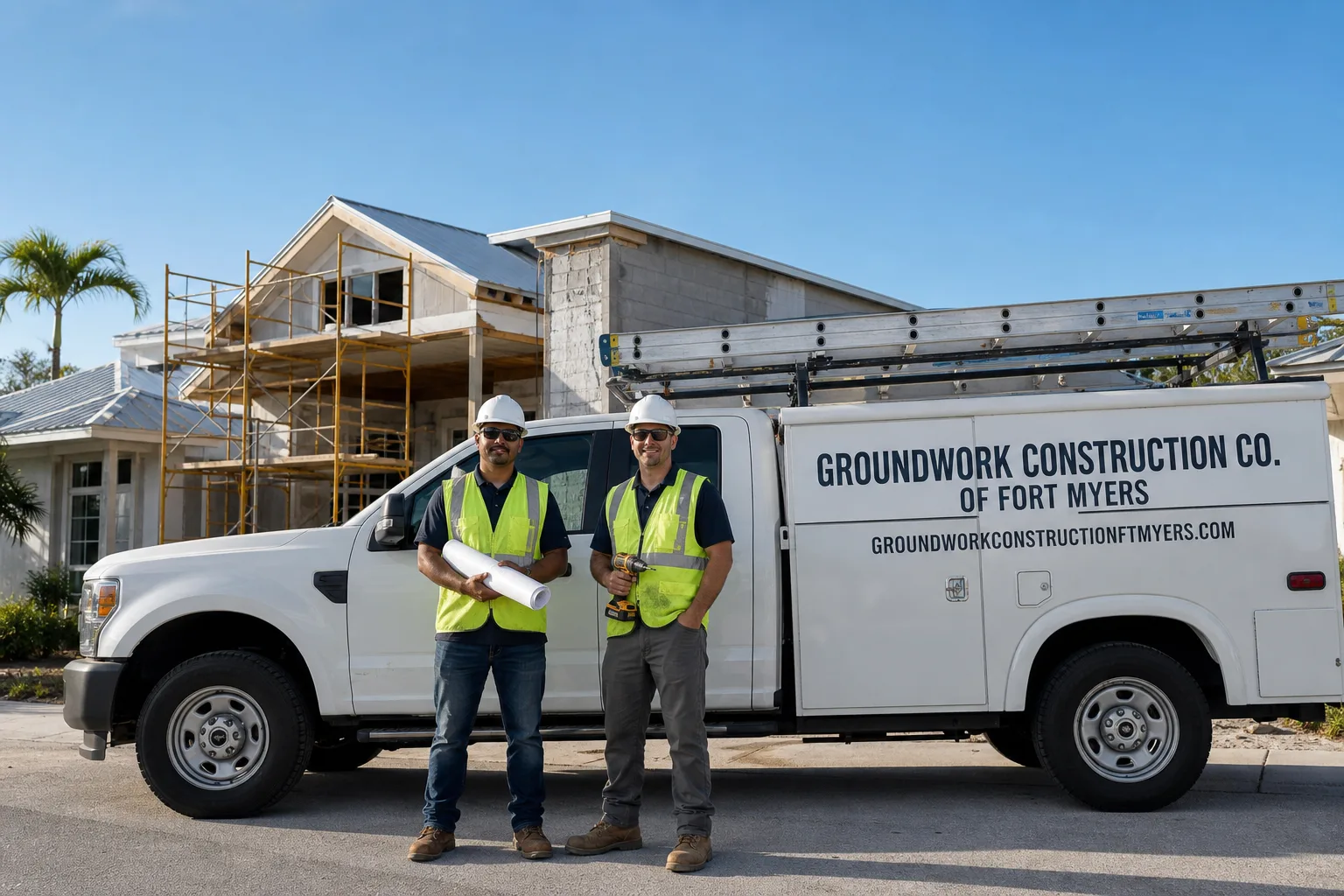
What a Chain Link Fence Project Looks Like in Charlotte Park, FL
A chain link fence in Charlotte Park typically costs $3,500 to $9,000, with most standard residential lots falling between $4,200 and $6,800. The job itself takes 2 to 4 working days from post-hole digging to the final gate adjustment, assuming the weather cooperates and no buried surprises slow things down. Call us at (844) 638-7249 for a free on-site estimate with a written, line-item price before you commit to anything.
What makes this different from a fence job in a newer inland subdivision is the combination of salt-soaked soil, wind-load requirements, and the patchwork of building code compliance that defines this harborfront community. We’ll walk through exactly how we handle each of those below.
How We Install a Chain Link Fence, Start to Finish
Every chain link fence in Charlotte Park follows the same disciplined sequence. Nothing gets skipped, and you’ll know what’s happening before we show up each day. Here’s the real timeline.
Stage 1: The site walk and utility locate (Day 0)
Before a shovel touches dirt, we walk the entire fence line with you, marking post locations with paint and confirming the exact path. This is when we flag anything that could change the price: a buried concrete footer from a long-gone seawall, roots from a mature ficus, or a boundary line that sits inside a flood-zone elevation restriction. We call in 811 for utility marking the same day; Florida law requires it, and no reputable contractor skips it. This stage takes about an hour on site.
Stage 2: Post-hole digging and concrete setting (Day 1)
We dig terminal, corner, and line post holes at the spacing specified by the wind-load chart for your fence height and the exposure category your property falls into. In Charlotte Park, homes on open harbor frontage or canal lots with no windbreak typically require posts set at 6-foot centers, not the 8-foot spacing you can get away with inland. Each post is set in a concrete footing with a domed top to shed water away from the steel. We don’t cut corners on depth: 24 to 30 inches minimum, depending on the post and soil conditions. The concrete cures overnight before any tension goes on the fabric.
Stage 3: Framework assembly (Day 2)
Once the concrete has set, our crew bolts on the horizontal rails, tension bands, and brace assemblies. This is the skeleton that carries all the load, and it’s where the gauge of the pipe actually matters. For residential chain link in a hurricane-prone area like Charlotte Park, we spec Schedule 20 or heavier on terminal posts and use pressed-steel fittings rather than die-cast, which have a documented habit of cracking under repetitive wind cycling. The gates get their frames hung and squared during this stage as well.
Stage 4: Fabric stretching and tying (Day 2 or 3)
The chain link fabric unrolls along the framework and gets stretched with a come-along tension bar until it’s tight enough that a good shove only moves it about an inch. Then we wire-tie it to the top rail and line posts every 12 to 18 inches. A fence that’s tensioned correctly won’t sag in the first summer or rattle in a stiff breeze off the harbor. If you opted for bottom tension wire (which we recommend on any lot with dogs or kids), that gets pulled and secured before we call the fabric done.
Stage 5: Gate adjustment and final walk-through (Day 3 or 4)
Gates get their drop rods, latch assemblies, and tension adjustments. A gate that drags on the grass or swings shut on its own isn’t finished, and we don’t leave until it opens smoothly and latches with a solid click. Then we walk the line with you to confirm every post is plumb, the fabric is tight, and the cleanup is complete. You sign off, we hand you the care sheet, and the 730-Day Done Right Promise applies from that moment.
The Options You’ll Choose Between for a Chain Link Fence
Chain link isn’t one-size-fits-all, and the choices you make here directly affect how the fence looks, how long it lasts, and what it costs. Here are the real trade-offs.
- Fabric gauge. Residential chain link typically comes in 11.5-gauge (thicker, stiffer, resists dents better) or 12.5-gauge (lighter, more common in budget packages, more prone to stretching over time). For a Charlotte Park lot where salt air is a constant factor, we strongly lean toward the heavier 11.5-gauge fabric. The material cost difference is modest, but the fence holds its tension through storm seasons for years longer.
- Coating and finish. Galvanized steel is the baseline: it sheds rust reasonably well for a decade inland but starts showing surface oxidation within 3 to 5 years this close to Charlotte Harbor. Vinyl-coated chain link (usually black or dark green polyester over a galvanized core) adds corrosion resistance and blends visually into landscaping. It costs more per linear foot but ages far better in salt-exposed lots. For homeowners who want the fence to nearly disappear against hedges or canal banks, the black vinyl coat is the way to go.
- Post and rail schedule. The wall thickness of the pipe matters. Schedule 20 is our minimum recommendation for residential line posts; Schedule 40 on terminal and gate posts gives you the stiffness needed to handle hurricane gusts without leaning. Upgrading to thicker posts adds 10 to 15 percent to the materials line but buys decades of straight, solid fence line.
- Gate hardware and configuration. A single walk gate, a double drive gate for the trailer or boat, or a combination of both. Drive gates wider than 10 feet need a wheel or a cantilever roller system to prevent sagging. We also spec corrosion-resistant hardware sets with stainless steel springs and latches on any lot within a quarter mile of the harbor, because the standard zinc-plated hardware that works fine five miles inland turns to rust in three seasons here.
- Height. Most residential yards in Charlotte Park go with 4-foot or 5-foot chain link. If you’re fencing a pool, Florida code requires a 4-foot minimum height with specific gate self-latching hardware, and your fence line must comply with the state’s pool barrier requirements in Chapter 515 of the Florida Building Code. Tell us the purpose up front and we’ll spec the right height and gate compliance from the start.
- Bottom tension wire and hog rings. Not glamorous, but they prevent a dog from pushing out the bottom of the fabric and keep the fence line uniform along uneven ground. We include them on virtually every job, and we recommend them without exception when the fence is containing pets.
For projects that are part of a larger property upgrade, see our broader Fence Installation in Charlotte Park page. Our fence installation crew handles the full scope, and homeowners in Charlotte Park often pair a chain link enclosure with Concrete Driveways & Concrete Work in Charlotte Park or Asphalt Driveways & Resurfacing in Charlotte Park to knock out multiple hardscape projects in one season.
What Chain Link Fence Costs in Charlotte Park, FL
For a standard residential chain link fence in Charlotte Park, expect to pay between $3,500 and $9,000. Most homeowner jobs land in the $4,200 to $6,800 range. That number includes all materials, concrete, gate hardware, labor, equipment, cleanup, and a written estimate before any money changes hands.
What pushes the price toward the high end of that range:
- Linear footage. The single biggest variable. A 60-foot fence line enclosing a small side yard lands near the bottom; a 200-foot perimeter wrapping a canal-front lot lands near the top.
- Gate count and size. A double drive gate with a cantilever roller system costs three to four times what a simple walk gate costs. Extra gates add material, hardware, and labor.
- Vinyl coating. Choosing black or green vinyl-coated fabric and matching coated posts and fittings adds roughly 20 to 30 percent to the material cost compared to bare galvanized, but it buys significant corrosion resistance in this salt-air environment.
- Post schedule. Upgrading from Schedule 20 to Schedule 40 on terminal and gate posts adds material cost but is the single best investment you can make in how the fence weathers a hurricane.
- Subgrade obstacles. Hitting old concrete, buried construction debris, or root masses from mature trees slows the digging and occasionally requires a concrete saw or a root grinder. We’ll flag any obvious trouble spots during the site walk so you know about them before the estimate is final.
- Permit scope. The permit fee itself is minor, but if the fence triggers a code-compliance review on an older home (common in the post-Charley housing stock here), documentation and engineering time can add to the project cost.
Every estimate we write is a fixed, line-item price. You see exactly what you’re paying for: pipe gauge, fabric type, gate hardware, number of posts, concrete quantity, and permit cost. Nothing gets added mid-job unless you change the scope, and even then we hand you a change order to sign before we proceed. That’s the upfront pricing, no surprises commitment we operate under on every job, and it’s backed by the 730-Day Done Right Promise.
How Charlotte Park’s Conditions Shape a Chain Link Fence Job
Charlotte Park sits directly on Charlotte Harbor, and that geography rewrites the rulebook for a chain link installation compared to what works inland in Fort Myers or North Port. The salt air accelerates corrosion on bare galvanized steel to the point that standard zinc-plated terminal post caps and tension bands can show rust blooms within 18 months. We spec corrosion-resistant pressed-steel fittings on every job here and default to heavier Schedule 40 terminal posts so the fence doesn’t develop a lean after two hurricane seasons of wind cycling off the water.
The housing stock adds another layer. This community absorbed a near-direct hit from Hurricane Charley in 2004, and the rebuild that followed created a patchwork of construction quality: some homes were redone under the toughened 2004+ Florida Building Code with proper wind-uplift engineering, others were patched back together quickly with whatever materials were available and not always with permits. Our crew has opened post holes on canal-front lots only to hit buried concrete debris, abandoned footers from long-gone structures, and fill soil that never compacted properly. We don’t guess at what’s underground. The site walk catches what’s visible, and we adjust the estimate if subsurface conditions require it. The good news is that chain link fencing, by its open-mesh design, presents far less wind resistance than a solid privacy fence, so the wind-load engineering is more straightforward. But the post embedment and concrete curing still have to be right, because a post that loosens in saturated canal-bank soil near Pine Manor or Lochmoor Waterway Estates will start to wobble within the first rainy season.
Serving Charlotte Park, FL - Our Local Coverage Area
We’re based in the Charlotte Park area and know this community well. Use the map below to see our service coverage - if you’re nearby, we can almost certainly help.
Frequently Asked Questions About Chain Link Fence in Charlotte Park
Most residential chain link fence jobs in Charlotte Park are completed in 2 to 4 working days. Day 1 covers post-hole digging and concrete setting; Day 2 is framework and rail assembly; Day 3 or 4 finishes fabric stretching, tying, gates, and final walk-through. Rain delays and subsurface obstacles can add a day. Call (844) 638-7249 and we’ll give you a realistic timeline for your specific property.
Yes. Charlotte County requires a fence permit for any new installation, and your property’s flood zone designation (most of Charlotte Park falls within AE or VE zones) may impose additional requirements on post embedment and gate placement. We pull permits as part of every job and handle the compliance documentation so you don’t have to chase paperwork yourself. For an exact quote that includes permit costs for your lot, call (844) 638-7249.
A properly installed chain link fence handles high winds better than a solid privacy fence, because the open mesh lets wind pass through rather than catching it like a sail. The key is correct post spacing, embedment depth, and pipe schedule. On exposed Charlotte Park lots with direct harbor frontage, we tighten post spacing to 6 feet on center and use Schedule 40 terminal posts to resist the lateral loads that come from sustained tropical-storm-force winds. The fabric itself may need re-tensioning after a major storm if debris hit it, but the frame stays put when it’s built this way.
A standard residential chain link fence in Charlotte Park runs $3,500 to $9,000, with most jobs between $4,200 and $6,800. That range accounts for the linear footage, gate count, fabric finish, and pipe schedule we discussed above. A written, line-item estimate is free, and the price we quote is the price you pay. Call (844) 638-7249 to schedule a site walk.
Every chain link fence we install in Charlotte Park is covered by the 730-Day Done Right Promise. If something isn’t right inside two full years, we fix it. That covers workmanship on post setting, fabric tensioning, gate operation, and hardware. Material defects are covered under the manufacturer’s warranty on the pipe, fabric, and fittings. No fine print, no chasing subcontractors. Questions about what’s included? Call (844) 638-7249 and ask directly.
Get a Free Estimate for Chain Link Fence in Charlotte Park
If you’re ready to price out a chain link fence on your Charlotte Park property, call (844) 638-7249 to schedule a free on-site estimate. We’ll walk the fence line with you, flag anything that might affect the job, and hand you a written, line-item price. The estimate costs you nothing, and the call is answered by a live person, 24/7. That number again: (844) 638-7249.
Written by Derek Hollenbeck, Owner at Groundwork Construction Co., serving Charlotte Park with straight answers and written warranties since 2014.