
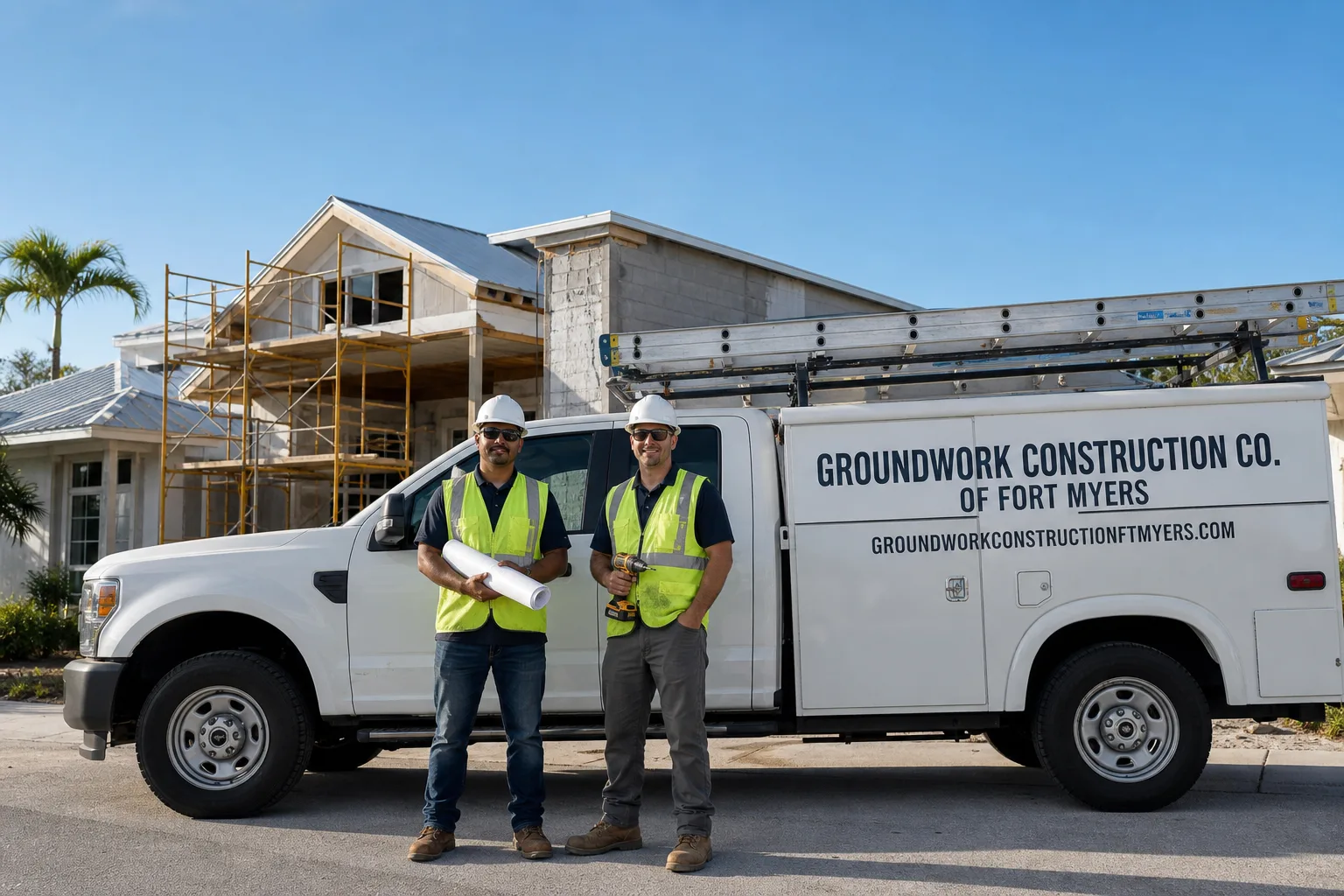
Emergency Storm Damage in Cape Coral Runs on Two Timetables: Immediate Safety and Permanent Repair
Emergency storm damage repair in Cape Coral splits into two distinct phases, and the price reflects how much of each your home needs. The emergency board-up, tarp, and water-intrusion stopgap happens within hours of your call, typically $400 to $1,800 depending on the breach. Full permanent repair to pre-storm condition or better lands between about $800 and $20,000, driven by structural scope, materials, and how much of your roof, windows, or doors Ian or a subsequent storm actually took. For a free on-site assessment and a written estimate that covers both phases, call (844) 638-7249. We answer live, any hour.
How Cape Coral Storm Damage Gets Fixed: The Real Sequence
Every storm job here starts with a hard truth: you need it weathertight tonight and you need it rebuilt right before the next named storm. We stage it in five moves so you know what happens and when you’ll be asked to make a decision.
Stage one is triage and temporary seal, same day. We arrive, assess the breach, and stop additional water from entering the envelope. This means heavy-duty tarps on compromised roof sections, plywood or polycarbonate panels over broken windows, and sandbag or diversion tactics where canal-water surge got into the garage or lower living areas. We also document everything with photos and mark the damaged materials for the insurance adjuster. No permanent work begins until you and your carrier have what you need.
Stage two is the structural assessment, within 48 hours of the call. Cape Coral homes took a beating in Ian, and hidden truss damage, lifted roof decking, and saltwater-soaked sheathing are common even when the roof looks intact from the curb. Our crew opens up a few test sections, checks for rust-compromised fasteners on the strapping and clips, and confirms whether the underlayment held or allowed moisture into the attic. If we find framing rot or sheathing delamination, we bring that into the permanent-repair scope and line-item it before a single shingle is ordered.
Stage three is the repair plan and material matching, typically days two through five. You choose between matching what you had or upgrading to modern wind-mitigation standards. For older barrel tile roofs on 1970s and 1980s Cape Coral homes, this is often the exact moment where homeowners decide to retrofit with a secondary water barrier or switch to a standing seam metal system that meets current Miami-Dade uplift ratings. We walk you through the GAF and CertainTeed options, plus the fastening schedule required for post-Ian Lee County code, and give you a fixed-price line-item estimate before anything is ordered.
Stage four is the permanent build-back, usually spanning three to ten working days. For roofing repairs, we strip the damaged section, replace any bad decking, lay the approved underlayment, and install the new roofing with the specified mechanical fastening pattern. Window and door replacements get flashed and sealed with corrosion-resistant hardware rated for the salt air that comes with living inside Cape Coral’s 400-mile canal network. Every penetration is checked, every seam is sealed, and we stage a mid-install walkthrough so you see the flashing, the nailing pattern, and the tie-in details before they disappear under finish materials.
Stage five is the final inspection, documentation package, and insurance-ready closeout. We walk the completed repair with you, hand over a binder with before photos, during-install photos showing the fasteners and underlayment, and the manufacturer warranty cards for the materials we used. If a city inspector needs to sign off, we coordinate that appointment and stand on site for it. You also get the Groundwork Construction Co. 730-Day Done Right Promise in writing: if something isn’t done right, we make it right, no fine-print expiration games.
What You’ll Actually Choose Between: Materials and Specs That Matter After a Storm
After emergency storm damage, the options break into two categories: match what was there or upgrade to something that handles the next storm better. The right call depends on the age of your home and what your insurance is covering, but you need to know the trade-offs either way.
- Asphalt shingle match vs. architectural upgrade. A standard three-tab match on a small repair section runs on the low end of the range and usually blends with late-1990s and early-2000s Cape Coral roofs. Architectural shingles cost more per square but carry better wind ratings and often trigger an insurance discount when the repair is large enough to reclassify the roof. We use GAF and CertainTeed architectural lines with the full manufacturer fastening schedule: six nails per shingle, not four, which matters when the next Cat 3 spins up in the Gulf.
- Barrel tile repair vs. standing seam conversion. Many Cape Coral homes built between 1980 and 2000 wear the original barrel tile, and matching broken tiles after a storm means sourcing from salvage yards or specialty manufacturers. If the damage is extensive, switching the affected roof plane to standing seam metal eliminates tile-match problems and dramatically improves uplift resistance. The trade-off is cost and whether your HOA in areas like Pelican or the Yacht Club neighborhood has a material-spec covenant. We pull that answer before you spend a dollar.
- Impact window replacement vs. shutter-reliant repair. If the storm took out a window or a sliding glass door facing the canal, you have a genuine decision: replace with a code-minimum unit or upgrade to Andersen or Pella impact-rated assemblies that don’t need shutters. The upfront cost is higher, but many Cape Coral homeowners who took direct hits in Ian tell us they’ll never rely on shutters alone again. We also install the new buck flashing and pan with stainless fasteners, because the salt spray from Charlotte Harbor eats galvanized hardware in a few seasons.
- Underlayment spec: peel-and-stick vs. basic felt. This is the single highest-impact upgrade most homeowners haven’t heard of. Basic felt underlayment meets old code but doesn’t self-seal around nail penetrations. A peel-and-stick high-temp underlayment adds real secondary water protection. On a Cape Coral roof that faces the Caloosahatchee breeze, a peel-and-stick layer under the new shingles or metal is often the difference between a dry attic and a water-damage claim two years later. We quote it as a line item on every storm repair.
When the repair scope is large enough to trigger a full reroof, homeowners often ask us about pairing the work with upgraded custom windows and doors in Cape Coral. The logic is straightforward: you’re already in permitting and envelope disruption, and matching the impact rating across the whole exterior often unlocks a package discount on both trades. It’s not for every budget, but we’ll show you the numbers and let you decide.
What Emergency Storm Damage Costs in Cape Coral, FL
Most emergency storm damage repair jobs in Cape Coral fall between $800 and $20,000. The range is wide because a tarp-and-one-sheet-of-plywood stopgap costs very little, while a full roof-plane rebuild with structural sheathing replacement, impact upgrades, and new flashing is a multi-trade project. Your number depends on five variables, and our written estimate lays out every one of them.
Size of the breach. A single missing ridge cap or a punctured soffit is a few hundred dollars to seal and patch. A tree limb through the roof deck across two trusses is an entirely different scope. The square footage of damaged roof area or the number of broken window and door openings directly scales the material and labor, and it’s the first thing we measure on site.
Condition of what’s underneath. On Cape Coral homes built in the 1970s and early 1980s, we frequently find decking that was already soft from years of humidity and canal-adjacent moisture before the storm hit. When we lift the shingles on an older Unit 2 or Unit 3 property, the sheathing tells the real story. If it needs full replacement, that pushes the job higher in the range. We show you photos and give you the choice before we cut anything.
Material grade and wind rating. A basic three-tab shingle patch is at the low end. Stepping up to architectural shingles with a peel-and-stick underlayment, or switching to a standing seam panel with concealed fasteners, moves the job toward the upper third of the range. For tile roofs, matching the original barrel profile with new tiles costs more than a field repair with salvaged material, and we’ll quote both so you see the spread.
Permit scope and inspection requirements. In Cape Coral, any permanent roof repair beyond a minor patch pulls a permit, and the fee schedule depends on the valuation of the work. If the repair scope crosses the threshold into a structural alteration, you may also need an updated elevation certificate and wind-mitigation inspection for your insurer. We handle the permit pull and the inspection scheduling, and those costs sit as transparent line items in the estimate.
Access and canal-side logistics. A two-story roof face over a seawall or a steep pitch facing the Caloosahatchee requires different staging and safety equipment than a single-story ranch on an interior lot. Canal-side access often means we can’t position a material lift on that side of the house, which adds labor hours for hand-carrying materials around the perimeter. You’ll see that differential reflected in the estimate, and we explain exactly why it’s there.
The estimate you get from us is fully itemized and sets a fixed price: the number on paper is the number you pay. No change orders hiding in the fine print, no surprise upcharges when we open the wall. Call (844) 638-7249 to schedule the free on-site assessment, and you’ll have a written quote in hand, typically within 24 hours.
What Cape Coral Homes Specifically Do to Storm Damage Repair
Cape Coral’s housing stock forces decisions on a storm repair job that a contractor in Fort Myers or Naples rarely faces. The bulk of the homes we repair here are concrete block structure builds from the 1970s through the 1990s, and their roof systems were installed to a wind code that predates everything we know about hurricanes today. When we open a roof that hasn’t been touched since 1983 on a canal-front property in the Yacht Club neighborhood, we typically find strapping that was toe-nailed rather than hurricane-clipped and underlayment that has been baked brittle by decades of Florida sun. The repair has to fix not just the storm damage but also the pre-existing vulnerability the storm exposed. That often means adding secondary strapping, upgrading the nailing pattern, and installing a modern peel-and-stick underlayment on the repaired section even if the rest of the roof is staying put.
Permitting adds another layer that is specific to Cape Coral. The city’s post-Ian code enforcement emphasis on elevation certificates and wind-mitigation documentation means a repair that looks cosmetic from the curb can trigger a requirement to bring the entire roof assembly up to current uplift standards if the damaged area exceeds a threshold percentage. We manage that conversation with the building department so you don’t have to parse the code yourself. In the older pre-utility sections of Cape Coral, particularly the Unit 1 through Unit 3 areas still phasing from well and septic to city services, we also coordinate around the city’s rolling utility expansion projects, and we frequently field calls about Cape Coral Garage Conversion ADU projects in these same neighborhoods. It is not unusual to arrive at a storm repair and find the street in front of the house opened for new water-main installation. We build the schedule around it; it’s a logistical reality of doing construction on the Cape, and we’ve been navigating it long enough that it never surprises us.
The canal geography matters in a material way too. Homes on saltwater-access canals in the southwest section of Cape Coral see significantly more corrosion on fasteners, flashing, and window frames than interior homes in the Diplomat neighborhood. We specify stainless or high-grade coated fasteners on every exterior penetration within a half mile of open water, and we check the existing strapping for rust pitting even on sections of the roof that weren’t directly hit. In some cases, a partial roof that’s otherwise fine has connectors that won’t survive another decade of salt spray, and the storm damage repair becomes the right moment to address it. If the wider project scope leads toward a full reroof, our roofing in Cape Coral team can fold the repair into a complete replacement and handle it as one continuous job.
Serving Cape Coral, FL - Our Local Coverage Area
We’re based in the Cape Coral area and know this community well. Use the map below to see our service coverage - if you’re nearby, we can almost certainly help.
Frequently Asked Questions About Emergency Storm Damage in Cape Coral
Same day, in nearly all cases. When you call (844) 638-7249, a live person answers, and we dispatch a crew to your Cape Coral address immediately. The tarp and temporary seal process takes one to three hours for a typical residential breach. We use heavy-duty reinforced tarps rated for wind exposure, and we mechanically fasten them, not with a few staples and hope. The goal is to stop water entry right now and hold until the permanent repair materials arrive.
Yes, for any permanent roof repair beyond a very minor patch. The City of Cape Coral requires a permit for roof work that replaces decking, alters the structural assembly, or changes the roofing material type. We pull the permit on your behalf, schedule the inspection, and stand on site for it. If the repair scope triggers a wind-mitigation or elevation-certificate requirement, we coordinate that with your insurer so you have the documentation you need without chasing it yourself. Call us for a free assessment and we’ll tell you exactly what applies to your specific repair.
In some cases, yes: a localized puncture with clean margins and solid decking underneath is a candidate for a patch rather than a full section replacement. The deciding factors are the size of the damaged area, the condition of the surrounding materials, and whether the existing roof system can be tied into with a watertight seal. On older Cape Coral homes where the surrounding shingles or tiles are near the end of their service life, a patch may buy you a few years but is not a long-term solution. We’ll show you the options, quote both the patch and the section replacement, and you make the call with straight numbers in front of you.
It covers the workmanship on every component we install, for two full years from the date of completion. If a leak develops at a seam we sealed, if a flashing we installed pulls loose, if a window we set fails to drain properly, we come back and make it right at no charge. The manufacturer warranties on the materials themselves run separately and are registered in your name. This guarantee is one of the longest workmanship commitments in residential construction, and we put it in writing on every storm repair job, no exceptions.
That depends on your policy and deductible, but we help you document the damage so your claim has what it needs. We photograph every damaged component before we touch it, we flag pre-existing conditions that may complicate a claim so you’re never blindsided, and we can communicate directly with your adjuster about the scope and cost of the permanent repair. Many Cape Coral homeowners who went through Ian found that a properly documented claim with contractor-supplied photos and a detailed scope of work moved faster than a DIY claim. We can’t promise what your carrier will cover, but we can promise you’ll have every piece of documentation they ask for.
Get a Free Estimate for Storm Damage Repair in Cape Coral
If your Cape Coral home took a hit from a recent storm or is still carrying damage from a previous one, we’ll come out, assess the full scope, and hand you a fixed-price written estimate. No vague ballparks, no pressure to sign. Call (844) 638-7249 - a live person answers, 24/7, and we’ll have a background-checked, uniformed crew at your property fast. The estimate is free, and the work comes with upfront pricing and the 730-Day Done Right Promise. Cape Coral homeowners also frequently ask us about exterior projects that run alongside storm repair, and our wood fence in Cape Coral team can assess any perimeter damage while we’re on site. From foundation to finish line, we make sure the whole house is built to last, backed in writing.
Written by Derek Hollenbeck, Owner at Groundwork Construction Co., serving Cape Coral since 2014.