
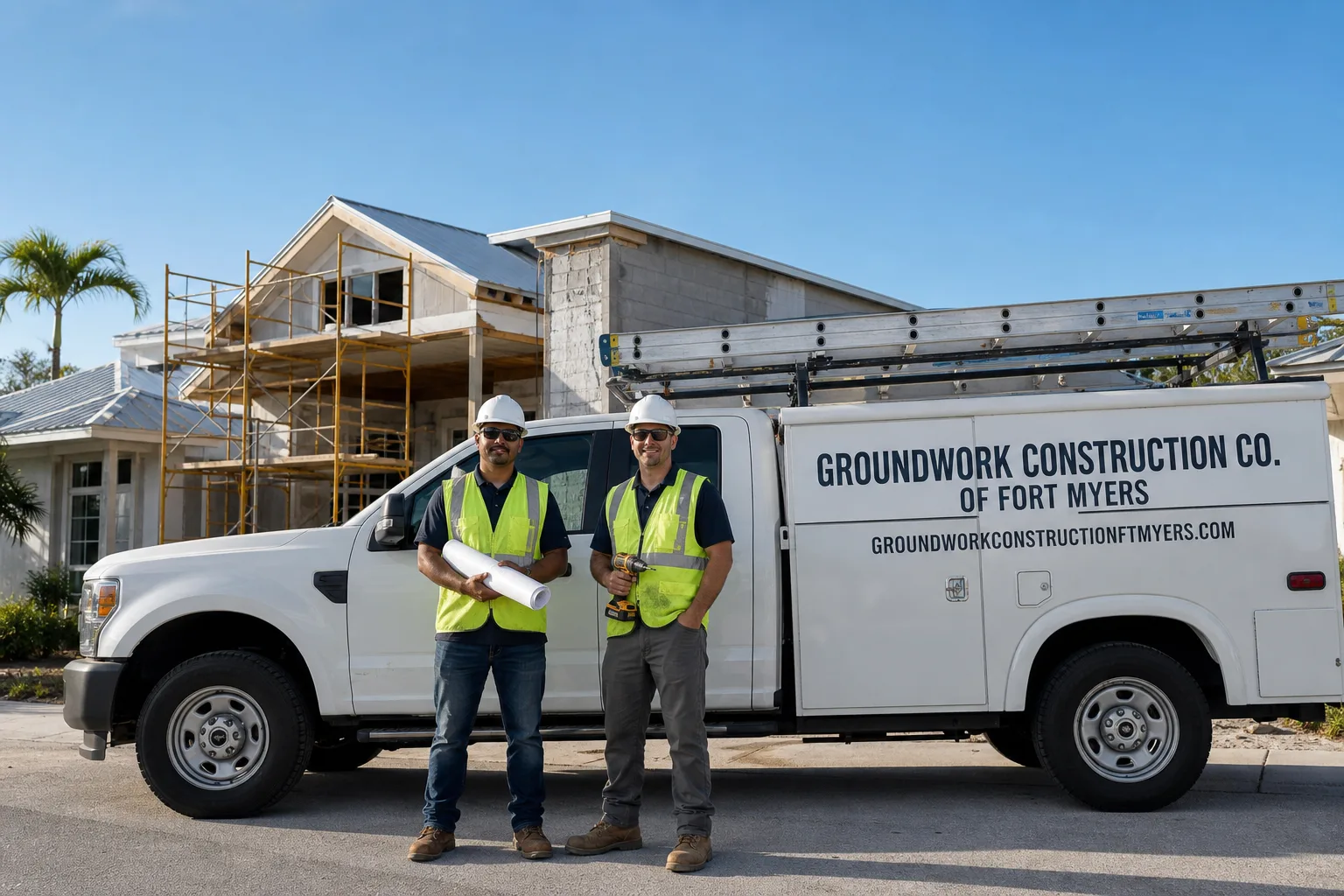
Emergency Storm Damage Repair in Grove City - What to Do First and What It Costs
When a storm rips through our Grove City service area, the first call you make after securing your family is to a contractor who can get your home dry and structurally stable. Emergency storm damage repairs in this waterfront community typically involve emergency tarping, board-up, water extraction, and structural bracing on day one, then a full damage assessment and scope of work for the permanent rebuild within 72 hours. For most Grove City homes hit by wind-driven rain, broken windows, or fallen tree limbs, the initial emergency stabilization runs $1,200-$4,800, and the full reconstruction scope that follows - particularly on Lemon Bay properties that fall under FEMA substantial-damage rules - can land anywhere from $22,000 to over $130,000 depending on damage extent and elevation requirements. Call us at (844) 638-7249 right now if you have a roof open to the sky, water moving through drywall, or compromised windows and doors.
We have seen the way storms tear across Lemon Bay and the specific way they punish the mid-century block homes and older fishing cottages that make up so much of Grove City’s housing stock. We know these houses inside and out, we know Charlotte County’s post-Ian permitting reality, and we know that fast, correct emergency response in the first 48 hours determines whether a home gets rebuilt or condemned. No voicemail, no waiting until Monday morning - a live person answers at (844) 638-7249 and a crew rolls to your property.
How Emergency Storm Damage Gets Repaired in Grove City
The sequence matters, and skipping a step or doing them out of order is how homeowners end up with mold blooming behind new drywall six months later. Here is exactly what we do, from the minute we show up through final inspection:
Stage 1 - Immediate Stabilization (Day 1, 2-6 hours). The crew arrives with tarps, boards, water pumps, and generators. Roof openings get covered with heavy-gauge poly sheeting mechanically fastened to the roof deck (not just bricks on top - those blow off in the next squall). Broken windows and doors get plywood-board-up. Standing water gets extracted from floors and pumped from crawlspaces or slab recesses. If interior walls are saturated, we cut flood cuts at 24-48 inches above the floor to open the cavity and start airflow. This stage stops the clock on additional water damage and makes the house safe to enter.
Stage 2 - Moisture Mapping and Damage Documentation (Day 1-2, concurrent). While stabilization is underway, we run moisture meters across every wall, floor, and ceiling surface to map how far the water traveled. Saltwater intrusion - common in Grove City storm surge at homes along the Lemon Bay shoreline - requires different remediation than freshwater rain intrusion, because the salt keeps pulling moisture from the air even after the surface feels dry. We photograph everything, document moisture readings, and create the insurance-grade report you’ll need for your adjuster and, if applicable, the FEMA substantial-damage assessment. This documentation also tells us whether the home qualifies for repair or has crossed the 50% damaged threshold that mandates full elevation.
Stage 3 - Drying and Controlled Demolition (Days 2-5). Industrial dehumidifiers and axial air movers run around the clock until moisture readings across all materials drop below 14% moisture content. During this phase, we remove unsalvageable materials: wet insulation, saturated drywall, buckled flooring, and any structural lumber that has lost its integrity. In Grove City homes built before current wind codes, this is often where we discover corroded hurricane straps or sill-plate rot hidden behind paneling - problems that existed before the storm but now become part of the repair scope because the permit office will flag them.
Stage 4 - Reconstruction Scope and Estimate (Day 3-7). Once the house is dry and stripped to structure, we walk every inch with you and write a line-item scope of work and a fixed-price estimate. This is the point where Grove City homeowners inside AE and VE flood zones learn whether they need a rebuild or a repair. If the structure is above the Base Flood Elevation and the damage is under 50% of the pre-storm value, we proceed to reconstruction. If it crosses that threshold, the scope pivots to a full elevation and rebuild - a different job with different numbers, which we explain in plain English and lay out in a separate proposal.
Stage 5 - Permanent Reconstruction (2-12 weeks depending on scope). New framing, sheathing, windows, doors, roofing, drywall, flooring, and finishes go in. We pull all permits, schedule every inspection with Charlotte County, and you deal with one point of contact from start to finish. The 730-Day Done Right Promise applies to every nail - if it is not right two years later, we make it right.
What You’ll Decide During Emergency Storm Damage Repair
Emergency work moves fast in the first day or two, but the reconstruction phase involves real choices. These are the material and spec decisions that determine how the finished home performs in the next storm:
- Roofing material grade and rating. Asphalt shingles - GAF Timberline or Owens Corning Duration class 3 - cost less upfront and meet code. Upgrading to a class 4 impact-rated shingle adds about $1,200-$2,400 on a typical Grove City roof but can cut your wind mitigation credits enough to pay for itself in three to five years. Standing seam metal is a bigger investment but handles 140+ mph winds and shrugs off the salt air that eats asphalt shingle granules in 12-15 years out here.
- Impact windows vs. shutters. Impact-rated windows from Andersen or Pella replace the entire frame and sash and provide passive protection - no setup required when a storm comes. Roll-down or accordion shutters cost less upfront but require manual deployment. In Grove City’s AE and VE flood zones, impact windows also eliminate the storm-panel debris that gets torn off and launched through a neighbor’s living room. Most waterfront owners we work with choose full impact window replacement after a storm for exactly that reason.
- Interior drywall and insulation. Standard gypsum and fiberglass are cheapest and meet code. We recommend closed-cell spray foam on exterior walls and paperless drywall in any home within a quarter mile of Lemon Bay. Spray foam dries without holding moisture, paperless drywall does not feed mold, and both together keep a future storm surge or roof leak from turning into a gut job again. This upgrade typically adds $3-6 per square foot of wall area and pays for itself the first time the house takes water.
- Flooring for flood-prone rooms. Luxury vinyl plank handles standing water without warping, is easy to pull and reinstall if needed, and costs roughly $4-$9 per square foot installed. Tile on a concrete slab - very common in Grove City’s older block homes - survives a flood completely but requires that the slab itself is dry and sound. Traditional hardwood or engineered wood is rarely the right call within three blocks of the bay.
What Emergency Storm Damage Repair Costs in Grove City, FL
Emergency stabilization alone in Grove City lands between $1,200 and $4,800 for tarping, board-up, water extraction, and initial drying equipment on a typical single-family home. The reconstruction side - once we go from emergency work to permanent repair, including any needed Grove City Full Kitchen Remodeling - falls between $22,000 and $130,000 depending on what got hit and how far the repair scope reaches. A house that lost part of a roof and some drywall but whose structure stayed dry is on the low end. A waterfront home on Lemon Bay that took storm surge across the first floor and triggered FEMA substantial-damage rules, requiring full elevation, is on the high end, and that is before any finish-level upgrades.
Here are the variables that actually move the number:
- Waterline height inside the home. A few inches of saltwater across a tile floor in one room is a dry-out and floor replacement. Two feet of saltwater through the entire first floor is a strip-to-studs gut job with electrical and mechanical replacement. The difference in cost is not linear - it jumps by tens of thousands of dollars at the point where kitchen cabinets, base cabinets, and buried ductwork get submerged.
- Whether the structure hits the 50% substantial-damage threshold. This is the Grove City-specific wildcard. If the county’s assessment finds the repair cost exceeds 50% of the pre-storm structure value, the code requires full elevation to Base Flood Elevation plus one foot of freeboard. That turns a $35,000 dry-out into a $110,000-$130,000 elevation-and-rebuild project. We identify this risk during our initial assessment so you are never blindsided.
- Roof damage extent and framing condition. Replacing shingles on a roof with intact decking and trusses is the cheapest path. If a tree limb pierced the deck and water saturated the attic insulation and ceiling drywall below, the job expands into structural framing repair, new sheathing, insulation, and drywall. Salt air in Grove City accelerates corrosion of the hurricane straps and connector plates on older roofs, and if those are compromised the repair scope includes bringing the whole roof-to-wall connection up to current code.
- Window and door condition after impact. If a pressure event blew out windows or doors, the repair includes full replacement units, potentially reframing the rough opening, and tying the new units into the existing weather barrier correctly. Impact-rated replacements are code-mandated for anything replaced in a windborne debris region, so expect to pay the impact-rated premium whether or not you wanted to upgrade.
Every estimate we write is a fixed-price, line-item document. You see every dollar before you sign anything. No change orders hiding behind “unforeseen conditions” language - we already looked during the drying phase. Call (844) 638-7249 and we will come to your Grove City property for a free, no-obligation estimate and damage assessment.
What Grove City’s Coastal Conditions Do to Storm Damage Repair
Grove City sits directly on the western shore of Lemon Bay, and Hurricane Ian’s 2022 storm surge did not just flood homes - it triggered FEMA “substantial damage” determinations on scores of older structures in this community. That one regulatory event changed what storm damage repair means here compared to anywhere ten miles inland. In Grove City, a straightforward-looking repair can legally become a full reconstruction to Base Flood Elevation standards the moment the county’s valuation spreadsheet says you crossed the 50% threshold. Out-of-area builders who quote a simple dry-out and patch job without pulling the flood zone and pre-Ian damage assessment first are writing a number that means nothing. We have done enough post-Ian work in Grove City to know that the first question on any waterfront property is “what’s the FEMA status on this address,” and the second is “what does the elevation certificate say.”
The housing stock here also shapes how these jobs go. The older fishing-camp-style cottages that line the canals and bayfront were mostly built before Charlotte County adopted modern wind and flood codes, so their sill plates often sit below current Base Flood Elevation, their wall sheathing is often plank rather than rated plywood, and their roof-to-wall connections rely on toenails rather than hurricane straps. A storm that damages a modern block home a half-mile inland on Placida Road might require a roof patch; the same storm hitting one of these older wood-frame waterfront homes can require structural retrofitting of the entire load path, from the roof trusses down to the foundation anchors. We explain that difference in plain terms during our walkthrough and we never quote a Lake Suzy price for a Lemon Bay job.
Salt-laden air off the Gulf also accelerates corrosion on any exposed metal - hurricane straps, anchor bolts, rebar, and roofing fasteners corrode years faster in Grove City than they do even 20 miles inland. On every storm repair we do here, we specify hot-dipped galvanized or stainless steel connectors, fasteners, and hardware. It adds a few hundred dollars to material cost and it means the repair holds up through 15 years of salt air without rust-jacking the framing.
Serving Grove City, FL - Our Local Coverage Area
We’re based in the Grove City area and know this community well. Use the map below to see our service coverage - if you’re nearby, we can almost certainly help.
Frequently Asked - Emergency Storm Damage Repair in Grove City
We dispatch a crew to Grove City properties within hours, not days, after you call (844) 638-7249. Emergency stabilization - tarping, board-up, water extraction - begins the same day we arrive. We keep response capacity staged across our service area during hurricane season so nobody waits on a crew to drive across three counties while their ceilings collapse.
Emergency stabilization work - tarping and board-up - does not require a permit because it is temporary life-safety work. Any permanent structural repair, including roof sheathing replacement, drywall replacement beyond cosmetic patching, or window and door replacement, requires a permit pulled through Charlotte County and will be inspected. We pull every permit and schedule every inspection so you don’t have to navigate the county’s post-storm backlog yourself.
Most homeowners policies in Florida cover emergency mitigation and permanent storm damage repair, less your hurricane deductible. We work directly with your adjuster, provide the moisture-mapping and photographic documentation they require, and walk them through the scope of work. For Grove City homeowners in flood zones, your windstorm policy covers wind damage and your NFIP or private flood policy covers rising-water damage, and the line between the two determines what each policy pays. We have been through enough of these claims to help you present the facts clearly and get the coverage you paid for.
Emergency stabilization is complete in a day. Full drying and controlled demolition take two to five days. Permanent reconstruction takes two to twelve weeks, depending on whether the job is a partial repair or a full gut-to-studs rebuild. Permitting through Charlotte County typically adds one to three weeks - less for repair permits, more for full rebuilds that require elevation review. We give you a hard timeline during the scope-of-work walkthrough, and we hit it.
The 730-Day Done Right Promise covers all workmanship on the permanent reconstruction portion of your storm damage repair. If anything we built fails due to our workmanship within two years, we fix it at our expense. Materials carry their own manufacturer warranties, which we register on your behalf. This promise applies whether the job was a $4,000 dry-out or a $130,000 full elevation and rebuild - same standard, same two-year backstop.
Get a Free Storm Damage Estimate in Grove City
If your home in Grove City took damage from wind, rain, or storm surge and needs Grove City Full Bathroom Remodeling or other repairs, do not wait for the drywall to tell you how bad it is. Call (844) 638-7249 and we will walk your property, map the moisture, assess the structural damage, and give you a fixed-price, line-item estimate with no obligation. A live person answers the phone - 24 hours a day, seven days a week, storms included. The estimate is free, the advice is straight, and the work carries our 730-Day Done Right Promise.
Written by Derek Hollenbeck, Owner at Groundwork Construction Co., serving Grove City and the Charlotte County coastline.