
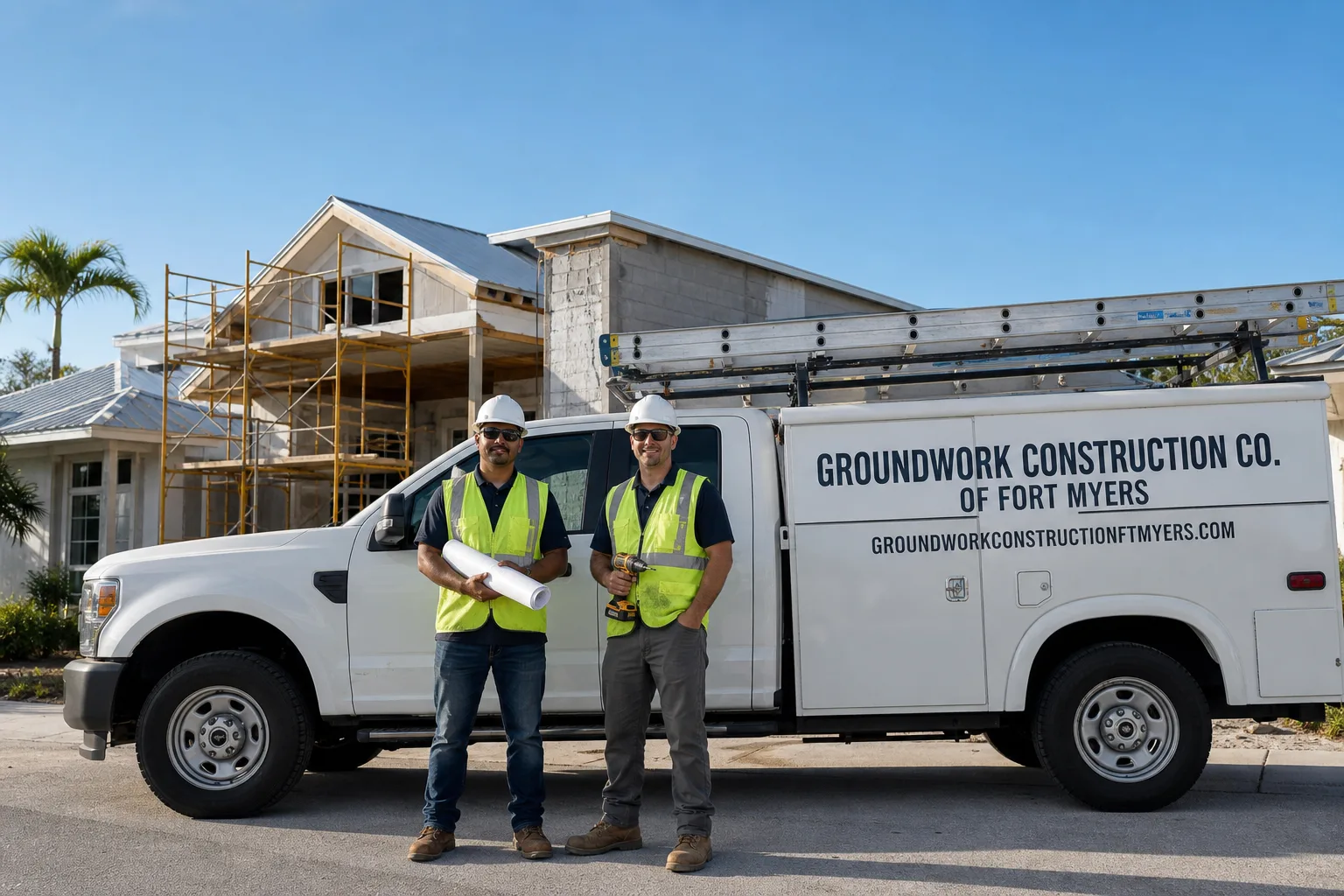
Storm Damage Triage in Harbour Heights: What Happens the First 72 Hours
Emergency and storm damage response in Harbour Heights typically begins with a same-day temporary stabilization call, followed by a detailed damage assessment within 48 hours. Most full emergency repairs on a wind- or water-compromised roof run between $1,800 and $8,500 depending on the extent of structural compromise and how much water got past the decking. Call (844) 638-7249 the moment you spot daylight or a water stain - the first 24 hours determine how much of the home can be saved with a repair versus a full replacement.
How We Triage Storm Damage in Harbour Heights
We learned a hard lesson after Hurricane Charley in 2004, and again after Irma in 2017: the houses that get triaged correctly in the first three days cost half as much to restore as the ones where water sat for a week. Our process in Harbour Heights follows the same sequence every time, because guessing costs too much.
Stage 1: Emergency stabilization (hours 0-4). We arrive with tarps, peel-and-stick underlayment, and poly sheeting rated for Florida wind-driven rain. The crew covers every penetration, ridge vent, and torn section of decking. If the storm tore off a section of sheathing, we install a temporary OSB patch screwed into the trusses, not just a blue tarp that lifts in the next squall. This stage stops the clock on interior water migration - ceiling drywall that’s still solid when we arrive stays solid.
Stage 2: Moisture mapping and damage documentation (day 1-2). We run a non-invasive moisture meter across every ceiling, wall cavity, and attic truss bay within a 15-foot radius of the obvious breach. In Harbour Heights homes built before 1994, we pay particular attention to the top-plate connections where original strapping corroded over decades of Peace River humidity. The moisture readings tell us exactly which sheetrock panels can be dried in place and which need cutting out. Every reading gets photographed with a time stamp for your insurance adjuster.
Stage 3: Scope of work and insurance alignment (day 2-3). You get a line-item written scope that separates emergency mitigation from permanent repair, with dollar figures attached to each line. If you’re filing a claim, we walk your adjuster through the same moisture log and photo set so there’s one story, not two competing narratives. In Harbour Heights, where FEMA flood versus wind exclusions get litigated on a per-parcel basis, having the damage mechanism documented with third-party moisture data changes how fast claims get approved.
Stage 4: Permanent structural repair (days 3-10, depending on scope). This is where we replace compromised decking, sister damaged rafters, install new underlayment lapped per Florida Building Code high-velocity hurricane zone details, and tie the new roof assembly to the wall system with code-compliant hurricane clips. On post-Charley homes that already have the newer strapping, we’re matching to existing. On 1970s-era Harbour Heights homes, we’re often retrofitting the entire roof-to-wall connection because the original toe-nails don’t meet current uplift requirements.
Stage 5: Interior dry-out and finish restoration (days 5-14). Once the envelope is sealed, we place commercial dehumidifiers and axial fans in any cavity that registered moisture above 17%. Drywall replacement, texture matching, and paint happen only after three consecutive moisture readings below 10%. This sequence prevents the most common failure we see in Harbour Heights storm repairs: contractors closing up walls that still held 14% moisture, leading to mold blooms the following August.
The Repair-or-Replace Call: What You’re Actually Choosing Between
After a storm in Harbour Heights, the real decision isn’t shingle color. It’s whether the existing roof assembly can be brought back to code with a targeted repair, or whether the damage exposed pre-existing failures that make a partial fix a bad investment. Here are the material and scope choices that shape the estimate:
- Underlayment grade - synthetic vs. #30 felt. On any Harbour Heights roof that lost decking, we specify a synthetic underlayment (GAF Deck-Armor or equivalent) with a 130+ mph wind-driven rain rating. #30 felt costs less up front - about $400-$700 saved on a typical repair - but it wrinkles when wet and tears during re-nailing on older decking. On a post-storm roof, the synthetic pays for itself the first time a tropical band sits over Charlotte County for six hours.
- Decking: patch vs. full sheet replacement. If the storm compromised more than 30% of a single decking plane, Florida code requires replacing the entire plane, not just patching the hole. On a 1970s Harbour Heights ranch with 4×8 sheets of half-inch CDX that have been soaking up river-valley humidity for 50 years, we often recommend full redecking even below the 30% threshold because the nail-holding capacity is shot. Figure $65-$90 per sheet installed, and a 2,200-square-foot roof uses roughly 70 sheets.
- Shingle vs. metal - the post-storm debate. If we’re replacing more than 50% of the roof area anyway, this is the moment to consider a standing-seam metal panel that carries a Miami-Dade NOA. The upfront cost is higher - metal runs $15,000-$40,000 depending on square footage - but Harbour Heights sits in a wind-borne debris region where the same shingle roof that got torn off in one storm can fail again in the next. For homeowners planning to stay 10+ years, the insurance premium reduction on a fortified metal roof often recovers $2,000-$4,000 of that delta.
- Hurricane clips and strapping retrofits. If your Harbour Heights home was built before the 2001 Florida Building Code, there’s a high probability the rafters are toe-nailed to the top plate with nothing but three 16d commons. Bringing those connections to current code with Simpson H2.5A clips or H1 straps adds $800-$2,200 to the job, but it’s the single highest-return upgrade for keeping the roof attached to the walls during the next Charlotte County hurricane warning. We won’t put a new roof over old connections without flagging this for you.
What Emergency & Storm Damage Costs in Harbour Heights, FL
Real-world emergency storm repair in Harbour Heights runs from roughly $1,800 for a localized decking patch, underlayment, and shingle match on a small breach, to $8,500+ when multiple truss bays are involved, interior drywall is saturated, and the entire roof plane needs redecking. A full storm-driven roof replacement - meaning the damage triggered an insurance-covered tear-off - typically lands between $10,000 and $20,000 on the homes we see along St. Paul Drive and the Peace River frontage roads.
Five variables move the number. First, decking condition: 50-year-old CDX that’s delaminating adds $2,500-$6,000 in sheet replacement versus clean decking that just needs a dry-in. Second, roof pitch and height: a 6/12 single-story off Harbour Drive is straightforward; a 10/12 riverfront two-story with limited staging access adds 20-35% in labor and safety equipment. Third, water migration: if moisture tracked down wall cavities into baseboards and subfloor, the dry-out scope jumps from a roof-only job to a multi-trade restoration. Fourth, code-required upgrades: a pre-2001 home often needs hurricane clip retrofits as a condition of permit sign-off, adding $800-$2,200. Fifth, material choice: dimensional shingles versus a standing-seam metal panel shifts the material line by $6,000-$18,000 depending on square footage.
Every written estimate from us separates the emergency stabilization line items from the permanent repair scope, so your insurance adjuster sees exactly what was temporary triage and what was permanent work. We also itemize what’s typically excluded - interior paint matching beyond the repaired area, landscaping restoration, and any dock or seawall damage, which requires a separate marine contractor assessment common on Peace River lots. Call (844) 638-7249 for a free on-site estimate with line-item pricing.
What Harbour Heights Homes Specifically Do to Storm Damage Repair
Harbour Heights sits directly on the Peace River in Charlotte County, and that geography dictates everything about how we approach storm work here. Hurricane Charley’s Category 4 eye passed close enough in 2004 to tear roofs off dozens of homes along St. Paul Drive and the riverfront streets, and the rebuilds that followed were done to the 2004 Florida Building Code’s newly tightened wind-load standards. That created a split housing inventory you don’t see five miles inland - pre-Charley homes with original 1970s and 1980s framing that may have never been brought to current uplift code, sitting next door to post-2004 homes with fully strapped roof-to-wall connections.
On a storm damage call in this community, the first thing we check - before we even unfold the ladder - is the permit history. If the home had a roof replacement permitted between 2005 and 2010, we’re likely dealing with proper hurricane clips and a nailed decking pattern that meets current code. If the last permit pulled was in 1983, we’re almost certainly going to find toe-nailed rafters, half-inch decking with nail withdrawal, and possibly unpermitted repairs done after Charley by out-of-state crews that packed up and left. That pre-2001 housing stock is the dominant failure mode we see here: not new storm damage on a good roof, but old storm damage reactivated because the underlying connections were never corrected.
Waterfront lots add another layer. Many Peace River-adjacent parcels in Harbour Heights were reclassified into higher-risk FEMA flood zones after the post-Charley map revisions, meaning any repair that involves decking replacement or structural retrofit now requires a current Elevation Certificate before the building department signs off. We coordinate that survey as part of the initial damage assessment because Charlotte County won’t issue the permit without it, and a week spent waiting on an elevation survey is a week of water vapor moving through your ceiling insulation.
If the storm damage is extensive enough to trigger a full roof replacement, some homeowners use that moment to upgrade other exterior elements. Our Custom Windows & Doors in Harbour Heights crew can assess whether the same storm compromised window seals or door frames, and our Wood Fence in Harbour Heights team regularly replaces fencing that got knocked flat by the same wind event - coordinating those trades under one project means one permit package and one point of accountability. Our full Roofing in Harbour Heights capability covers everything from emergency tarping to complete tear-off replacement, and our Roofing crew runs the same triage protocol across every Charlotte County job we take. We’ve been serving Harbour Heights long enough to know which streets flood first and which homes have the original strapping that needs attention before the next named storm.
Serving Harbour Heights, FL - Our Local Coverage Area
We’re based in the Harbour Heights area and know this community well. Use the map below to see our service coverage - if you’re nearby, we can almost certainly help.
Frequently Asked - Emergency & Storm Damage in Harbour Heights
We dispatch within two hours of your call to Harbour Heights, and the tarping and temporary dry-in is typically complete within four hours of arrival - same day, often before sunset. The permanent repair scope and estimate follow within 48 hours. Call (844) 638-7249 and a live person answers, day or night.
Emergency stabilization - tarps, temporary decking patches, and poly sheeting - does not require a permit in Charlotte County if it’s classified as a temporary measure to prevent further damage. The permanent repair, including any decking replacement beyond a single sheet, does require a building permit and will trigger an inspection for code compliance on the roof-to-wall connections. We pull the permit as part of the permanent scope and schedule the inspection so you don’t have to manage the process.
Most Florida homeowners policies cover emergency mitigation and permanent storm damage repair, minus your hurricane deductible, which in Charlotte County typically runs 2% to 5% of the dwelling coverage limit. The claim outcome often hinges on whether the damage was caused by wind (covered) or rising water/flood (requires separate NFIP flood policy). This is why our moisture-mapping documentation matters so much on Peace River-adjacent parcels - it establishes the mechanism of entry in a way that’s hard to dispute. We provide the photo log and moisture readings directly to your adjuster.
Emergency tarping is same-day. The permanent repair on a typical Harbour Heights home takes 3 to 7 working days from permit issuance to final inspection, assuming the damage is contained to one roof plane and decking replacement is partial. A full tear-off triggered by storm damage runs 5 to 10 working days. The variable that adds time is interior dry-out - if water migrated into wall cavities, we run commercial dehumidifiers for 3 to 5 days before closing those walls, and that extends the total timeline by about a week.
Waiting. The most expensive repairs we do are the ones where a homeowner noticed a small water stain after a squall, assumed it was minor, and called us two weeks later after mold had colonized the attic insulation and the ceiling drywall had collapsed. In Harbour Heights’ humidity, a roof breach that lets in even a few gallons of rain becomes a multi-trade restoration within 72 hours. Call (844) 638-7249 the same day you see the stain - the estimate is free, and the phone is answered by a person, not a voicemail.
Get a Free Storm Damage Assessment in Harbour Heights
If your Harbour Heights home took wind or water damage from the last storm, don’t wait for the ceiling to tell you how bad it is. Call (844) 638-7249 for a free on-site assessment and written line-item estimate. We’ll have a background-checked crew on site within hours to stabilize the breach, map the moisture, and give you a permanent repair scope with upfront pricing. The 730-Day Done Right Promise covers every repair we make - if it’s not done right, we make it right.
Written by Derek Hollenbeck, Owner at Groundwork Construction Co., serving Harbour Heights and Charlotte County storm damage restoration needs.