
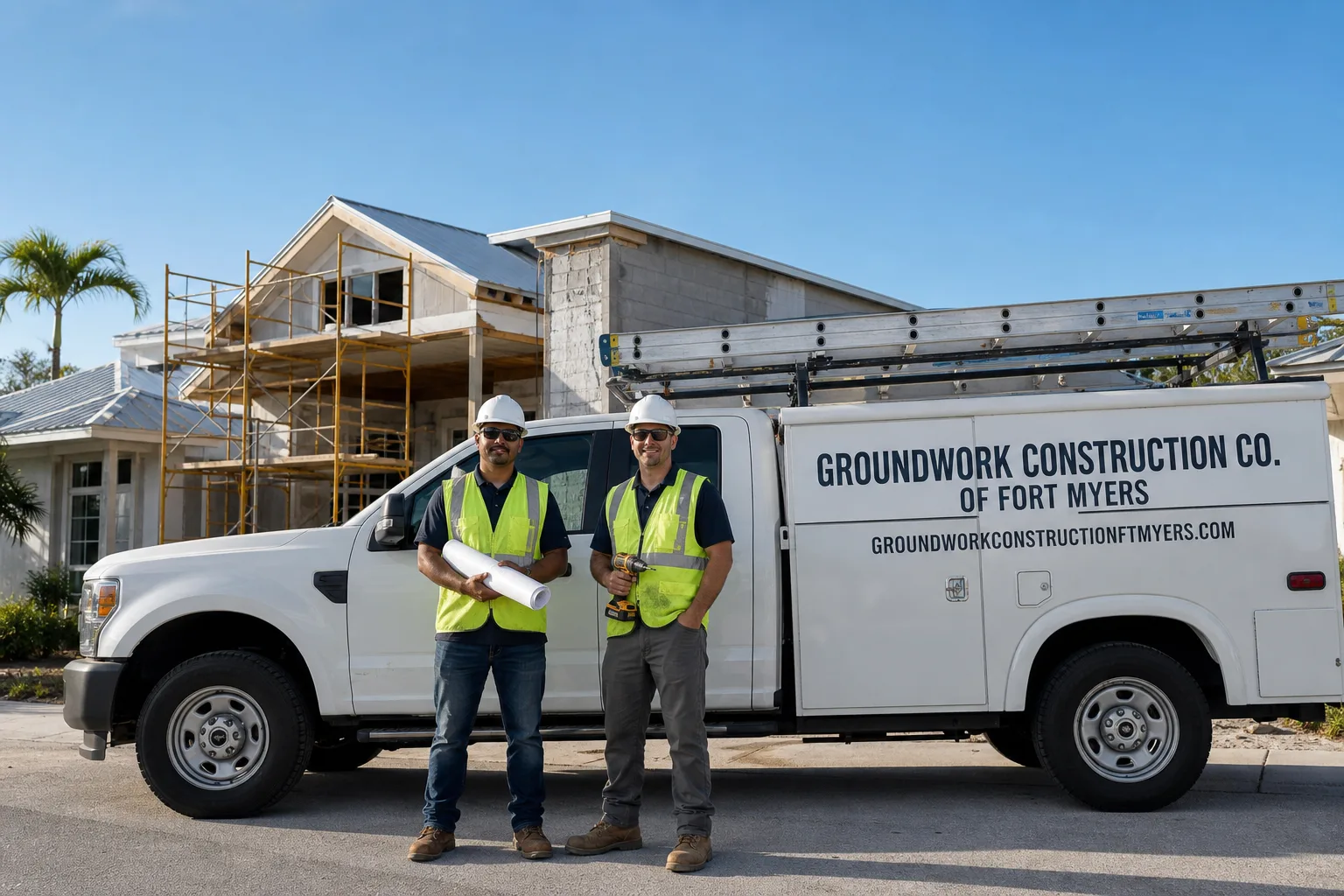
What to Expect With Emergency Storm Damage Repairs in Harlem Heights, FL
After a storm rolls through, emergency storm damage repair in Harlem Heights typically runs $400 to $8,000 depending on whether you’re patching a few torn shingles or tarping and stabilizing a partial roof failure. Most emergency work gets started within 24 to 48 hours of your call to (844) 638-7249, with a full damage assessment and temporary protection in place the same day our crew arrives. Permanent repairs follow once your insurance adjuster signs off and Lee County permits clear, which is a timeline variable that anyone rebuilding in this community after Hurricane Ian knows well.
How We Handle Storm Damage Calls, Step by Step
1. Immediate triage over the phone
When you call (844) 638-7249, a live person answers, day or night. We ask a few direct questions: Is water coming into the house? Do you see daylight through the roof deck? Is there a tree limb on the structure? Those answers tell us whether to dispatch a tarp-and-board-up crew immediately or schedule a next-morning inspection. If you have photos from your phone, we review them in real time so the first truck shows up with the right materials for temporary protection.
2. On-site assessment and temporary stabilization
Our crew typically arrives within 2 to 4 hours for active water-intrusion calls in Harlem Heights. We walk the roof, check the attic for wet decking and truss damage, and document everything with photos timestamped for your insurer. Before we leave that first visit, any breached area gets a heavy-gauge polyethylene tarp secured with furring strips nailed into sound framing, not just bricks or stucco trim, so the temporary seal holds through the next squall line that spins up off the Gulf.
3. Scope of work and insurance documentation
Within 24 hours of the tarp job, we deliver a written line-item scope of repair, including the specific materials we’ll use, the linear feet of drip edge or flashing that needs replacement, and the number of squares of roofing being torn off and reinstalled. We write it to the same formatting Lee County building officials and most major insurers expect, which cuts down on the back-and-forth that stalls approvals. You’ll know exactly what’s proposed before we file anything.
4. Permitting and material staging
Permanent repair permits in unincorporated Lee County currently run through a phased backlog system that hasn’t fully normalized since Ian. We submit electronically through the county’s portal and maintain a direct relationship with the Colonial Boulevard permitting office to track plan-review status. Once the permit is in hand, materials get staged on your property, typically within 3 to 5 business days. For homes with older concrete-barrel tile or discontinued dimensional shingles, we source matching stock during this window so the repaired section blends with the rest of the roof.
5. Permanent repair and final inspection
The actual repair phase for most storm damage jobs takes one to three days once materials and permits align. We strip damaged material back to sound decking, replace any wet or delaminated sheathing, install new underlayment lapped to code, and tie the new roof covering into the existing field. A Lee County inspector signs off on the work before we remove the temporary tarp and final-bill. Our 730-Day Done Right Promise covers every repair from that inspection date, so if something moves or leaks after the fact, we’re back to make it right at no cost to you.
Material and Repair Choices You’ll Make After a Storm
The options break down into two paths: match what existed before or upgrade to something more wind-resistant while the roof is open. Here’s what most Harlem Heights homeowners weigh:
- Asphalt shingle match (3-tab or architectural). Fastest to source and cheapest to install. Architectural shingles carry a higher wind rating than older 3-tab, and if your existing roof predates the 2002 Florida Building Code, we’ll typically recommend stepping up to an architectural product like Owens Corning TruDefinition Duration at minimum, simply because the original material was under-rated for what the coast sees now.
- Underlayment upgrades. Code-required underlayment is peel-and-stick in many wind zones already, but upgrading to a full self-adhered high-temp underlayment across the entire repaired section adds about $0.40 to $0.80 per square foot and buys you a secondary water barrier that stays sealed around fastener penetrations. On a Harlem Heights home where wind-driven rain is the real threat, that’s cheap insurance.
- Roof-to-wall connection retrofits. If our tear-off exposes the original toenailed truss connections common in 1950s through 1980s concrete-block homes here, Lee County will require hurricane strap or clip retrofits before we can close the permit. We handle the engineering letter and the installation as part of the repair scope, but it’s a variable you need to know about before the crew starts cutting.
- Tile reuse versus tile replacement. Older barrel tile roofs that survived Ian often have spalled or cracked tiles that are no longer manufactured. We can salvage undamaged tile from less-visible roof planes to blend the repair, or switch the damaged slope to a code-compliant lightweight tile profile that won’t require reinforcing the trusses. The cost difference is meaningful, so we walk every homeowner through the numbers before ordering material.
What Emergency Storm Damage Repair Costs in Harlem Heights, FL
Realistic emergency storm damage repair in Harlem Heights lands between $400 on the very low end for a small shingle patch and $8,000 for a multi-slope repair with underlayment replacement, tile matching, and structural retrofits. The median roof repair call we ran here last year fell in the $1,200 to $2,800 range, where the damage was larger than a couple of shingles but didn’t require a full roof replacement.
The four variables that push a job to the high or low end:
- How many roof squares are compromised. A single wind-lifted ridge cap is a $400 fix. Three squares of torn shingles and wet decking across two roof planes changes the math significantly.
- Roof pitch and accessibility. A steep 8/12 or 10/12 pitch requires staging and fall-protection setups that flat, walkable roofs don’t. That labor differential adds 15 to 25 percent.
- What’s hiding under the damaged section. On 1960s and 1970s block homes in Harlem Heights, we routinely find rotted 1×6 plank decking, missing collar ties, or corroded strap anchors once the roof covering comes off. Each of those hidden conditions adds line-item cost that doesn’t appear in a satellite-adjuster estimate.
- Permit and inspection load. Lee County’s post-Ian backlog means we sometimes carry an extra week or two of schedule float, and expedited permit processing carries a modest additional fee. We build it into the quote transparently so you’re not surprised by a line item labeled “county fees” after work begins.
Every written estimate we provide includes the material specification, labor, permit fees, and a flat-dollar number for the job as scoped. If hidden damage surfaces mid-repair, we stop, show you photos and a change-order figure, and get your approval before we spend another dollar. Upfront pricing, no surprises.
What Harlem Heights Homes Specifically Do to Storm Repairs
Harlem Heights sits squarely inside Lee County’s Hurricane Ian reconstruction zone, and that changes how every roof repair here is scoped and permitted. Nearly all of the homes we open up in this community were built between the 1950s and the 1980s, which means the original roof-to-wall connections are often just toenailed trusses without the engineered hurricane clips the Florida Building Code has required since 2002. When a storm tears off enough material that our repair triggers a permit inspection, the county inspector will flag those connections, and we have to retrofit them before we get a final sign-off. That is not a contractor upselling you. That is a local code reality born from the post-Ian permitting environment on Colonial Boulevard, where inspection backlogs and wind-mitigation requirements have created a regulatory gauntlet that contractors working in Fort Myers proper don’t always see with the same intensity.
The salt-laden humidity here accelerates corrosion on fasteners and flashing in ways that a homeowner 15 miles inland doesn’t experience. We replace rusted pipe collars, pitted drip edge, and corroded valley metal far more often on a Harlem Heights repair than on the same roof type in a drier inland subdivision. That is not extra work we invent. It is what the coastal microclimate does to exposed steel over 40 or 50 years. And because many of these homes are slab-on-grade concrete block with low-slope hip roofs, drainage patterns matter more than on a steep gable roof. Ponding water after a storm can find a pinhole in old modified-bitumen low-slope sections and quietly rot decking for months before anyone sees a ceiling stain.
Serving Harlem Heights, FL - Our Local Coverage Area
We’re based in our Harlem Heights service area and know this community well. Use the map below to see our service coverage - if you’re nearby, we can almost certainly help.
Frequently Asked Questions About Emergency Storm Damage in Harlem Heights
In most cases we have a crew on-site within 2 to 4 hours of your call to (844) 638-7249, with the tarp secured the same day. The variable is road access after a major event. If Glenn Road or Apollo Drive is blocked by debris from a line of downed cabbage palms, we stage at the nearest accessible intersection and walk the roof with a ladder crew. If you need an exact ETA when you call, the live person on our line can give you one based on current crew locations in the neighborhood.
Most Florida homeowners policies cover emergency mitigation as a separate line item from the permanent repair, typically with a reimbursement structure that pays for reasonable temporary protection. Our documentation includes time-stamped photos of the damage before and after tarping, and a line-item invoice formatted to what claims adjusters in Lee County expect. We recommend you file the claim within 48 hours and reference our documentation package. Call us at (844) 638-7249 if you want to walk through what the adjuster will need before they visit the property.
Yes, with some narrow exceptions for very small shingle-only patches. Once you expose roof sheathing or replace underlayment during our Roofing services, Lee County requires a repair permit with a final inspection. Given the current backlog at the Colonial Boulevard building department, we file the application the morning after your tarp goes on so the permit clock starts running immediately. An experienced local contractor who knows the expediter process cuts days or weeks out of that timeline.
We stop work and show you exactly what we found, with photos and a firm change-order price, before we touch it. The most common surprises during Harlem Heights Full Kitchen Remodeling and roofing work are rotted decking from long-term moisture intrusion, corroded strap anchors that won’t pass a wind-mitigation inspection, and termite damage in older fascia boards. None of those get fixed until you approve the additional scope in writing. Upfront pricing means no one works ahead of your budget.
We go further than most crews to match. If your existing shingle is discontinued, we source NOS (new old stock) from supply houses across southwest Florida before we propose a near-match. For barrel tile roofs, we pull salvage tile from less-visible rear slopes to keep the street-facing planes consistent. A repaired section will always weather a little differently in the first year, but the color and profile will be right. If the roof is older and future repairs are likely, some Harlem Heights homeowners choose to use this as the moment to replace the entire roof, which can make insurance sense. We can talk you through that decision on-site. Many customers pair a major roof scope with other hurricane-hardening work - upgrading to impact windows and doors through our Custom Windows & Doors in Harlem Heights service, for instance.
Get a Free Emergency Damage Assessment in Harlem Heights
If you’re looking at water coming through the ceiling or shingles in the yard after a storm, call (844) 638-7249 now. A live person picks up, asks what you’re seeing, and gets a crew routed to your neighborhood. We’ll put eyes on the damage, get temporary protection in place, and hand you a written repair scope with a fixed price, backed by our 730-Day Done Right Promise. Estimates are free, and there’s no obligation to proceed with permanent repairs through us. For Harlem Heights homeowners who want the full picture before filing a claim, we also walk you through how this roof work fits into a larger Roofing in Harlem Heights plan, whether you’re considering a whole-roof replacement or integrating new gutters and fascia. Some customers even wrap a new Wood Fence in Harlem Heights into the project scope once the roof is squared away.
Written by Derek Hollenbeck, Owner at Groundwork Construction Co., serving Harlem Heights and communities across Lee County since 2014.