
What Glass Railing Systems Actually Cost and Take to Install in Burnt Store Marina
Glass railing systems in Burnt Store Marina typically run between $180 and $350 per linear foot installed, putting most whole-deck or lanai projects in the $3,200 to $8,500 range. The job usually takes three to five working days from tear-out to final inspection, depending on how much existing railing needs to be removed and whether your mounting surface is concrete slab or wood decking. Call us at (844) 638-7249 and we’ll give you a written line-item estimate before you commit to anything.
How We Install Glass Railing Systems in Burnt Store Marina Homes
The path from old railing to a clean, view-maximizing glass system follows five stages, each with decisions that affect your timeline and final cost. Here’s how it plays out on most Burnt Store Marina projects.
Day 1: Removal and Surface Assessment
We strip the existing railing down to the mounting surface, whether that’s a concrete pool deck, a second-story balcony slab, or pressure-treated wood decking. This usually takes a morning. While the surface is bare, we inspect for the salt-driven corrosion that’s common on Charlotte Harbor-facing homes. If anchor bolts or embedded hardware show rust jacking or spalling, those get flagged and addressed before the new system touches the surface. You’ll know by end of day one whether any unexpected sub-surface repair adds to the scope.
Day 1-2: Order Verification and Hardware Spec
Before a single post goes in, we confirm the glass panel dimensions against the site measurements and select the mounting system: surface-mounted shoes, fascia-mounted brackets, or core-drilled spigots set into the concrete. In Burnt Store Marina, we spec only 316-grade stainless steel hardware, not the 304-grade stuff that pits within two years of salt exposure. You pick the glass type at this stage (clear, low-iron, tinted) and the hardware finish. Parts that aren’t already on the truck arrive within a day for most standard configurations.
Day 2-4: Post and Base Rail Installation
We set the posts or base shoes, leveling and shimming each one to dead plumb before anchoring. For concrete surfaces, that means epoxy-set anchors drilled to the manufacturer’s embedment depth. For wood decking, we bolt through to the joist structure underneath. Glass railing puts a lot of lateral load on the mounting points, and we won’t shortcut this stage. This is the longest part of the job, typically two full days for a 40- to 60-linear-foot run. By the end, the skeleton of the system is rigid and ready for glass.
Day 4-5: Glass Panel Installation and Adjustments
Tempered glass panels go in last. Each panel weighs between 40 and 80 pounds depending on thickness and height, and the crew sets them using suction cups, adjusting the clamp pressure on each shoe or spigot until the glass sits straight with consistent gaps. If you chose a frameless system, the visual payoff really hits at this point, especially on homes where we’re framing a view across the harbor. We walk the whole run with you before finalizing the install.
Day 5: Clean, Seal, and a Conversation About Maintenance
The crew cleans adhesive residue and handprints off every surface, applies silicone sealant at any base-rail joints, and torques all accessible fasteners. Then we spend ten minutes with you on what to watch for: spotting early signs of pitting on hardware, which cleaning products will cloud the glass, and how to know when a post might need retorquing after the first full storm season. That’s it. The system is done, and you’re holding the manufacturer’s warranty plus our 730-Day Done Right Promise on the installation.
The Choices That Shape Your Glass Railing System
You’ll make about four real decisions on this job, and each one changes both the look and the long-term durability in a salt-air environment like Burnt Store Marina. Here’s what we walk you through during the estimate.
- Framed vs. semi-frameless vs. frameless. Framed systems use aluminum or stainless top and bottom rails with the glass held in a channel. They’re the most affordable, starting around $180 per linear foot, and the top rail gives you a handhold. Semi-frameless runs vertical posts with glass clamped between them and no top rail. Frameless uses base shoes or spigots alone, which keeps sightlines completely clean but costs more, roughly $280 to $350 per linear foot, because the glass is thicker and the hardware is heavier-duty.
- Glass type: clear, low-iron, or tinted. Standard clear tempered glass has a faint greenish cast that’s more noticeable when you’re looking across water. Low-iron glass removes that green tint and gives you truer color transmission, which matters on harbor-facing decks. Tinted glass cuts glare and adds privacy but darkens the view. For most Burnt Store Marina lanai jobs, low-iron is the most popular upgrade.
- Hardware finish. We stock brushed stainless, polished stainless, and powder-coated black or bronze. Brushed stainless hides salt spots best. Polished looks sharper but shows water spotting faster. Powder-coated finishes add corrosion resistance on top of the 316-grade base metal. If your home has existing bronze light fixtures or door handles, matching the railing hardware ties everything together.
- Mounting method. Surface-mounted shoes bolt to the top of the slab. Fascia-mounted brackets attach to the vertical face of the slab edge, which frees up deck space and gives a floating-glass look. Core-drilled spigots sink into the concrete itself, the cleanest look but the most labor-intensive because each hole has to be diamond-drilled and epoxied. On older Burnt Store Marina condo balconies with thinner slab edges, fascia mounting sometimes isn’t structurally viable, and we’ll tell you that upfront.
When the view is the point of the whole project, we usually lean toward materials from suppliers like Belgard or Unilock for complementary hardscape, and our windows and doors crew regularly coordinates with railing installs when a lanai overhaul is part of a full Windows & Doors in Burnt Store Marina upgrade.
What Glass Railing Systems Cost in Burnt Store Marina, FL
Budget $3,200 to $8,500 for a complete glass railing replacement on a typical lanai, balcony, or pool deck in Burnt Store Marina. Jobs that land closer to the low end are usually straight runs of 20 to 30 linear feet on flat, intact concrete with a framed system and standard clear glass. Jobs at the high end push 50 to 60 linear feet, use frameless low-iron glass on fascia mounts, and involve stairs or angled sections that add labor.
What moves the number:
- Linear footage. This is the biggest multiplier. More railing means more glass, more posts, more anchor points. Simple math, but it adds up fast on wraparound decks.
- Mounting surface condition. Concrete that’s spalled or cracked needs repair before we anchor anything. Wood decking that’s rotted at the joists requires sistering or replacement. These fixes sit outside the railing bid and get priced separately once we expose the surface.
- Glass and hardware grade. Low-iron glass adds $40 to $70 per linear foot. 316 stainless vs. powder-coated 304 isn’t a huge price difference but matters enormously for longevity here in the harbor’s salt air.
- Stairs and angles. Every stair tread that needs a panel, every angle that isn’t a clean 90 degrees, adds fabrication and field-cutting time. Stair railing can add $800 to $2,000 to the total depending on the number of steps.
- Permit and inspection fees. Charlotte County charges permit fees based on project valuation, and glass railing replacements that alter the guardrail system trigger a structural review. We pull the permit, schedule the inspection, and include the fees in your written estimate so there’s no surprise line item at the end.
We give you upfront pricing with every component broken out. The number you see on the estimate is the number you pay, no change orders unless you ask to add scope. And if you’re pairing this with a larger project like Paver Driveways in Burnt Store Marina, we can roll both into one estimate and one project schedule.
What Burnt Store Marina Homes Specifically Do to This Job
The single biggest variable here isn’t the railing system, it’s what we find underneath the old one. Burnt Store Marina is a 1980s-to-2000s planned marina community of concrete block homes and low-rise condos sitting directly on Charlotte Harbor, and the salt-air corrosion here is relentless. If you’re also considering other exterior upgrades, our Windows & Doors team handles marine-grade installations built for this same environment. We regularly pull aluminum railing off a 1990s-era condo balcony and find the original anchor bolts reduced to rust-colored powder. When the mounting surface is a concrete slab poured at pre-Hurricane Ian finished floor elevations, we sometimes uncover slab-edge spalling that got worse after the surge and was never addressed. That work has to happen before railing goes on, period.
Permitting is the other local reality you need to know. Most of Burnt Store Marina falls in Charlotte County jurisdiction, but because the community straddles the Lee County line along Burnt Store Road, a canal-front home with its dock across the property line can fall in both jurisdictions. A glass railing on the lanai almost always falls under Charlotte County’s permit review, but if the scope touches the seawall or dock area, Lee County may want a look at the structural connection. We’ve done this enough times to know which inspector handles which piece, and we don’t get surprised by it. As part of our broader work across Burnt Store Marina, we’ve learned the inspection rhythms and the HOA review timelines that apply to exterior modifications in the community.
We also deal with the real-world schedule of a post-Ian county building department. Charlotte County’s permit backlog has improved since 2023 but isn’t back to pre-storm turnaround times, so we build a realistic inspection buffer into every timeline we give you. You’ll never hear us promise an inspection date we can’t actually get.
Serving Burnt Store Marina, FL - Our Local Coverage Area
We’re based in the Burnt Store Marina area and know this community well. Use the map below to see our service coverage - if you’re nearby, we can almost certainly help.
Frequently Asked Questions About Glass Railing Systems in Burnt Store Marina
Most jobs finish in three to five working days. Allow an extra day or two if we need to repair concrete spalling or rotted decking before mounting. The Charlotte County inspection schedule can add a few days between completion and final sign-off, and we factor that into the project calendar upfront.
Yes. Replacing a guardrail system in Charlotte County triggers a building permit and a structural inspection. We pull the permit, handle the inspection, and close it out. HOAs in Burnt Store Marina often require architectural review for exterior modifications as well, and we’ll help you gather the submittal documents they’ll ask for.
We bolt or epoxy-anchor into the existing surface, which means we drill holes. That’s unavoidable. What we don’t do is leave those holes unsealed or let water intrusion start a corrosion problem under the surface. Every anchor point gets epoxy-filled and sealed. If the substrate is too deteriorated to hold anchors safely, we’ll show you exactly what needs to be fixed before the railing goes in.
Glass railing in Burnt Store Marina typically runs $180 to $350 per linear foot compared to $90 to $160 for aluminum and $140 to $220 for stainless cable. For roofing projects on these same harbor-facing homes, our Burnt Store Marina Metal Roofing crews use the same marine-grade standards. Glass is the most expensive option upfront, but it’s also the only one that gives you an unobstructed view across Charlotte Harbor, which is often the whole reason people choose this community.
The glass itself is unaffected, but the hardware takes a beating if it isn’t the right grade. We spec 316 marine-grade stainless steel on every Burnt Store Marina install for exactly this reason. 304 stainless, which is common inland, pits and rust-stains within two years within a few hundred yards of the harbor. With 316 hardware and occasional freshwater rinsing, the system holds up for decades. Our 730-Day Done Right Promise covers the installation, and the manufacturer’s warranty covers the glass and hardware against defects.
If you’re already planning to upgrade the deck surface underneath, it’s worth knowing that a number of homeowners in the area combine glass railing with Fence Repair in Burnt Store Marina when the property has both a lanai and a perimeter fence that need attention in the same season.
Get a Written Estimate for Glass Railing in Burnt Store Marina
Call (844) 638-7249 and we’ll set up a time to measure your deck, balcony, or lanai and walk you through the options in person. You’ll have a detailed line-item estimate with real numbers before you decide anything, and there’s no cost for the estimate. Our team knows the Burnt Store Marina HOA requirements, the Charlotte County permit path, and the marine-grade hardware this environment demands. We also offer Burnt Store Marina New Detached ADU construction if you’re looking to expand your footprint on the property. From your first call to the final inspection, a live person answers the phone every time.
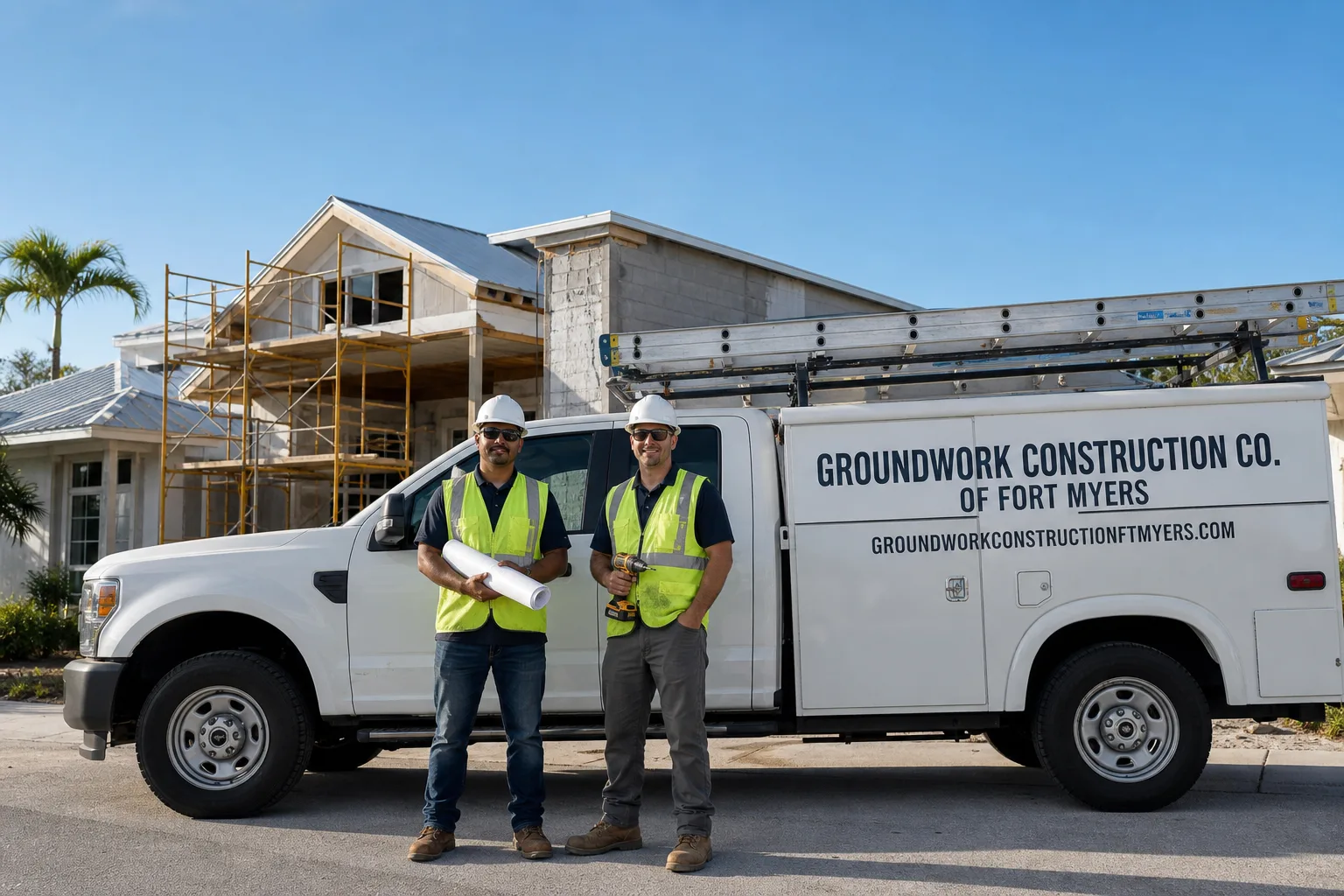
Written by Derek Hollenbeck, Owner at Groundwork Construction Co., serving Burnt Store Marina with glass railing systems built for salt air and open water views.