
What Glass Railing Systems Actually Cost and How Long They Take in Estero
Glass railing systems in Estero typically run $180-$380 per linear foot installed, with most whole-deck or balcony projects landing between $5,500 and $14,000. A straightforward frameless glass panel replacement on an existing deck with solid footings takes our crew two to three days. A full new-construction install with poured concrete footings, engineered attachment points, and permit inspections stretches to five to seven working days. Call (844) 638-7249 to lock in a free written estimate specific to your home, not a ballpark over the phone.
The Real Step-by-Step for Glass Railing Systems in Estero
Most homeowners we talk to have never ordered a glass railing system before. They don’t know what gets decided when, which is exactly what creates anxiety. Here is how it actually goes, start to finish.
Stage 1: On-site measurement and attachment-point assessment. One of our background-checked technicians comes to your Estero property for roughly 45 minutes. We measure every linear foot, check what the railing will attach to (concrete slab edge, wood deck rim joist, or a pony wall), and photograph any slope variation. On homes in The Brooks or Miromar Lakes where decks were poured 15-plus years ago, we are specifically looking for spalling at the slab edge. If the concrete is compromised, the attachment spec changes. You decide nothing yet. You get a written quote within 48 hours.
Stage 2: Product selection and engineering. This is where you choose the glass type, hardware finish, and handrail profile. We bring physical samples to your home so you can see how morning light hits a green-tinted panel versus an ultra-clear low-iron panel against Estero’s afternoon sky. Once you pick, our team engineers the attachment detail and, if required, stamps the drawing for permitting. This stage takes three to five days, most of which is waiting on you to decide and the engineer to seal the drawing.
Stage 3: Permitting with Lee County. Glass railing systems in Estero are not decorative. They are a structural guardrail system under Florida Building Code Section 1015. That means a permit and an engineered product approval. We submit the sealed drawing to Lee County’s building department, which is still processing a high volume of post-Ian reconstruction work. Plan review here currently takes seven to fourteen business days for something straightforward. If the railing attaches to any surface within a FEMA Special Flood Hazard Area, the permit review could flag your finished-floor elevation against the Advisory Base Flood Elevation. We handle this; you don’t. But it adds time.
Stage 4: Installation. Day one is footings and base-channel anchoring, if the attachment goes into concrete. We core-drill, epoxy-set stainless anchor bolts, and let the epoxy cure overnight. Day two is glass panel setting. The panels arrive from the fabricator pre-cut and tempered. We set each panel, level it, and torque the clamps or set-screws to the manufacturer’s spec. On a framed system, the top rail goes on last. On a frameless system, the top edge is left raw or capped per your choice. A typical 40-linear-foot deck railing install takes our crew two full days. A curved pool-deck run or multi-level balcony takes longer.
Stage 5: Final walkthrough and the 730-Day Done Right Promise kick-in. We walk the full system with you, push-test every panel, and check every fastener. You sign off. The warranty starts that day. If anything shifts, loosens, or hazes within two years of installation, we fix it on our dime. That’s the 730-Day Done Right Promise, and it’s not pro-rated.
The Options You’ll Choose Between
Most dealers sell a system. We want you to understand exactly what you’re buying before you spend a dollar. Here are the real trade-offs.
- Frameless vs. framed. Frameless glass railing uses thick tempered glass panels, typically ½-inch or ⁵⁄₈-inch, clamped at the base with stainless shoes or standoffs. It reads clean and open, which is why it dominates Estero’s lakefront and golf-course homes where the view is the point. Downside: it costs more per linear foot and shows water spots within a day of a summer thunderstorm. A framed system uses thinner glass set into a powder-coated or anodized aluminum rail, giving you a slimmer budget and less maintenance. We install both, and we show you both before you decide.
- Glass type. Standard tempered glass has a faint green tint from iron content. Low-iron glass (sometimes called Starphire or ultra-clear) removes that tint, so the glass reads nearly colorless. Against Estero’s water and preserve views, the difference is noticeable. Low-iron adds roughly 20 to 30 percent to the glass cost. For full-sun western exposures, we also offer tinted or low-E coated glass that cuts glare and heat gain.
- Hardware finish. Stainless steel 316-grade is the only hardware finish we spec within five miles of Estero Bay. Salt air will pit 304-grade or powder-coated steel within two years. We standardize on 316 stainless clamps, shoes, and fasteners for every project where prevailing wind carries salt inland. The upgrade appears on every written estimate we produce for Estero, because skipping it costs more later.
- Top rail or cap. A continuous top rail adds structural rigidity and gives people something to grab. Code requires a graspable handrail on any railing serving stairs. On a purely horizontal deck railing, many Estero homeowners choose a minimal cap or no cap at all to keep sightlines unobstructed. We explain the code threshold clearly so you know where a rail is required and where it’s optional.
What Glass Railing Systems Cost in Estero, FL
A full glass railing job on an Estero deck or balcony lands between $5,500 and $14,000 for most homes we measure. The per-linear-foot installed cost runs $180 on the low end for a basic framed system with standard glass, up to $380 or slightly more for frameless ultra-clear panels with 316 stainless standoffs.
Four things push the number up or down. First, linear footage. An 18-foot lanai rail is a different job than 80 feet of pool-deck perimeter. Second, attachment surface. Drilling into sound, level concrete on a 2010-era slab in Pelican Landing is fast. Attaching to a wood-framed balcony that needs blocking reinforcement behind the rim joist adds framing labor. Third, glass spec. Standard tempered versus low-iron is a real dollar difference, and we line-item it so you see exactly what each choice adds. Fourth, permitting. If your property’s flood-zone remapping triggers an elevation review, engineering rework adds cost. We quote that as a fixed line item, not an open-ended change order.
Every estimate we write includes the glass panels, hardware, engineered attachment detail, permit fees, installation labor, and a final walkthrough. It does not include repairing spalled concrete at the attachment edge if existing concrete is failing. If we find that during stage one, you get a separate line-item cost before we proceed. Nothing goes in the contract that you haven’t seen and approved. Upfront pricing, no surprises.
What Estero Homes Specifically Do to This Job
Estero’s master-planned communities built between 1995 and 2010 gave us tens of thousands of concrete-slab decks and balconies framed with standard aluminum picket railing, the builder-grade stuff that looked fine on day one and started corroding at the base fasteners within a decade. We replace more corroded picket rail with glass in Estero than we do in any neighboring market. The failure mode is almost always galvanic corrosion at the aluminum-to-concrete connection, accelerated by Gulf salt air and daily summer rain cycling. Estero is uniquely rough on exterior metal.
Permitting adds a layer here that homeowners don’t see coming. When a deck railing replacement triggers a permit in a community like The Brooks or Miromar Lakes, Lee County may review the finished-floor elevation against the current Advisory Base Flood Elevation. If the slab was legally built to pre-Ian flood maps but now sits below the advisory elevation, the railing permit does not force an elevation fix on its own. But if you’re planning other exterior work that touches the slab, the cumulative project scope can trigger elevation requirements. We walk you through that before any paperwork gets filed. Also, many Estero HOAs require architectural review for railing changes, especially anything visible from the golf course or water. We supply the spec drawings for your submittal; the approval wait is out of our hands.
When neighbors see a finished frameless glass install on a property in Corkscrew Shores or Wildcat Run, they tend to ask who did it. That’s how we’ve built most of our glass railing work in Estero. It’s a look that fits the view-forward architecture here, and it’s a functional upgrade that actually holds up when the hardware is spec’d correctly for salt exposure.
Serving Estero, FL - Our Local Coverage Area
We’re based in the Estero area and know this community well. Use the map below to see our service coverage - if you’re nearby, we can almost certainly help.
Frequently Asked - Glass Railing Systems in Estero
Yes. Glass railing is a structural guardrail under Florida Building Code, not a cosmetic upgrade, and Lee County requires a permit with an engineered product approval. We pull the permit as part of the job. If your community’s HOA requires architectural approval, you’ll need that too, and we provide the spec drawings for your submittal.
With a straightforward replacement project on existing concrete, the whole sequence runs three to four weeks. About half that time is permit review at Lee County. The physical install, once materials are fabricated and the permit is in hand, takes two to three working days for a typical deck or balcony. New-construction projects with footings and engineered attachments run longer.
Yes, when engineered and installed correctly. Tempered glass panels used in compliant guardrail systems are rated for significant wind pressure. The critical factor in Estero is the hardware. We use 316-grade stainless steel fasteners and base shoes exclusively on coastal and near-coastal jobs because standard hardware corrodes rapidly in salt air. If you’re within a few miles of Estero Bay and someone quotes you a lower number using powder-coated hardware, ask what grade of stainless is underneath.
Sometimes. If the existing aluminum or steel frame is structurally sound, properly anchored, and not corroded at the base connections, we can set new glass panels into it. But on most 15-to-20-year-old aluminum picket rails in Estero, the base fasteners are already compromised. We inspect the frame during the measurement visit and tell you honestly whether it’s worth saving. Re-using a bad frame is a false economy that the 730-Day Done Right Promise won’t let us take.
Glass railing in Estero requires more frequent cleaning than inland homes because afternoon thunderstorms leave mineral spots and salt spray builds a film that fogs the glass over time. Most of our clients rinse panels with fresh water monthly and use a squeegee or glass cleaner every few months. On stainless hardware, a wipe-down with a marine-grade protectant twice a year keeps the 316-grade clamps looking clean. There’s no painting, no sealing, and no structural maintenance on a properly installed system for decades.
Get a Written Estimate for Glass Railing Systems in Estero
If you’re ready to replace a corroded railing or spec glass on new construction, start with a free on-site measurement and estimate. We’ll walk the deck with you, show you physical glass and hardware samples, and hand you a detailed line-item quote. No pressure, no ballpark numbers that change later. Call (844) 638-7249 to schedule. A live person answers, day or night.
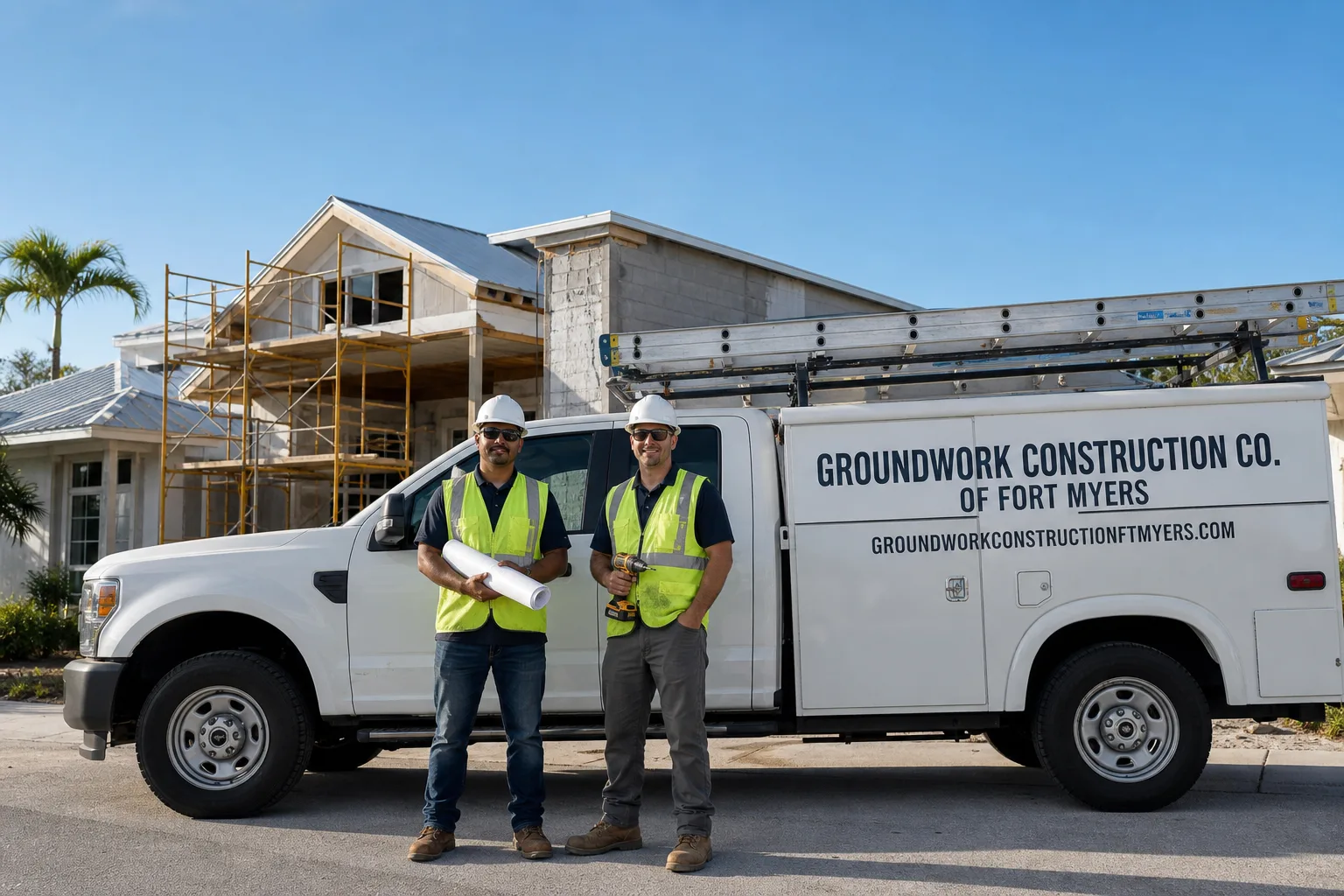
Written by Derek Hollenbeck, Owner at Groundwork Construction Co., serving Estero homeowners with transparent pricing and a 730-Day Done Right Promise on every job.