
What Glass Railing Systems in Nocatee Actually Cost and How Long They Take
A frameless glass railing system for a typical Nocatee balcony or pool deck runs between $180 and $350 per linear foot, installed. A standard 40-foot run commonly lands in the $7,200 to $14,000 range. Most jobs take two to three days on site, though custom fabrication can add a week or more of lead time before we start drilling. Call (844) 638-7249 for a line-item quote on your specific layout, no strings attached.
These are not off-the-shelf deck panels. A true glass railing system uses tempered or laminated safety glass held by low-profile base shoes or stainless steel standoff pins, engineered to meet Florida Building Code wind-load and impact requirements. The glass stays clear, the view stays open, and the system ties into your existing concrete slab or wood framing with embedded anchor bolts rated for coastal exposure. When a Nocatee homeowner asks us for a glass railing, they are almost always replacing an aging aluminum picket rail, upgrading a builder-grade balcony on a Toll Brothers or David Weekley home, or bringing a new pool deck up to the Community Development District’s safety standards before final sign-off.
How We Install Glass Railing Systems on Nocatee Homes
Every job follows the same tight sequence, whether it is a second-story deck off a Tidewater home or a ground-level pool enclosure in Crosswater Village. We surface-mount whenever possible to avoid waterproofing complications in the slab. Here is what the five stages actually look like.
1. Site measure and substrate check (day 1, morning)
We laser-measure every linear foot, note where posts will land relative to floor joists or concrete edges, and check the substrate with a moisture meter. On Nocatee pool decks built on sandy fill over former pine flatwoods, we occasionally find spalling or cracks within six inches of the slab edge where cantilevered coping meets the bond beam. If the concrete is not sound enough to hold an embedded anchor at the required embedment depth, we discuss core-drilling and epoxy-setting the base shoes before a single panel gets ordered. This is the decision point that determines whether the job stays on budget or needs an engineered fix. Homeowners decide here: proceed as planned or upgrade the substrate prep. We submit measurements to the fabricator the same day.
2. Permitting and CDD approval (1-3 weeks, concurrent with fabrication)
St. Johns County requires a building permit for any guardrail system serving an elevated deck or required egress path. Because Nocatee operates under its own Community Development District, any railing that alters an existing attachment to the home’s exterior envelope or encroaches on a setback may also need CDD architectural review. We handle both. Our permit package includes the fabricator’s engineering calcs, product approval numbers for the glass and hardware, and a site plan showing the railing’s relationship to the property line and any stormwater swale. The CDD typically reviews concurrently with the county, but we budget an extra week for the dual-approval rhythm. This stage catches contractors who do not know Nocatee off guard. It will not catch us.
3. Demolition and anchor prep (morning of install day)
We remove the old railing in sections, cut anchor bolts flush to the concrete, and patch any craters with a high-strength non-shrink grout. On wood-framed balconies common on the second story of 2007-2015 production homes, we open the decking at each post location to verify the rim joist and blocking are intact. Southeast Florida humidity and occasional wind-driven rain from afternoon storms mean we sometimes find soft sheathing or corroded fasteners in homes built before 2012. If we do, we replace the blocking and flash the penetration before the base shoe goes down. The deck is prepped and vacuumed by noon.
4. Base shoe and glass installation (afternoon of install day through day 2)
We set the base channels or standoff pins in a continuous laser-leveled run, shimmed to follow the deck’s slope for drainage while keeping the glass plumb. Tempered glass panels go in with the fabricator’s stamp oriented to the outside, clamped and leveled, then torqued to spec. For frameless systems with stainless standoffs, every hole is drilled through the glass in a controlled shop environment before delivery; we never field-drill tempered glass. Silicone seals at all joints and base-channel weep holes get tooled smooth. By the end of day two, the railing is standing and structurally complete.
5. Final walkthrough and county inspection (day 3)
We clean every panel with a non-abrasive glass cleaner, check all fasteners with a torque wrench, and walk the entire run with you, pointing out weep-hole drainage paths and how the system handles thermal expansion. The county inspector checks embedment, glass stamp visibility, and railing height (minimum 42 inches for guardrails in Florida). Once the permit is signed off, your railing is under our 730-Day Done Right Promise, the same one we put on every Windows & Doors in Nocatee project we complete. If anything shifts, loosens, or fogs inside a sealed unit, we fix it.
The Options You Will Choose Between
Every glass railing system starts with three core decisions. Here is what they mean and where we see most Nocatee homeowners land.
- Frameless base-shoe vs. standoff-pin mounting. A continuous aluminum base shoe anchors into the concrete or framing every 16 inches and holds the glass in a U-channel. It is the most common choice on pool decks because it handles slab movement well and costs less. Stainless steel standoff pins clamp the glass at discrete points, creating a floating look that maximizes views on elevated balconies. Standoff systems run about 20 to 30 percent more than base-shoe and require thicker glass to handle point loads.
- Tempered vs. laminated glass. Tempered safety glass meets code for most residential guardrails and shatters into small cubes if broken. Laminated glass sandwiches a PVB interlayer between two panes and holds together even when cracked, which is what the Florida Building Code requires for overhead glazing and some impact-zone applications. For a second-story balcony in Nocatee, laminated glass adds roughly $45 to $65 per linear foot but eliminates the remote chance of glass falling to a patio or walkway below. We recommend laminated for any elevated application within 30 miles of the coast, where windborne debris is a year-round reality.
- Glass tint and edge finish. Clear glass with polished edges is the default. Low-iron glass removes the faint green tint inherent to standard float glass and gives truer color transmission, an upgrade that runs an extra $20 to $30 per linear foot. Homeowners near the Intracoastal Waterway or in the northern villages closest to the marsh sometimes choose a light gray tint to cut glare off the water. Polished edges are standard; we can add a beveled or pencil-round profile on request.
No railing system uses standard window glass. Every panel is heat-strengthened or tempered and stamped with the fabricator’s safety rating, which the county inspector will check. We source through the same supply chain our Windows & Doors division uses for impact-rated glazing, so the glass meets the same wind-load standards as the windows already in your home.
What Glass Railing Systems Cost in Nocatee, FL
A glass railing system in Nocatee starts around $7,200 for a compact 25-linear-foot pool-deck run with a standard base shoe and tempered glass and can reach $22,000 or more for a 60-foot wraparound balcony using laminated low-iron glass on stainless standoffs. The midpoint for a typical 40-foot job with base-shoe mounting and tempered glass sits between $9,800 and $13,500.
Four variables push the number toward the high or low end. First is linear footage, the straightforward multiplier on material and labor. Second is glass type: laminated glass adds roughly 40 percent to material cost over tempered alone. Third is mounting style: standoff-pin systems demand thicker glass, more precise drilling, and more labor per linear foot. Fourth is substrate condition. If the existing concrete slab edge is spalled, cracked, or built on uncompacted fill, as we see on some older lots in the original Nocatee villages, the prep work for epoxy-set anchors adds $800 to $1,500 to the job before any glass goes up. The CDD’s requirement that we not alter lot grading without review rarely affects a railing replacement, but if your deck slab sits within a drainage easement, we flag it during the estimate so there are no surprises.
Our written estimate is a line-item breakdown: demolition and disposal, substrate prep, base shoe or standoff hardware, glass panel fabrication, installation labor, and the permit fee. It also includes a separate line for the county inspection and CDD coordination if needed. What it does not include is any structural repair to the balcony or deck framing beyond the immediate anchor zone. If the rim joist or beam supporting your deck shows rot or termite damage, we will quote that as a separate scope before the railing goes on. You see every number before you sign. No change orders because we guessed wrong about the concrete.
What Nocatee Homes Specifically Do to a Glass Railing Job
Nocatee sits on low-lying pine flatwoods that were timberland for most of the last century. The soils are sandy at the surface and often hold a layer of organic muck two to four feet down, which is why pool decks and balcony slabs in older village sections like Tidewater and Coastal Oaks occasionally show hairline settlement cracks along the bond beam within the first ten years. When we anchor a glass railing base shoe, we need solid concrete for the full embedment depth of the anchor. If the slab edge has spalled or the rebar is too close to the surface, we core-drill and epoxy-set the anchors rather than wedge-anchor, which adds a day of cure time but guarantees the railing will not pull loose when a storm pushes 110-mph gusts against the glass.
The dual-permit reality is the bigger variable. St. Johns County permits the railing as a structural guardrail under the Florida Building Code. The Nocatee CDD reviews it as an architectural modification. If your railing faces a preserve, a pond, or a neighboring lot with a view corridor, the CDD may specify glass tint or opacity limits to match the community’s design standards. We have managed this process on dozens of Nocatee projects and build the two to three extra weeks into the timeline from the start. It is one of the reasons homeowners who do a railing upgrade sometimes Fence Repair in Nocatee at the same time, since the CDD review window is already open and the permit fees do not double.
There is a practical upside to Nocatee’s housing stock. Nearly every home built here since 2007 sits on a monolithic concrete slab engineered to the current Florida Building Code, which means the concrete under your feet is almost always thick enough, with rebar spacing tight enough, to accept a surface-mounted base shoe without exotic engineering. That is not the case in older coastal towns where slab-on-grade construction from the 1970s and 1980s is common. We also see a pattern where homeowners upgrading their outdoor spaces pair a glass railing with a Paver Driveways in Nocatee project, pulling the whole exterior envelope into one coordinated scope while the crew and equipment are already on site.
We work throughout Nocatee, from the established neighborhoods around the Splash Water Park up through the newest phases in Greenleaf and Brookwood. Each village has its own rhythm with the CDD, and we know which inspectors want to see the anchor embedment before the glass goes on and which are fine with a single final inspection. That institutional knowledge is not something an outside contractor picks up on their first or second job here.
Serving Nocatee, FL - Our Local Coverage Area
We’re based in the Nocatee area and know this community well. Use the map below to see our service coverage - if you’re nearby, we can almost certainly help.
Frequently Asked Questions About Glass Railing Systems in Nocatee
On-site work runs two to three days for a standard 40-linear-foot job. The full timeline, including fabrication, permitting, and CDD review, is typically four to six weeks from the day you sign the estimate to the day the county signs off. Custom glass fabrication accounts for two to three of those weeks. The permit and CDD review run concurrently and take another two to three weeks. We keep the old railing in place until the day of install, so your deck or balcony is never left unguarded. Call (844) 638-7249 and we can give you a tighter window based on current lead times.
Yes. St. Johns County requires a permit for any guardrail on an elevated deck, balcony, or along a required exit path. If the railing attaches to the home or sits within a CDD-managed view corridor, the Nocatee CDD requires architectural review as well. We pull both approvals. If a contractor tells you no permit is needed for a guardrail replacement, they are either misinformed or planning to skip the inspection. Skipping the inspection can become a problem when you sell the home and the buyer’s home inspector flags unpermitted work on a life-safety component.
It covers the entire installation: glass panel defects, hardware loosening, seal failure, and any workmanship issue related to how the railing was anchored and assembled. If a panel fogs inside a laminated unit or a base shoe pulls away from the concrete, we come back and make it right at no cost. The glass itself carries the fabricator’s warranty against spontaneous breakage from nickel-sulfide inclusions, which is standard in the industry. The 730-Day Done Right Promise is our workmanship guarantee specifically, one of the longest in residential construction, and it applies from the day the permit is signed off.
We can. If your home has low-E tinted windows from a specific manufacturer, we can order glass with a matching tint and light transmittance so the railing glass reads as an extension of the home’s glazing rather than a mismatched add-on. This comes up often on homes in Nocatee’s newer villages where the builder-grade windows have a specific gray or blue-green tint. Matching requires a sample or the original window sticker to identify the glass spec. It adds about two weeks to fabrication lead time and roughly 15 percent to the glass material cost.
It will, but it needs more frequent cleaning than a railing set further inland. Salt spray and mineral dust from the marsh can leave a haze that builds up over two to three weeks during dry, windy months. We recommend a spray-on glass cleaner and a microfiber cloth once every two weeks for homes within a mile of the Intracoastal Waterway. The base shoe has weep holes that drain water and condensation, but they need to stay clear of debris. We walk every homeowner through the maintenance routine at the final walkthrough so the glass looks as clean in year five as it did on install day.
Get a Line-Item Estimate for Glass Railing Systems in Nocatee
If you are ready to replace a builder-grade railing or need a new system for a pool deck or balcony in Nocatee, we will come out, measure every inch, check the substrate, and put a fixed-price estimate in your hands on the spot. The number we quote is the number you pay, backed by our 730-Day Done Right Promise. Call (844) 638-7249 to schedule a free on-site estimate. You will speak to a live person, not a voicemail, and we can typically have someone at your home within a few days to start the process.
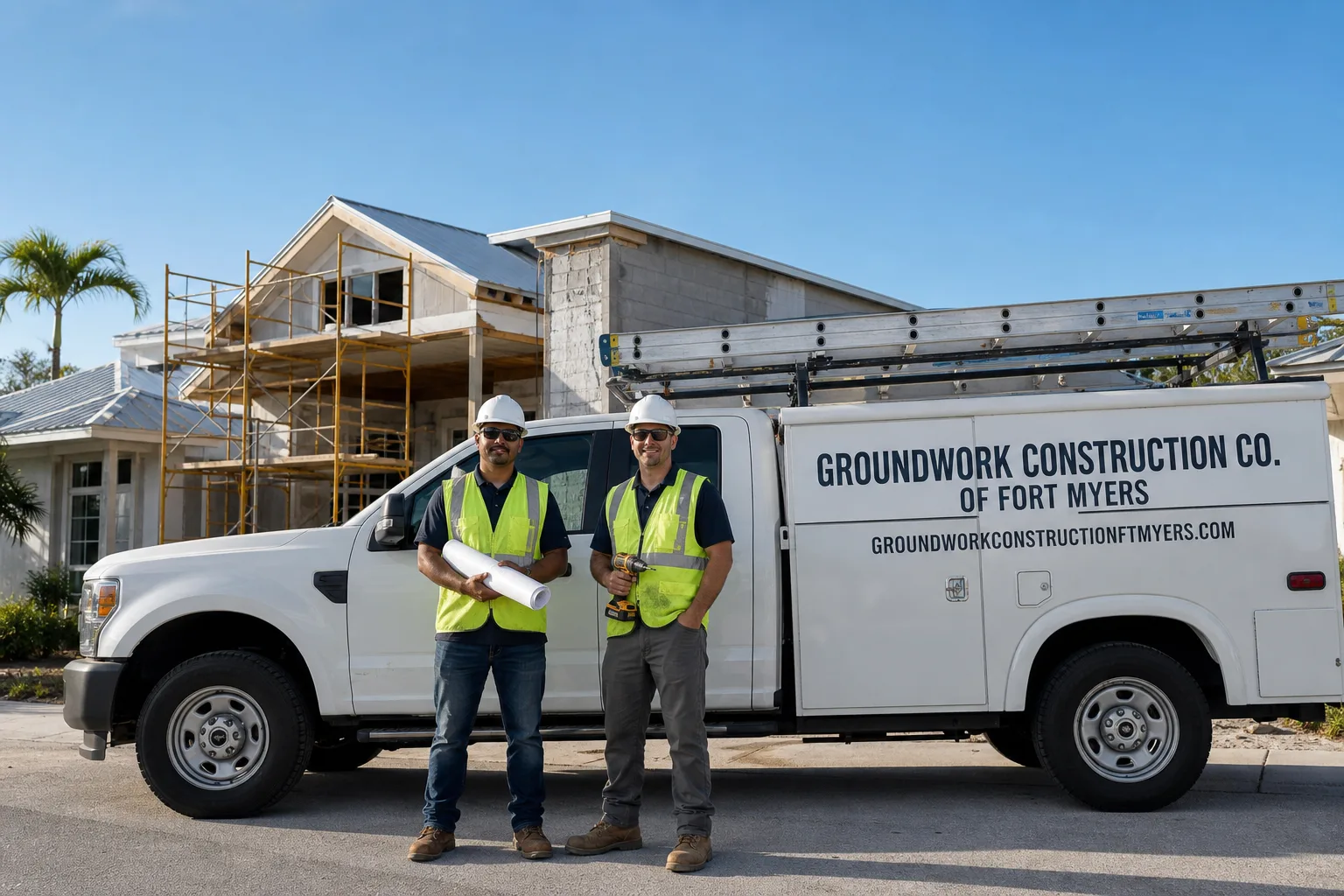
Written by Derek Hollenbeck, Owner at Groundwork Construction Co., serving Nocatee through our Fort Myers office.