
What Glass Railing Systems Actually Cost and Take to Build in Punta Rassa, FL
Glass railing systems in Punta Rassa run from $350 to $650 per linear foot installed, with most full-deck or balcony projects in this community landing between $9,000 and $22,000. A typical job takes two to three site visits across seven to ten business days, not a single afternoon. The biggest variables are total linear footage, whether the base mounts go into a concrete substructure or a wood-framed deck, and what Lee County’s VE-zone anchoring requirements demand during plan review. Call (844) 638-7249 for a written, line-item estimate that accounts for this specific coastline.
How We Build a Glass Railing System on a Punta Rassa Property
Every glass railing job around here follows the same disciplined sequence. The salt-spray air and elevated VE-zone construction we see daily in Punta Rassa, FL don’t allow shortcuts, so we work from a five-stage process that keeps the structural connections corrosion-free and the inspection trail clean.
Stage one is the site measure and anchor substrate check. Before we order a single panel, we walk the exact footprint with a laser and a handheld rotary hammer. On a Punta Rassa condo balcony with a concrete slab, we’re checking thickness, PSI, and edge distance to confirm a proper embedment for stainless wedge anchors. On a wood-framed elevated deck behind a waterfront home, we’re opening a small access point to inspect the rim joist and verify it’s hurricane-strapped to the piling system, because a glass railing acts like a sail in a Cat 4 wind field and the entire load path has to be engineered back to the pile caps. This visit runs about 90 minutes, and it’s where we flag any core-drilling access issues or spalled concrete that needs a structural repair before we mount anything.
Stage two is the permit package and product order. For glass railings in Punta Rassa, Lee County wants a stamped detail showing the anchorage method, the glass make-up (tempered, laminated, or both), and the top-rail connection. We pull that submittal together from the manufacturer’s Florida Product Approval documentation and submit it alongside the site-specific anchor schedule. Product order goes in the same day because lead times on ½-inch tempered-and-laminated glass panels with polished edges and drilled point-fittings can stretch three to four weeks depending on the hardware finish. This is the decision window where you lock in the glass tint, the handrail profile, and whether the base shoes are surface-mounted or core-drilled into the slab.
Stage three is base shoe and post installation. Once product hits our warehouse, we schedule two days to set every mounting point. For a surface-mount system on a concrete deck, that means layout, drilling, epoxy injection, and torqueing down the stainless base shoes to a calibrated spec that will not crack the glass when it’s set. For a core-drilled fascia-mount system on a raised deck edge, it means sleeving the holes with a plastic isolator bushing to separate the stainless post from the treated lumber and prevent galvanic corrosion in the constant salt air. By the end of the second day, every anchor gets a pull-test with a calibrated gauge, logged, and photographed. No glass goes in until every base passes.
Stage four is glass panel set and alignment. We bring a three-man crew for the panel set. These panels weigh enough that wind off San Carlos Bay becomes a real handling hazard, so we schedule this for a morning with a forecast under twelve knots. Each panel gets lowered into the base shoes on silicone setting blocks, shimmed to a consistent 1/16-inch reveal, and locked down with the pressure-plate cap or the point-fixed standoff clamps. We work sequentially around the perimeter, adjusting level and plumb as we go. A full Punta Rassa wraparound deck with forty linear feet takes a single long day to set and align.
Stage five is final tightening, silicone jointing, and the close-out inspection. We return for a half-day visit after the panels have had one thermal cycle to settle. Our lead installer walks every anchor bolt with a torque wrench, runs a consistent bead of marine-grade structural silicone along the base shoe channel, and applies a corrosion-inhibitor compound to any exposed stainless fastener threads. The county inspector follows us, checks the anchorage against the approved detail, and signs off. That same afternoon we send you the final permit card, the manufacturer care sheet for cleaning salt residue off the glass without scratching it, and the 730-Day Done Right Promise in writing.
Throughout the job, a live person answers when you call, 24/7, because questions don’t only come up during business hours on a construction project. Our technicians are background-checked, uniformed, and trained specifically on the coastal anchoring requirements that Punta Rassa demands.
The Glass and Hardware Options You Choose Between
Not every glass railing system holds up the same way a hundred yards from the Caloosahatchee. The choices below are the ones we walk homeowners through on site, with the real trade-offs spelled out.
- Monolithic tempered glass versus laminated-interlayer glass. Tempered alone meets code and costs less, around $350-$440 per foot. Laminated glass sandwiches a PVB or ionoplast interlayer between two tempered panes and stays intact even if it cracks, which matters when a deck chair gets airborne in a storm. It runs $480-$610 per foot in this market. For any Punta Rassa deck facing west into San Carlos Bay, we recommend laminated, period.
- Frameless base-shoe versus standoff-clamp mounting. A continuous base shoe gives you a clean, uninterrupted glass wall with no visible hardware except the top rail. Standoff clamps (often called spider fittings) bolt through drilled holes in the glass corners and create a more industrial, open look. Standoff systems are faster to replace a single damaged panel, but they expose more stainless hardware to salt pitting over time.
- Aluminum handrail cap versus full stainless top rail. An aluminum cap rail clips onto the glass edge, costs less, and comes powder-coated in a range of colors. A continuous stainless steel top rail needs to be spliced and welded on site, costs more, but acts as a structural chord that stiffens the entire railing run. In a VE-zone where wind-driven salt fog is relentless, the stainless top rail is the lower-maintenance long play.
- Surface-mount versus fascia-mount versus core-drilled posts. Surface-mount base shoes sit on top of the finished deck. Fascia-mount posts anchor into the vertical face of the deck edge, preserving every inch of walking space on a narrow condo balcony. Core-drilled posts go two to three inches into the concrete slab for a completely hidden connection detail. Core-drilling adds cost and requires a thicker minimum slab - often not an option on post-Ian elevated decks where the structural slab was poured at exactly the minimum thickness Lee County approved.
We spec hardware from brands whose marine-grade 316 stainless components we trust, including ActiveYards and Unilock railing accessories where the design calls for a particular profile. Every fastener, every isolator bushing, and every setting block gets selected for salt-spray resistance before we write the order.
What Glass Railing Systems Cost in Punta Rassa, FL
As noted above, plan on $350-$650 per linear foot fully installed, with most whole-deck projects in Punta Rassa falling between $9,000 and $22,000. Four factors push the number toward the high end.
Linear footage is the raw multiplier - a forty-foot wraparound balcony costs materially more than a twelve-foot straight run, even though the per-foot unit rate drops slightly with volume. The anchoring substrate drives the labor: coring and epoxying into reinforced concrete takes more time and tooling than lagging into a wood deck that’s already been exposed and prepped. Glass make-up is the single biggest material swing - moving from ½-inch tempered to ½-inch laminated with a custom low-iron tint for color clarity adds roughly $110-$150 per foot. And the existing condition of the deck edge matters: if we find spalled concrete from years of salt exposure during the site check, that repair has to happen before any railing anchor goes in, and it’s often outside the railing scope itself.
Our written estimate includes the full material takeoff with manufacturer and glass spec noted, the anchor schedule, the permit submittal package, all labor, and the final county inspection close-out. It does not include structural deck repairs we cannot see until the anchor-test phase, though we photograph and price those as a separate line item with photos attached so you’re never guessing. It’s upfront pricing with no surprises - the number you see is the number you pay unless you change the scope. We also offer 0% financing for 18 months and $1,000 off projects over $10,000, which brings most full-deck glass railing jobs in Punta Rassa under the threshold for that credit - just as we do for Punta Rassa Kitchen Design & Layout projects.
What Punta Rassa Homes Specifically Do to This Job
Punta Rassa sits at the exact point where Hurricane Ian’s catastrophic storm surge funneled into the Caloosahatchee estuary in September 2022, which is why homeowners here also trust us for our Metal Roofing service in Punta Rassa. Virtually every structure here was either destroyed or received a substantially damaged determination from Lee County, triggering mandatory rebuilds to current FEMA VE-zone base flood elevations that are often three to five feet higher than pre-Ian footprints. For glass railing work, that fact changes everything. We aren’t bolting glass to a standard deck - we’re bolting it to a newly elevated concrete slab on pilings or stem walls, with an anchor embedment depth that the county plan reviewer scrutinizes. The railing system itself has to carry a Florida Product Approval for the specific anchorage detail and wind load, and the inspector will ask to see the pull-test logs.
The narrow peninsula geography also creates a near-constant salt-spray environment. Standard zinc-plated hardware that would last thirty years inland in Fort Myers begins to show rust spots within eighteen months here. We use only 316 marine-grade stainless fasteners and silicone isolator pads that separate dissimilar metals, and we recommend an annual freshwater rinse of the entire glass-and-hardware assembly to knock back salt accumulation before it etches the glass or pits the stainless. This was true before Ian, and it’s even more critical now with so many rebuilt homes sitting on exposed, elevated platforms that catch the full brunt of the west wind off San Carlos Bay.
Because the post-Ian rebuild here is not routine remodeling but complete coastal reconstruction, we often coordinate the railing installation with the marine contractor handling the seawall and dock interface, as well as with other trades working on the driveway pavers and fencing that are part of a full Punta Rassa property rebuild. The permitting coordination with the South Florida Water Management District - triggered whenever work is within a certain setback of the bulkhead - adds a layer of paperwork that is uncommon even a few miles inland. Our team has been navigating that process alongside the broader Windows & Doors in Punta Rassa work that often runs concurrently on these rebuilds, and we keep the permit timeline tight because we’ve done it before.
Serving Punta Rassa, FL - Our Local Coverage Area
We’re based in the Punta Rassa area and know this community well. Use the map below to see our service coverage - if you’re nearby, we can almost certainly help.
Frequently Asked - Glass Railing Systems in Punta Rassa
Yes, Lee County requires a building permit for any glass railing system that serves as a fall-protection guardrail. The submittal must include the manufacturer’s Florida Product Approval documentation, a site-specific anchor schedule, and a wind-load calculation that accounts for the VE-zone exposure. We prepare and submit the entire package as part of the job, and the final inspection is included in our scope. Skipping the permit is not an option on a rebuilt post-Ian structure that already has a heightened county file.
From the day of the site measure to the day the county inspector signs off, plan on four to six weeks, with about seven to ten business days of active on-site work spread across two to three visits. The longest stretch is the product lead time - tempered-and-laminated glass panels with custom hole-drilling take three to four weeks to fabricate and ship to our Fort Myers warehouse. The anchor and panel-set days go quickly once the glass is on hand.
Condo balconies typically mount to a concrete slab with a waterproofing membrane already in place, so we use a surface-mount base shoe with a continuous silicone seal that doesn’t puncture the membrane. Single-family decks - especially the new elevated ones on pilings - more often use a fascia-mount or core-drilled post detail because the deck edge is a structural concrete beam with plenty of thickness. The engineering submittal changes, the anchoring method changes, and the inspection path is slightly different because condo work sometimes triggers an additional engineering review from the association’s reserve-study consultant.
Not if the right materials go in from day one. We use 316 marine-grade stainless steel for every fastener, base shoe, and standoff clamp, plus silicone isolator pads that keep the stainless from touching any aluminum or treated lumber directly. The glass itself is tempered and, in our standard Punta Rassa spec, laminated with an interlayer that won’t delaminate in heat and humidity. What you do at home matters too: a quick freshwater rinse of the glass and hardware once a month keeps salt accumulation from pitting the stainless finish over the long term.
We do this all the time in Punta Rassa on post-Ian rebuilds. We sequence the railing work for the window after the structural slab is poured and cured but before the final stucco and paint are done, so the base shoes can be set while the deck is still fully accessible. When the project also includes Paver Driveways in Punta Rassa or a new Fence Repair in Punta Rassa, we coordinate our crews so the heavy equipment traffic doesn’t cross a finished glass railing run. If you’re working with our Windows & Doors team on the same rebuild, we can tie the railing anchor inspection to the same day the impact window rough openings get their frame inspection, cutting one full county visit out of the schedule.
Get a Free, Written Glass Railing Estimate in Punta Rassa, FL
Every glass railing estimate we write accounts for your exact deck configuration, the anchoring substrate we verify on site, and the VE-zone requirements Lee County will enforce. There’s no generic per-foot number and no change-order surprise after the first anchor goes in. Call (844) 638-7249 to schedule a free on-site walkthrough with a technician who knows Punta Rassa’s coastal reconstruction requirements, whether it’s for glass railings or a Punta Rassa New Detached ADU. A live person picks up, day or night, and we typically have someone at your property within a few days to take measurements and talk through the glass and hardware choices that make sense for your view.
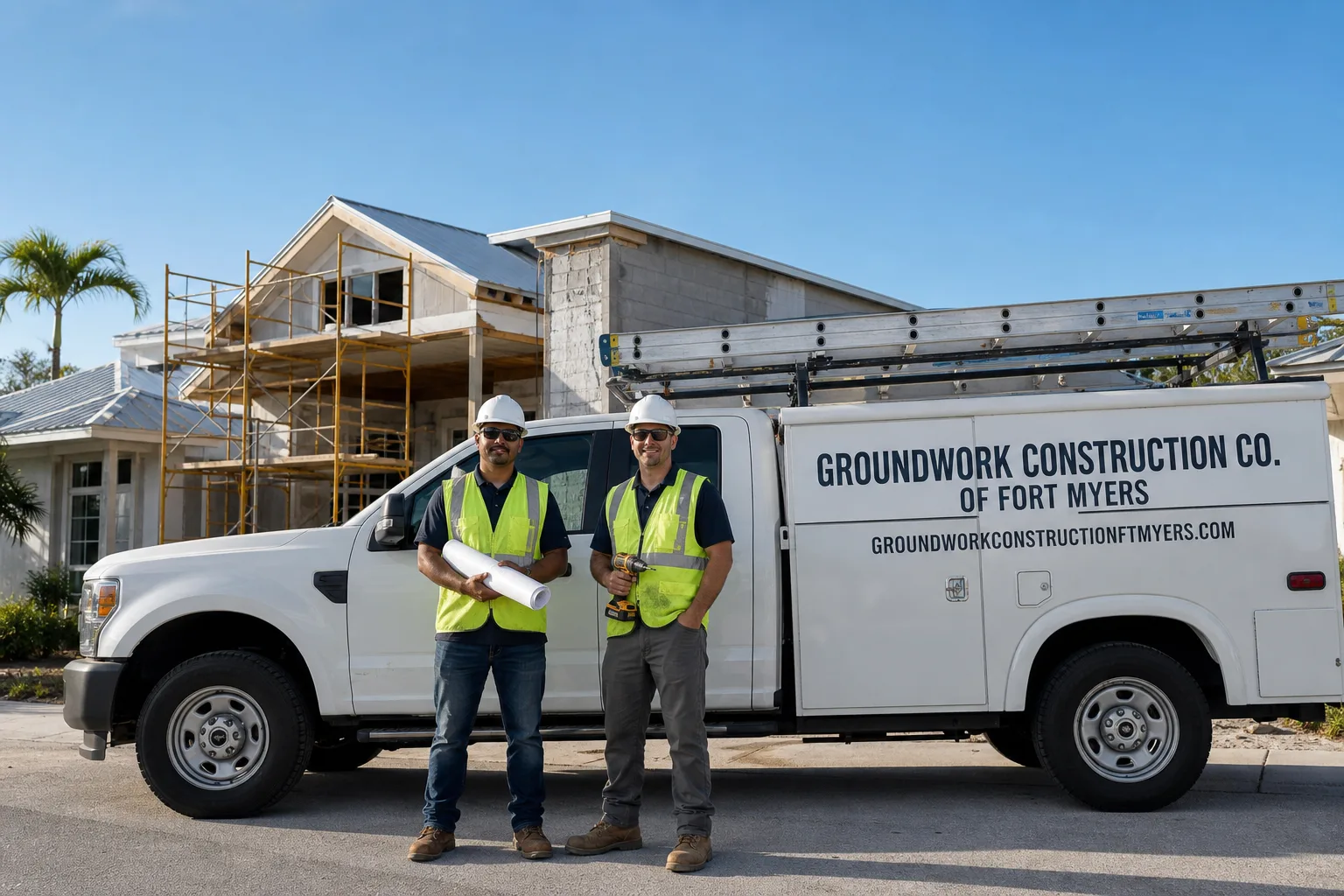
Written by Derek Hollenbeck, Owner at Groundwork Construction Co., serving Punta Rassa homeowners with glass railing systems built for the Florida coast.