
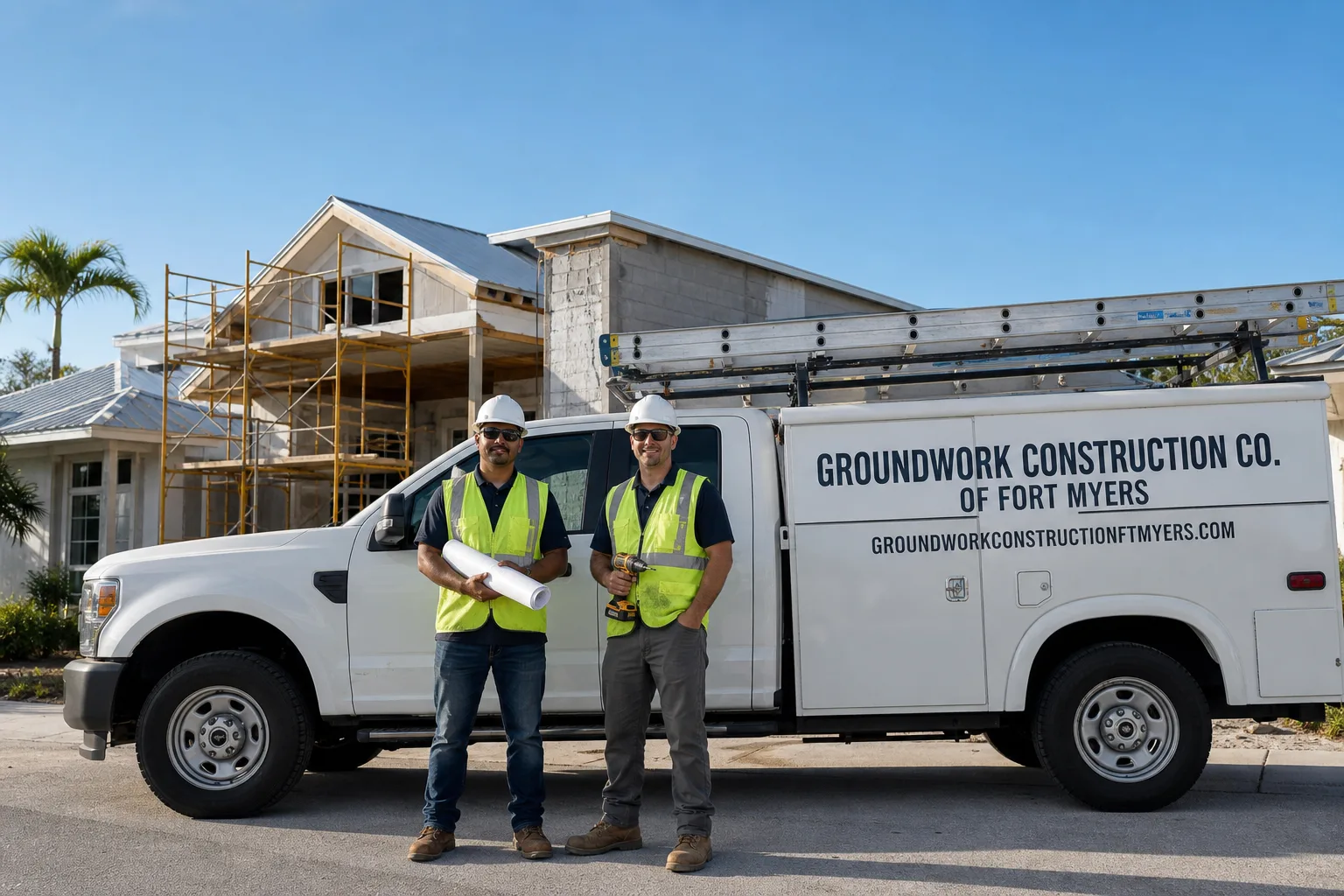
What a Junior ADU & Interior Conversion Actually Costs and Takes in Fort Myers Shores
A junior ADU and interior conversion in Fort Myers Shores typically runs $45,000 to $130,000, with most projects finishing in 10 to 16 weeks from the first hammer swing to final inspection. That range covers converting an existing garage, basement, or underused interior space into a fully self-contained living unit with its own kitchenette, bath, sleeping area, and separate entrance. The number moves most based on whether you’re working inside an already-finished footprint or building out from scratch, and on what Lee County’s post-Ian floodplain rules require of your specific lot. Call (844) 638-7249 for a free project estimate that accounts for your home’s elevation certificate and FEMA zone before you commit to a dollar.
How We Build a Junior ADU Inside an Existing Fort Myers Shores Home
The process follows a tight sequence, and knowing what happens when keeps surprises off the table. We’ve refined this over hundreds of projects across Lee County, and the stages rarely shift order, even when the scope changes. Here’s the real day-by-day breakdown, not a brochure version.
Stage 1: Site Walk and Elevation Check (Days 1-3). This is the step that separates a Fort Myers Shores project from the same job in Fort Myers. We pull your property’s elevation certificate and FEMA flood zone designation before we draw a single line. If your home sits at or below base flood elevation and the conversion triggers Lee County’s 50% substantial-improvement rule, the scope has to include foundation elevation or floodproofing measures. You’ll decide here whether the ADU stays at grade with flood vents and moisture-rated materials, or whether we engineer a stem-wall lift to get finished floor above the required height. The cost difference between those two paths is often $20,000 to $40,000, so this is the decision that sets the budget.
Stage 2: Design, Engineering, and Permitting (Weeks 1-4). We draw the floor plan to capture your square footage, egress windows, plumbing rough-in locations, and electrical subpanel requirements. A Florida-licensed engineer stamps the wind-load calculations for any new window or door openings, which Fort Myers Shores homes almost always need because existing 1960s-to-1980s block walls weren’t framed for today’s impact-rated openings. You’ll choose your kitchenette layout, bath fixture locations, and door swing direction during this stage. We submit the full package to Lee County Building & Permitting and typically see plan review turnaround in 2 to 3 weeks, though post-Ian review volume can push that closer to 4.
Stage 3: Interior Demolition and Rough-In (Weeks 5-7). We pull non-load-bearing walls, strip finishes to studs, and cut openings for the new entrance door and egress window. Electricians run a dedicated subpanel and circuits for the ADU’s kitchenette appliances, mini-split HVAC, and bath fan. Plumbers set the drain lines, supply lines, and vent stack for the bathroom and kitchenette sink. If you’re in the Orange River floodplain, this is when we also install flood vents in foundation walls and switch all subfloor and bottom-plate lumber to pressure-treated - a line item that runs $1,500 to $3,500 depending on linear footage but is non-negotiable for FEMA compliance here.
Stage 4: Dry-In, Insulation, and Finish Work (Weeks 8-12). We hang and finish drywall, spray closed-cell foam in exterior walls for both insulation and moisture resistance, and install the impact-rated entry door and window. The kitchenette gets its cabinets, countertop, sink, and appliances. The bathroom receives its vanity, toilet, shower pan or tub, and tile surround. Flooring goes in last - we typically recommend luxury vinyl plank over concrete slab for Fort Myers Shores ground-floor ADUs because it handles the occasional damp floor better than engineered wood or laminate. You’ll walk the space with our project lead at week 11 for a punch list before we call the final inspection.
Stage 5: Final Inspection and Sign-Off (Weeks 13-16). Lee County inspects electrical, plumbing, mechanical, and structural work, plus floodplain compliance if your ADU sits in an AE zone. We’ve been through enough Fort Myers Shores inspections to know exactly what the county flags: missing flood vent documentation, wind-load stickers not visible on windows, and GFCI placement in the kitchenette. Any correction gets handled within the week, and you’re handed a signed-off, permitted living unit backed by our 730-Day Done Right Promise.
The Options You’ll Choose Between for a Junior ADU
Every choice in a junior ADU build comes down to three things: how you’ll use the space, how long you’ll own the home, and what the FEMA rules say you must do. These are the actual decisions our Fort Myers Shores homeowners face, with no sugar-coating on the trade-offs.
- Kitchenette vs. full kitchen. A junior ADU legally requires only a kitchenette - sink, small refrigerator, microwave or cooktop, and counter space. Stepping up to a full kitchen with a range, dishwasher, and ventilation hood adds $8,000 to $15,000 and triggers a mechanical permit for the exhaust run. If you’re renting the unit long-term, full kitchen rents faster. If it’s for an aging parent who won’t cook much, the kitchenette keeps the budget lean.
- Impact-rated windows and doors vs. standard with shutters. Lee County code allows either path, but impact-rated units eliminate the shutter dance before every storm warning. For a ground-level ADU entry door, an impact-rated unit from a brand like Andersen runs $1,800 to $3,500 installed. Shutters cost less upfront at $400 to $900 per opening, but they’re a manual chore every hurricane season - and in Fort Myers Shores, where the Orange River rises fast, you don’t want to be outside fumbling with shutter pins when water’s already in the yard.
- Mini-split HVAC vs. tying into the main system. A dedicated ductless mini-split runs $3,500 to $6,000 and gives the ADU its own thermostat and independent efficiency. Tapping into your existing central system saves the upfront equipment cost but often requires a larger air handler and duct modifications that eat most of the savings - and you lose the ability to control the ADU temperature separately. For a rental unit, the mini-split wins every time.
- Bathroom: shower only vs. tub-shower combo. A walk-in shower with a low-threshold pan and grab-bar blocking is the smarter long-term choice if the ADU will ever house an older family member. A tub-shower combo costs about $1,200 more in materials and tile labor but limits accessibility. We see Fort Myers Shores homeowners lean toward the shower-only layout for exactly this reason - the ADU often starts as a guest suite and becomes a parent-in-law arrangement within a few years.
- Flooring: luxury vinyl plank vs. tile. LVP runs $4 to $8 per square foot installed and handles humidity and occasional minor water intrusion without warping. Tile costs $8 to $15 per square foot and is impervious to water, but it’s cold underfoot and unforgiving if someone falls. On a Fort Myers Shores slab at or near grade, LVP with a vapor-barrier underlayment is our default recommendation - it’s what we’d put in our own homes here.
What Junior ADU & Interior Conversion Costs in Fort Myers Shores, FL
A junior ADU and interior conversion in Fort Myers Shores lands between $45,000 and $130,000. The bottom of that range assumes you’re converting an existing finished room or garage with minimal structural work, no plumbing relocation, and a kitchenette rather than a full kitchen. The top end reflects a full build-out with foundation lift, impact-rated openings, separate HVAC, and high-end finishes.
Here’s what moves the number. First, square footage: a 400-square-foot ADU costs roughly half what an 800-square-foot unit costs, but the per-square-foot price drops as you get larger because the kitchenette and bath are fixed-cost chunks. Second, existing condition: a garage already under roof with a slab costs far less to convert than carving out a portion of the main house that requires relocating load-bearing walls. Third, plumbing location: if your existing drain stack and water lines are on the opposite side of the house from where the ADU bath needs to tie in, expect $4,000 to $9,000 in additional rough-in cost to trench and run lines. Fourth, floodplain compliance: if your elevation certificate shows finished floor below base flood elevation, the required floodproofing or elevation work adds $20,000 to $40,000 - and in Fort Myers Shores, this is the variable that catches people most off guard. Fifth, finish level: builder-grade cabinets, laminate counters, and a fiberglass shower pan keep costs low; custom cabinetry, quartz counters, and a tiled walk-in shower with glass enclosure push the number toward the high end.
Every estimate we write in Fort Myers Shores includes line-item pricing for materials, labor, permits, and the engineering stamp. What it does not include - and we flag this on page one - is change-order work discovered behind walls: termite-damaged studs, corroded cast-iron drain pipes in a 1970s home, or electrical panels that don’t meet current code for the additional load. We photograph everything during rough-in so you see exactly what we found before we ask for a dollar more. That’s the upfront pricing commitment we live by.
What Fort Myers Shores Homes Specifically Do to This Job
Fort Myers Shores sits on the Orange River floodplain, and that geography changes the junior ADU conversation completely. Hurricane Ian flooded this community via river overflow in 2022, not coastal surge, and the aftermath rewrote the construction rulebook here. Lee County inspectors now enforce the 50% substantial-improvement rule aggressively: if the cost of your ADU conversion plus any other renovations done in the past five years exceeds 50% of the structure’s pre-damage market value, the entire building must be brought into compliance with current FEMA AE flood zone elevation and wind-mitigation codes. We’ve seen a homeowner on Nuna Avenue budget for a simple garage-to-ADU conversion, only to hit that threshold and suddenly owe a full stem-wall lift - a $35,000 line item they hadn’t planned for. Contractors who work mostly in higher-ground parts of Fort Myers or Cape Coral often miss this trigger on their first Shores job. We don’t, because we pull the elevation certificate and run the 50% calculation before we quote the work.
The housing stock here compounds the challenge. Most Fort Myers Shores homes are concrete block or wood-frame builds from the 1960s through the early 1980s, originally constructed at or below the base flood elevation that existed at the time. That means the slab your ADU will sit on was likely poured before modern vapor-barrier standards, and the existing electrical panel in a 1972 home typically doesn’t have the spare amperage for a separate living unit. We routinely budget for a subpanel upgrade and whole-home surge protection on these projects - it’s not a nice-to-have, it’s what the county and common sense both require. The Orange River corridor also creates localized flood risk during non-hurricane rain events; we’ve been on sites where a week of afternoon thunderstorms raised water into crawlspaces and yards. That’s why we spec pressure-treated bottom plates, flood vents, and moisture-resistant sheathing on every ground-level ADU in Fort Myers Shores, regardless of whether the FEMA zone letter technically mandates it.
For homeowners considering this as part of a larger property transformation, our Home Additions & ADU in Fort Myers Shores work often ties the ADU into a broader whole-house renovation. Many clients also pair the interior conversion with Kitchen Design & Layout in Fort Myers Shores in the main house while we’re already on site, or use the project as a chance to refresh a guest bath through our Small & Partial Kitchen Remodels in Fort Myers Shores. Our Home Additions & ADU team handles everything from a single-room conversion to a full detached unit, and because we’ve been working across Fort Myers Shores since the post-Ian rebuild began, we know the inspection office, the floodplain manager, and the specific code interpretations this community demands.
Serving Fort Myers Shores, FL - Our Local Coverage Area
We’re based in the Fort Myers Shores area and know this community well. Use the map below to see our service coverage - if you’re nearby, we can almost certainly help.
Frequently Asked Questions About Junior ADU & Interior Conversion in Fort Myers Shores
Plan on 10 to 16 weeks from demolition to final inspection. The biggest variable is Lee County’s permitting timeline: plan review typically takes 2 to 3 weeks, but post-Ian workload can push that to 4. If floodplain compliance triggers engineered foundation work, add another 2 to 3 weeks for the concrete pour, cure time, and additional inspection. We’ve completed straightforward interior conversions in 9 weeks when the permitting office moved fast, but 12 to 14 weeks is the realistic center. For a firm timeline on your specific property, call (844) 638-7249 and we’ll walk the site this week.
Yes, and it’s not optional. Any conversion that adds a separate living unit - even one inside your existing footprint - requires a building permit, electrical permit, plumbing permit, and mechanical permit if you’re adding HVAC. Lee County also requires a zoning review to confirm the ADU meets lot-coverage and setback rules for your specific Fort Myers Shores parcel. We pull every permit under our license and our name, and we don’t start work until the permit card is posted. Skipping permits on an ADU here isn’t a small risk: it voids your homeowners insurance on the converted space and becomes a disclosure nightmare when you sell.
Sometimes, yes - and that’s the least expensive path. If you have a finished bonus room, den, or oversized laundry room with an adjacent bathroom, we can often add a kitchenette and a locking entrance door without relocating a single drain line. The bathroom already shares a wet wall with the new kitchenette sink, so plumbing stays put. This keeps the cost in the $45,000 to $60,000 range. But if your ideal ADU location is on the opposite side of the house from existing plumbing, or if you need to cut a new exterior door where no opening exists, expect the number to climb. Call (844) 638-7249 and we’ll tell you within 20 minutes on site which scenario you’re in.
Inside an existing conditioned space, you’re looking at roughly $110 to $165 per square foot for a permitted, finished unit with a kitchenette and bath. Converting an unconditioned garage pushes that to $140 to $225 per square foot because you’re adding insulation, drywall, HVAC, and potentially floodproofing. A detached new-construction ADU is a different animal entirely and runs closer to $250 to $350 per square foot. The square footage itself matters less than the condition of the space you’re starting with - that’s why we quote only after a site walk, never over the phone from square-footage alone.
Every junior ADU and interior conversion we build is covered by our 730-Day Done Right Promise: if it’s not done right, we make it right for two full years from the day you sign off. That’s one of the longest workmanship guarantees you’ll find on a residential ADU in Lee County. Manufacturer warranties on the materials - windows, doors, appliances, flooring, roofing if we touch it - run separately and typically range from 10 years to lifetime, depending on the brand. We walk you through what’s covered under each during the design stage so there’s no fine-print confusion later.
Get a Free Estimate for Your Fort Myers Shores Junior ADU
If you’re considering a junior ADU and interior conversion in Fort Myers Shores, the next step is a no-pressure site visit. We’ll pull your elevation certificate, measure the space, check your existing plumbing and electrical for ADU feasibility, and hand you a written, line-item estimate - usually within 3 business days. No change-order games, no vague allowances. Call (844) 638-7249 to schedule your free project estimate and design consult. A live person answers, day or night.
Written by Derek Hollenbeck, Owner at Groundwork Construction Co., serving Fort Myers Shores with permitted, floodplain-smart ADU conversions.