
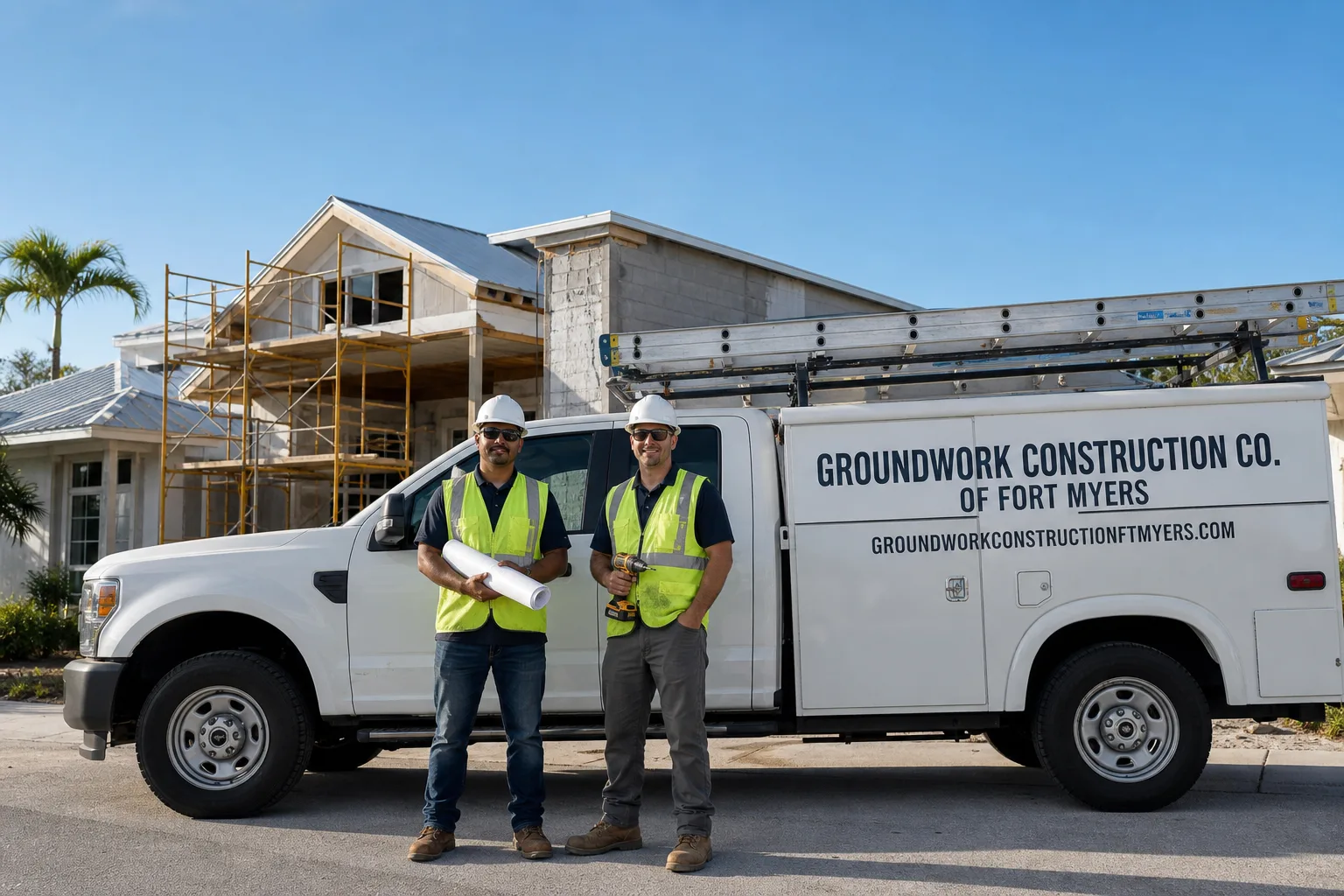
What a Metal Roof Job Actually Involves in Charlotte Harbor - and What It Costs
Metal roofing in Charlotte Harbor is a full tear-off and engineered re-cover, not an overlay. A standing-seam or metal-panel roof here takes our crew five to nine working days on a typical 2,200-square-foot ranch, start to finish. Pricing for a complete metal roof installation in this market lands between $15,000 and $40,000, with the real spread coming down to panel gauge, existing deck condition, and whether the house sits in a FEMA AE flood zone requiring elevation-triggered structural add-ons. Call (844) 638-7249 for an exact quote tied to your specific roof - estimates are free and we walk them through with you on-site, not over email.
How We Install a Metal Roof on a Charlotte Harbor Home
Every metal roof we put on in Charlotte Harbor follows a sequence that’s shaped as much by the building department as it is by the materials themselves. Here’s what the actual week looks like.
Stage one - permit and wind-load plan (before anything hits the truck). Charlotte County requires a sealed roof-covering permit with wind-load calculations specific to the address. Your home’s exposure category - B, C, or D depending on how close you are to the harbor’s open water - determines the uplift resistance the panel system must meet. We submit the product approval numbers (Miami-Dade or Florida Building Code) and the fastener schedule with the application. This takes three to five business days; old-timber decks in the Deep Creek corridor sometimes trigger a structural supplement if the original sheathing predates the county’s current nailing-pattern code.
Stage two - tear-off and deck inspection (day one or two). We strip the existing roof down to the sheathing. On a CBS-block Charlotte Harbor house from the 1960s or 1970s, this is where we often find 3/8-inch plywood with 30-year-old water staining at the soffit edges - common in homes that sat through decades of harbor-driven humidity before the Charley rebuilds. The county inspector comes out to check the bare deck; they will flag delaminated sheathing, missing H-clips, or any rot pocket within 12 inches of a rafter tail. If the deck fails, we replace the bad sheets that same day and call for the re-inspection. Figure one full day for tear-off, debris load-out, and passage of the nail-down inspection.
Stage three - underlayment and secondary water barrier (late day two through day three). Charlotte County requires a self-adhered high-temperature underlayment (think modified bitumen peel-and-stick) on the entire roof plane for a metal system - no 30-pound felt shortcuts allowed. We roll it flat, torch-seal the laps at eaves and valleys, and install the drip edge with a continuous corrosion-resistant cleat detail. If the home is inside one of the harbor’s AE flood zones, this is also when we confirm that the existing roof-to-wall connections - hurricane straps at every rafter - are intact and tight. We’ve seen homes on Bayshore Road where Charley’s wind exposed missing straps, and the current inspector won’t let metal go on top of that without a retrofit.
Stage four - panel layout and mechanical fastening (three to five working days). Metal panels or standing-seam sections go on in runs measured from ridge to eave with no mid-field splices - continuous lengths eliminate the lap-joint failure point that shows up in cheaper residential metal. Each panel locks to the next with a mechanically seamed clip system fastened at precise centers into the truss or rafter below, not just into the sheathing. Our crew works one roof slope at a time, flashing every penetration - plumbing vents, bath fans, range hoods - with custom-fabricated metal boots sized to the exact pipe diameter, sealed with a polyether lap sealant that moves with Charlotte Harbor’s 95-degree summer-to-winter thermal swing without cracking. Ridge caps and hip closures go on last, with vented profiles that allow the attic to breathe even under direct June sun.
Stage five - final inspection and close-out (day six through nine, depending on weather and the inspector’s schedule). The county sends the same inspector class who’s been doing this since the 2004 code overhaul. They walk the ridge line, check fastener patterns at the eave edges, and verify that the panel manufacturer’s installation instructions - a document they keep on file per Florida Building Code - match what we built. We don’t take final payment until that green tag is stapled to the permit card. You get the manufacturer’s material warranty paperwork, our 730-Day Done Right Promise in writing, and a storm-season punch list: torque-check the panel clips every three years, clear the gutter valleys before July, and don’t let sabal palm fronds sit on the roof surface - the tannins will etch the coating finish.
The Choices That Decide the Roof You Get
Not all metal roofing systems are the same product. Here are the three decisions that shape what gets ordered, what it costs, and how it performs on a Charlotte Harbor home.
- Panel profile: exposed-fastener versus standing-seam. Exposed-fastener panels (corrugated or 5V-crimp style) run toward the lower end of the price range - $15,000 to $22,000 on a typical ranch - but the screw gaskets are the roof’s weak link. They need re-torquing and gasket replacement every eight to twelve years in our salt-humid air. Standing-seam with concealed clips lands in the $28,000 to $40,000 range and eliminates the gasket-failure failure mode entirely. If the home is inside a half-mile of the harbor shoreline, we strongly recommend standing-seam - the spray zone accelerates gasket degradation faster than the manufacturer testing windows assume.
- Steel gauge: 24 versus 26. 24-gauge steel is the thicker option and what we spec on 90% of Charlotte Harbor metal roofs. It resists oil-canning - that wavy distortion you see on thinner panels under direct Florida sun - and adds decades to the service life. 26-gauge saves about $1,200 to $1,800 on material cost for a 2,200-square-foot roof but will show movement sooner, especially on south-facing slopes that bake all afternoon.
- Coating system: PVDF versus SMP. A PVDF (polyvinylidene fluoride) coating - the chemical family behind brand names like Kynar 500 - is the standard for color retention in coastal environments. It costs $4,000 to $6,000 more than an SMP (silicone-modified polyester) finish across a full roof but will not chalk or fade to a washed-out pastel within ten years the way SMP routinely does in direct salt exposure. On a $35,000 roof, that difference buys you a color that still matches the original swatch when the house is sold.
What Metal Roofing Costs in Charlotte Harbor, FL - and What Moves the Number
Metal roofing in Charlotte Harbor runs $15,000 to $40,000 for a complete tear-off-and-replace on a single-family home. The low end is a straight-gable roof with accessible pitch and an exposed-fastener panel system on a home outside the flood zone. The high end is a complex hip roof with standing-seam panels, custom flashing at three or more dormer intersections, and a full deck replacement underneath.
Five variables push a job toward one end of that range or the other:
- Roof complexity and square footage. A 1,400-square-foot ranch with two roof planes is a different labor equation than a 3,000-square-foot two-story with valleys, crickets, and a low-slope porch tie-in. More planes mean more trim, more flashing, and more days of crew time.
- Existing deck condition. If the sheathing is pre-1990 3/8-inch plywood with water damage at the eaves - common in Charlotte Harbor homes north of the 2004 rebuild demarcation - re-decking adds $2,800 to $5,500 depending on the square footage and whether we have to sister nailers into the rafter tails. This is not optional; the county won’t pass the deck inspection with compromised sheathing, and metal cannot be fastened to spongy substrate.
- Panel system and coating grade. As covered above, the jump from exposed-fastener SMP to standing-seam PVDF is the largest single line-item swing on the estimate.
- Permit and engineering scope. Homes within the AE flood zone that carry a post-Charley elevation requirement sometimes need a structural analysis confirming the roof’s dead load doesn’t exceed the foundation’s design capacity - roughly a $600 to $900 engineer letter, plus the permit fee adder. Straightforward re-roofs on standard lots typically clear permits for $350 to $500.
- Access and site logistics. Steep lots with no driveway-side clearance, homes with solar panels that need removal and reinstallation, or properties inside gated communities with limited delivery windows all add labor hours. A standard suburban lot in the Harbor Heights section is straightforward; a deep-water canal-front lot on the Peace River side with narrow side-yard access is not.
Every written estimate we provide in Charlotte Harbor includes the full material take-off, the permit fee, the tear-off and dumpster cost, the underlayment system, and labor for the roof itself. It does not include gutter replacement or soffit repair unless we explicitly note those line items during the walk-through - we won’t surprise you with a change order on day four. Call (844) 638-7249 to schedule your free on-site estimate. We come out, measure the roof, check the attic, and hand you a fixed-price quote the same visit.
What Charlotte Harbor Homes Specifically Do to a Metal Roof Job
Charlotte Harbor sits at near-ground-zero of Hurricane Charley’s 2004 Category 4 landfall, and that event rewrote the rulebook for every roof that goes on here. The building stock is split right down the middle: surviving CBS-block homes from the 1960s through early 1980s that lack modern hurricane straps and impact-rated openings, sitting right next to post-2004 rebuilds engineered to Charlotte County’s aggressively updated wind and flood standards. When we pull a permit for a metal roof on an older home along the Bayshore Road corridor or in the neighborhoods just east of the Tamiami Trail spur, the county will almost always flag the rafter-to-top-plate connections during the deck inspection. If those straps are missing or undersized, the job stops until they’re retrofitted - it’s a line item the inspector won’t skip, and crews who normally work in Lee or Sarasota counties are routinely caught off-guard by how hard Charlotte County enforces that one detail.
The harbor’s geography does the rest. Proximity to one of Florida’s largest tidal estuaries puts a large share of Charlotte Harbor parcels inside FEMA AE or VE flood zones. That doesn’t always change the roof itself, but it changes what happens beneath it: if the home has a post-Charley elevation certificate and the metal roof adds dead load beyond the original design, we may need an engineer’s letter confirming foundation adequacy before the permit clears. For homes within a half-mile of open water, we also spec stainless-steel or heavy-gauge galvanized fasteners as a matter of course - the salt-humid air corrodes standard exterior screws at roughly twice the rate inland installs see, and the panel manufacturer’s warranty often won’t hold without the corrosion-resistant hardware upgrade. Homeowners replacing windows or doors alongside the roof often look at our Impact Windows & Doors in Charlotte Harbor work to get the entire envelope rated in one permit cycle - it’s more efficient than phasing it out over multiple seasons.
Our roofing crew has been working on Charlotte Harbor homes long enough to know which blocks got hardest by Charley and which rebuilds were done to the letter of the 2005 Florida Building Code versus the cheaper minimums. That knowledge shows up in the estimate before the first fastener goes in - and it’s a big part of why a metal roof installed here lasts 40-plus years instead of 20. For the wider scope on any roofing project, see our Roofing in Charlotte Harbor page for the full picture.
Serving Charlotte Harbor, FL - Our Local Coverage Area
We’re based in the Charlotte Harbor area and know this community well. Use the map below to see our service coverage - if you’re nearby, we can almost certainly help.
Frequently Asked - Metal Roofing in Charlotte Harbor
Plan on five to nine working days from tear-off to final inspection for a standard single-family home. The permitting phase adds three to five business days before materials hit the truck. Weather delays, deck repairs, and the inspector’s schedule can push the calendar out - we build a one-week buffer into every Charlotte Harbor project timeline because summer-afternoon storms roll off the harbor with almost no warning, and nobody should be standing on a bare deck when lightning is moving in. We keep you updated daily so you know exactly where things stand. If your project is part of a full Roofing in Charlotte Harbor scope that includes the roof plus gutters or soffit, expect that one- or two-day extension at the tail end.
Yes. Charlotte County requires a sealed roof-covering permit with wind-load calculations for every metal roof installation, no exceptions. The permit triggers two inspections: the bare-deck check after tear-off and the final inspection after the panels are fastened. A homeowner attempting to install without a permit risks a stop-work order, a double permit fee penalty, and - far more importantly - an unpermitted roof that will get flagged during any future home sale or insurance inspection. Our permit runs are included in the estimate. Call (844) 638-7249 and we’ll explain what the county needs for your specific property.
A properly installed standing-seam metal roof with concealed clips and Miami-Dade product approval is one of the most wind-resistant roof systems available for Charlotte Harbor homes. The continuous panel runs, mechanical seam locking, and fastener-to-truss connection outperform shingle roofs in uplift tests by a wide margin. The weak point is never the metal itself - it’s the flashing at penetrations, the eave-edge detail, and whether the building’s roof-to-wall connections (hurricane straps) are intact underneath. That last part is why Charlotte County inspectors are so particular about the deck inspection. If the straps are right and the panel system is installed to the manufacturer’s wind-load specifications, a metal roof here holds up to what the harbor throws at it. Homeowners who also want to harden the openings often pair the roof with our Window Replacement in Charlotte Harbor service for a consistent wind-rated envelope.
The material warranty comes from the manufacturer - typically 30 to 40 years on the coating system and 50 years to lifetime on the steel substrate, depending on the brand and coating grade. Our workmanship is covered by the 730-Day Done Right Promise: if something isn’t right, we make it right, at no cost to you. That’s one of the longest workmanship guarantees in the residential roofing space, and it applies to every metal roof we install in Charlotte Harbor. Keep in mind that salt-spray-zone homes require the periodic maintenance we outline at close-out - power-washing the panels once a year and checking the flashings - to keep the coating warranty valid.
We can. Metal roofing comes in a broad range of profiles and colors, and we match the panel style to your home’s architecture - standing-seam in a dark bronze or slate for a coastal-elevated Key West style, 5V-crimp galvalume for a mid-century CBS ranch, or flat-panel hidden-fastener for a clean modern rebuild. We bring full-size color chips and panel samples to the estimate so you see the finish in your own daylight before committing. The goal is a roof that looks right on your street - not one that broadcasts “this was the cheapest option available.”
Get a Fixed-Price Metal Roofing Estimate in Charlotte Harbor
The best way to know what your roof will cost is to let us come out and measure it. We’ll walk the roof plane, check the attic framing, and hand you a written, line-item estimate the same visit - no email back-and-forth, no rough ballpark that changes later. For metal roofing in Charlotte Harbor, call (844) 638-7249 to schedule your free on-site estimate. We answer the phone with a live person, we show up on time, and the price we quote is the price you pay.
Written by Derek Hollenbeck, Owner at Groundwork Construction Co., providing metal roofing and full-scope construction services to Charlotte Harbor homeowners.