
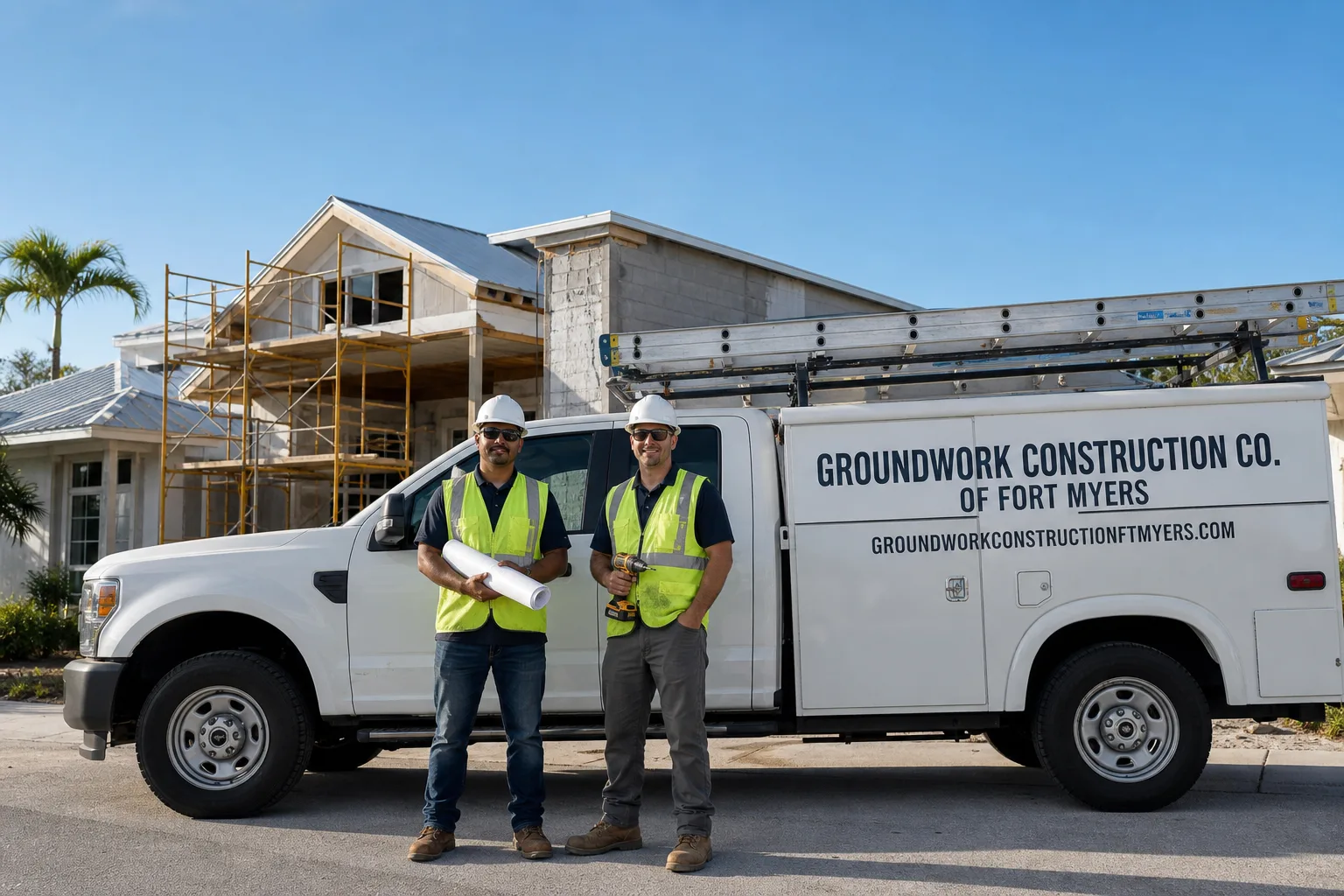
What Metal Roofing Costs and Takes in Cleveland, FL
A new metal roof in Cleveland typically runs $15,000 to $40,000 and takes our crew 3 to 7 working days from tear-off through final inspection. That’s the straight number, not a teaser. The spread depends on roof size, panel profile, whether the old roof comes off or gets overlaid, and how much fascia and soffit repair the subtropical humidity has handed us by the time we lift the shingles. Call (844) 638-7249 for a line-item quote at your home – estimates are free, and the number you see is the number you pay.
How we install a metal roof from start to finish
We’ve put enough metal on enough homes to know that a predictable process is what settles a homeowner’s nerves. Here’s the actual sequence, stage by stage, with the decisions you make at each point.
Stage 1: Measurements, material order, and permit pull (1 to 2 weeks before demo day). We measure every plane of the roof ourselves, calculate panel runs and trim lengths, and place the order with our metal supplier. The panels get cut to your roof’s exact dimensions at the manufacturer – no field-fabricated seams running ridge to eave. While material is in production, we submit the permit package to Pasco County. On a Cleveland property, that package often includes a sinkhole attestation if the original build predates the county’s karst mapping requirements, which most 1970s and 1980s CBS ranches do. The permit clock moves faster when that paperwork is in order on day one.
Stage 2: Tear-off and deck inspection (day 1). The existing roof comes off to the bare sheathing. This is where we find what the shingles were hiding: rotted plywood, corroded fasteners, truss uplift from decades of wet-dry cycling. We replace any compromised decking at a per-sheet rate you approve before we cut a single panel. In Cleveland, we expect decking work on roughly half the roofs we open – the afternoon thunderstorm cycle June through September keeps attic moisture levels high, and sheathing doesn’t dry out easily.
Stage 3: Underlayment, flashing, and tie-down hardware (day 2 to 3). A high-temperature peel-and-stick underlayment goes down over the whole deck, followed by new drip edge, valley metal, and pipe flashings. This is also when we install or upgrade hurricane tie-downs to meet Florida’s post-2001 uplift code. If your home still has toenailed truss connections from the original build, we add approved straps and clips. The Pasco County inspector won’t pass the rough-in without them, and we won’t let a roof leave the ground without the inspector signing off.
Stage 4: Panel and trim installation (day 3 to 6). The metal panels go up in sequence, locked together with concealed fasteners on standing seam profiles or exposed fasteners with neoprene washers on corrugated and ribbed panels. Ridge caps, gable trim, and vented closures follow. This is the stage where panel alignment matters visibly – we set the first course with a laser line because a quarter-inch drift at the eave becomes an inch and a half at the ridge, and the sun doesn’t forgive lazy layout work.
Stage 5: Final inspection and walk-through (day 6 or 7, plus county inspection scheduling). We clean the grounds with a magnetic roller, walk the roof with you or on your behalf, and schedule the Pasco County final inspection. Once the county signs the permit card, your 730-Day Done Right Promise starts. If anything isn’t right, we make it right – no expiration games, no fine print.
The options you’ll choose between
Metal roofing isn’t one product. You’re picking a panel profile, a gauge, and a fastener system, and each choice changes the price, the look, and the long-term maintenance profile. Here are the real trade-offs:
- Standing seam (concealed fasteners). The panels connect with a snap-lock or mechanically seamed joint that hides every screw. No exposed fasteners means no neoprene washer to degrade under Florida UV – this is the lowest-maintenance option and the one we recommend for Cleveland homes within a mile of the Gulf breeze where salt spray accelerates corrosion. The trade-off: it’s the higher end of the pricing spectrum because the panels are site-specific and the install is slower.
- Exposed-fastener panels (corrugated or ribbed). A proven profile, common on agricultural and workshop structures, now showing up on residential roofs where budget is the driver. The panels overlap and fasten through the face with painted screws and rubber washers. The honest trade-off: the washers will need replacement at some point over the next 15 to 20 years, sooner if the roof faces the coastal wind directly. The cost savings are real up front, but so is the maintenance clock.
- Gauge and finish. Most of our Cleveland installs use 24-gauge steel with a Kynar 500 PVDF coating in a light-reflective color. 26-gauge is available and costs less, but over a wide-open Florida roof deck, the thicker metal resists oil-canning (visible waviness between ribs) better in direct heat. We won’t spec anything thinner than 26-gauge for a residence – the metal has to hold its shape through a decade of thermal expansion cycles.
What metal roofing costs in Cleveland, FL
A metal roof on a typical Cleveland home lands between $15,000 and $40,000. The low end is a simple gable or hip roof under 2,000 square feet with exposed-fastener panels over a single layer of shingles left in place. The high end is a cut-up roof with multiple valleys, dormers, and steep pitches above 2,500 square feet, done in standing seam with full tear-off, decking replacement, and fascia rebuilds. Most of the jobs we quote sit in the $19,000 to $28,000 range.
What moves the number:
- Roof size and complexity. Simple rectangles install fast. Dormers, crickets, valleys, and mechanical penetrations add labor hours and trim pieces. A single skylight can add a full morning of flashing work.
- Tear-off versus overlay. Code allows one overlay in many cases, but pulling the old shingles lets us inspect the deck, and the county typically requires tie-down upgrades accessible only with the deck exposed. We price both paths and explain the permit implications of each.
- Decking condition. You pay per sheet for any sheathing that’s delaminated, rotted, or too brittle to hold a fastener. We photograph every sheet we replace and show you on-site before the underlayment goes down.
- Fascia, soffit, and gutter remediation. Decades of humidity cycling rots out the fascia board on older Cleveland CBS homes. We don’t attach new drip edge to compromised wood; we replace it. That work gets added to the estimate as a line item, not a surprise change order.
- Permit scope and sinkhole documentation. Pasco County permits for structural roof work sometimes require a sinkhole attestation or a reference to a prior geotechnical report. If your property hasn’t been assessed and the inspector flags it, the cost of a subsurface investigation becomes part of the project. We flag this possibility during the estimate so you’re never blindsided at the permit counter.
Every estimate we write is a fixed-price, line-item document. The number you approve is the number you pay, and nothing goes on the roof until you understand every line. Call (844) 638-7249 to schedule yours.
What Cleveland homes specifically do to a metal roof
The karst limestone under Cleveland doesn’t just matter for slabs – it affects roofs indirectly but meaningfully. When the ground shifts even a few millimeters over a subsurface void, door frames rack and truss connections torque. We step onto a lot of 1970s and 1980s CBS ranch roofs out here and find subtle ridgeline sagging that a shingle roof can mask for years. Metal is less forgiving. A standing seam panel will telegraph truss movement as visible distortions along the ridge, which is why we check the framing plane with a string line before ordering panels on every Cleveland home built before 1990. If the trusses have moved, we adjust blocking and fastener patterns to compensate – the metal gets installed to a true plane regardless of what the framing did below it.
The other Cleveland-specific factor is the corrosion clock. Homes south of County Road 476 and west toward the coastal edge catch a persistent salt-laced breeze that inland homes in Fort Myers don’t see. On those properties, we spec 24-gauge standing seam with stainless steel fasteners and trim clips as standard. It’s not an upsell; it’s what the environment demands. We’ve pulled exposed-fastener panels off Cleveland homes after twelve years and found rust scaling around every washer face. The right metal choice at installation makes that someone else’s problem forty years from now, not yours. If you’re also considering impact-rated openings – common on this side of the county since the post-Ian code updates – we often coordinate metal roofing with Impact Windows & Doors in Cleveland so the entire building envelope gets hardened in one sequence, not two separate mobilizations.
Our Roofing crew works Cleveland properties every week, from the older mobile home conversions along the back roads to the newer construction pushing west along the Suncoast Parkway corridor. When the job calls for a full Roofing in Cleveland scope beyond just the metal – like fascia, gutters, and ventilation upgrades – the same crew handles it without subcontracting. Some homeowners pair the roof with Window Replacement in Cleveland during the same project window, especially on homes where the original single-pane aluminum frames are losing their seal in the humidity. One mobilization, two major improvements, one team in uniform accountable for the whole thing.
Every metal roof we install in Cleveland comes with our 730-Day Done Right Promise, and every call to us is answered by a live person – not a voicemail box that hopes you’ll leave a message. That’s been our standard for over 42 years of serving local communities, and it doesn’t change when the permit process hits a snag or the weather delays a panel delivery. You get the truth, the timeline, and a fixed price in writing.
Serving Cleveland, FL - Our Local Coverage Area
We’re based in the Cleveland area and know this community well. Use the map below to see our service coverage - if you’re nearby, we can almost certainly help.
Frequently asked – Metal Roofing in Cleveland
A properly installed 24-gauge standing seam metal roof with a Kynar 500 finish will run 40 to 50 years in Cleveland’s subtropical environment before the coating shows meaningful fade or chalking. Exposed-fastener panels have a shorter useful life – expect 25 to 35 years before the fastener washers need systematic replacement, and budget for that maintenance at the 15-to-20-year mark on coastal-facing roof planes. The steel itself won’t rust through if the coating is intact and the fasteners are stainless, but the washer is the wear item. That’s why we push standing seam with concealed fasteners on any home within sight of salt water.
Yes. Every metal roof installation in Cleveland requires a Pasco County building permit, and the inspector will check for hurricane tie-down compliance under the Florida Building Code before signing the rough-in. The permit process often triggers a sinkhole documentation review on homes built before Pasco County’s current karst mapping standards went into effect. We handle the permit package from submittal to final sign-off, and we won’t start a single panel until the permit is posted.
Code allows one overlay in many cases, but we recommend full tear-off on Cleveland homes for two reasons. First, the deck needs to be inspected for rot and fastener hold – metal panels exert different uplift forces than shingles, and a fastener that’s biting into compromised plywood will pull out in a storm. Second, the Pasco County inspector typically requires hurricane tie-down upgrades that are accessible only from above with the deck exposed. We’ll price both paths on your estimate and explain the permit implications so you make an informed choice.
A metal roof over solid decking with underlayment and attic insulation is not meaningfully louder than asphalt shingles during rain. The old myth about metal roofs being noisy comes from agricultural pole barns with exposed purlins and no attic cavity. A residential metal roof in Cleveland is installed over your existing attic space and insulated ceiling, so the sound transmission is almost identical to what you hear now. If the attic is conditioned or you add spray foam insulation, it’s quieter than shingles.
The metal panel manufacturer provides a paint-and-substrate warranty (typically 30 to 40 years on Kynar 500 finishes), and our workmanship is covered by the 730-Day Done Right Promise. That means if anything we installed isn’t right within two full years of completion, we make it right at our cost. After that window, the manufacturer’s warranty continues to cover coating degradation and perforation according to their terms. We walk you through both documents at contract signing so there’s nothing to guess about later.
Get a fixed-price metal roofing estimate in Cleveland
If you’re pricing a metal roof in Cleveland, start with a real number on a written estimate, not a phone-quote range. Call (844) 638-7249 to schedule a free on-site estimate. We’ll measure the roof, discuss panel profiles and gauge options that fit your home and the coastal exposure, check the framing plane, and hand you a line-item price the same day. Live person answers, no voicemail, and the number on the page is the number you’ll pay.
Written by Derek Hollenbeck, Owner at Groundwork Construction Co., serving Cleveland and the surrounding communities.