
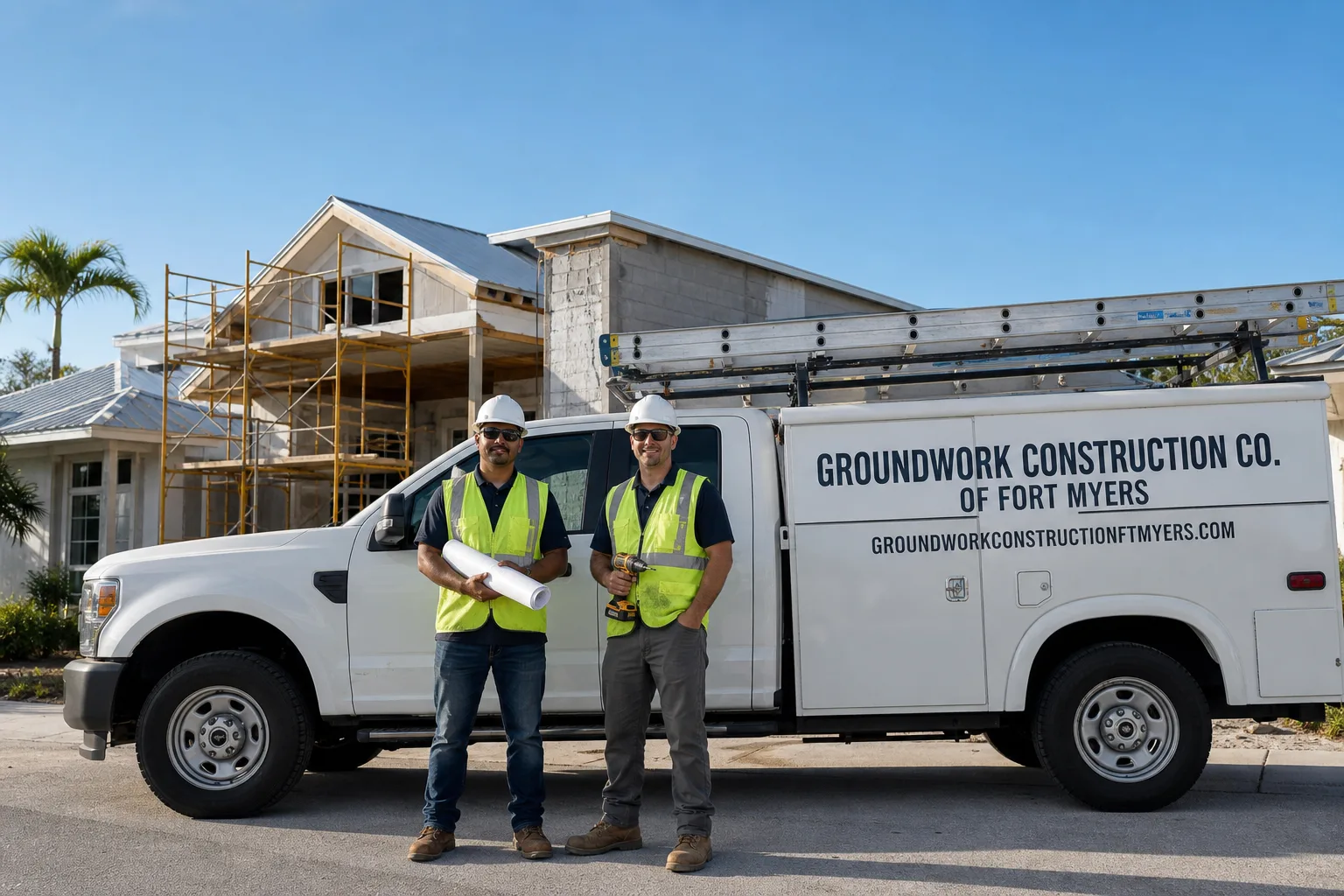
What a Metal Roof in Gateway Actually Costs, Takes, and Involves
Metal roofing in Gateway, FL runs from about $15,000 to $40,000 for a full installation on a standard single-family home, with most jobs landing between $21,000 and $32,000. The work typically takes 5 to 8 working days from tear-off to final inspection, depending on roof complexity, pitch, and whether we’re replacing rotted decking or adding secondary water barriers. Call (844) 638-7249 for a free on-site estimate with line-item pricing written in plain English.
If you live in one of Gateway’s CDD-governed villages, you already know the drill: nothing gets done to your exterior until the architectural review committee signs off. We handle that paperwork from day one so your investment doesn’t stall at the starting line. And with the insurance carriers across Lee County tightening wind-mitigation requirements post-Ian, this isn’t just a roof job. It’s a compliance play that keeps your policy intact.
How We Install a Metal Roof in Gateway - Stage by Stage
The real timeline isn’t a mystery if you’ve been through it once. Here’s what we walk every homeowner through before the first panel goes on.
Stage 1: Architectural Review and Permitting (1 to 3 weeks before materials hit the driveway). Gateway’s CDD structure means the community’s review committee sees your plans before Lee County does. We submit the material spec sheet, color sample, and panel profile to the ARC, then pull the county building permit and any required wind-load engineering letters. The ARC typically takes 10 to 14 days; we front-load this so it runs parallel to material ordering and doesn’t hold up the job.
Stage 2: Tear-Off and Deck Inspection (Day 1, sometimes bleeding into Day 2). The existing roof comes off to the bare decking. On Gateway homes built in the mid-90s to early 2000s, we regularly find two things: original 3/8-inch plywood decking that’s started to delaminate at the edges, and nail patterns that don’t meet current uplift codes. Our crew replaces any soft or delaminated sheathing as we go, re-nails every sheet of decking to the current code spacing, and then lays the high-temperature peel-and-stick underlayment that doubles as the secondary water barrier. This stage is where hidden costs surface, and why we write the decking replacement into the up-front estimate rather than treating it like a change order.
Stage 3: Underlayment, Flashing, and Ventilation (Day 2 or 3, typically 1 full day). With the deck dried in, we install all flashings - valley metal, pipe boots, wall step-flashing - and any ridge or soffit vent upgrades required to meet Lee County’s net-free-ventilation area minimums. For a metal roof specifically, we also lay down the counter-batten system, which creates an air gap between the underlayment and the metal panels. That gap is what keeps the attic cooler and prevents the trapped-moisture corrosion you see on direct-to-deck metal installations from 20 years ago.
Stage 4: Panel Installation (2 to 3 days for a typical Gateway ranch or two-story). The metal panels go on, screwed and clipped to the batten grid according to the manufacturer’s engineered wind-load schedule. The screw pattern matters - too few and you fail uplift testing, too many and you dimple the panel face and void the finish warranty. Our crew runs panels ridge-to-eave in single pieces whenever the roof geometry allows, reducing the number of end-lap joints that become potential leak paths. Ridge caps, hip caps, and gable trim go on last.
Stage 5: Final Walkthrough, Cleanup, and Lee County Inspection (1 day). We run a magnetic sweep of the entire property, twice, because metal roof screws and trim offcuts hide in St. Augustine grass. Then we walk the roof with you - or send you photos if you’d rather not climb - and show you the completed flashings, screw coverage, and trim details before the county inspector arrives. Once the inspection passes, we file the close-out documentation you’ll need for your insurance discount verification.
For homeowners tackling a full exterior refresh, this often runs alongside a Roofing in Gateway project that covers soffit and fascia replacement or a gutter upgrade that ties into the new metal roof’s drip edge. Our Roofing crew coordinates all of it under one timeline.
The Metal Roof Options You’ll Choose Between
Metal roofing isn’t one product. In Gateway, the decision tree usually splits three ways, and each path has real dollar implications.
- Standing Seam vs. Exposed-Fastener Panels. Standing seam uses hidden clips and no exposed screws on the flat field of the roof - the fasteners are concealed under the next panel. It costs more (roughly $3 to $5 more per square foot installed) but eliminates the maintenance cycle of replacing gasketed screws every 12 to 18 years. Exposed-fastener panels (like corrugated or 5V-crimp) cost less up front but rely on neoprene-washered screws that Florida sun and heat eventually degrade. For a homeowner planning to stay 15-plus years, standing seam typically makes more sense.
- Gauge and Substrate. We install 24-gauge steel as the standard on residential roofs in Lee County - it holds up to wind-load requirements better than 26-gauge and resists oil-canning on wider panel runs. Aluminum is available at a higher material cost and gets specified most often on coastal-adjacent properties, though Gateway’s inland position makes steel the practical pick for nearly every home we quote. Stone-coated steel (a steel panel with a granular acrylic coating) is a third option that mimics barrel tile visually while keeping the weight low, which matters on older truss systems.
- Color and Finish. Gateway’s ARC has a say here. Most villages maintain an approved palette, and the lighter colors - off-white, beige, light gray - earn higher solar reflectance ratings that cut attic temperatures by a measurable margin. The finish matters as much as the color: Kynar 500 or Hylar 5000 PVDF coatings hold their color and resist chalking far longer than standard polyester finishes, which matter when your roof faces Florida sun for 12 hours a day.
Some homeowners in Gateway time this alongside Window Replacement in Gateway to bring the entire exterior envelope into compliance and into a single, matched aesthetic that the ARC approves in one submission. That sequencing saves a second review fee and two separate mobilizations.
What Metal Roofing Costs in Gateway, FL
A complete metal roof in Gateway ranges from $15,000 at the low end (small villa, simple gable, exposed-fastener panel, no decking replacement) to $40,000 at the high end (large two-story, standing seam, cut-up roof with hips and valleys, significant decking repair, and upgraded underlayment). Most quotes land between $21,000 and $32,000. Here’s what moves the number.
Roof square footage and pitch. The bigger and steeper the roof, the more material and labor. A 1,800-square-foot single-story ranch with a 5:12 pitch costs far less to metal than a 3,200-square-foot two-story with a 8:12 pitch and multiple valleys.
Decking condition. Homes built between 1990 and 2005 in Gateway frequently need partial decking replacement - rotted eaves from past gutter overflow or delaminated plywood at the south-facing exposures. We write a per-sheet replacement cost into the estimate so you know the number before we start, not after.
Underlayment and secondary water barrier. Lee County code now requires a secondary water barrier on re-roofs, and insurance carriers increasingly demand documented high-temperature self-adhered underlayment rather than basic synthetic felt. The upgrade adds roughly $1,200 to $2,400 depending on roof size, and it’s not optional if you want your wind-mitigation credit to stick.
Panel type and gauge. Standing seam runs more than exposed-fastener. 24-gauge runs more than 26-gauge. Stone-coated steel runs more than painted steel. We price all three options and let you see the difference in writing.
Permitting and engineering. Gateway’s dual-layer review - ARC then county - adds roughly $400 to $700 in direct fees and engineering documentation, depending on whether the roof requires a custom wind-load letter. This gets baked into the quote.
Every estimate we write comes as a fixed-price, line-item document. No change orders, no surprise fuel surcharges, no “we found something” add-ons. The number you see is the number you pay. And with 0% financing for 18 months and $1,000 off projects over $10,000, a metal roof in Gateway becomes a capital improvement you can budget for, not a scramble.
What Gateway Homes Specifically Do to a Metal Roof Job
Gateway is a Lee County Community Development District, built out in a concentrated wave between 1990 and 2010, and nearly every home we work on here is a concrete-block ranch or villa with a barrel-tile or flat-tile roof that’s now 20 to 30 years old. That uniformity of age and construction creates predictable failure patterns we see on repeat: original single-stage tile installations that pre-date Florida’s post-Andrew wind-mitigation code, underlayment that’s baked brittle under two decades of Florida sun, and nail patterns that no longer meet uplift requirements.
Insurance carriers have caught on. Many Gateway homeowners are now receiving renewal notices requiring documented secondary water barriers and re-nailing of decking as a condition of keeping their policy. A metal roof installation here isn’t just a material upgrade. It’s the mechanism that lets us bring the entire roof assembly up to current code in one job - re-nail the deck, lay the self-adhered underlayment, and install a panel system that earns the wind-mitigation credits that directly reduce premiums.
The CDD layer adds real process too. Before Lee County sees a permit application, your village’s architectural review committee must approve the material, color, and profile. We’ve navigated ARC submittals across enough Gateway villages to know which committees want a physical color sample board and which ones accept digital renderings. That’s not a detail you want to learn by getting a rejection letter two weeks into the process. When homeowners pair a roof with Impact Windows & Doors in Gateway, a single coordinated ARC submission covers both - something we do as a matter of course so you don’t pay duplicate submission fees.
Hurricane Ian’s 2022 wind field damaged roofs across Gateway, and while this community sits inland enough to avoid storm-surge flooding, the sustained multi-year reconstruction backlog from that storm still affects material lead times. We quote lead times honestly, not aspirationally, because we’ve been ordering metal panels through that backlog and know exactly where the suppliers stand.
Serving Gateway, FL - Our Local Coverage Area
We’re based in the Gateway area and know this community well. Use the map below to see our service coverage - if you’re nearby, we can almost certainly help.
Frequently Asked - Metal Roofing in Gateway
Most metal roofs in Gateway take 5 to 8 working days from tear-off to final inspection. The ARC review runs parallel to material ordering and typically adds 10 to 14 days before the crew arrives, not after. Weather delays in summer-afternoon thunderstorm season can stretch the on-site days, but we schedule around the forecast and keep the decking dried in each evening.
Yes. Gateway operates as a CDD, meaning your village’s architectural review committee must approve the roof material, panel profile, and color before Lee County will issue a building permit. We prepare and submit the ARC package - including sample boards and spec sheets - before the job starts so the paperwork doesn’t delay your installation.
In most cases, yes. A standing-seam metal roof installed with the secondary water barrier and re-nailed decking documentation earns substantial wind-mitigation credits on the Uniform Mitigation Verification Inspection form that Florida insurers use. We provide the close-out documentation your inspector needs to verify the installation. Every carrier discounts differently, but Gateway homeowners routinely report premium reductions that help offset the roof cost over time.
We don’t recommend it and won’t do it. Installing metal over existing tile hides decking rot, skips the required re-nailing step, and makes it impossible to install the secondary water barrier that Lee County code and your insurance carrier now require. The tile comes off, the deck gets inspected and fastened to code, and only then does the metal go on. Shortcutting that sequence costs more money in denied claims than it saves in tear-off labor.
The metal panel manufacturer warranties the finish and substrate - typically 30 to 40 years on the PVDF coating and a lifetime limited warranty on the steel, depending on the brand. Our workmanship is covered by Groundwork Construction Co.’s 730-Day Done Right Promise: if it’s not done right, we make it right. That’s two full years of workmanship coverage, in writing, on a roof that’s engineered to last decades. Call (844) 638-7249 for a free estimate with all warranty details spelled out.
Start With a Free, No-Pressure Estimate for Metal Roofing in Gateway
A metal roof in Gateway is a 20-plus-year decision. The estimate should give you real numbers, not a handshake and a ballpark. Call (844) 638-7249 to schedule a free on-site walkthrough. We’ll measure the roof, talk through the ARC process, price all three panel options, and hand you a fixed-price written quote - upfront pricing, no surprises, and the 730-Day Done Right Promise behind every screw and seam.
Written by Derek Hollenbeck, Owner at Groundwork Construction Co., serving Gateway and Lee County since 2014.