
What a Metal Roof in Venice Actually Costs and How Long It Takes
Metal roofing in Venice runs $15,000-$40,000 for a full installation on a typical single-family home, with most jobs landing between $18,000 and $28,000. From tear-off to final inspection, you’re looking at 5-10 working days depending on roof complexity, pitch, and whether we need to replace any sheathing once the old roof comes off. Call (844) 638-7249 for a written, line-item estimate specific to your house - we don’t do ballpark numbers over the phone, we come out and measure.
How We Install a Metal Roof - The Actual Sequence
Stage 1: Tear-off and deck inspection (Day 1, sometimes Day 2)
We strip the existing roof down to the bare decking - shingles, underlayment, flashing, everything. This is the moment of truth on older Venice homes. On a 1970s concrete-block ranch off Jacaranda Boulevard, we regularly find sections of plywood decking that look fine from the attic but crumble once the shingles come up, rotted from decades of Gulf-humidity working through nail holes. If we find rot, you’ll get photos and a per-sheet replacement price on the spot - it’s typically $75-$95 per 4×8 sheet of CDX plywood, and most Venice tear-offs need 3-6 sheets replaced, not the whole deck. You decide before we proceed, and the number doesn’t change later.
Stage 2: Underlayment and ice-and-water shield (Day 2-3)
On a metal roof, the underlayment isn’t just a backup - it’s part of the system. We install a high-temperature peel-and-stick membrane across the entire deck, not just the eaves, because metal roofs in Florida heat-cycling can hit 160°F+ and you need a barrier rated for that. Around all penetrations - plumbing vents, skylight curbs, the chimney if there is one - we double-layer the membrane. This stage also includes drip-edge at the eaves and rakes. You don’t make any material choices here; this is all specification-driven based on the metal panel system we’re using.
Stage 3: Panel layout and fastening (Day 3-5 for standing seam; 2-4 for exposed-fastener panels)
This is the visible part. Panels get laid out from eave to ridge in full-length runs - we don’t splice panels mid-roof on a Venice home under 50 feet of run because every seam is a potential leak point in a hurricane. For standing seam, the panels clip to the deck with concealed fasteners that allow thermal expansion; for exposed-fastener corrugated or ribbed panels, screws with neoprene washers go through the face. The trade-off here is real: standing seam costs more but eliminates thousands of fastener penetrations through the roof surface. On a Gulf-front property in Venice, where salt-air corrosion eats exposed fasteners measurably faster than even 10 miles inland, that difference matters over a 40-year roof life.
Stage 4: Trim, flashing, ridge cap (Day 5-7, overlapping with panel work)
Every transition gets custom-bent trim - eave trim, gable trim, sidewall flashing, valley metal if the roof has valleys. The ridge cap on a metal roof is typically a vented design that allows hot attic air to escape without letting rain in, which matters on Venice Island homes where attic temperatures in August routinely hit 140°F. All trim pieces are lapped shingle-style so water always sheds outward. If the home has a chimney, we install a two-piece metal cricket behind it - on older Venice Mediterranean Revival homes near the historic district, we’ve pulled off original 1920s clay-tile crickets that were mortared in place and failing, and the metal replacement solves that permanently.
Stage 5: Final walk, fastener check, and inspection (Day 8-10)
We walk the entire roof with a torque wrench, checking fastener tension on exposed-fastener systems - over-torqued neoprene washers fail early, and under-torqued screws back out in wind. All debris gets magnet-swept (you don’t want a roofing screw in a tire three months later). We then schedule the Sarasota County building inspection. Venice jobs on the island side require wind-load documentation as part of the permit close-out - we provide the engineering letters for the specific panel and clip system used, and that stays with the house records.
The Options You’ll Choose Between
- Standing seam vs. exposed-fastener panels. Standing seam uses hidden clips and allows the metal to expand and contract without stressing fastener holes. It’s the premium choice - quieter in rain, better in high wind, and the go-to for coastal Venice homes where 140-mph wind ratings matter. Exposed-fastener panels (corrugated or ribbed) cost 30-40% less up front, but the neoprene washers on the screws have a finite service life - budget for re-fastening at roughly the 15-20 year mark in Venice’s salt air. If you’re in a flood-zone property near the water and plan to stay 20+ years, standing seam almost always makes more sense over the life of the house.
- Gauge and substrate. Most Venice metal roofs we install are 24-gauge steel with a Galvalume coating, or 26-gauge for tighter budget windows. Aluminum is the alternative - it costs more than steel but doesn’t rust, which is relevant if you’re within a quarter mile of the Gulf. We don’t recommend 29-gauge for any Florida residential roof; it dents too easily in hail and wind-borne debris and doesn’t meet Miami-Dade uplift requirements that some Venice insurers now ask for even this far north.
- Paint system and color. Kynar 500 (PVDF) paint finishes carry 30-40 year fade warranties and reflect more solar heat than SMP (silicone-modified polyester) finishes. In Venice, where a light-colored roof can drop attic temperatures 20-30 degrees and shave real dollars off the AC bill from June through October, the Kynar upgrade typically pays for itself. Color choice often gets constrained by HOA rules - several Venice Island communities and newer developments like Venice Woodlands have approved color palettes, and we pull those before you pick a swatch.
- Ridge venting style. Vented ridge caps that run the full ridge line are standard. Some homeowners on older Venice ranch homes with limited soffit intake opt for powered attic ventilation paired with the metal roof, but we only recommend that when the soffit area genuinely can’t support passive intake - most 1960s-1980s block homes here have enough vent area to work passively.
What Metal Roofing Costs in Venice, FL
A full metal roof installation in Venice runs $15,000-$40,000. The typical 1,800-2,400 square foot single-story ranch on the island or just east of the Intracoastal falls between $18,000 and $28,000 for a standing seam system with new underlayment, trim, and ridge venting. Here’s what pushes a job toward the high or low end.
- Roof size and complexity. Square footage is the base multiplier. A 1,200-square-foot roof with a simple gable layout sits at the bottom of the range; a 3,500-square-foot roof with hips, valleys, dormers, and a steep pitch pushes the top. Venice homes with the classic 1960s low-pitch hip roof - one of the most common shapes here - typically fall in the middle.
- Decking replacement. If tear-off reveals 6-8 sheets of rotted plywood, that’s $450-$760 added. Not a budget-breaker, but it’s the single most common surprise on Venice teardowns, especially on homes built before 1990 when OSB decking with lower moisture resistance was standard.
- Standing seam vs. exposed-fastener. Standing seam adds 30-40% to the panel and labor cost. For a $22,000 exposed-fastener job, the standing seam version is roughly $29,000-$31,000 with the same trim and underlayment package.
- Gauge and material. 24-gauge steel is the baseline. 26-gauge can trim roughly 8-12% off the material cost. Switching to aluminum adds roughly 15-20% over 24-gauge steel.
- Permit fees and wind engineering. Sarasota County permit fees for a reroof typically run $300-$600, but Venice properties in the AE/VE flood zone or with high-velocity wind exposure may also require a signed-and-sealed engineering letter for the panel and clip assembly - that adds $400-$800, and we include it in the estimate so it doesn’t show up as a surprise later.
Every written estimate we give you includes the permit fee, the engineering letter if required, the tear-off and disposal, the underlayment system, the panels and trim, and all labor. What it doesn’t include is unspecified decking replacement and any structural repairs we can’t see until the roof is off - and we show you photos and a firm price before doing either. For a full breakdown on your specific roof, call (844) 638-7249. The estimate visit is free.
What Venice Homes Specifically Do to a Metal Roofing Job
Venice throws two things at a metal roof that inland Sarasota County jobs don’t see: salt-air corrosion and flood-zone elevation requirements that reshape the whole project. On the island, the prevailing westerly breeze carries a fine salt mist that settles on every exposed surface - fasteners, flashing, panel edges. We see standard galvanized roof screws on Gulf-front homes show rust bloom in 8-10 years where the same screw 15 miles inland would go 20. That’s why we specify stainless-steel or high-grade coated fasteners on every Venice Island job, and why the concealed-fastener standing-seam system is disproportionately popular here compared to neighborhoods north of State Road 72.
The older housing stock - 1960s-1980s concrete-block ranch homes that dominate neighborhoods off Jacaranda Boulevard and closer to the historic district - almost universally lacks modern hurricane straps and roof-to-wall connectors. When we replace a roof on one of these homes, the code often triggers a wind-mitigation upgrade as a condition of the permit: adding clips, straps, or tie-downs that weren’t there when the house was built. It’s not optional, and it’s not something a drive-by estimate can catch. We include the engineering review in the quote because we’ve done enough Venice teardowns to know it’s coming. Contractors who don’t work here regularly tend to underbid these jobs and then hit the homeowner with a $1,500-$3,000 change order after the old roof is off and the inspector flags the missing connectors - that’s an avoidable mess.
Permitting runs through Sarasota County, and Venice Island properties in the AE flood zone need finished-floor and roof-deck elevations documented. A metal reroof on an existing house typically doesn’t change the structure’s elevation, so it doesn’t trigger a full floodplain review, but the county still wants the permit package to reference the existing elevation certificate if one’s on file. We pull that record before submitting so there’s no delay. The whole permit-to-close cycle on a Venice metal roof runs about 2-3 weeks, with the actual roof work taking 5-10 working days - we schedule around afternoon thunderstorm patterns from June through September, starting early and wrapping before the lightning rolls in off the Gulf.
If you’re also making other upgrades, many Venice homeowners we work with pair a metal roof with Impact Windows & Doors in Venice to get the wind-mitigation discount from their insurer in one coordinated project. When the project scope expands beyond the roof, we roll it into the broader Roofing in Venice work so the scheduling and permit sequencing don’t conflict.
Serving Venice, FL - Our Local Coverage Area
We’re based in the Venice area and know this community well. Use the map below to see our service coverage - if you’re nearby, we can almost certainly help.
Frequently Asked - Metal Roofing in Venice
A properly installed 24-gauge standing-seam metal roof with a Kynar 500 finish will last 40-50 years on a Venice home, even within a quarter mile of the Gulf. Exposed-fastener panels have a shorter service life because the neoprene washer under each screw degrades - expect to re-fasten at year 15-20 in Venice’s coastal environment, at a cost of roughly $1,500-$3,000 depending on roof size. The metal itself won’t fail; it’s the fasteners and seals that need maintenance. Call (844) 638-7249 if you want to talk through the real maintenance timeline for your specific location.
Yes. Sarasota County requires a building permit for any full roof replacement, including metal reroofs, and the permit package must include wind-load documentation for the specific panel and attachment system. Venice Island properties in the AE flood zone may also require reference to the existing elevation certificate. We pull the permit, provide the engineering, and schedule the inspection - it’s included in your estimate. For homes in HOAs, we also pull the architectural review requirements before you pick a color so there’s no rework.
In most cases, yes - metal roofs carry Class 4 impact resistance and 140+ mph wind ratings that Florida insurers reward with premium discounts. The discount varies by carrier, but we commonly see homeowners in Venice save 15-30% on the wind portion of their premium after installing a standing-seam metal roof with documented Miami-Dade or Florida Product Approval numbers. The key is that the roof has to be permitted, inspected, and documented - an off-the-books install won’t get you the discount. We provide the full product-approval package and engineering letter so your agent has everything they need.
A metal roof over solid decking with a full underlayment isn’t meaningfully louder than shingles from inside an attic-insulated home. The “metal roof = loud” idea comes from pole barns and uninsulated structures where the panels are attached directly to purlins with no decking or attic space. On a Venice home with standard R-30 attic insulation and 5/8-inch plywood decking, the difference is barely perceptible - you’ll hear a hard rain, but you’d hear it on shingles too. Standing seam with a ventilated attic space is quieter than exposed-fastener panels because there’s less vibration transfer through the fasteners into the decking.
We don’t recommend it, and Florida building code under the high-velocity hurricane zone provisions effectively requires a full tear-off for most metal roof installations because the underlayment must be bonded directly to the decking. Putting metal over shingles traps moisture between the two layers, accelerates deck rot, and makes it impossible to inspect the decking for the kind of hidden rot we routinely find on Venice homes built before 1990. The tear-off adds roughly $2-4 per square foot, and skipping it to save money creates a much more expensive problem down the road.
Get a Written Estimate for Metal Roofing in Venice
If you’re considering a metal roof on your Venice home, the next step is a free on-site estimate where we measure, inspect the decking condition, check the existing roof-to-wall connections, and give you a line-item price that won’t change unless we find something structural and you approve it. Call (844) 638-7249 - you’ll get a live person, not voicemail - and we’ll schedule a time that works around the Venice afternoon weather patterns. The estimate covers exactly what you’ll pay, with panel options, color choices, and the full warranty terms in writing. Our roofing crew covers all of Venice, and if you’re considering Window Replacement in Venice at the same time, ask about bundling both projects under one permit and schedule.
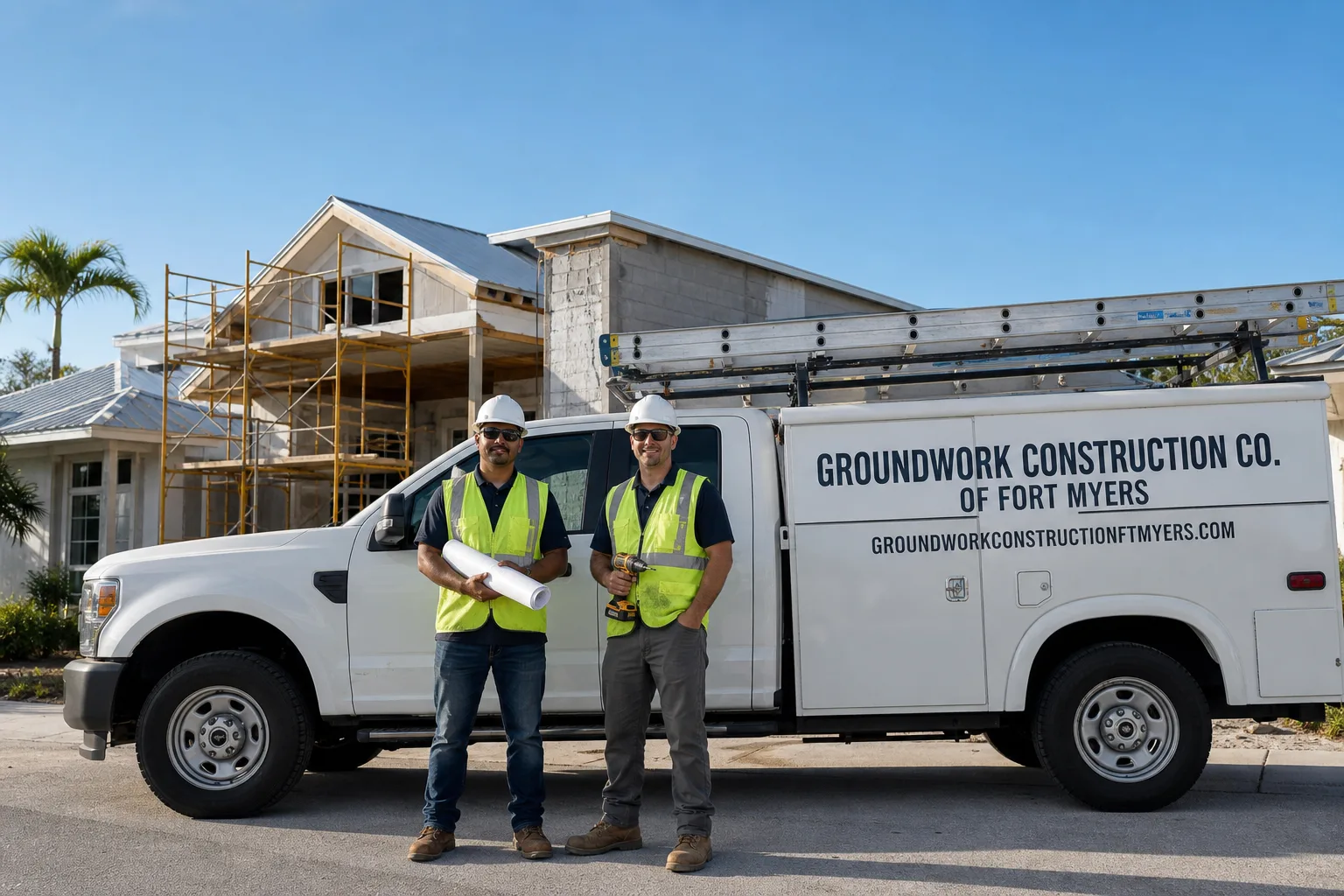
Written by Derek Hollenbeck, Owner at Groundwork Construction Co., serving Venice since 2014.