
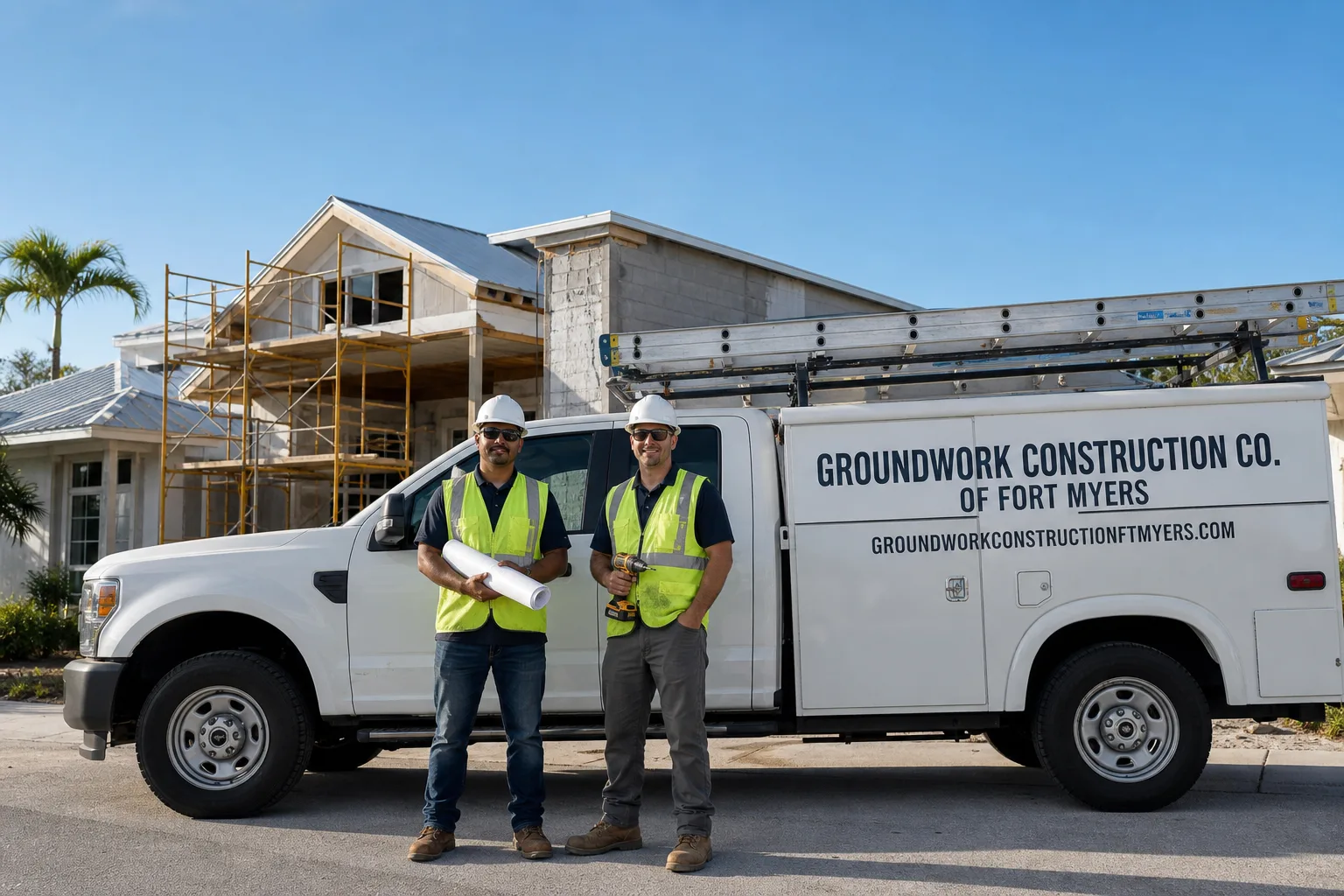
What a Patio, Walkway, or Pool Deck Project Actually Costs and Takes in Marco Island
Most patios, walkways, and pool decks in our Marco Island service area run between $3,500 and $11,000 for a full paver installation, with the job taking five to ten working days from first cut to final compaction. The final number depends heavily on how your existing slab or soil is holding up under decades of salt air and whether your HOA or the city requires permeable pavers to meet current stormwater rules. Call (844) 638-7249 and we’ll give you a written, line-item estimate built around your home’s actual conditions, not a ballpark over the phone.
How We Build a Patio, Walkway, or Pool Deck That Stays Flat in Florida Soil
The sequence matters more here than a few miles inland. Marco Island’s lots were carved from dredged tidal fill, and what’s under your feet is rarely uniform. We stage every job the same way we would on a new-build foundation because the alternative is a wavy surface in two years. Here’s what happens from the day our crew arrives.
Stage 1: Demolition and soil check (Day 1-1.5). If you have existing concrete or old pavers, we saw-cut and remove them. More importantly, we probe the exposed grade. On Marco Island we routinely find pockets of organic muck or loose shell fill a few inches down, the same stuff that gives foundation engineers headaches on teardown-rebuilds. If we find unstable material, we over-excavate and bring in clean compactable fill before anything else happens. You make zero decisions here beyond giving us the green light to start.
Stage 2: Base compaction and slope grading (Day 2-3). We lay a minimum six-inch crushed limestone base in lifts, compacted with a plate compactor, and we grade the entire footprint to a quarter-inch-per-foot slope away from your home and pool coping. This is where a lot of island work goes wrong. An undercompacted base on organic fill settles unevenly, and we see it on pool decks built ten years ago that now pitch water toward the house instead of away. You choose what happens next: whether we stop at the base and let you walk the layout, or press forward on the already-approved plan.
Stage 3: Edge restraint and bedding sand (Day 3-4). We install concrete edge restraint along the perimeter to lock the pavers in place, then screed a one-inch layer of coarse bedding sand. This is also when we set the final elevation against existing thresholds, pool-coping anchors, and any drain boxes. If your Marco Island property requires a French drain or channel drain integrated with the pool deck (and many on the island’s original low-slab lots do), we dig and set it now. Your decision point: drain placement and grate finish, which we walk through on-site.
Stage 4: Paver laying and cutting (Day 4-6 for a typical 400-square-foot job). Crew lays the pavers in the pattern you chose, making all cuts with a wet saw to keep dust down and edges clean. Pool decks take the most time here because of the curved coping cuts and the need to keep expansion joints true to the pool shell. You’ll see the pattern come together in real time, and if something bugs you about a specific cut line, this is when to speak up, not after sanding.
Stage 5: Joint sand, compaction, and final walk-through (Day 6-7, plus cure if we apply sealer). We sweep polymeric sand into the joints, run the plate compactor again, and mist the surface to activate the polymer. The result is a joint that resists ants, weeds, and washout from Marco Island’s afternoon deluges. If you opt for a sealer, we apply it here and it cures for 24 hours before furniture or foot traffic. We hand you a maintenance card and confirm you’re happy with every edge, slope, and joint before we call the job done.
The Options You’ll Choose Between for Your Patio, Walkway, or Pool Deck
Most of what gets installed on Marco Island falls into three material buckets. Each has a different relationship with salt air, pool chemicals, and the intense Gulf sun, so the right choice depends on whether you prioritize color retention, heat reflection, or upfront cost.
- Concrete pavers (Belgard, Oldcastle, and similar). The overwhelming choice on the island for a reason. Modern concrete pavers are manufactured under high pressure and hold color far longer than poured concrete, and if a paver cracks or stains, you replace one unit instead of cutting out a slab section. They stay cooler under bare feet than dark brick and come in enough shapes and colors to match anything from a 1960s CBS rancher to a new elevated coastal contemporary. Cost for a standard tumbled paver in a running bond pattern lands in the middle of the range; a herringbone or multi-size randomized pattern adds labor hours but not much in material cost.
- Travertine and natural stone. High-end pool decks on the island’s newer custom builds skew heavily toward travertine. It stays cooler than concrete, drains instantly through its natural pores, and has a look that HOAs in the newer gated communities tend to favor. The catch is cost: stone material alone can be triple the price of a quality concrete paver, and cutting it on-site is slower, so the total job pushes toward the top of the Marco Island price band.
- Textured poured concrete with saw-cut joints. Still seen on older Mackle-era homes where the original slab is being replaced in kind, and occasionally the right call when a walkway needs to match an existing driveway pour. We use Quikrete or Sakrete bag mixes on small pours and truck-delivered on anything over a hundred square feet. Concrete is the most affordable surface option but it will show hairline cracks eventually on Marco Island’s shifting fill, and it holds heat much more aggressively than pavers around a pool.
Beyond material, you’ll pick a joint sand color (charcoal blends hide dirt near the grill; tan blends keep the surface cooler), an edge-restraint finish (concrete haunching on straight runs, aluminum edging on curves), and whether you want a seal coat. Sealer adds $0.30-$0.70 per square foot and buys you a few extra years of color richness before the sun starts bleaching.
What a Patio, Walkway, or Pool Deck Costs in Marco Island, FL
The realistic window for paver patios, walkways, and pool decks in Marco Island is $3,500-$11,000. A simple 150-square-foot walkway in a standard paver with a straight-line pattern sits at the low end. A 500-square-foot pool deck with travertine, integrated deck drains, and a herringbone pattern pushes toward the top. Here are the variables that move your number.
Square footage is the bluntest lever. Every additional hundred square feet adds roughly $800-$1,400 in combined material and labor depending on the paver grade you choose.
Existing demolition. If we’re pulling up a settled concrete slab that’s been baking in salt air since 1978, demolition and disposal add a line item. If the same slab is spalling and has rebar rusting through, the demo is heavier and the base prep underneath usually takes more work because the soil has been starved of drainage for decades.
Drainage requirements. Many Marco Island homes built on the original low-slab pads need a dedicated channel drain or catch basin integrated into the new hardscape to keep standing water off the lanai. Adding drainage can add $600-$1,200 depending on the run length and whether we tie it into an existing downspout system.
Material grade. The spread between a basic tumbled concrete paver and a first-quality travertine or porcelain paver is wide. If your HOA has a required material palette, that locks in one end of the range before we even measure.
Pool coping and tie-in work. A standalone walkway costs less than a pool deck that has to marry up to existing coping, work around an outdoor kitchen stub-out, or navigate a screen-enclosure base track. The more things the pavers have to die into, the more cuts and the more hours.
Every estimate we write in Marco Island includes all base material, bedding sand, polymeric joint sand, edge restraint, and a line item for any necessary drain integration. We also offer Driveway & Pavers services using the same detailed approach. What’s generally not included: major pool-coping replacement (that’s a separate pool-contractor scope), outdoor kitchen construction, and screen-enclosure work, though we coordinate timing with the subs who handle those.
What Marco Island Homes Specifically Do to This Job
We work on a lot of the original 1965-1985 concrete block homes that the Mackle Company dropped onto engineered fill over tidal muck. Those slabs have had sixty years to react to salt-laden air leaching chlorides into the concrete, and we regularly find the top inch of an old patio slab is spalling while the soil beneath has settled unevenly. The fix is never a skim coat. It’s full removal, base recompaction, and a properly graded paver surface built to drain away from the house, which is exactly the approach a project near Snook Inn required last year when the old lanai deck was pitching water into the slider track every summer afternoon storm. That same attention to detail carries over to our Small & Partial Kitchen Remodels service in Marco Island.
Permitting reality on Marco Island: if the new hardscape changes the site’s impervious surface footprint or alters drainage flow, the city wants a site plan and may require permeable pavers to meet current stormwater rules. If the project is part of a larger remodel that already has a building permit open, we typically tie the hardscape scope into that permit package. Either way, we pull the permit so you don’t have to navigate the city’s plan review yourself. HOA approval is a separate step on nearly every property in 34140 and 34113, and we provide the material cut sheets and site sketches your architectural review committee needs.
One thing worth understanding: Marco Island’s foundation reality changes how we think about something as simple as a walkway. On a typical inland lot a few miles east, you might get away with a four-inch base. Here, where unconsolidated organics sit just below the crust, we always compact a six-inch minimum base to bridge any soft spots, and on pool decks we often go thicker because the combination of saturated soil and heavy pedestrian loads around a pool accelerates settlement. This is not upselling. This is what stops a new patio from looking ten years old in three.
Homeowners who are already planning a full outdoor transformation sometimes pair this work with ADU Site Prep & Utilities in Marco Island if the hardscape is part of a guest-house or in-law-suite project, or with Full Kitchen Remodeling in Marco Island when the patio upgrade is happening alongside an interior kitchen overhaul and both crews need to sequence around the same exterior access. For larger hardscape packages that include the driveway approach, that falls under our Driveway & Pavers in Marco Island scope, and we coordinate the full hardscape plan so the driveway, walkway, and pool deck read as one surface rather than three unrelated patches.
Serving Marco Island, FL - Our Local Coverage Area
We’re based in the Marco Island area and know this community well. Use the map below to see our service coverage - if you’re nearby, we can almost certainly help.
Frequently Asked Questions About Patios, Walkways, and Pool Decks in Marco Island
Most jobs finish in five to ten working days. Demolition and base prep take the first two days. Paver laying runs three to five days depending on square footage and complexity. Sealer cure adds a day at the end. Weather can stretch that slightly during Marco Island’s rainy season, but we schedule around forecast windows and don’t leave an open excavation exposed to a summer downpour.
Yes, in most cases. The City of Marco Island requires a site permit when the new hardscape changes the amount of impervious surface or alters drainage patterns. We handle the permit application as part of the project. If your HOA also requires approval, we supply the material specifications and plot-plan sketches your review board will ask for. Call (844) 638-7249 and we can tell you in the first conversation whether your specific project triggers a city permit.
Not if the base is built right. The island’s dredge-fill lots have a reputation for settlement, but a properly compacted six-inch limestone base distributes the load and bridges soft spots that would distort a thinner base. We also compact in lifts rather than dumping the full six inches at once, which makes a measurable difference in how flat the surface stays over five and ten years.
A concrete pool deck pour in Marco Island typically starts around $3,000 and goes up with stamping, texturing, or integral color. Pavers start around $3,500 for a small deck with a basic tumbled paver and run toward $11,000 for a larger area in travertine or a multi-size pattern. The long-term math tilts toward pavers on this island because they handle soil movement better and a single cracked unit costs a few dollars to swap, versus cutting out and repouring a concrete section.
We can usually get close, but a perfect color match depends on how long the existing surface has been weathering in the Marco Island sun. Even pavers from the same manufacturer’s same color lot look different after five years of UV and salt exposure. We’ll bring sample boards to your home and show you what a fresh installation looks like next to the existing surface so you can decide whether to blend or intentionally contrast.
Get a Free, Written Estimate for Your Marco Island Patio, Walkway, or Pool Deck
Our crew works across the whole island, from the neighborhoods near Holiday Inn Club Vacations Sunset Cove Resort down to the waterfront lots by Wheel Chair Only Beach View. We also handle Specialty Roofing in Marco Island for homeowners looking to protect their property from the same harsh coastal conditions. We show up in uniform, walk the site with you, and hand you a line-item price that includes every dollar of base prep, drainage, and material. No change orders appear on day four. Call (844) 638-7249 to schedule your free on-site estimate, and we’ll have a real person on the phone when you do.
Written by Derek Hollenbeck, Owner at Groundwork Construction Co., building hardscapes across Marco Island since 2014.