
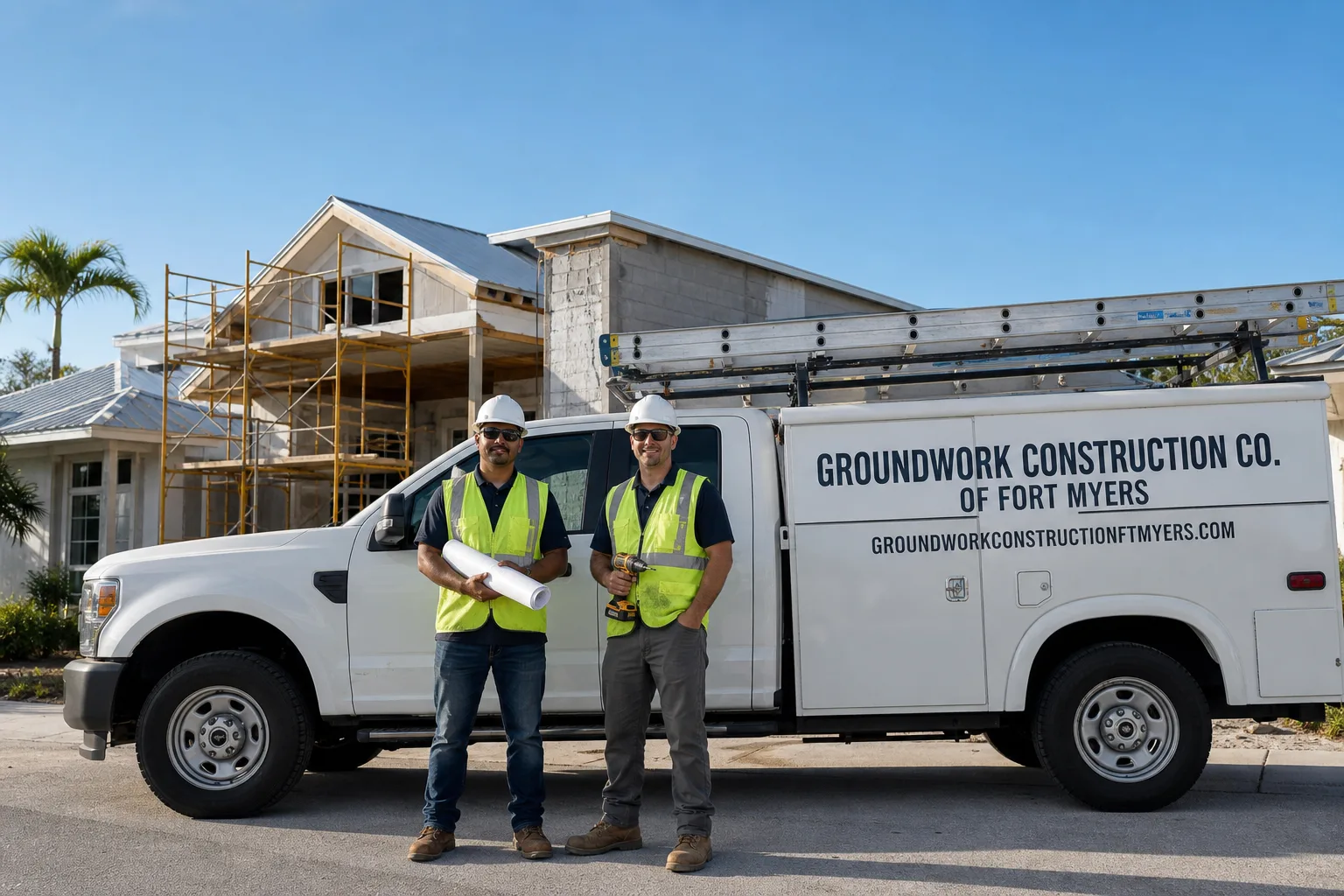
What a Paver Driveway in Cypress Lake Really Costs and How the Job Comes Together
A paver driveway installation in Cypress Lake typically runs between $7,000 and $18,000 and takes 5 to 10 working days from demolition to final sand. The spread depends almost entirely on square footage, the paver you choose, and what’s under the existing slab. Call us at (844) 638-7249 for a line-by-line written estimate, not a ballpark over the phone. You’re reading this because you want a paver driveway, not a concrete pour or an asphalt overlay, and that decision makes a lot of sense in this part of Lee County. Pavers handle our summer downpours without ponding, and they stay cooler underfoot than asphalt through July and August.
How We Build a Paver Driveway in Cypress Lake, Start to Finish
Most people haven’t watched a paver driveway go in before, and the sequence matters because it directly affects how long you’re parking on the street and when you need to make decisions. Here’s what the five stages look like on a typical Cypress Lake property.
Day 1-2: Demo and subgrade prep. The existing driveway surface, whether it’s cracked concrete or crumbling asphalt, gets saw-cut and hauled off. Our crew then excavates down 8 to 12 inches below the finished grade, depending on the soil we hit. In Cypress Lake we regularly encounter sandy loam that drains well, but we also find pockets of organic fill from the 1970s build era that have to be cut out and replaced with clean compactable material. If we hit that, it adds half a day but prevents settlement later. The subgrade gets graded to slope away from the house and compacted in lifts with a plate compactor.
Day 2-3: Base and edge restraint. We bring in 6 to 8 inches of crushed limestone base, spread it, wet it, and compact it in lifts. This is the structural layer that carries vehicle loads. Once the base is locked in, we install edge restraint, typically a concrete haunch or heavy-gauge aluminum edging spiked into the compacted base along the perimeter. Edge restraint keeps the pavers from drifting outward under the lateral pressure of turning tires. Without it, you get a spreading border within the first two wet seasons.
Day 3-5: Sand screed and paver placement. A 1-inch layer of coarse bedding sand is screeded over the base. The pavers are laid in your chosen pattern, starting from the longest straight edge, usually the garage slab, and working outward. Full-size pavers carry the field, and cut pieces get marked with a pencil, cut on a wet saw, and set along the borders. In Cypress Lake we schedule a mid-install walkthrough at this stage so you can see the pattern in place before we lock everything in with joint sand and compaction. It’s the last point where changing a border course or adjusting a soldier row is quick.
Day 6-7: Compaction, joint sand, and final compaction. Once every paver is set, we run a plate compactor over the entire surface to vibrate the pavers into the sand bed. Then we spread fine polymeric joint sand across the whole driveway and sweep it into the joints, followed by a second pass with the compactor. The polymeric sand is activated with a light mist of water, and it cures to a firm but flexible bond that resists ants, weeds, and washout. This is the step that separates a paver driveway that still looks tight five years later from one that starts sprouting weeds after the first rainy season.
Day 7-10: Cure time and final walkthrough. We recommend keeping vehicles off the new driveway for 48 to 72 hours while the polymeric sand fully cures. Foot traffic is fine the next day. Derek Hollenbeck or the project lead walks the finished driveway with you, checks the slope with a level, and confirms drainage is moving water away from the foundation. If anything needs a touch-up, it’s handled before we leave. This walkthrough is part of our 730-Day Done Right Promise: if something doesn’t hold up, we make it right.
This same crew handles every driveway installation, whether it stands alone or is part of a larger Driveway & Pavers in Cypress Lake project that includes a pool deck or walkway. The process doesn’t change, just the square footage.
The Paver Options You’ll Actually Choose Between
You’re picking more than a color. You’re choosing a material thickness, a surface texture, and a joint width that all affect how the driveway wears and what it costs. Here are the real trade-offs we walk through with Cypress Lake homeowners.
- Standard concrete pavers (60mm thickness). These are the workhorses: Belgard, Tremron, and Unilock all make solid 60mm options rated for residential vehicle loads. They run $7 to $11 per square foot for the paver alone. Plenty of color families from charcoal to terracotta. If your cars are sedans and minivans, 60mm is all you need.
- Permeable pavers. These have wider joints and a deeper stone base that lets water drain straight through the surface. They matter in Cypress Lake because many lots fall in FEMA AE flood zones, and permeable paving can reduce the impervious-surface calculation on your property. They cost about 20 to 30 percent more than standard pavers, mostly due to the deeper excavation and additional base material.
- Tumbled or tumbled-edge finishes. A tumbled paver has softened edges and a more textured face that looks closer to old stone. It costs more per square foot than a smooth paver, and the irregular edges mean wider joints that take more sand. Looks great on Mediterranean-style and older Florida ranch homes. Driveways with tight turning radii benefit from the extra grip, too.
- Cobble vs. plank shapes. A 6×9 cobble paver in a herringbone pattern is the strongest layout for a driveway because the interlock resists braking and turning forces better than a running-bond plank. Planks, like a 4×8 or 6×12, give a cleaner, more modern look but need edge restraint to be absolutely bombproof. Our driveway & pavers crew can show you samples of both on-site.
- Border courses and accents. A contrasting soldier course around the perimeter or a band of darker pavers down the center adds maybe $800 to $1,500 to the job, all in cutting and material upcharge. It’s a detail that frames the house well, and most Cypress Lake homes with front-facing garages benefit from that visual boundary.
We stock samples from Belgard and Tremron in the Fort Myers yard, so you can see the colors in full sun, not under showroom lighting. A paver that looks warm gray indoors can read blue at noon in Southwest Florida. We’ll bring the samples to your house.
What a Paver Driveway Costs in Cypress Lake, FL
A straightforward paver driveway replacement on a typical Cypress Lake lot runs $7,000 to $18,000. At the low end, you’re looking at roughly 400 square feet of standard 60mm pavers with minimal demo and good subgrade. At the high end, you’re closer to 1,000 square feet, dealing with thick concrete tear-out, permeable pavers, and possibly regrading to meet base flood elevation requirements. The variables break down like this.
Square footage drives the number more than anything else. A two-car driveway plus a short approach is roughly 450 to 600 square feet. Add a turnaround pad or an extended approach and you’re at 800 to 1,000. The paver itself is $3 to $6 per square foot for standard 60mm units, and labor and base material add roughly $8 to $12 per square foot installed. Permeable pavers push the installed cost toward $14 to $18 per square foot.
Existing surface removal is the second biggest variable. Hauling away a 4-inch concrete slab costs more than scraping up 2 inches of asphalt, and if the old slab was poured thick with wire mesh, demo takes longer. A clean dirt-to-dirt new-build, like on a bare lot or a fresh home addition, skips the demo line entirely.
Subgrade corrections catch people off guard. If we find soft organic fill or buried construction debris from the original build, which is not rare in 1970s Cypress Lake subdivisions, we have to over-excavate and bring in clean fill. That adds several hundred dollars and a day of work.
Edge details and pattern complexity (herringbone vs. running bond, multiple border courses, inlays) add labor hours and paver waste from cuts. Permits and inspections add a line item too. Lee County requires a permit for driveway work when the scope includes new impervious surface over a certain threshold, and in flood zones that can trigger an elevation review. A written estimate from us breaks all of this out so you see exactly what each line covers before you sign. Call (844) 638-7249 to schedule that estimate. The pricing upfront means the number you see is the number you pay.
What Cypress Lake Homes Specifically Do to This Job
The single biggest thing we see in Cypress Lake that changes a paver driveway job is water. A lot of these homes were built in the 1970s and 1980s on slab-on-grade foundations, on parcels that FEMA now maps as AE flood zones. When we pull up an old concrete driveway on a Cypress Lake property, we’re often the first people to see what Ian’s floodwater did to the subgrade. Sandy soil that sat saturated for days can lose its compaction, and if we don’t catch it during excavation, the new pavers settle unevenly within two wet seasons. That means we probe deeper here than we would on a higher inland site, and we spec a thicker base course on any lot where the finished elevation puts the driveway within a foot of the base flood elevation line.
Permitting in Lee County is slower post-Ian, and homeowners have learned the hard way that out-of-state crews who swept in after the storm didn’t always pull permits or meet Florida Building Code wind-load standards. A paver driveway does not carry wind loads, obviously, but its connection to the house and any retaining walls or drainage structures tied to it often do fall under permit review. We handle the permit application, and we show up with a Lee County Certified General Contractor license number on every estimate. No homeowner should have to ask for it. Some HOAs in Cypress Lake, particularly in the gated sections near the country club, also have architectural review requirements for driveway materials and colors, and we’re used to submitting paver samples and drainage plans for board approval.
The stucco ranchers that dominate Cypress Lake’s housing stock look best with pavers that pull from a warmer palette, tans and terra cottas and buffs that talk to the stucco, rather than cool grays that wash out in bright sun. We’ve also done a number of jobs here where the paver driveway was paired with a Garage Conversion ADU in Cypress Lake, and in those cases the driveway often gets widened or extended to serve the new living unit. That changes the drainage plan and sometimes triggers the impervious-surface review, which we coordinate through the county from the start. Homeowners expanding their living space sometimes also look at an ADU Design & Permitting in Cypress Lake service to handle the full entitlement, and we walk them through how the driveway layout ties into the site plan.
Post-Ian, a new paver driveway in Cypress Lake is also an opportunity to fix drainage that was never quite right. Many of these homes had their original concrete driveways sloped just barely enough, and after 40 years of settlement the water was running toward the garage instead of away from it. Our regrade during base prep solves that permanently. It’s one of those things you don’t notice until a hurricane season with three named storms in the Gulf reminds you.
Serving Cypress Lake, FL - Our Local Coverage Area
We’re based in the Cypress Lake area and know this community well. Use the map below to see our service coverage - if you’re nearby, we can almost certainly help.
Frequently Asked Questions About Paver Driveways in Cypress Lake
Yes, in most cases Lee County requires a permit for driveway work, particularly when it involves new impervious surface, drainage modifications, or work in a FEMA flood zone. We pull permits on every job that requires one and factor the fee into your written estimate so there’s no surprise line item after work starts.
A properly installed paver driveway in Cypress Lake should last 25 to 35 years with basic maintenance. The pavers themselves are rated for 50-plus years, but the base and edge restraint are what determine real-world lifespan. Our 730-Day Done Right Promise covers workmanship, and we stand behind the installation far beyond the standard one-year warranty you’ll see from most local contractors.
We generally do not recommend it in Cypress Lake. Any cracks in the old slab will telegraph through the pavers over time, and concrete doesn’t drain, so you trap water between the slab and the pavers. We saw-cut and remove the existing surface so we can fix subgrade problems and slope the new base properly. The exception is when the existing slab is structurally sound, flat, and high enough that overlaying won’t create a drainage problem, but that’s rare on 40-plus-year-old homes.
For standard 60mm concrete pavers, installed cost in Cypress Lake typically runs $11 to $16 per square foot, including demo, base, materials, and labor. Permeable pavers run closer to $14 to $18 per square foot. Square footage, paver choice, and subgrade condition are the three levers that move the number. Call (844) 638-7249 for a written, line-by-line estimate that locks in your price.
Possibly. Several Cypress Lake communities, particularly those with active architectural review committees, have guidelines on driveway materials and color palettes. We submit paver samples and drainage plans to HOAs as part of the approval package. It’s a routine step for us, and we can tell you early on whether your community typically approves quickly or asks for revisions.
Get a Written Paver Driveway Estimate in Cypress Lake, FL
If you’re ready to price a paver driveway on your Cypress Lake property, we make that step simple. Call us at (844) 638-7249 and a live person answers, 24/7. We’ll schedule a time for Derek Hollenbeck or a project lead to walk the site, take measurements, and talk through the paver options that fit your house. You’ll get a written estimate with every line item broken out, no vague allowances. If your project qualifies, you can also use our $1,000 off projects over $10,000 or our 0% financing for 18 months to make the numbers work. This isn’t a ballpark. It’s the number you pay.
Written by Derek Hollenbeck, Owner at Groundwork Construction Co., serving Cypress Lake and all of Cypress Lake.