
What a Paver Driveway in Naples Park Actually Costs and How Long It Takes
A paver driveway installation in Naples Park typically runs $7,000 to $18,000, with most single-car driveways on the neighborhood’s standard 50×100-foot lots falling between $9,500 and $14,500. The job takes 5 to 9 working days from demolition of the old slab to final sanding and compaction, though that timeline stretches when we uncover what’s underneath a 1960s-era CBS home’s original drive. Call us at (844) 638-7249 for a free, line-item estimate that accounts for your exact lot conditions.
How We Build a Paver Driveway, Day by Day
Most homeowners in Naples Park have never watched a paver driveway go in from bare dirt to finished surface. The process is methodical and every stage has a reason. Here is what you will see when our crew arrives.
Day 1-2: Demolition and Base Excavation
We remove the existing driveway surface, whether that’s cracked concrete from the Kennedy administration or an older asphalt patch job. On the original 1960s and 70s homes around Naples Park, we almost always find the slab was poured directly on native sandy soil with no gravel base and no rebar worth reusing. We dig down 10 to 12 inches below the finished grade to make room for the structural base layers a paver driveway requires here, especially with Collier County’s high water table sitting just a few feet down. If the old driveway abuts a seawall cap or tie beam on homes near the canal-fed avenues, we hand-trench that edge to avoid disturbing adjacent structures.
Day 2-3: Base Installation and Compaction
We lay and mechanically compact a 4- to 6-inch layer of crushed concrete or limestone road base, compacted in lifts every 2 inches. This is the structural spine of the driveway and the step where cut-rate installs fail first. In Naples Park, where salt-laden Gulf air and seasonal saturation cycles from afternoon thunderstorms work the soil underneath, we add an extra lift of base beyond minimum code, knowing what the combination of sandy subgrade and FEMA AE flood-zone moisture does to a paver system over a decade. We run a plate compactor across the base until it is dead flat and hard enough that a boot heel leaves no impression.
Day 3-4: Edge Restraints and Sand Screed
Once the base passes our grade check, we stake heavy-duty aluminum or concrete edge restraints along the entire driveway perimeter. We do not use plastic edge restraints within 10 miles of the Gulf, period; the thermal expansion and UV exposure on Naples Park’s open-grid lots turn them brittle in three to five years. We then screed a 1-inch bed of coarse bedding sand across the compacted base, running screed rails and a straightedge to hold the exact slope needed for drainage toward the street or a yard inlet.
Day 4-7: Paver Laying and Cutting
Our crew sets the pavers in your chosen pattern: herringbone for maximum interlock and load distribution, running bond for a cleaner look, or a soldier-course border with a field pattern. We work off the laid surface so we never walk on the screeded sand. Every paver along the edges, around drain boxes, and at the street apron gets wet-cut with a masonry saw for tight, crisp joints, a detail visible from the curb on Naples Park’s narrow avenues where your neighbors will absolutely notice a ragged cut. This stage is the bulk of the visible labor and accounts for two to three days on a typical single-width driveway.
Day 8-9: Compaction, Sand Joint Fill, and Final Walk
We run the plate compactor across the entire paver surface to seat the pavers into the sand bed, then sweep fine polymeric sand into the joints. We compact a second time, re-sand any low joints, and mist the surface lightly to activate the polymer. The result is a joint that resists ants, weeds, and washout from Naples Park’s afternoon downpours. We do a final walk with you before we leave, usually on a Saturday morning while the neighborhood’s construction noise from the teardown two lots over is already going, and we do not consider the job complete until you have pointed at every edge and nodded.
The Options You Will Choose Between
Before we order a single pallet of pavers, we sit down and walk you through the real choices that determine how the driveway looks, how it handles 15 years of Florida sun, and what it costs.
- Concrete pavers vs. clay brick pavers. Concrete pavers from manufacturers like Oldcastle give you consistent color, tighter size tolerance, and a lower per-square-foot price. Clay brick pavers cost more and offer a richer, warmer color that does not fade, but they are more brittle under point loads like a jack stand or a motorhome leveling pad. For Naples Park, where most homes park two cars and a golf cart on a relatively short apron, concrete pavers are the more practical pick for 90 percent of the driveways we build.
- Paver thickness: 60mm vs. 80mm. A standard residential driveway works with 60mm pavers. If you plan to park a heavy pickup, a boat trailer, or a concrete mixer on the driveway during a future ADU build, step up to 80mm. The material cost difference is real, roughly $1.50 to $2.50 more per square foot, but the long-term resistance to cracking under repeated heavy loads repays that on the first tire track that does not sink.
- Pattern and border choices. Herringbone pattern distributes turning loads better than any other layout and hides subtle settlement over time. Running bond is cleaner, but it telegraphs any deviation in the base. A contrasting soldier-course border in a darker paver gives the driveway a framed, finished look that reads “this was done by someone who cared” from the moment you pull up.
- Joint sand type. We use polymeric sand on every Naples Park paver driveway, full stop. Standard joint sand washes out of the joints during the first hard summer rain, and before long you have grass and ant mounds in your driveway. The polymer additive in brands like Sakrete polymeric sand sets firm after misting, staying put through standing water and the sprinkler overspray common on tight-lot Naples Park homes.
- Drainage integration. Because much of Naples Park sits in FEMA AE flood zones, your driveway needs positive drainage to the street or to a yard drain that ties into the swale. We often run a channel drain across the driveway entrance when the lot grade pitches toward the house, which is a modest material add but prevents standing water against the garage slab.
What Paver Driveways Cost in Naples Park, FL
A paver driveway in Naples Park runs $7,000 to $18,000. The low end represents a single-car driveway on a flat lot with no demolition surprises and a straightforward concrete paver in a standard pattern. The high end covers a wider two-car driveway with deep demolition, a full border-and-field pattern, thicker pavers, and drainage infrastructure added into the scope.
These are the variables that actually move your number, not theoretical upsells:
- Square footage. Naples Park’s 50×100 lots limit most driveways to 400 to 700 square feet. Every additional 100 square feet adds roughly $1,200 to $1,800 in material and labor.
- Existing slab condition and removal depth. Original 1960s-era slabs on this neighborhood’s sandy subgrade are often 3 to 4 inches thick with no wire mesh and no base gravel. They come out quickly. If a previous owner poured a thicker replacement slab or added a reinforced apron, demolition and haul-off costs rise accordingly.
- Material grade. Upgrading from standard 60mm concrete pavers to 80mm pavers or to clay brick adds $2 to $4 per square foot. A soldier-course border in a contrasting color adds a few hundred dollars in material and cutting labor.
- Drainage requirements. If your lot grade directs water toward the garage, we need to cut in a channel drain and tie it to the street or yard drain, which adds $800 to $1,500 depending on run length and access.
- Permit scope. A straight driveway replacement on the same footprint is typically a simple permit. If you are widening the driveway or changing the approach at the street curb, you cross into a scope that triggers additional Collier County review, sometimes a survey stakeout, and higher permit fees.
Our written estimates for paver driveways in Naples Park include line-item pricing for demolition, base material by the ton, bedding sand, pavers by the square foot, edge restraint, polymeric sand, all labor, and the permit fee. What we do not bury in the estimate but you should know: if we find a collapsed drain pipe or a rotted seawall cap during excavation, those are addressed in a change order with photos and a conversation, never a surprise invoice at the end. Call (844) 638-7249 to schedule a free on-site estimate where we measure, walk the drainage, and hand you a number you can budget from.
What Naples Park Homes Specifically Do to This Job
In most neighborhoods, a paver driveway is a straightforward swap. In Naples Park, it rarely is. The original homes here, single-story CBS boxes built between the late 1950s and the mid-1970s on tight 50×100-foot lots, were designed with driveways that served one family car and maybe a bicycle. The slab sitting on native sand with no base aggregate, no reinforcement, and no thought given to the fact that in 2026 two full-size SUVs and a golf cart would be parked on it every night has, in many cases, already cracked and settled past the point of a cosmetic overlay.
And the replacement cycle in Naples Park is not like other neighborhoods. We pull up to a house on 6th Avenue or 101st Avenue North and the property two doors down is a teardown with a two-story luxury spec going up on a lot identical to yours, the builder having just poured an elevated slab 8 feet above base flood elevation to satisfy Collier County’s post-Irma flood construction rules. Your paver driveway is being installed at the existing grade of a 1972 home, and we have to grade it so that it drains correctly today and does not become a low-point pond if the neighbor’s new build regrades the swale along the lot line. The high water table, less than 4 feet down on many of these avenues, means every inch of base compaction matters: a poorly compacted base in saturated sandy soil shifts within two rainy seasons, and you feel it the first time your car tire drops into a subtle depression that was not there in June.
The salt air from the Gulf, less than a mile west, accelerates corrosion of any metal edge restraint or stake that is not aluminum or stainless. We see it on paver jobs done five years ago by out-of-area crews who used galvanized steel spikes: rust streaks bleeding through the polymeric sand joints after a few wet seasons. Naples Park homeowners notice details like that because the blocks are small enough that your driveway is on display every time someone walks a dog down your avenue. If your home is on one of the numbered avenues with a canal at the rear lot line, the seawall proximity adds another consideration: we keep heavy compaction equipment back from the tie-beam zone and hand-compact the last few feet to avoid transmitting vibration into older seawall caps, many of which date to the original build and have already had one repair cycle.
And then there is the HOA reality. Not all of Naples Park is governed by a single association, but the pockets that are, particularly around the northern avenues, often have architectural review requirements that govern driveway material, color, and even the paver pattern visible from the street. We have worked with enough of those boards to know that submitting a sample board and a pattern diagram with the permit application avoids a stop-work order two days into the job. Whenever you are pairing a paver driveway with a larger project, like a Garage Conversion ADU in Naples Park that changes your driveway usage entirely, we coordinate the grading and access plan from day one so the driveway is not torn up twice.
Serving Naples Park, FL - Our Local Coverage Area
We’re based in the Naples Park area and know this community well. Use the map below to see our service coverage - if you’re nearby, we can almost certainly help.
Frequently Asked - Paver Driveways in Naples Park
Most paver driveway installations in Naples Park take 5 to 9 working days from demolition to final compaction and sanding. The timeline depends on the size of the driveway and whether we encounter unexpected conditions during excavation, like a collapsed drainage pipe or an unusually thick slab. We set a day-by-day schedule during the estimate so you know exactly when your cars need to be parked elsewhere. A typical single-car driveway on a standard lot is a Monday-to-Monday job.
Yes. Collier County requires a permit for any driveway replacement or new installation, including paver driveways. If you are replacing an existing driveway on the same footprint and not altering the street curb approach, the permit is generally straightforward. If you are widening the driveway, changing the curb cut, or adding drainage that ties into the right-of-way, the permit scope expands and may require a survey. We pull the permit for you as part of the project, and our estimate includes the permit fee line-item.
We do not recommend it, and on most Naples Park homes we will not do it. The existing slabs are often 50 to 60 years old, un-reinforced, and already cracked or settled. Laying pavers over a failing slab guarantees those cracks telegraph through the paver surface within a few seasons. We remove the old slab, build a proper compacted base, and install the pavers on a stable foundation that will not shift under your cars. The cost difference on a standard Naples Park driveway is usually under $1,500, and it buys you a surface that stays flat for 20-plus years instead of two.
Every paver driveway we install in Naples Park is covered by our 730-Day Done Right Promise: if it is not done right, we make it right. That covers workmanship and installation for two full years. The paver manufacturer’s warranty on the material itself, typically covering structural integrity and color-fastness, runs separately and we provide that documentation with your final paperwork. For drainage issues, settlement beyond normal compaction, or joint sand failure during the warranty period, we come back at no charge.
A paver driveway in Naples Park runs $7,000 to $18,000, which places it above a standard concrete pour ($4,500 to $12,000) and asphalt paving ($3,500 to $9,000) in our market. The premium gets you a surface that handles Florida’s soil movement and afternoon deluges better than a monolithic slab because the individual pavers can shift slightly without cracking, and the joints allow water to percolate rather than pond. For homeowners planning to stay in the home more than five years or those whose lot is in a FEMA flood zone where standing water is a recurring headache, pavers are often the smarter long-term spend. Call (844) 638-7249 for an exact number on your driveway, free of charge.
Get a Free Estimate for Your Paver Driveway in Naples Park
We will come to your home in Naples Park, measure the driveway, walk the drainage with you, and hand you a written, line-item estimate that covers demolition, base, pavers, sand, labor, and permit. No vague ranges and no change orders you did not approve first. When you are ready to talk numbers or want to see paver samples on-site, call us at (844) 638-7249. A live person answers, day or night, and we can usually have a project estimator on your avenue within a few days. This is part of our full Driveway & Pavers in Naples Park scope, so if your project extends to a patio or a pool deck, we price that at the same visit. Homeowners who are already planning a detached structure often ask us to coordinate the driveway access with ADU Design & Permitting in Naples Park so the sequencing works without tearing up fresh pavers later.
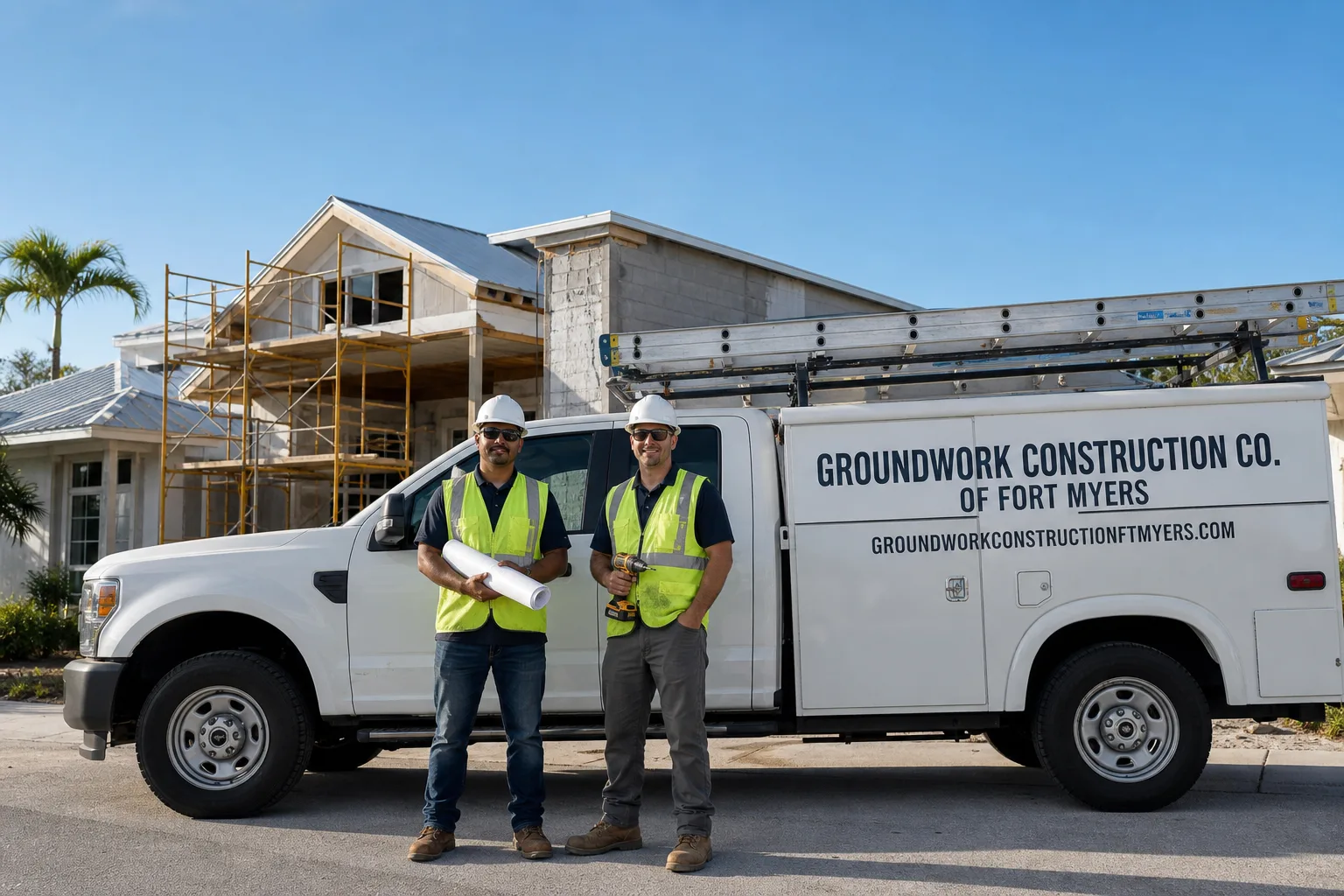
Written by Derek Hollenbeck, Owner at Groundwork Construction Co., serving Naples Park and surrounding communities with transparent pricing and the 730-Day Done Right Promise.