
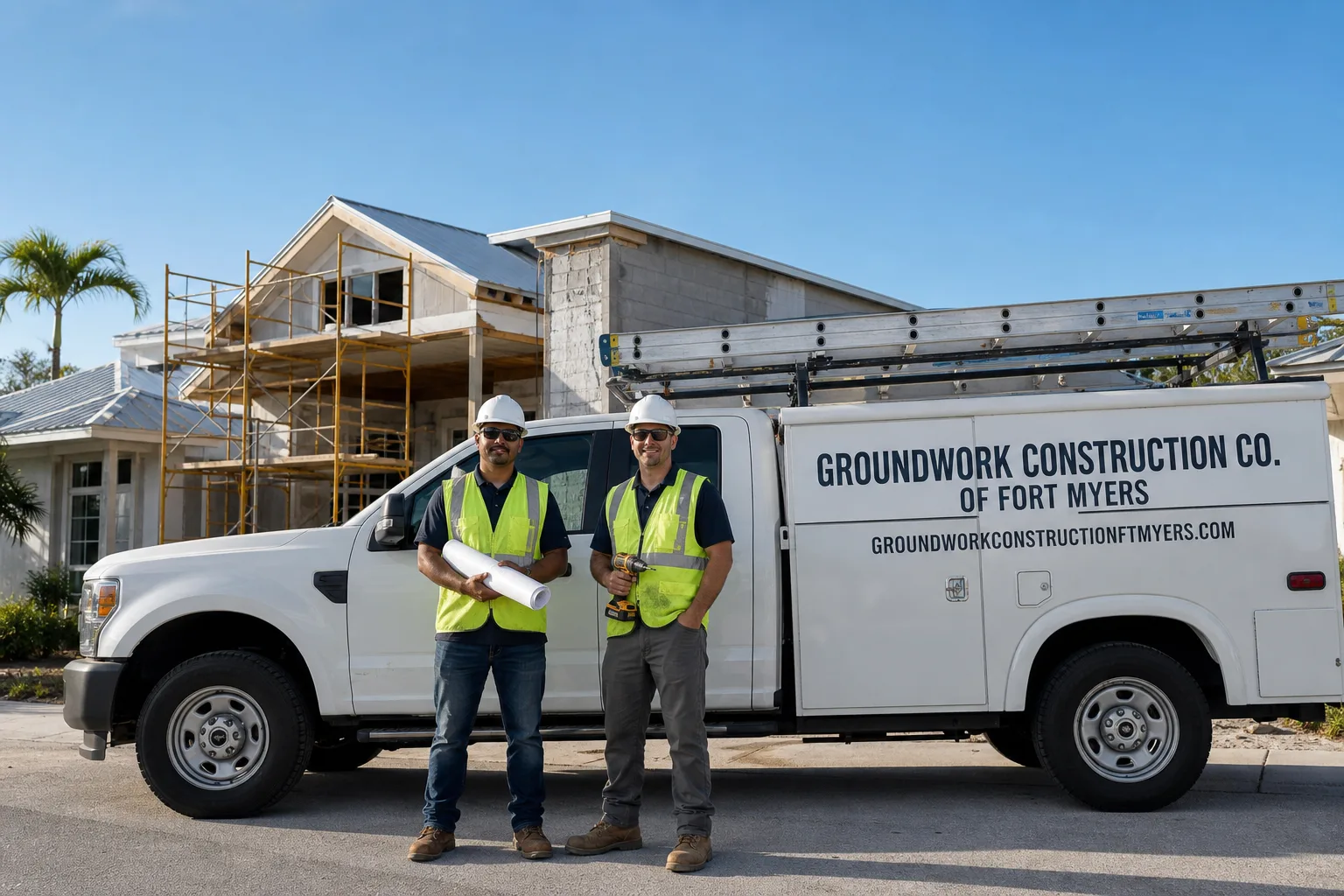
What a Paver Driveway in Vineyards Actually Costs and How Long It Takes
A paver driveway installation in Vineyards typically runs between $7,000 and $18,000, with most single-car-width driveways falling around $9,500 to $13,000. The work takes five to eight working days from the first shovel to the final sand, weather permitting. Call (844) 638-7249 to schedule a free on-site estimate with exact numbers for your driveway’s dimensions and paver choice. We pull every permit and manage your community’s ARB approval so you don’t get tied up in paperwork.
How We Build a Paver Driveway
The process isn’t magic, but it is methodical. Every stage is designed to handle what Vineyards dirt and stormwater throw at a driveway over 30 years. Here is what happens, start to finish:
Day one: removal and rough grade. We saw-cut and remove the existing concrete or asphalt, then haul it off. Next we excavate six to eight inches below the finished paver height, grade the subgrade to a slope that moves water away from your garage door, and compact the native soil. If your home sits on a low lot in one of the community’s older sections where the water table is close to the surface, we may add an extra inch of excavation and a geotextile fabric layer that keeps the stone base from mixing with saturated soil over time.
Day two and three: base and edge restraint. A four- to six-inch layer of compacted crushed limestone goes in, compacted in two-inch lifts. This is the structural layer that carries the weight of your vehicles without settling. We install aluminum or concrete edge restraints along the driveway perimeter to lock the pavers in place laterally. Because Vineyards driveways often flare at the street and again at the garage, edge restraint layout takes a few extra hours to get the radius cuts right.
Day four: bedding sand and paver laying. We screed a one-inch layer of coarse concrete sand across the compacted base and begin laying pavers according to the pattern you chose during the design consult. Our crew runs string lines the entire length of the driveway to keep bond lines straight over a 40-foot or longer run. Field cuts at edges and around any existing landscape features happen here, using wet saws for clean joints.
Day five and six: compaction and joint sand. Once every paver is set, we run a plate compactor over the entire surface to embed the pavers into the sand bed. Then we spread polymeric sand across the driveway, sweep it into the joints, and compact again. The polymeric sand has a binding agent that hardens when misted with water, locking the joints against weeds, ant colonies, and the kind of wind-driven rain that a summer storm front pushes through Vineyards.
Day seven: final compaction and inspection. We make a final pass with the compactor, clean the surface, and walk the job with you to check every edge and joint. The driveway is usable the same day. Within two weeks, the pavers will fully settle into a monolithic surface that flexes instead of cracking when the ground shifts.
The Options You’ll Choose Between
Most of our Driveway & Pavers jobs come down to three decisions. Each has a cost and a look, and each matters more in a community where the ARB reviews every exterior surface before you break ground.
- Paver material and brand. Concrete pavers from manufacturers like Tremron and Oldcastle are the workhorses here, costing less and offering dozens of color blends that match the Vineyards Community Association’s approved palette. Techo-Bloc or Cambridge clay pavers run higher per square foot but give you a richer, more textured surface, and clay holds its color longer under Southwest Florida UV. For most homeowners, a quality concrete paver with a blended face and a sealed finish is the sweet spot on cost and curb appeal.
- Paver size and laying pattern. A standard 4×8-inch paver in a running-bond pattern is the most affordable layout. Larger-format plank pavers (6×12 or 6×18) in a herringbone or basketweave pattern require more cutting, more waste, and more labor, which pushes the number toward the high end of the range. Herringbone is also the strongest pattern for a driveway because the interlock resists the lateral forces from tires turning in place, which is worth the extra cost if you park multiple vehicles.
- Border and accent bands. A contrasting border course around the driveway perimeter or a soldier-course accent band running across the apron adds real visual structure. It also requires careful field cuts and sometimes a second paver color, which adds material and labor. We’ll show you samples on-site so you can judge the effect against your home’s stucco color and the approved exterior palette before you commit to the extra line item.
All of our paver suppliers carry products that have been pre-vetted against the ARB’s approved exterior color and material list for Vineyards. There is no guesswork, and no stop-work order because the paver color looked a shade too warm in the showroom but reads differently under Florida sunlight.
What Paver Driveways Cost in Vineyards, FL
We quoted the range earlier: $7,000 to $18,000. Most single-width driveways with a standard concrete paver and a simple pattern fall between $9,500 and $13,000. Here is what pushes a job toward the low end or the high end:
- Square footage. A short, single-car driveway in a coach home or villa runs maybe 400 square feet. A long, wide, flared driveway on a larger lot in the single-family sections of Vineyards can run 1,200 square feet or more. Material and labor scale directly with area.
- Demo conditions. An old concrete slab that is heavily reinforced, post-tensioned, or poured thicker than expected adds demo time and disposal weight. If we hit an old buried drainage pipe or an abandoned irrigation line that needs capping, that is an extra line item, but we flag it during the estimate walk so you see it coming.
- Paver grade and finish. A tumbled, multi-blend concrete paver costs more than a standard smooth paver. A natural clay paver costs more still. A double-bordered, two-color layout with a flagstone-textured finish lands at the top of the range.
- Subgrade surprises. Collier County soil varies. If we find muck, a buried tree stump, or overly wet ground near the surface once we excavate, we may need deeper stone or a geotextile separator. In Vineyards, where the water table sits high on certain low-lying streets, this is a known risk, not a freak occurrence, and we price it into the contingency discussion up front.
- Permit and ARB fees. The permit with Collier County is straightforward. The ARB submission requires a full material board, a site plan, and sometimes a drainage plan if the driveway footprint changes the amount of impervious surface. We handle every submittal, and our written estimate includes the anticipated filing fees so you aren’t surprised by a separate invoice.
Our estimates are fixed-price and line-itemed, written in plain English. You get a number, a scope of work, and a material specification sheet you can take to the ARB yourself. The number on the estimate is the number you pay unless you ask us to change the scope mid-project. Call (844) 638-7249 for your free estimate.
What Vineyards Homes Specifically Do to This Job
A paver driveway in Vineyards is never just a paver driveway. The community’s Architectural Review Board requires material samples, a color photograph, and a site plan before Collier County will issue a permit. That is a dual-approval sequence that out-of-area contractors routinely underestimate, and it turns a two-week job into a two-month headache when it is not managed properly. We have been through the ARB process enough times to know which paver blends land in the approved palette, which edge restraint profiles read as “finished” to the reviewing architect, and how long the review window actually takes during peak season.
The housing stock itself also shapes the work. Most homes in Vineyards were built between the late 1980s and late 1990s, and the original concrete driveways are now 25 to 35 years old. We regularly find settled slabs with root intrusion from mature oak and palm root systems that have pushed the concrete up at the garage apron and the sidewalk joint. A poured-concrete overlay fails the same way in five years. A properly compacted paver base with an open-graded stone layer handles minor root movement and soil expansion without cracking, which is why we recommend pavers over an overlay for these older, tree-lined lots.
Stormwater is the other local variable. During a summer afternoon storm, water sheets across a flat concrete driveway and pools at the garage lip. Our base design includes a positive cross-slope and, on lots where the elevation change from street to garage is slight, a trench drain tied into the existing yard drainage. It is a small addition to the scope that prevents a large problem during the rainy months, which in Collier County is roughly half the year.
Serving Vineyards, FL - Our Local Coverage Area
We’re based in the Vineyards area and know this community well. Use the map below to see our service coverage - if you’re nearby, we can almost certainly help.
Frequently Asked - Paver Driveways in Vineyards
Yes. Collier County requires a permit for any driveway that replaces or expands the original impervious surface area. Before the county will look at the permit, the Vineyards Community Association’s Architectural Review Board must approve your material choices and site plan. We prepare and submit both packages on your behalf as part of our scope.
Five to eight working days from demolition to final sand, assuming normal weather and no hidden subgrade problems. The ARB review and county permit processing add two to six weeks before we can break ground, depending on the time of year and the ARB’s meeting schedule.
Yes. Once the final compaction pass is complete and the polymeric sand is misted and setting, the driveway is usable the same day. We recommend waiting 24 hours before parking heavy vehicles to let the sand fully cure, but a passenger car can roll onto it immediately.
The paver manufacturers warrant their product against cracking and color fade for the life of the product, usually a transferable limited lifetime warranty. Our workmanship is covered by Groundwork Construction Co.’s 730-Day Done Right Promise: if it isn’t done right, we make it right. Joint sand settlement or minor edge adjustments in the first year are normal and we handle them as part of our post-installation service without additional cost.
The number on the estimate is the number you pay unless you ask us to change the scope during the job. If we uncover a buried slab, an abandoned oil tank, or saturated soil that requires deeper excavation, we stop work, show you the condition, and give you a separate line-item price before we proceed. No change orders get buried in the final invoice without your written sign-off.
Many homeowners in Vineyards with deeper lots pair a new paver driveway with a Garage Conversion ADU in Vineyards project, using the same paver material to create a cohesive hardscape from the street to the new living unit. Others go the other direction and add a full Driveway & Pavers in Vineyards scope that includes a paver walkway and patio in the same pattern. Either way, we can plan the entire hardscape in one material order, which keeps your costs down and your ARB submittal to a single package. If a detached ADU Design & Permitting in Vineyards is in your long-term plan, we’ll design the driveway layout to accommodate the future access and utility runs now so you do not cut into brand-new pavers later.
Start With a Free On-Site Estimate
A paver driveway in Vineyards starts with a walk of your property and a straight conversation about what you want, what the ARB will approve, and what the number is. We measure, talk through paver choices, and hand you a written estimate with a scope of work and a material board you can take to the ARB. Call (844) 638-7249 to schedule yours. Estimates are free, and a live person answers the phone, day or night.
Written by Derek Hollenbeck, Owner at Groundwork Construction Co., serving Vineyards, FL.