
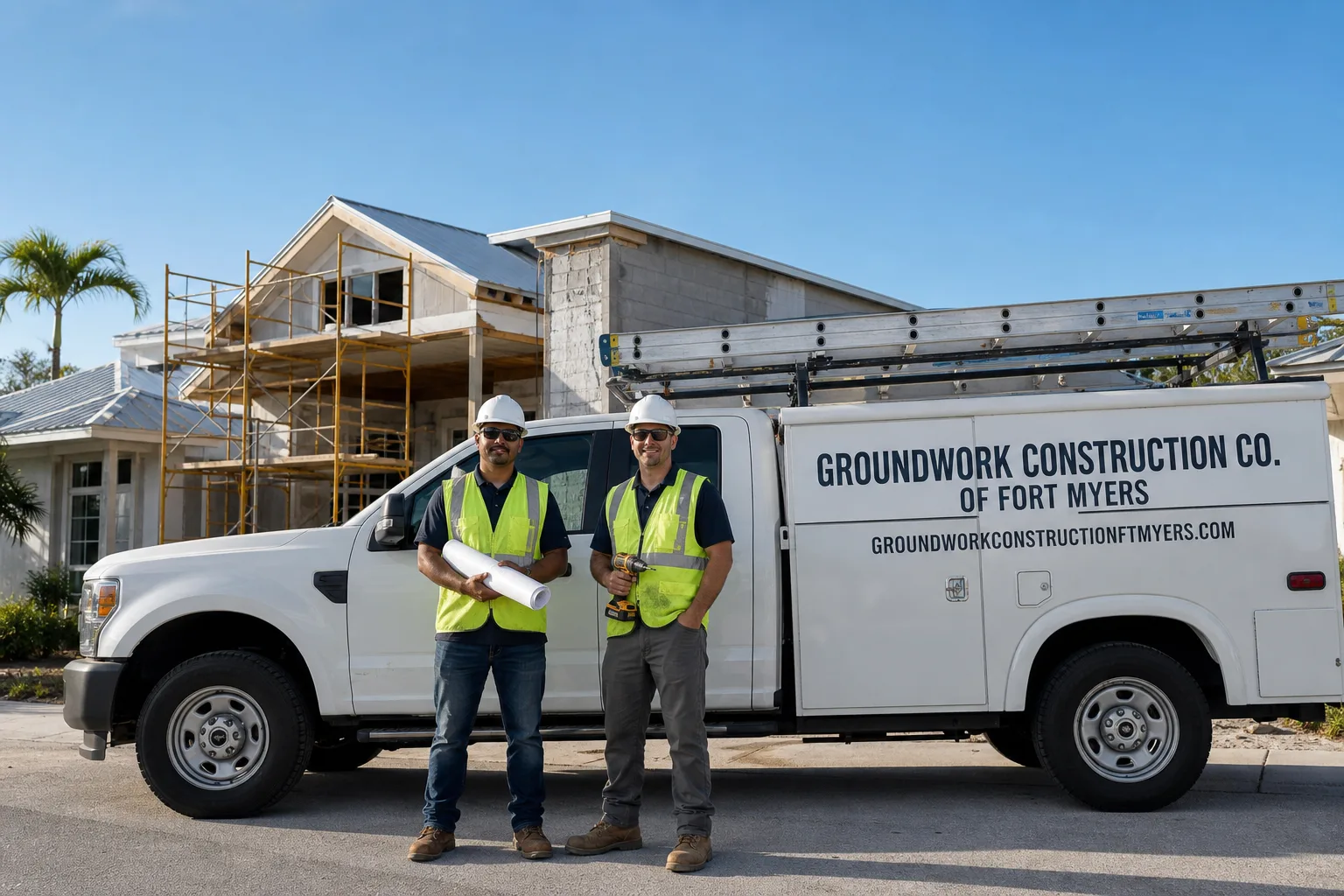
What Roof Repair in Charlotte Park Actually Costs and How Fast It Gets Done
Roof repair in Charlotte Park typically runs $400 to $1,800 for most common leak and shingle fixes, and the actual repair itself is usually finished in one day once we’re on site. A small missing-shingle patch or a localized flashing leak sits at the bottom of that range. A larger repair involving rotted decking, multiple truss bays, or a stubborn tie-in between an older roof section and a newer post-Charley addition pushes closer to $1,800. Call (844) 638-7249 to get a specific number for your roof, not a guess.
How We Work Through a Roof Repair, Stage by Stage
We don’t show up with a bundle of shingles and hope for the best. A proper roof repair in Charlotte Park has a real sequence, and knowing what happens next takes the stress out of it. Here’s how we run it.
Stage 1: The on-site assessment. We walk the roof surface and the attic if it’s accessible, looking for the leak path, not just the water stain on the ceiling. Water travels sideways, so the pinhole in the flashing is rarely directly above the wet drywall. We trace it back, mark the affected area, and check the decking beneath with a moisture meter. This stage takes about 45 minutes and gives us the square footage we’re actually working with.
Stage 2: Scope and price, in writing. Before a single shingle comes off, you get a line-item quote. It tells you exactly what we’re replacing, what materials we’re using, whether decking repair is included or priced per-sheet if discovered, and the fixed number you pay. No allowance for “maybe we’ll find something” with an open checkbook. This is where upfront pricing earns its keep. You decide yes or no with full information.
Stage 3: The teardown and inspection of what’s underneath. On repair day, we strip the damaged shingles, underlayment, and any compromised flashing in the marked zone. This is the moment of truth. The decking that looked solid from above sometimes reveals itself as soft once we’re standing on it. If we find rot, we show you a photo, explain how many sheets need to go, and apply the per-sheet rate we already quoted. No pressure, just facts. On Charlotte Park homes, especially pre-Charley structures, we occasionally find decking that was never properly fastened to begin with, nailed with smooth-shank 6d commons instead of ring-shank 8d fasteners. We fix what the last crew got wrong.
Stage 4: The rebuild layer by layer. New underlayment goes down first, lapped correctly so water can’t wick uphill. Then new shingles or matching tiles, step flashing where the repair meets a wall or chimney, and counter-flashing cut into the mortar joint where needed. Pipe boots get replaced if they’re anywhere near the end of their service life. Every fastener is ring-shank, every seam is sealed, and the nail pattern is checked against the GAF or Owens Corning installation spec for that specific product. We don’t use a one-size-fits-all nailing schedule.
Stage 5: The close-out and your paperwork. We walk the repair with you from the ground, show you before-and-after photos, and leave you with a written record of what was done, what materials were used, and how the 730-Day Done Right Promise applies to this specific repair. If a drip ever shows up from that same repair zone within two years, we come back. No argument, no invoice.
The Options You’ll Choose Between
Roof repair isn’t one-size. The right fix for a two-year-old architectural shingle roof is different from the right fix for a 25-year-old three-tab that’s nearing the end anyway. Here’s what most Charlotte Park homeowners weigh.
- Match the existing shingle vs. strategic contrast. If your roof is still in good shape with years of life left, we source the same shingle, same color, same lot if we can. On older roofs where a perfect match isn’t possible, we steer you toward a deliberate near-match that blends from the street, rather than a patch that screams “this was repaired.” Color-matching a faded shingle is more art than science.
- Repair the decking or just the surface. Soft decking must go. The question is whether we replace only the rotted section or extend the repair to the nearest truss or rafter bay for a cleaner tie-in. A sheet of OSB costs the same either way. The labor difference is modest, and the result is a roof that doesn’t telegraph a weak seam to the next hurricane. In Charlotte Park, where most of the housing stock sits in AE flood zones, a waterlogged deck can also hide mold that impacts indoor air quality.
- Flashing replacement vs. flashing patch. A torn piece of step flashing can sometimes be caulked if it’s minor and temporary. But on a salt-air coastline, exposed metal flashing corrodes faster than you’d think. We typically recommend replacing the entire flashing run in the affected area rather than patching one piece, because the adjacent pieces are usually just a season or two behind the failure. The cost difference is small and the peace of mind is real.
- Underlayment upgrade. Code minimum is a single layer of #15 felt. For a repair that sits in a valley or near a high-traffic water path, we often suggest a synthetic underlayment or a self-adhered ice-and-water shield product from GAF. It adds maybe $70-$120 to the repair and gives you a waterproofing layer that doesn’t degrade when the shingles above it get battered by a summer squall.
What Roof Repair Costs in Charlotte Park, FL
Most roof repair jobs we write in Charlotte Park land between $400 and $1,800. That range isn’t random. Several factors determine where your job falls on it, and you should know them before anyone hands you a number.
The size of the damaged area is the biggest lever. One missing shingle is a quick job. A four-by-eight-foot swath of failed underlayment with rotted decking beneath it is a half-day job with material. Square footage drives material cost and labor hours, and that’s where the bulk of the price difference comes from.
Decking condition is the wildcard. On a roof where the decking is solid, the repair stays at the low end. On a roof where water has been getting in for months, we might pull up the shingles and find OSB that crumbles under a pry bar. We price decking replacement per sheet, and you only pay for what actually needs to go, but on an older Charlotte Park home with original sheathing from the 1970s, it’s wise to expect at least one sheet.
Roof pitch and accessibility matter more than most people realize. A walkable 4/12 pitch is fast. A steep 8/12 or 10/12 pitch requires staging, harnesses, and slower work. Homes on Charlotte Park’s canal-front lots sometimes have limited ladder access on the water side, adding setup time. Steep-roof work is inherently more dangerous, and our crews use full fall-protection rigs every time. Nobody runs a ridge without being tied off.
Material type sets a floor. Three-tab asphalt is the least expensive to repair. Architectural shingles cost a little more per square. Tile roof repair, which is its own service page, is a different animal entirely with higher material costs and the risk of breaking adjacent tiles during the repair. Our team knows when a tile repair crosses into roof replacement territory and we’ll tell you honestly.
Every estimate we write includes the tear-off and disposal of damaged material, new materials installed to manufacturer spec, all required fasteners and sealants, and the 730-Day Done Right Promise on workmanship. What it doesn’t include is damage we can’t see until the roof is opened. That’s when the per-sheet decking rate or the per-linear-foot rafter repair rate applies. You approve it before we do it, same day, with a photo in your hand.
What Charlotte Park Homes Specifically Do to Roof Repair
Charlotte Park’s housing stock does not cooperate with standard repair assumptions. This community sits directly on Charlotte Harbor’s shoreline, and it absorbed a near-direct hit from Hurricane Charley in August 2004. The result is a split housing inventory that we deal with every week. Roughly half the homes we work on were rebuilt after the storm under Florida’s toughened 2004+ Building Code, with proper hurricane straps, engineered tie-downs, and fastener schedules that meet current wind-uplift standards. The other half are surviving pre-Charley structures, often 1960s-era concrete-block or wood-frame ranches, with roofing systems that never saw a code update.
Opening a roof for a small repair on one of these older Charlotte Park homes regularly surfaces problems that a newer-home repair wouldn’t. We find decking nailed with smooth-shank fasteners instead of ring-shank, hurricane straps installed backward or missing entirely, and flashing details that never would have passed a post-2004 inspection. Salt-air corrosion accelerates every steel component on these waterfront lots, so a rusted-out pipe boot or a failed galvanized step-flashing is more common here than inland. Our repair scope often expands from “fix the leak” to “bring this roof section into compliance with current FBC before closing it back up.” The permitting reality in Charlotte Park means we can’t legally recover a roof without addressing structural deficiencies we uncover. That’s not upselling. That’s the building department.
When you call us about a roof repair in Charlotte Park, the conversation almost always starts with what year the house was built or last re-roofed. That single data point tells us more about what we’re likely to find than anything else. We’ve worked on homes along San Mauricio Drive, near the canal loops off Rio Vista, and on the harbor-facing properties where the salt spray is relentless, and the pattern is consistent: post-Charley homes repair cleanly, pre-Charley homes demand a code-compliance audit before we can responsibly close the permit. Every repair we do here includes that audit as a standard step, because skipping it means opening yourself to a failed inspection or a denied insurance claim when the next storm comes through.
Serving Charlotte Park, FL - Our Local Coverage Area
We’re based in our Charlotte Park service area and know this community well. Use the map below to see our service coverage - if you’re nearby, we can almost certainly help.
Frequently Asked Questions About Roof Repair in Charlotte Park
Most repairs are a single-day job from setup to cleanup. The physical repair takes four to six hours. The full timeline, from first call to finished repair, depends on permit turnaround with Charlotte County, which typically runs three to five business days for a minor roof repair permit. Emergency repairs that qualify as immediate safety hazards can sometimes start sooner, but most Charlotte Park repairs follow the standard permit cycle.
Yes, almost always. Charlotte County requires permits for roof repairs that involve structural decking replacement or more than a very small shingle patch. We pull the permit as part of the job. It protects you twice: it ensures the work meets current Florida Building Code and it creates a paper trail that your insurance company can verify. Homes in Charlotte Park that received unpermitted post-Charley repairs are exactly the ones that run into trouble at resale or during a claim.
A small leak that’s only staining the ceiling can usually wait a few days for the proper permit and scheduling. A leak that’s actively dripping into the living space, or a section of roof that lost shingles to wind during a storm, should not wait. Water that gets past the decking soaks into insulation, drywall, and eventually the framing. In Charlotte Park’s humid coastal air, mold starts inside a wet ceiling cavity in 48 hours. If you can see daylight from your attic or water is hitting the floor, call (844) 638-7249 immediately. A live person answers, 24/7, and we’ll get someone out to tarp it while the permit processes.
It covers the workmanship on everything we touch. If the repaired area leaks from the same failure within two years, we fix it at our expense. That includes any water damage inside the home caused by our repair failure. It doesn’t cover new damage from a separate storm event or wear and tear on unrelated roof areas, which is what your homeowner’s insurance is for. Two full years is one of the longest workmanship guarantees in residential roofing, and we put it in writing on every Charlotte Park repair.
It depends on the cause. Storm damage from wind or hail is typically covered, minus your deductible. A slow leak from age or deferred maintenance generally is not. If the damage is storm-related, we’ll help you document it for your adjuster with dated photos and a detailed scope. If it’s a maintenance repair, our upfront pricing means you know the number before we start, and we offer 0% financing for 18 months on qualifying projects. Many Charlotte Park homeowners pair a small roof repair with Window Installation in Charlotte Park or Door Installation in Charlotte Park when they’re coordinating a broader exterior update, and the financing applies across the whole project.
Get a Real Quote for Roof Repair in Charlotte Park
A roof repair estimate shouldn’t be a mystery. Call (844) 638-7249 and tell us what you’re seeing. We’ll ask about the leak location, the age of the roof, and when you first noticed it, then schedule a time to walk the roof in person. The estimate is free, the price you see is the price you pay, and every repair is backed by the 730-Day Done Right Promise. If it’s not done right, we make it right. That’s the standard for Roofing in Charlotte Park, and it starts with a phone call answered by a real person.
Written by Derek Hollenbeck, Owner at Groundwork Construction Co., serving Charlotte Park through honest pricing and accountable Roofing since 2014.