
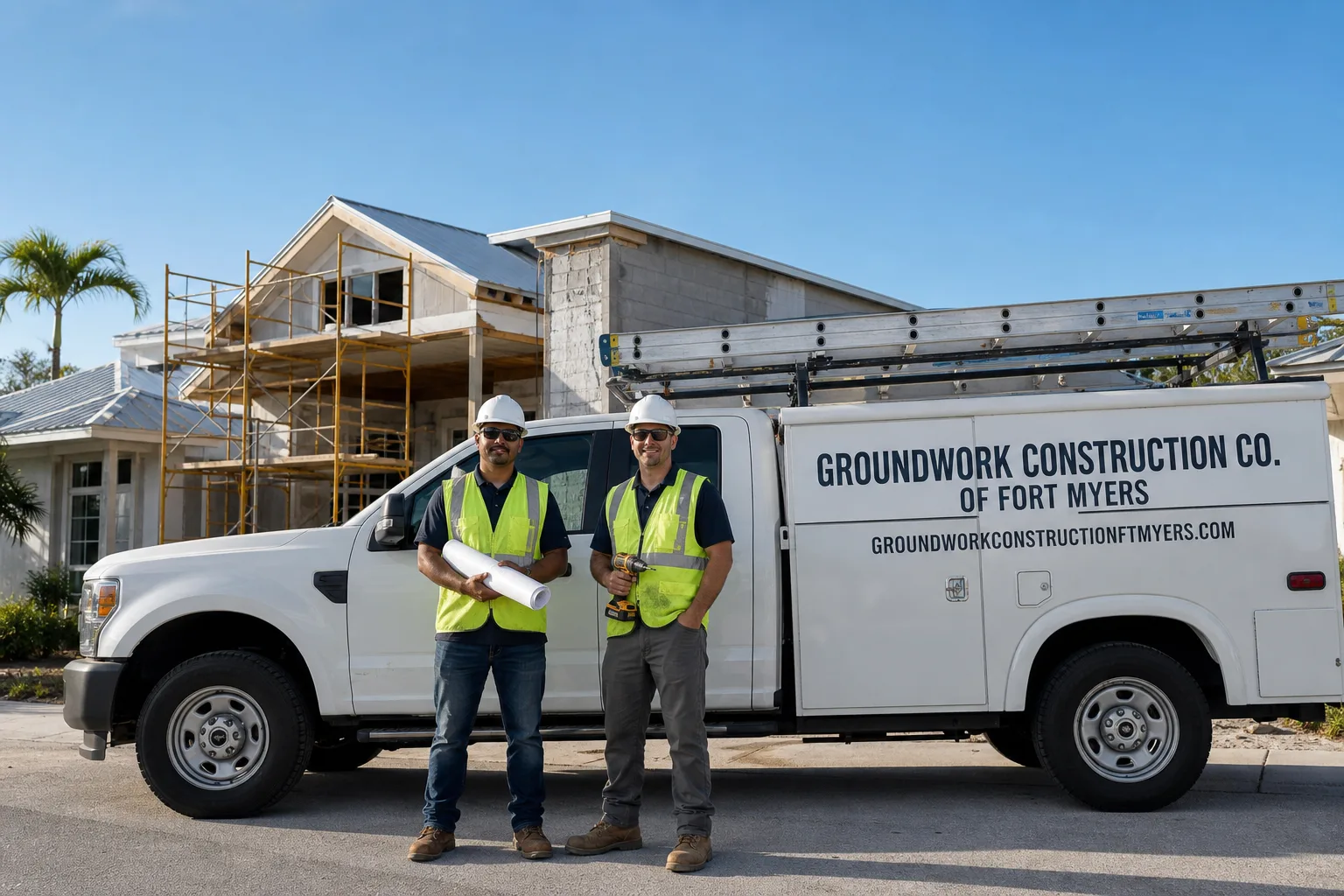
What Specialty Roofing in Pelican Bay Actually Involves and What It Costs
Specialty roofing in Pelican Bay is the custom, often highly engineered work that falls outside a standard tear-off and replacement. We’re talking about projects on the beachfront high-rises and mid-rise condos that dominate this community: balcony deck coating and waterproofing, courtyard and pool-deck membrane replacement over occupied space, detail copper and standing-seam metalwork on turrets and parapets, and the structural carpentry needed to correct failing soffits and fascia on 30-year-old towers. A typical specialty job here runs $4,200-$18,500 depending on scope, and most take two to four weeks because of the material curing times and the mandatory inspection holds imposed by Pelican Bay’s condo associations. If you’re facing a leak that nobody else can seem to trace, call us at (844) 638-7249 for a real on-site assessment.
How We Sequence a Specialty Roofing Project in Pelican Bay
Specialty work doesn’t follow the rhythm of a standard shingle job. The sequence is dictated by the building’s occupied floors below, the post-tension slab we’re working over, and the condo board’s access rules. Here’s what you’ll see from the day we start.
Stage 1: Engineering review and slab-scanning (Days 1-2). Before any material touches the roof, we pull the as-built structural drawings and scan every square foot where we’ll cut, core, or fasten. On Pelican Bay’s post-tension concrete towers, hitting a tendon isn’t a patch job - it’s a structural event. We use ground-penetrating radar to map the tendon layout so our anchor points and drain cuts are in safe zones. You get a marked-up scan report to keep.
Stage 2: Demolition and substrate inspection (Days 3-5). We strip the existing membrane or metal down to the structural deck. This is when we find what the previous contractor left behind: rotted nailers on a parapet cap, corroded rebar in a balcony slab, saturated insulation board that’s been holding water against the concrete for a decade. We stop, document everything with photos, and present a written condition report before building back. You decide what gets repaired - no surprise work orders.
Stage 3: Rough-in for drains and flashings (Days 5-8). Specialty roofing often means custom-fabricated copper scuppers, tapered insulation to correct ponding, or reglet-mounted counterflashing cut into stucco and EIFS walls. This stage gets all the hidden metal and drainage in place before the waterproofing goes down. Pelican Bay’s salt-laden air means we use stainless-steel fasteners and sealant primers rated for coastal exposure - no zinc-plated hardware that will rust out in five years.
Stage 4: Membrane, metal, or coating installation (Days 8-18, trade-dependent). For a fluid-applied deck coating over a parking garage, we’re working in lifts: primer, base coat, fabric-reinforced intermediate coat, and a UV-stable topcoat with aggregate broadcast for slip resistance. Each layer needs time to cure, and we won’t rush it because the bond between coats is what keeps a penthouse ceiling dry. On metalwork, our crew forms, solders, and mechanically fastens copper or standing-seam panels to wind-load specs that meet Collier County’s high-velocity hurricane zone requirements.
Stage 5: Flood-testing, inspection, and close-out (Days 18-finished). Any horizontal waterproofing gets a 24-hour flood test with a board inspector or association representative present. We don’t leave until the test passes. After that, we install the finished walkway surfaces or protective pavers, clean the drains, and hand you a close-out package with all material warranties, the tendon-scan records, and the final inspection sign-off. If this is part of a full Roofing in Pelican Bay scope, we coordinate the specialty phase to dovetail with the main roof replacement schedule.
The Options You’ll Choose Between
Specialty roofing isn’t one product - it’s a class of waterproofing and architectural sheet-metal systems where the right choice depends on what the roof is doing. Below-grade deck coating? Parapet cap that’s visible from the street? Here are the real-world options and their trade-offs.
- Fluid-applied PMMA and polyurethane systems. These are the go-to for flat decks, balconies, and walkways over occupied space. They cure fast and can be trafficked within a few hours. The high-end formulations include a reinforced fleece layer that bridges hairline concrete cracks. Cost runs $12-$18 per square foot installed. The trade-off: they demand a bone-dry substrate, which means scheduling around Pelican Bay’s afternoon storms in the summer.
- Hot-applied built-up and modified-bitumen roofing. When the job is a low-slope section tucked behind a parapet wall, we still use these when the building’s original spec calls for it. Kettle-applied asphalt with a granule cap sheet holds up to ponding water better than most single-ply membranes. It’s $8-$14 per square foot. The trade-off: odor during installation and a heavier weight load on the structure that needs to be confirmed by an engineer.
- Standing-seam metal and copper detail work. This is the custom fabrication side - bay-window roofs, turret caps, chimney crickets, and parapet caps that you see from the ground. Copper develops a green patina over time that Pelican Bay’s associations often require for architectural consistency. Installed cost runs $28-$45 per linear foot for copper cap-work. The trade-off: copper is beautiful and lasts 60 years, but material lead times right now are 3-6 weeks, so we order early.
- Pedestal paver systems over waterproofing. Used on large amenity decks and pool surrounds. The waterproofing goes down first, then adjustable-height pedestals support 24″x24″ concrete pavers, creating a walkable surface that can be lifted to access drains. About $14-$22 per square foot for the full assembly. The trade-off: pedestal heights must account for the deck’s existing slope, and the pavers have to be rated for the wind uplift zone - something our Roofing crew specs before ordering a single paver.
What Specialty Roofing Costs in Pelican Bay, FL
A specialty roofing project in Pelican Bay runs $4,200-$18,500 for the typical scope we handle on condo towers and single-family homes. Small, focused work - replacing a 60-linear-foot copper parapet cap with new soldered joints - comes in around $5,000. A full balcony-deck waterproofing with pedestal pavers on a mid-rise wing can hit the top of the range.
The number moves on five main variables. First, access: if we need a boom lift or suspended scaffolding because the work is 12 stories up with no adjacent roof, equipment costs jump the bid by $1,200-$3,000. Second, existing condition: corroded rebar that needs epoxy-injection repair before we can coat a balcony slab adds $800-$1,800 per balcony. Third, the post-tension tendon layout: if the drain locations need to shift and we’re in a tight tendon field, the core-drilling gets slower and more expensive. Fourth, material spec: a PMMA deck coating from a brand like Quikrete’s commercial line is a different price bracket than a basic acrylic, and it lasts twice as long. Fifth, condo association requirements: some Pelican Bay boards mandate a third-party waterproofing consultant to sign off, which adds $600-$1,500 to the project - we coordinate it, but the consultant’s fee is a direct pass-through you’ll see on the estimate.
Every written estimate includes a line-by-line breakout of demolition, substrate prep, material, fasteners, membrane or metal, flood-testing, and permit fees. What it doesn’t include is vague allowances. We do upfront pricing with no surprises, and our 730-Day Done Right Promise means if something we installed fails due to our workmanship, we make it right - no arguing about whose fault it is.
What Pelican Bay’s Buildings Specifically Do to This Job
Pelican Bay is a master-planned Gulf-front community dominated by luxury condo towers built between the mid-1980s and early 2000s - almost all of it constructed under the pre-2002 Florida Building Code. That matters for specialty roofing because we’re almost never working on a clean, modern substrate. The post-tension concrete decks on these towers have been absorbing salt-laden air for 30+ years, and we routinely find corroded rebar, spalled concrete, and failed waterproofing that the original builder installed before today’s elastomeric coating technology existed. Florida’s post-Surfside mandatory inspection laws (SB 4D) are now pushing associations into structural assessments and capital projects, which means the specialty roofing work we bid today often runs hand-in-hand with concrete restoration that the association’s engineer has already scoped. On the single-family and villa homes scattered through the interior neighborhoods, the salt corrosion is just as aggressive - we replace fascia and soffit metal every few years on homes within a half-mile of the Gulf, and the fasteners on those jobs have to be 316-grade stainless to hold up. The associations here are also famously thorough: expect an architectural review before material approval, and a 24-hour flood test witnessed by the property manager before we call the job complete. If your specialty project ties into a wider exterior scope, homeowners here often pair this with Sliding & Patio Doors in Pelican Bay as part of a coordinated envelope upgrade, especially on Gulf-facing units where salt intrusion has damaged door tracks and flashings.
Serving Pelican Bay, FL - Our Local Coverage Area
We’re based in the Pelican Bay area and know this community well. Use the map below to see our service coverage - if you’re nearby, we can almost certainly help.
Frequently Asked Questions - Specialty Roofing in Pelican Bay
Most jobs run two to four weeks from mobilization to final flood-test sign-off. The curing time on fluid-applied coatings - typically 24 hours per lift - sets the pace, not the labor hours. If your association’s inspection calendar books a week out, we build that into the schedule day one so you’re not waiting on us.
Yes, the work requires a Collier County building permit, and if you’re in a condo tower, the association will almost certainly require a structural engineer’s letter confirming the work doesn’t compromise the post-tension slab system. We submit the permit package in-house, including the GPR tendon-scan documentation, so the county has everything they need on the first round. Call (844) 638-7249 and we’ll walk you through the timeline.
Failed parapet cap flashing is the number-one call we get. The original copper or aluminum cap on a 1990s tower develops a pinhole leak at a soldered seam, water runs inside the parapet wall for months undetected, and the first sign is a water stain on a ceiling two floors down. By the time you see the stain, the plywood nailer inside the parapet is rotted and the membrane has delaminated. Tracing the actual entry point takes a water-test with two people - one on the roof with a hose, one in the unit watching with a moisture meter.
Yes, and in Pelican Bay that’s the norm - owners aren’t relocating for a membrane replacement. We contain odor and debris with taped-off work areas, we schedule kettle-heating or coating applications during the day on weekdays per association rules, and we never block a parking garage entrance without 48 hours’ written notice. Our crew are background-checked, uniformed technicians; the building’s front desk will know who’s on-site every morning.
Yes. It covers workmanship on every specialty roofing project we install. If a membrane seam separates or a parapet cap leaks from a joint we soldered, we fix it. Material defects are covered under the manufacturer’s warranty, which we register for you, and we handle the claim if one ever comes up. The promise is simple: if it’s not done right, we make it right - for two full years after the final walkthrough.
Get a Real Estimate for Specialty Roofing in Pelican Bay
Specialty roofing in Pelican Bay is a job where the estimate is everything - you need to see the scope, the materials, and the engineering concerns before you can make a decision. Call (844) 638-7249 to schedule a free on-site assessment. One of our roofing specialists will come out, inspect the condition on the roof or deck in question, pull the structural drawings if the building makes them available, and build you a written, line-by-line estimate with a firm price. We answer our phones with a live person, 24/7 - you won’t get a voicemail black hole when you’re trying to stop a leak. For more on what we do in this community, see our Pelican Bay service area page. If your specialty roofing is part of a broader exterior refresh, we also handle Glass Railing Systems in Pelican Bay, which many associations upgrade alongside deck and balcony work.
Written by Derek Hollenbeck, Owner at Groundwork Construction Co., serving Pelican Bay with specialized roofing and building-envelope solutions.